Unjustified Premium Hikes Are Rampant: It's High Time to Regulate NEV Insurance
 11/02 2026
 416
Compared with traditional fuel vehicles, even though NEVs boast smarter features and stronger performance, one must admit that many people don't buy NEVs for the smart features and performance—the most important reason is to save money. Do you agree?
If you agree, let's keep talking.
Indeed, after buying an NEV—even an extended-range or plug-in hybrid model—since most trips can be made on electricity, daily running costs are noticeably lower than those of traditional fuel vehicles. Not to mention pure EVs, where the cost per kilometer is at most about one mao. Note that this one-mao cost refers to the case without a home charging pile. With a home charging pile, the cost drops even further—less than 5 fen per kilometer.
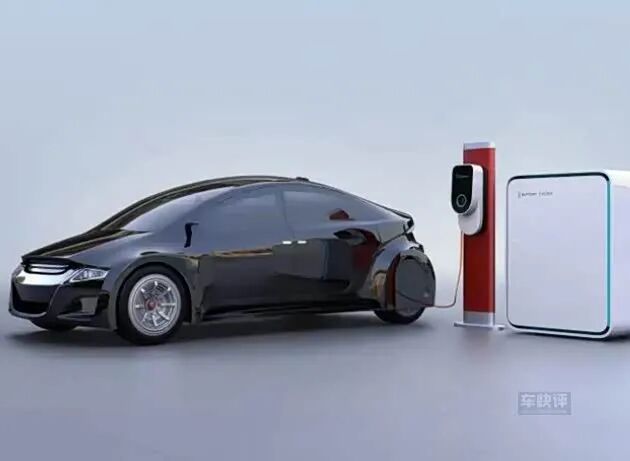
However, there is now a problem troubling some—or most—owners who have already bought NEVs, making their lives miserable. This problem is neither charging and range anxiety nor used-car value retention, but commercial auto insurance.
Car owners can understand that NEV premiums are more expensive than those for fuel vehicles. After all, from a risk perspective, NEVs are far riskier than fuel vehicles. Data shows that the average risk cost per NEV insurance policy is about 2.2 times that of fuel vehicles, and the premium is 1.7 times that of fuel vehicles. But the current problem is not simply that premiums are more expensive than fuel vehicles—it's that inexplicably, without any claims, premiums are several thousand yuan more expensive. Let's look at what happened to this Beijing car owner.
According to media reports, after Ms. Jin in Beijing bought a new energy vehicle, her premium had already risen to 4,400 yuan in 2023. It stayed unchanged at 4,400 yuan in 2024. By 2025, the premium rose again to 5,000 yuan. Even more exaggerated, in 2026 the premium jumped directly from 5,000 yuan to over 7,400 yuan.
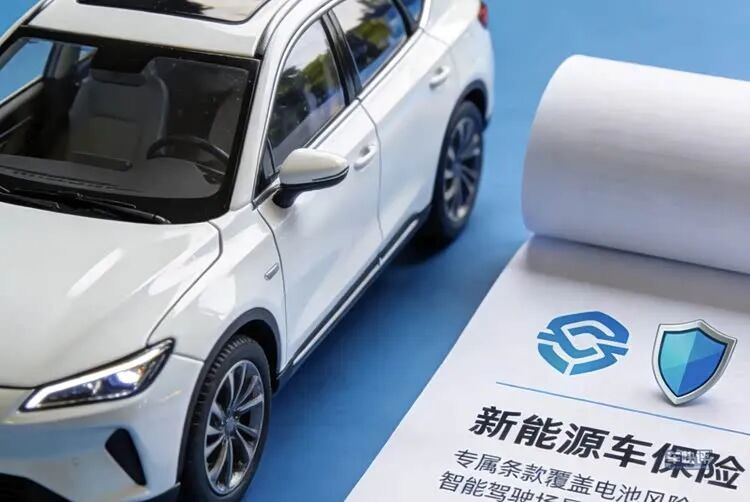
It should be specifically noted that throughout 2025, Ms. Jin's car had no claims record. The insurance company's agent could not give her a clear explanation for why the 2026 premium would increase by 2,400 yuan.
There are actually quite a few car owners who have had the same experience as Ms. Jin. Many NEV owners are completely confused about premium increases. Under what circumstances insurance rates rise and under what circumstances they fall—there has never been a clear standard. Some owners even say that they bought NEVs to save money, but the money they saved all went to the insurance companies.
Interestingly, however, not all NEV premiums are rising. There is a Xiaomi SU7 owner in Beijing whose car had a claim in 2025, yet in 2026 the premium not only didn't rise—quotes from multiple insurance companies were actually cheaper than in 2025.
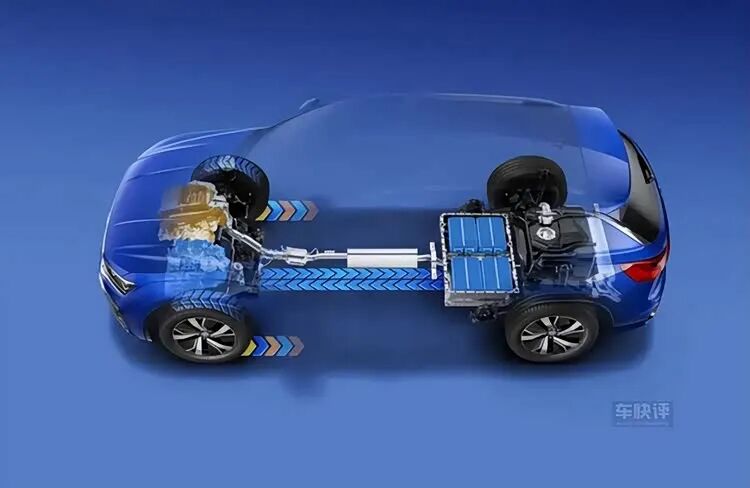
As mentioned above, everyone can understand that NEV premiums are somewhat more expensive than fuel vehicles, but when there were no claims at all in the previous year and the premium rises for no reason the next year—and by no small margin—that is truly incomprehensible.
If we must find a reason, in Car Quick Review's view, the answer may lie in the following set of data. Public information shows that in 2024 and 2025, underwriting losses for NEV insurance were 5.7 billion yuan and 5.6 billion yuan respectively. In other words, on NEV premiums alone, in just 2024 and 2025, insurance companies lost 11.3 billion yuan. To turn losses into profits, raising premiums may be the simplest and crudest method.
So it's time to regulate the NEV premium problem. Finally, I'd like to ask the NEV owners reading this article: how much is your premium per year? Has it gone up or down in recent years? Let's chat in the comments.

Copyright statement: This article is original content by Car Quick Review. Please contact us for authorization before republishing. Unauthorized republishing is strictly prohibited, and any form of plagiarism or misappropriation of text and images is prohibited; otherwise, legal liability will be pursued. Some images in the article are sourced from the internet, and the copyright belongs to the original authors. If your work is used, please contact us to claim compensation or request removal.
-
![]()
This "Silver October" New Energy Report Card Is Most Striking for Its "Zero, Xiao, Xiao" Polarization
-
![]()
AITO's First Real Test: Can the New M8 Carry Seres on Its Own?
-
![]()
Huawei Wins Audi A8 Deal — Why That Matters More Than Launching Another "Jie" Brand
-
![]()
The Most Aggressive Investor, Mediocre Returns: Has Amazon Become a Worker for Nvidia?
-
![]()
Explained: Anthropic's Prospectus — and What It Means for the Auto Industry and Us Workers
-
![]()
[Xauto Smart Driving Rankings] Xiaomi SU7 N70 HyperOS 1.18.3 Urban Evaluation Report
-
Why AI Short Dramas Have Exploded in Popularity
-
Japanese Big Four See Sales Drop in China in First 10 Months; Are Toyota and Honda Hybrids Still Worth Buying in the Cold North?