From Lathe Operator to President of Brazil: Why Does Lula Value Chinese Automakers?
 11/02 2026
 397
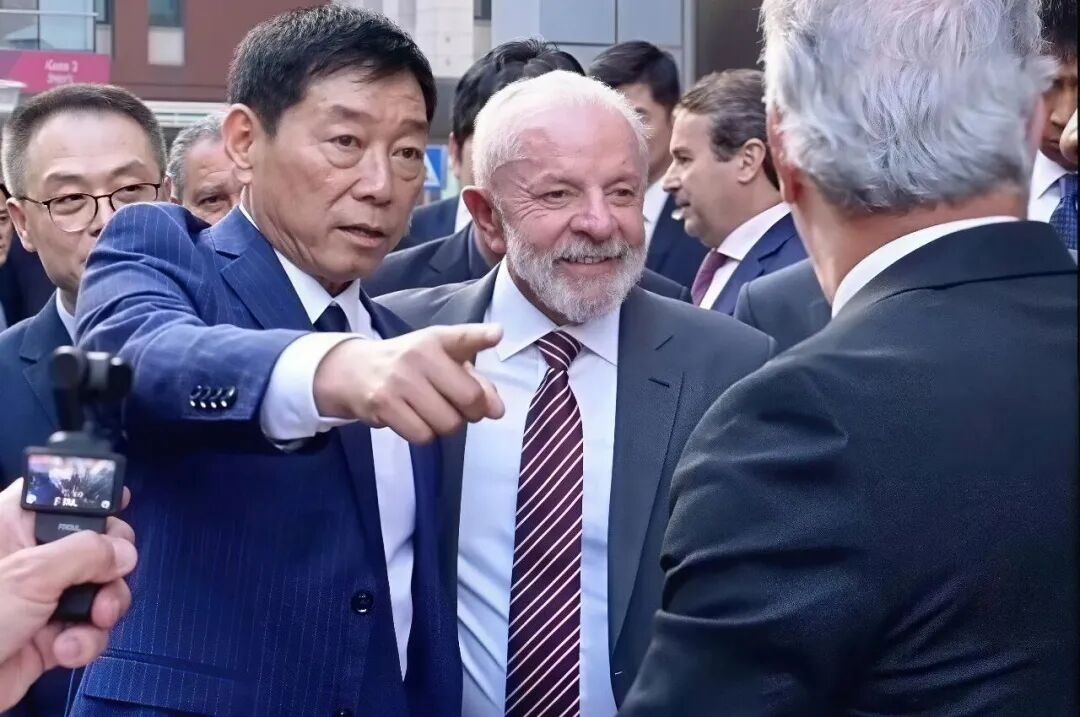
Lula has been waiting for Chinese automakers.
Original by Auto Pixel (ID:autopix)
On October 25, Lula was elected President of Brazil for the fourth time.
He defeated Flávio Bolsonaro with 51.79% of the valid votes, reversing the deficit from the first round. For Chinese automakers investing in Brazil, this means a president who actively promotes local manufacturing and frequently attends the openings of automotive projects will remain in office.
Over the past year, tracing Lula's public schedule of automotive factory events reveals a meaningful series of handovers. Great Wall opened a factory bought from Mercedes-Benz, BYD began production at the Camaçari industrial base left by Ford, and Changan launched a new production line with the help of Brazilian local company CAOA. Lula was on the podium at all of them.
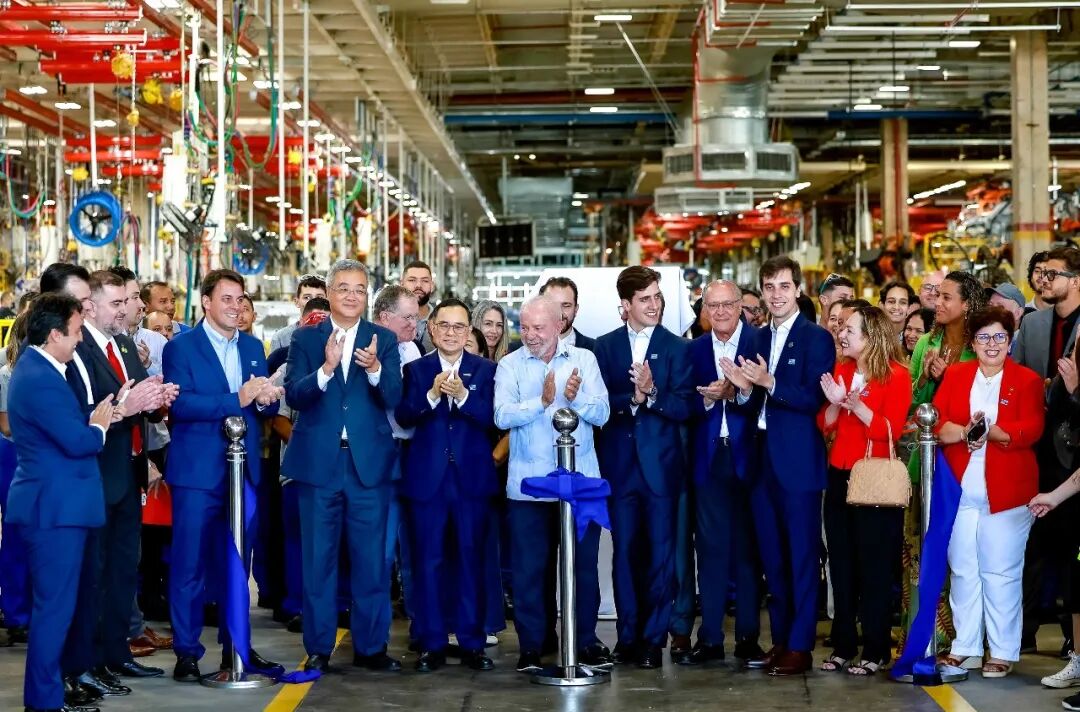 ▍Lula attends the production launch of Changan's Brazilian partner factory
The state of Bahia even passed legislation to rename "Avenida Henry Ford" in Camaçari as "Avenida BYD." In 2021, Ford ended a century of manufacturing operations in Brazil. Four years later, BYD is building a new plant at the industrial base Ford left behind, starting new production.
Lula regards these investments as proof of Brazil's reindustrialization. For him, automobiles are also tied to another chapter of history. More than forty years ago, it was the automobile factories in southern São Paulo that turned a descendant of migrants from the Northeast into a union leader, and then propelled him onto the national political stage.
In this election campaign, in his political hometown of the ABC region, he first faced a sharp narrowing of his advantage, then widened his lead again in the runoff. The new investment brought by Chinese automakers can become his governing achievement. To turn achievements into support, he still needs to win over workers whose way of life has changed.
What Chinese automobiles are entering is a market of nearly three million vehicles, and also seventy years of Brazil's industry and politics. Only by understanding this history can one understand why Brazil treats automobiles as a major matter.
01 Factories Made Lula
In 1952, seven-year-old Lula left northeastern Brazil with his mother. They rode in the back of a truck for thirteen days to reach the state of São Paulo.
In those years, large numbers of Northeastern families were migrating to the Southeast. São Paulo was industrializing and needed labor, but Brazil lacked the foreign exchange needed to buy machinery, technology, and oil. Exports of agricultural products such as coffee, cotton, and sugar could hardly support the growing demand for imports.
In 1956, President Juscelino Kubitschek proposed a deal. Offer the Brazilian market to multinational automakers, requiring them to move production in. A subsequent special decree set year-by-year localization schedules for different vehicle models. For passenger cars, for example, the government required that by July 1960, the localization rate calculated by vehicle weight reach 95%.
Foreign companies brought capital, and Brazil reduced its dependence on imported vehicles and parts through local production. An automobile is also linked to steel, glass, rubber, and machining, and can drive a group of suppliers. The automotive industry thus became an important tool for Brazil's industrialization.
This industrialization model also left a problem that continues to this day. Brazilian engineers developed models such as the Volkswagen Gol and accumulated strong capabilities in technologies such as ethanol and flex fuel. But decisions on global platforms, major investments, and a considerable portion of cutting-edge technology remain in the hands of multinational headquarters.
Although this approach did not allow core automotive technology and talent to take root locally in Brazil, as investment spread, it rapidly transformed southern São Paulo. The ABC region consists of seven cities in the southern part of the São Paulo metropolitan area, and São Bernardo is its automotive industry center. In 1960, it had only more than 80,000 people; twenty years later, it had more than 420,000. Factories spread along the Anchieta Highway, migrants entered the factories, learned to operate machine tools, and obtained formal labor contracts.
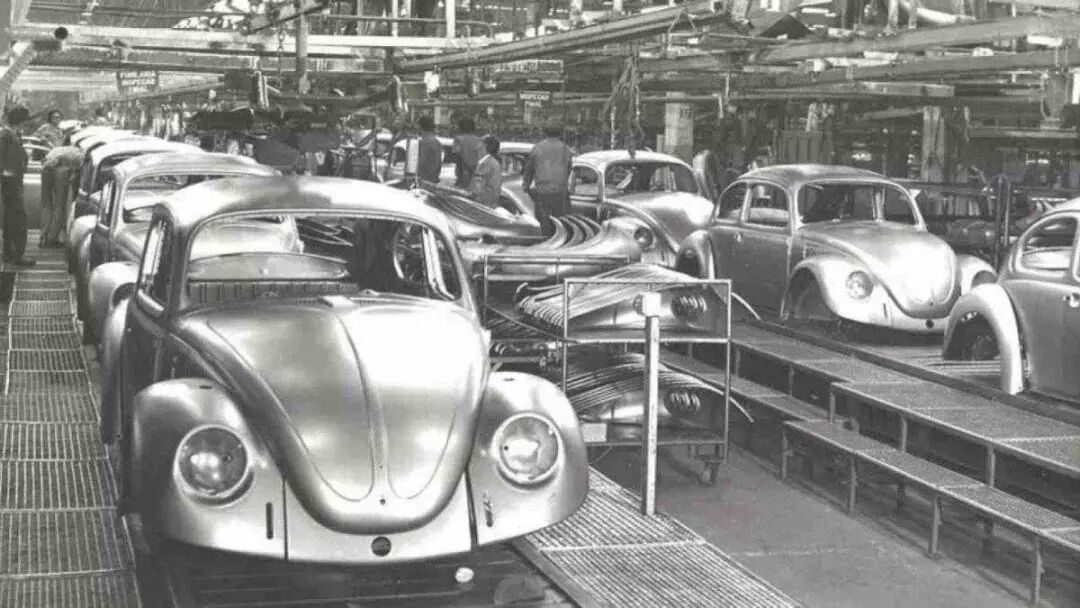 ▍Volkswagen Brazil Beetle factory
Lula also took this path. He worked as a shoeshine boy and warehouse helper, later learned to be a lathe operator, and entered a metal factory. In 1975, he was elected president of the Metalworkers' Union of São Bernardo and Diadema.
The automotive industry gave workers a path to rising income and also placed them in similar lives. Tens of thousands of people changed shifts at the same factory gate, lived in nearby communities, and faced similar wages and working conditions. Personal experiences easily found resonance in the collective and became shared demands.
Brazil's military government soon encountered this force.
In 1977, the official underreporting of inflation was exposed. At the time, wage adjustments were linked to the official price index; if inflation was underreported, wage compensation was also reduced. The union statistics agency DIEESE estimated that cumulative wage losses from 1973 to 1974 reached 34.1%. Lula's union thus launched a campaign for retroactive compensation.
In May 1978, Scania workers in São Bernardo began a strike, and workers at Volkswagen, Ford, and Mercedes-Benz followed. By 1979, about 170,000 metalworkers in the ABC region were participating in strikes, and stadiums became their meeting places.
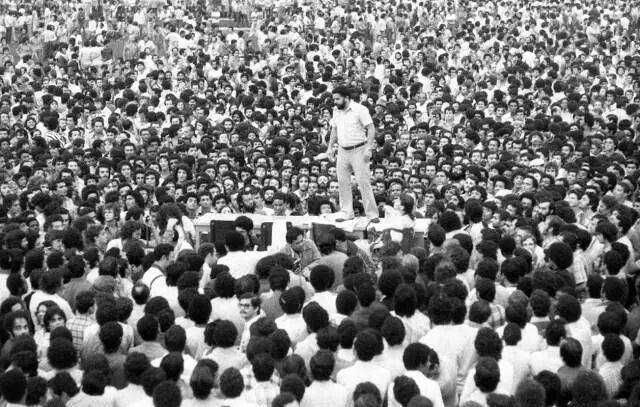
At a major rally in March 1979, tens of thousands of workers poured into the Vila Euclides Stadium. There was no stage and not enough amplification equipment, so Lula stood on a temporarily brought-in table, and the front rows relayed his words layer by layer to the back. A local union leader thus became a nationally watched figure.
The military government took over the union in 1979. In February 1980, Lula, together with union figures, intellectuals, and social activists, founded the Workers' Party. Two months later, the government intervened in the union again, and he was arrested.
Large factories created growth and also gave workers the ability to stop production. The unions organized them, and the Workers' Party brought this collective action into national politics.
The automotive industry helped make Lula.
02 The Rise and Fall of an Automotive Giant
In 1980, when Lula founded the Workers' Party, Brazil's automotive industry still had a huge scale of production, but the financing model that supported rapid industrialization was already unsustainable.
In the 1970s, the military government borrowed heavily in US dollars to build steel, petrochemical, and energy projects, and many of these debts used floating rates. After 1979, the United States sharply raised interest rates to suppress inflation, and Brazil's debt burden rose rapidly. In 1982, Mexico erupted into a debt crisis, international banks tightened lending to Latin America, and the method of maintaining investment by borrowing new debt could no longer continue.
Brazil fell into a severe recession from 1981 to 1983. The government and enterprises cut investment, and industrial employment shrank. The military government stepped down in 1985, but debt and hyperinflation continued to affect subsequent governments.
The automotive industry did not decline all the way after that. In the 1990s, market opening, corporate restructuring, and local government investment promotion brought another round of investment. But both production methods and geographical distribution changed.
Automation reduced direct employment, and outsourcing moved some workers out of the automakers' contract system. New factories were dispersed to the interior of São Paulo and other states. The Iracema Polis factory later taken over by Great Wall is in the interior of São Paulo State; Camaçari, where BYD is located, is far away in Bahia State in the Northeast.
The ABC region remains important in the automotive industry map, but the originally huge worker community has gradually dispersed.
Lula was also changing. In 1989, 1994, and 1998, he failed in three consecutive presidential campaigns. By his fourth run in 2002, he promised the business community fiscal discipline and economic stability, and finally won the election.
His first two terms coincided with a commodity boom, with minimum wages rising, credit expanding, and large numbers of low-income families entering the consumer market. Automobiles became one of the most visible beneficiaries of this round of growth.
In 2003, Brazil's annual vehicle production was still less than two million. In 2013, output rose to about 3.74 million, setting a historical record. Multinational automakers expanded factories across the country, and Brazil had the most complete automotive industrial system in South America.
Three years later, output was only just over two million, a decline of more than 40% from the peak.
Commodity prices weakened, domestic investment and consumption lost momentum, and fiscal problems, credit tightening, and political crisis reinforced one another. In 2015 and 2016, Brazil fell into deep recession for two consecutive years. Production lines once prepared for growth became idle capacity.
In 2020, Mercedes-Benz announced the closure of its passenger car factory in Iracema Polis. The plant had been in operation for less than five years and could no longer sustain itself.
A few weeks later, in January 2021, Ford announced the end of local production in Brazil. The union received notice from company executives, and workers later gathered at the factory gate, but it was already difficult to change the decision from multinational headquarters.
Ford attributed the withdrawal to long-term weak demand, losses, and the impact of the pandemic, and the company was also restructuring its global business. Volkswagen, General Motors, Toyota, and other companies still produce in Brazil, and the country remains an important global automotive manufacturing nation.
What changed more visibly was the situation of workers. From 2012 to 2021, the ABC region lost nearly 60,000 industrial jobs. Factories once brought people together, while layoffs, outsourcing, and production relocation dispersed many into different jobs.
03 Chinese New Energy Has Arrived
In August 2021, Great Wall bought Mercedes-Benz's Iracema Polis factory. On October 27, 2022, the Bahia state government and BYD signed an investment intention letter. Three days later, Lula won that year's presidential election.
Chinese automakers entered Brazil with their own overseas strategies and with years of investment promotion by local governments. After Lula returned to power in 2023, he provided more active federal industrial policy for these projects and incorporated them into Brazil's "green reindustrialization" plan.
Brazil already knows how to build fuel vehicles and has fairly mature engineering talent and a parts base. In the face of new fields such as power batteries, electric drives, and automotive software, it hopes to keep the next round of manufacturing and R&D in the country as well. Otherwise, the huge automotive market will still exist, but changes in technology and supply chains may continue to bypass Brazil.
Seventy years ago, automobiles drove traditional industries such as steel, rubber, and machining. Today, Brazil hopes to use new energy vehicle investment to expand industries such as batteries, electronics, and low-carbon technology, and automobiles have once again become an important tool for it to promote industrial development.
The MOVER program launched in 2024 provides incentives for activities such as local R&D, efficiency improvement, and low-carbon technology. From 2024 to 2028, the program arranges a total of 19.3 billion reais in financial credits. For automakers to obtain preferences, they need to meet corresponding R&D investment and technical requirements.
Brazil is also gradually restoring import tariffs on electric vehicles and hybrid vehicles and adjusting tax rates on imported knocked-down parts. The cost gap between imported complete vehicles and expanded local manufacturing has thus changed.
For Chinese automakers, Brazil is likewise attractive. It is the largest single automotive market in Latin America, with ready suppliers, ports, and technical talent. Chinese companies need overseas growth, while market barriers in the United States and Europe are rising, so Brazil has become an important production and sales destination.
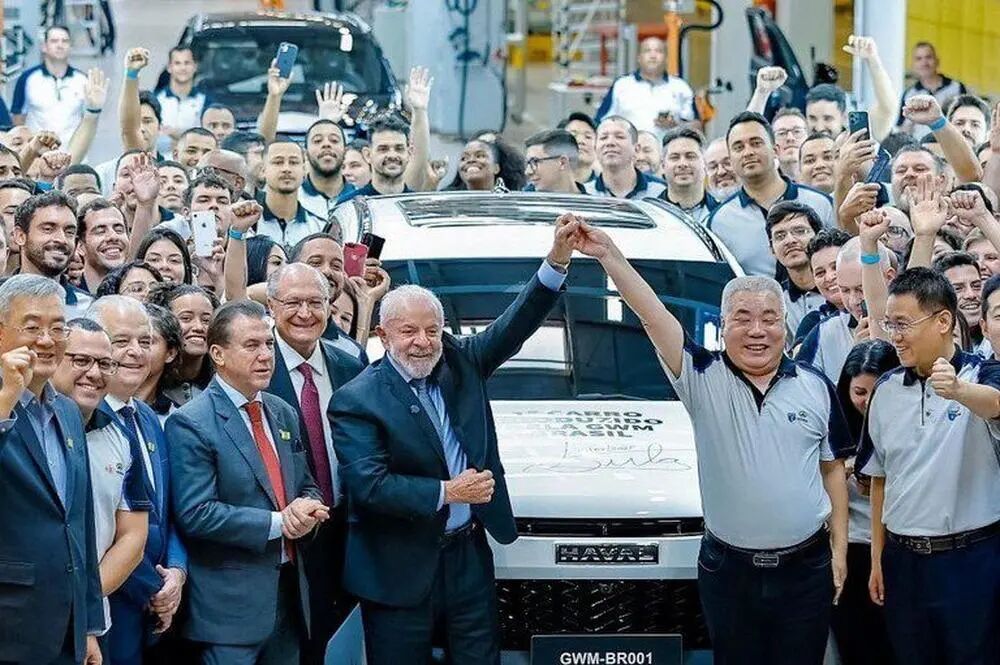 ▍Lula at the Great Wall Haval factory
Their entry methods also differ. Great Wall acquired and renovated Mercedes-Benz's old plant, BYD built a new vehicle factory at the industrial base left by Ford and incorporated old buildings into supplier planning, and Changan used CAOA's existing factory, with Brazilian partners investing capital while it provided models, authorization, and technology. Geely and Leapmotor cooperate with the systems of Renault and Stellantis, respectively.
What Chinese automobiles are entering is an industrial network with decades of history. Buying factory sites, relying on local partners, and building supply chains each have different costs and conditions.
Lula is very willing to publicly showcase this change. In August 2025, he attended the opening of Great Wall's factory, and two months later he came to BYD. In March 2026, the CAOA Changan production line was launched, and he was present again. He can stand in these factories and tell Brazilians that industrial policy is bringing investment and jobs.
By early 2026, announced investment plans in Brazil's automobile and parts industry had totaled about 190 billion reais. This figure covers the entire industry and includes new investment by traditional multinational automakers. The Brazilian automakers association expects new vehicle sales in 2026 to exceed three million for the first time in twelve years.
Chinese companies gain the market, and Brazil gains new investment and products. The next difference lies in how deeply local production can go. Knock-down assembly, complete manufacturing, and local R&D leave different opportunities for suppliers and engineering teams.
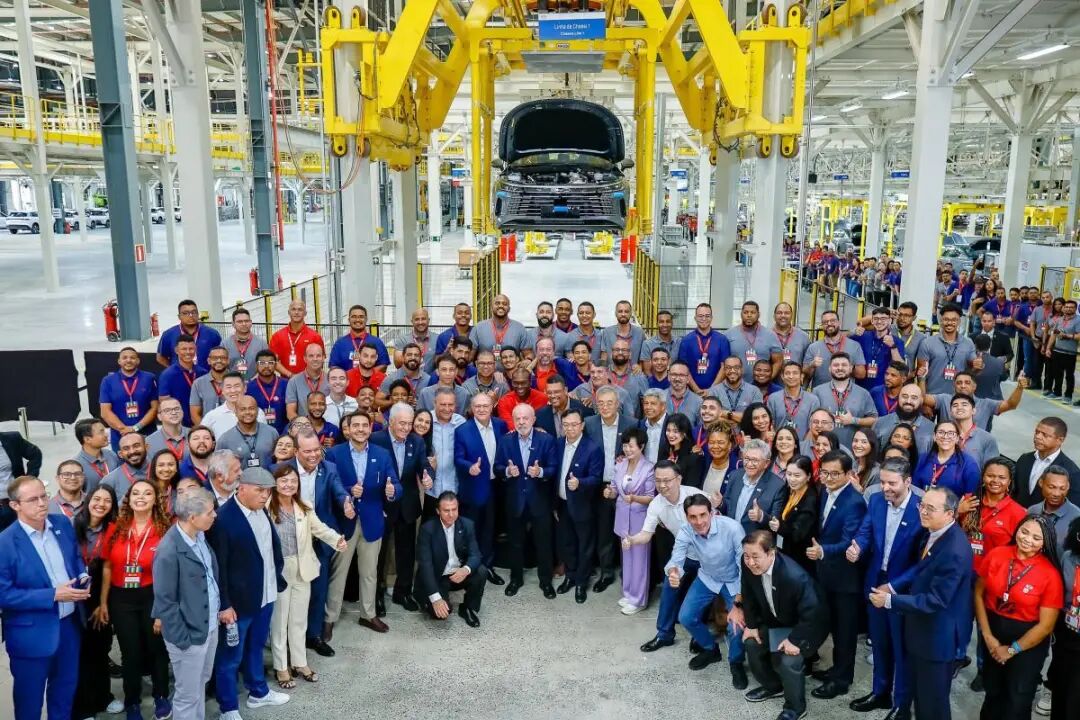 ▍Lula at the BYD factory
BYD is going through this process. A BYD Brazil executive said at the end of October that cumulative investment in the Camaçari project had reached about 11.3 billion reais, almost twice the initially announced amount. Welding and painting processes are entering testing, and the company plans to gradually move toward more complete manufacturing, targeting about 50% local content by early 2027.
BYD also said the park has brought about 9,000 direct jobs. Chinese automakers are indeed creating a new group of industrial workers. The question is whether these factories, distributed across different states and adopting new production methods, can hardly re-form the concentrated labor society of the ABC region in those years.
Lula can use factory openings as governing achievements, but he cannot thereby determine how workers will vote. The link between the automotive industry and politics has already changed.
04 The factory era that cannot be returned to
In August 2026, Lula put his campaign launch event at the May 1 Stadium in São Bernardo. This stadium, also known as Vila Euclides, witnessed him rising to national prominence from 1979 to 1980.
There were about 20,000 supporters on site. More than forty years ago, Lula became a labor leader here; today, he returned to the stands with the governing record of his presidency, once again seeking the support of workers.
The first-round vote offered a more concrete warning. Across the greater ABC region, Lula led Flávio by about 14,000 votes. In the first round of 2022, his advantage here exceeded 120,000 votes. On October 9, the Workers' Party and the Metalworkers' Union returned to the gates of the Volkswagen plant, seizing the shift change to drum up support for him.
By the second round, the situation had changed again. Lula won 53.46% of the valid votes in the greater ABC region, leading by about 113,000 votes—a larger margin than the roughly 64,000-vote advantage he had in the 2022 runoff. This former industrial powerhouse remains a key stronghold for him.
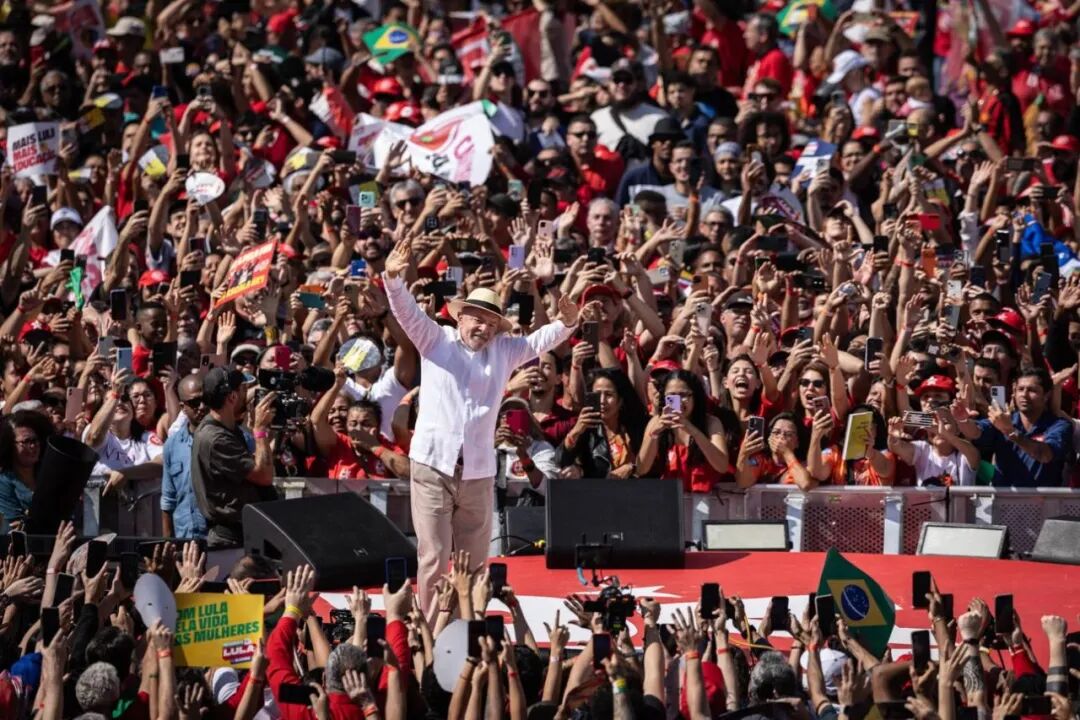 ▍Lula returns to the May 1st Stadium
From the first-round setback to the runoff mobilization, the Workers' Party won back support. That support must be built in every campaign. For a party that began in the trade unions, the workers it must understand today have long since extended far beyond the large factories of the past.
Reuters once interviewed a 27-year-old delivery rider named Daran in São Bernardo. His father worked in a factory and had long supported Lula. Daran himself had also done formal work, earning about 3,000 reais a month, before switching to food delivery. He estimates that after deducting motorcycle costs, he still has 5,500 reais left each month, far more than he earned working in a factory.
This is Daran's personal income calculation, enough to explain why he left formal work, but it cannot represent all riders. His father's job was tied to the factory gate, the union, and a formal contract; Daran faces a dispatch app every day, and he has not inherited his father's identification with Lula.
Brazilian Institute of Geography and Statistics data for 2025 shows that the number of people working through digital platforms has approached two million. Meanwhile, the union membership rate among employed people nationwide fell from 15.7% in 2014 to 8.8% in 2025.
Workers have not disappeared, but the way they work together has changed. A factory can gather thousands of people at shift change, while platform workers are scattered across roads, vehicles, and mobile apps. Many hope for protection against injury and illness and for income security, while also wanting to keep the freedom to accept orders on their own terms. Traditional union politics must again understand this way of life.
Changes in industrial jobs alone cannot explain an election, nor can regional vote totals prove that auto workers collectively shifted. Prices, public security, religion, and governing performance also influence choices. Political identity needs to be rebuilt around these concrete realities of life; a few automobile factories are no longer enough to represent the entire laboring society.
Lula is adjusting too. During the campaign, he signed the Move Brasil-related law, providing financing support for ride-hailing drivers, taxi drivers, and delivery riders to buy cars or motorcycles. When he was young, he organized the people who built cars; today, he also has to win over the people who make a living by using cars to take orders.
Reelection gives Lula time to continue promoting industrial policy. For Chinese automakers, the Brazilian government's demand that investment bring local jobs and technology will not disappear once the election ends.
Lula has won a new term, and Brazil's welcoming attitude toward Chinese automakers will remain stable for a few more years.
But over a longer cycle, for companies operating here, beyond winning consumers, they also need to grow together with local suppliers and handle wage negotiations and labor relations well. All of this will affect whether a factory can ultimately integrate into local society over the long term.
Half a century ago, Brazil's automobile factories produced Lula. Today, Lula has again invited Chinese automakers into those industrial bases that once belonged to Ford and Mercedes-Benz, hoping to use the spillover of China's new energy vehicle industry to drive Brazil's industrialization once again.
Factories can restart, and production lines can be updated. But the Brazil that was once shaped by the automobile industry can never go back.
This article is original content by Autopix.
Unauthorized reproduction is prohibited.
-
![]()
This "Silver October" New Energy Report Card Is Most Striking for Its "Zero, Xiao, Xiao" Polarization
-
![]()
AITO's First Real Test: Can the New M8 Carry Seres on Its Own?
-
![]()
Huawei Wins Audi A8 Deal — Why That Matters More Than Launching Another "Jie" Brand
-
![]()
The Most Aggressive Investor, Mediocre Returns: Has Amazon Become a Worker for Nvidia?
-
![]()
Explained: Anthropic's Prospectus — and What It Means for the Auto Industry and Us Workers
-
![]()
[Xauto Smart Driving Rankings] Xiaomi SU7 N70 HyperOS 1.18.3 Urban Evaluation Report
-
Why AI Short Dramas Have Exploded in Popularity
-
Japanese Big Four See Sales Drop in China in First 10 Months; Are Toyota and Honda Hybrids Still Worth Buying in the Cold North?