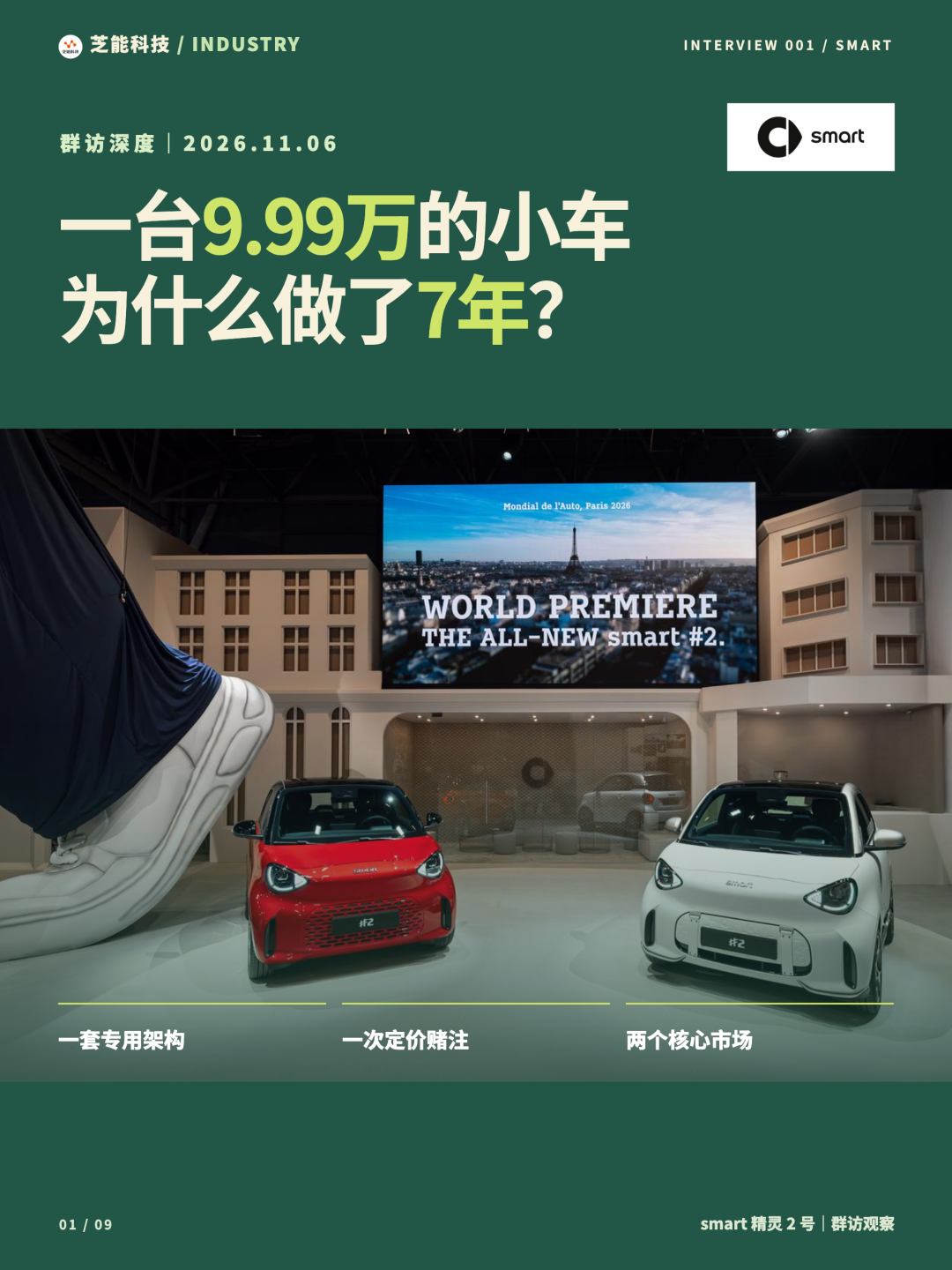
Why Did It Take smart Seven Years to Perfect a Small Car Priced at 99,900 Yuan?
 11/09 2026
 436
Produced by Zhineng Technology
On November 5, the all-new smart Elf No.2 was launched. The Premium Luxury Edition carries a guide price of 102,900 yuan and a limited-time benefit price of 99,900 yuan.
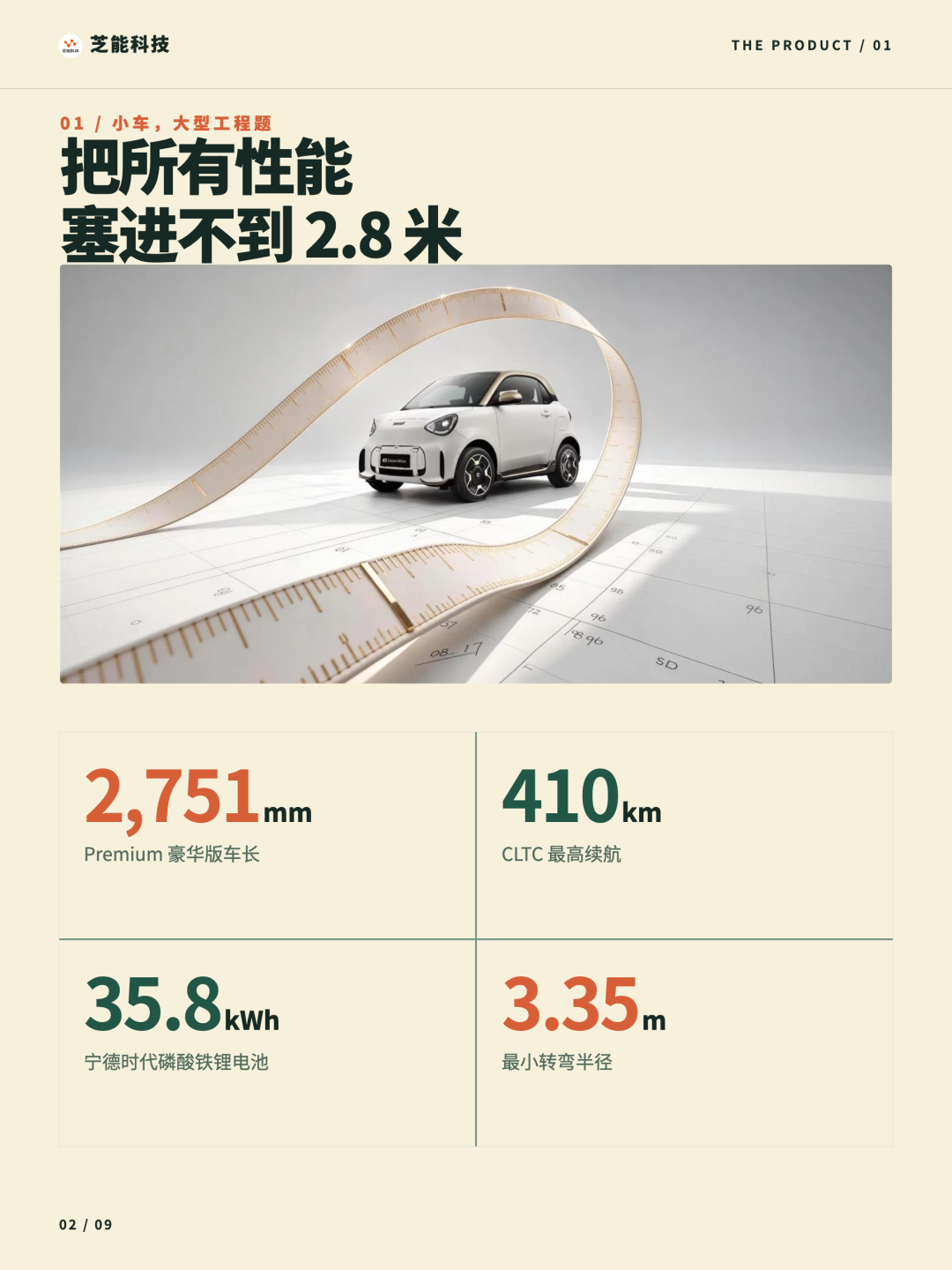
The car measures 2.751 meters in length, packs a 35.8 kWh battery, delivers a CLTC range of 410 kilometers, and features rear-wheel drive, a rear five-link suspension, and the ECA electric compact architecture.
Details disclosed in a group interview: development took roughly seven years, with repeated project adjustments driven by surging lithium carbonate prices and shifts in overseas markets; to prevent the suspension from encroaching on battery space, the team abandoned the lower-cost torsion beam and three-link setups; and to broaden appeal, pricing was pushed below 100,000 yuan.
Tong Xiangbei, CEO of smart Global, addressed the technical choices; CMO Kang Yi discussed the differing purchase motivations of users in Europe and China; and marketing management stated bluntly that at the current price, the project still needs scale to support profitability.
Orders exceeded 2,000 within minutes of the price announcement.
01 A Small Car Cannot Satisfy Every Wish—and smart Ultimately Chose the Most Expensive Solution
A large car can extend range simply by adding more battery; a two-seat small car enjoys no such freedom.
The Elf No.2 is 2,751 mm long, has a wheelbase of 1,875 mm, and carries a 35.8 kWh battery. The safety crumple zone, passenger cabin, rear-mounted motor, and suspension are all competing for the same dimensions.
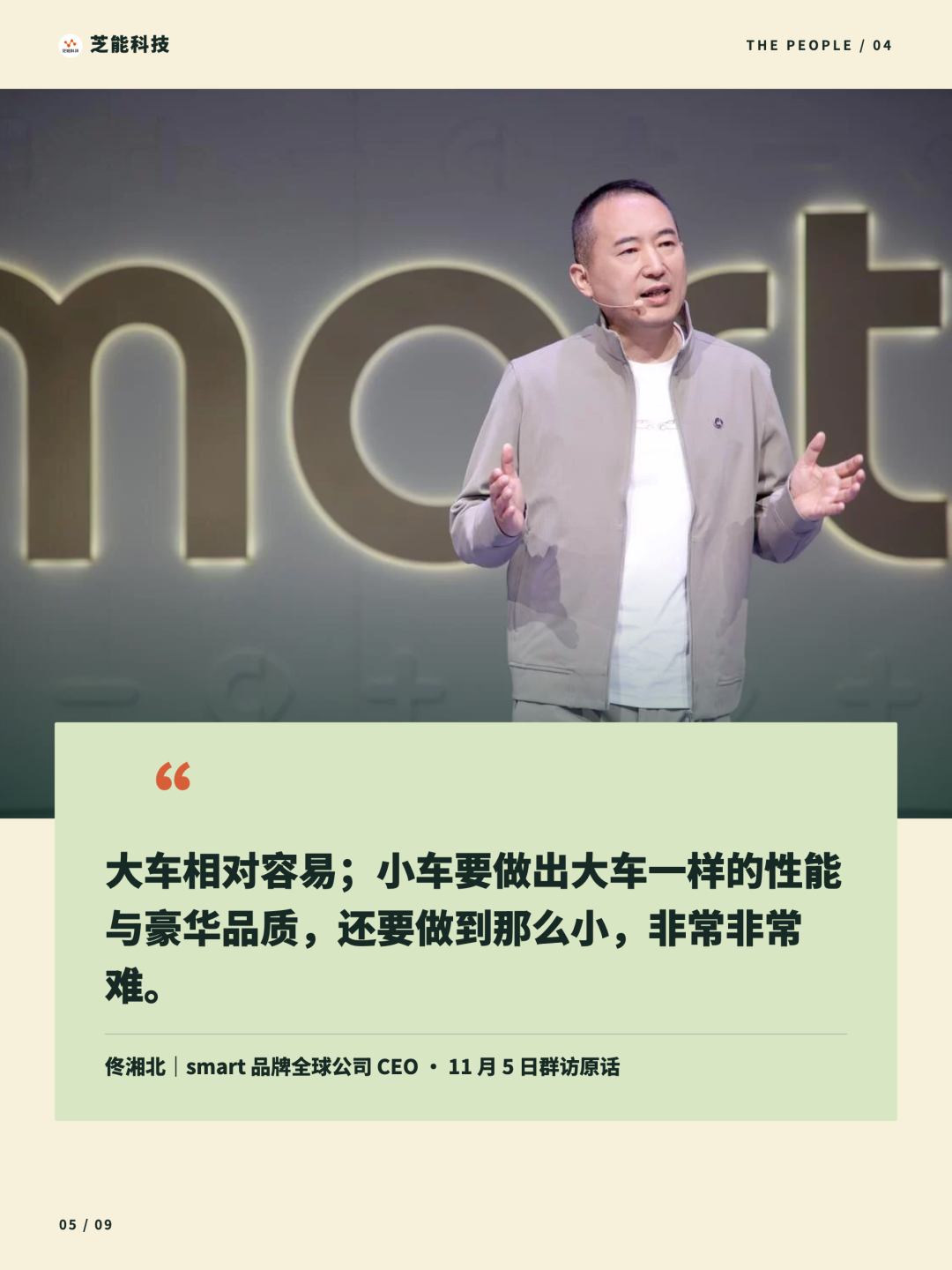
Tong Xiangbei offered the suspension as an example.
The team initially hoped to use the more cost-effective torsion beam, but its dynamic performance fell short of the target;
after switching to a three-link setup, a relatively long longitudinal link extended forward, occupying the battery layout area and forcing the battery pack into a trapezoidal shape. Retaining the three-link solution would have meant sacrificing usable battery capacity and range.
Ultimately, they moved to the structurally more complex and more expensive rear five-link setup: each of the five links is shorter and can be rearranged within the axial space, leaving a more complete layout area for the battery.
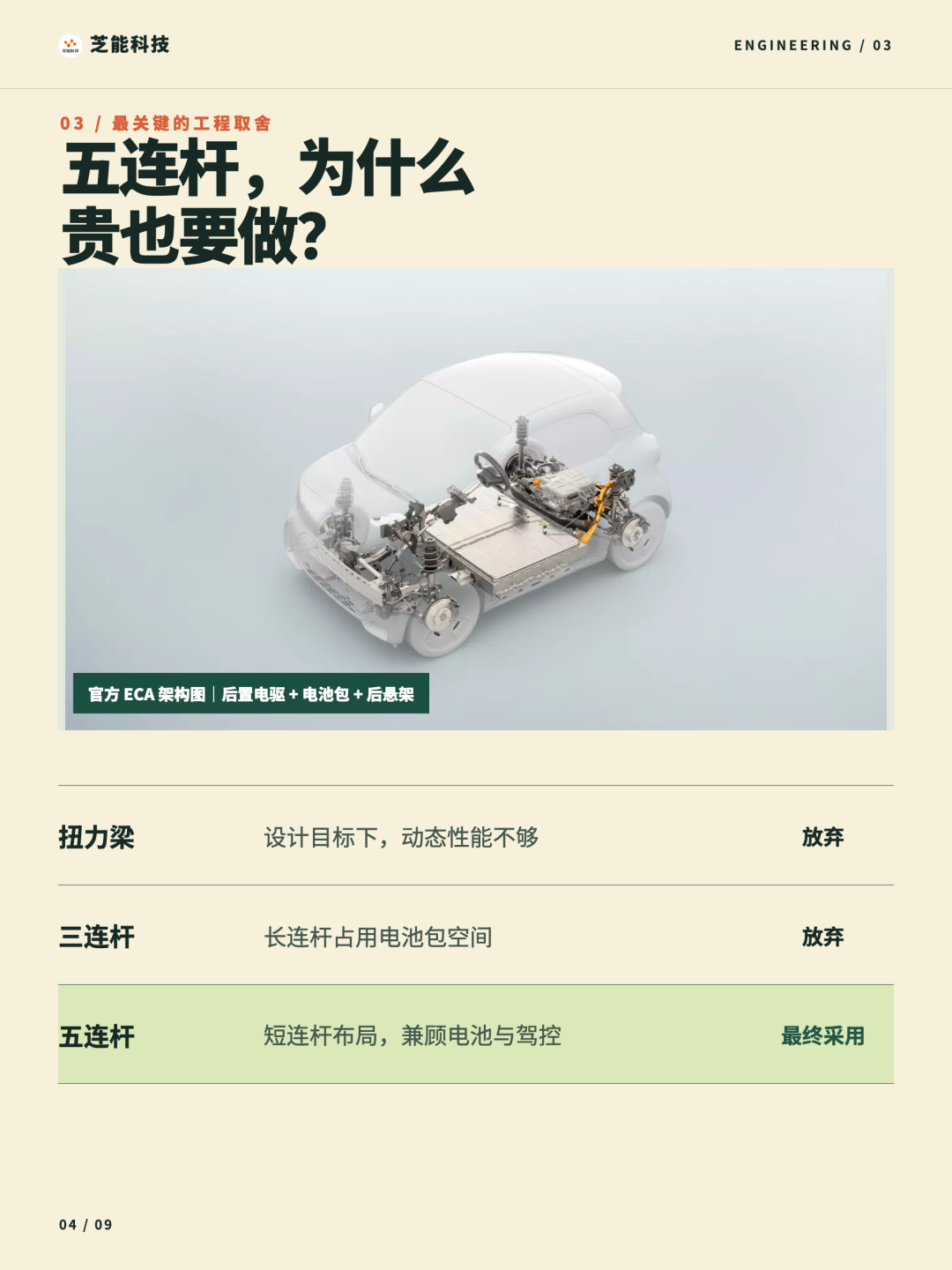
The core issue of the chassis is whether the suspension and battery pack can coexist. In a body of less than three meters, the position of every link affects the battery and rear-impact protection. smart increased component costs in exchange for a layout compatible with both range and driving control.
The production car adopts the ECA dedicated architecture, an 11-in-1 integrated electric drive, rear-mounted rear-wheel drive, a 60 kW motor, a CLTC range of 410 kilometers, and a turning radius of 3.35 meters. High-strength steel accounts for more than 78%, and the body-in-white torsional stiffness is 39,000 Nm/deg.
Why not simply use an existing platform?
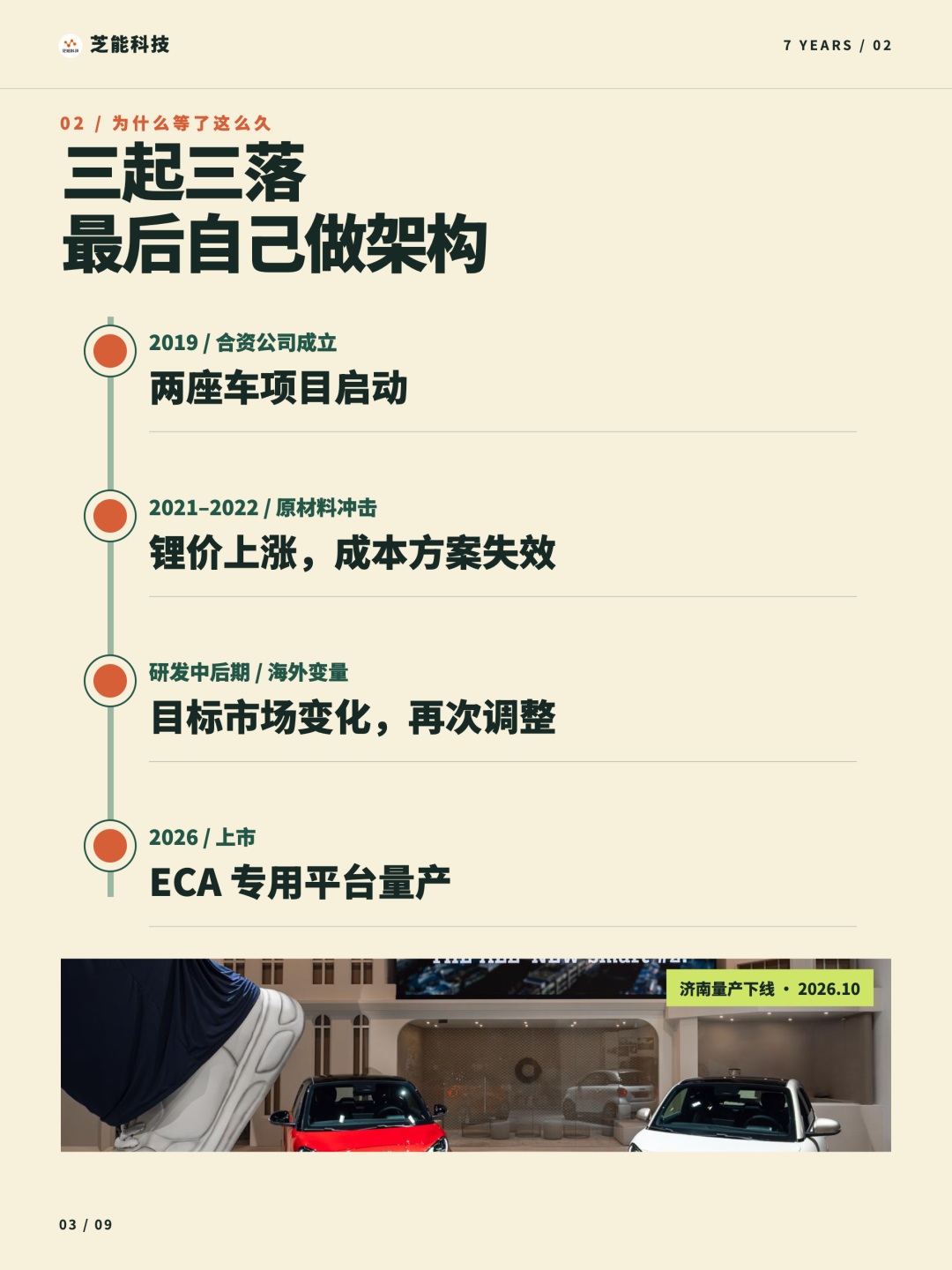
Tong Xiangbei cited two major disruptions: from late 2021 to early 2022, lithium carbonate prices surged from about 80,000 yuan per ton to more than 600,000 yuan per ton, upending the cost plan; later, changes in the international market affected a market on which the project had originally relied heavily.
The solution was to develop a dedicated pure electric architecture in-house—although an existing platform saves upfront R&D, its layout boundaries are already fixed.
Assisted driving was also a trade-off.
Tong Xiangbei recalled the two screens during product definition: on the left were the four-wheels-at-the-corners layout, split tailgate, and driving experience that must be inherited from fortwo; on the right were contemporary technologies such as advanced intelligent driving, 800V, air suspension, and large screens—which were then screened one by one.
In the end, priority was given to automatic parking, remote parking, and custom parking spaces, corresponding to novice drivers and narrow parking scenarios.
There is no clear version or timetable for higher-level driving assistance.
02 Behind the 99,900 Yuan Price, smart Must Answer Two Questions at Once: China and Europe
Europe is easier to understand.
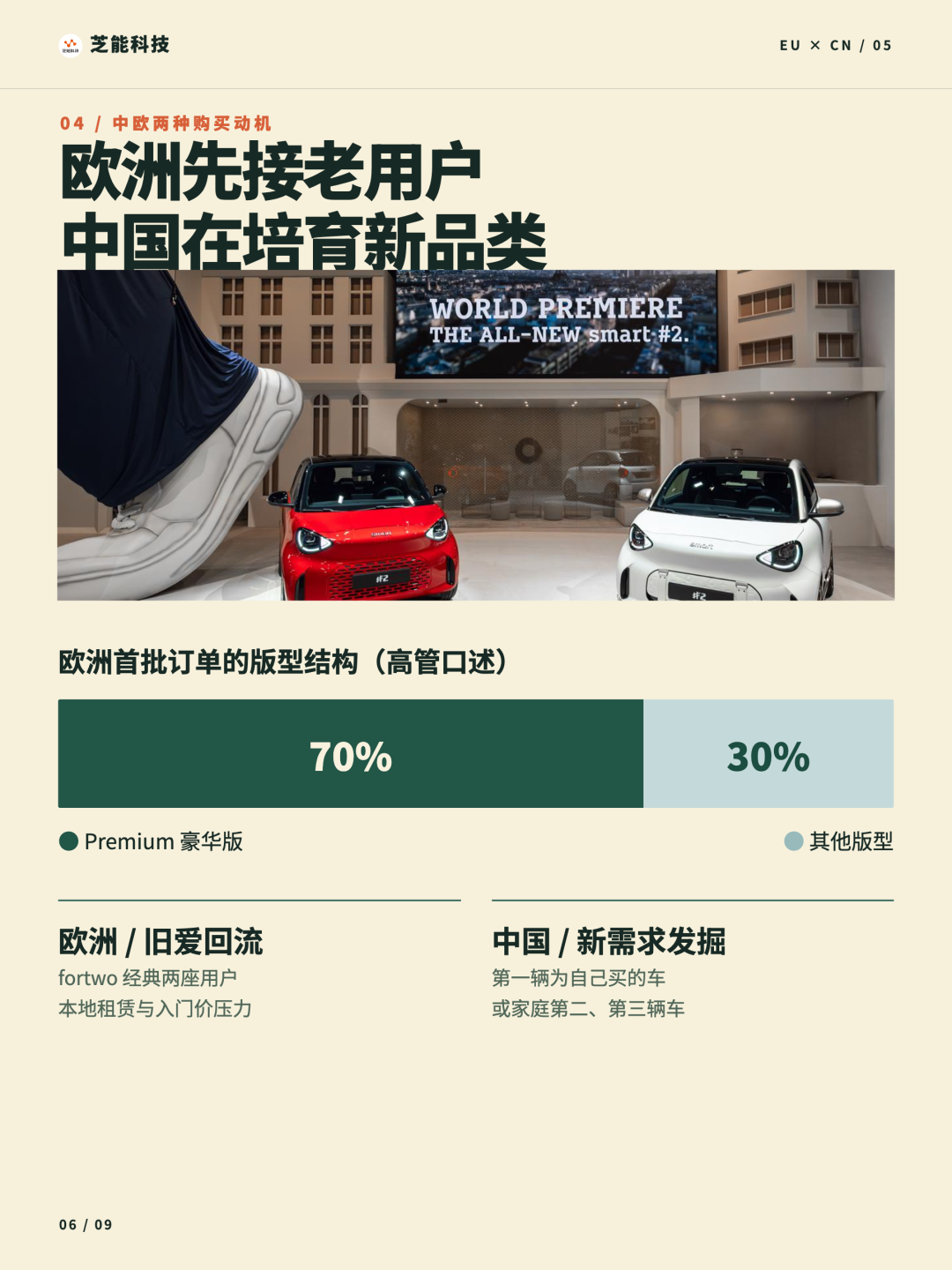
Over the past 28 years, fortwo has cumulatively sold more than 2 million units globally, with a large existing user base in Paris, Rome, and Berlin.
Kang Yi judged that Europe's potential may be greater than China's, and said that about 70% of the first batch of European orders after the Paris debut chose the Premium Luxury Edition.
Europe also faces competition from low prices and low monthly rentals.
Within smart, there were disagreements over whether to offer a version below Premium: Tong Xiangbei leaned toward launching only the luxury edition globally, while the European team favored continuing the high-low configuration combination.
As a result, the main China version maintains a single luxury configuration, while Europe balances brand image and price entry at the same time.
The Chinese market is more difficult.
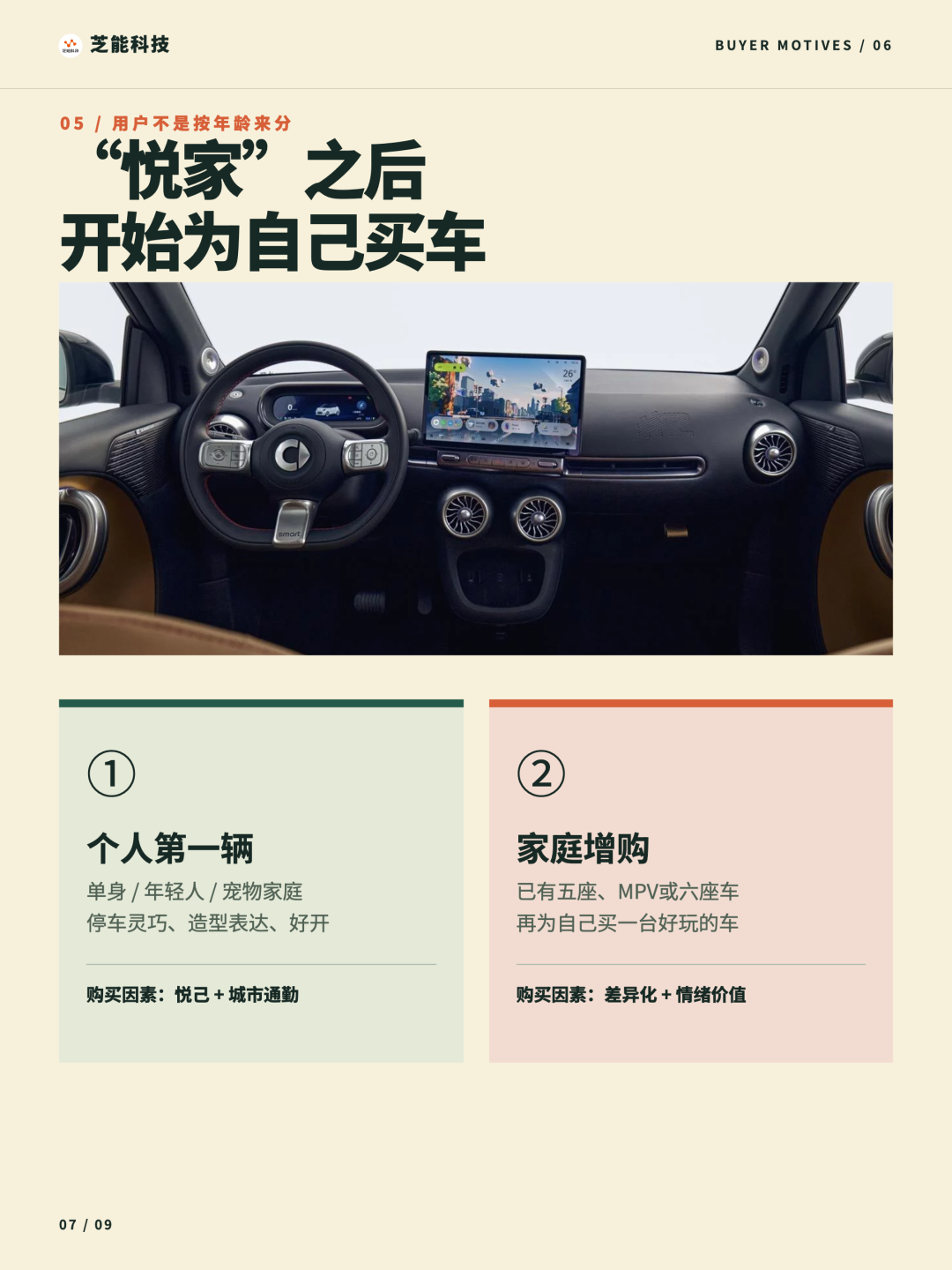
The first car often has to satisfy the whole family: five seats, space, long trips, and loading—and a two-door two-seat car struggles to compete on these metrics.
Tong Xiangbei observed that when a family already has a fully functional car, or when young people are more willing to pay for personal preferences, car-buying criteria begin to change.
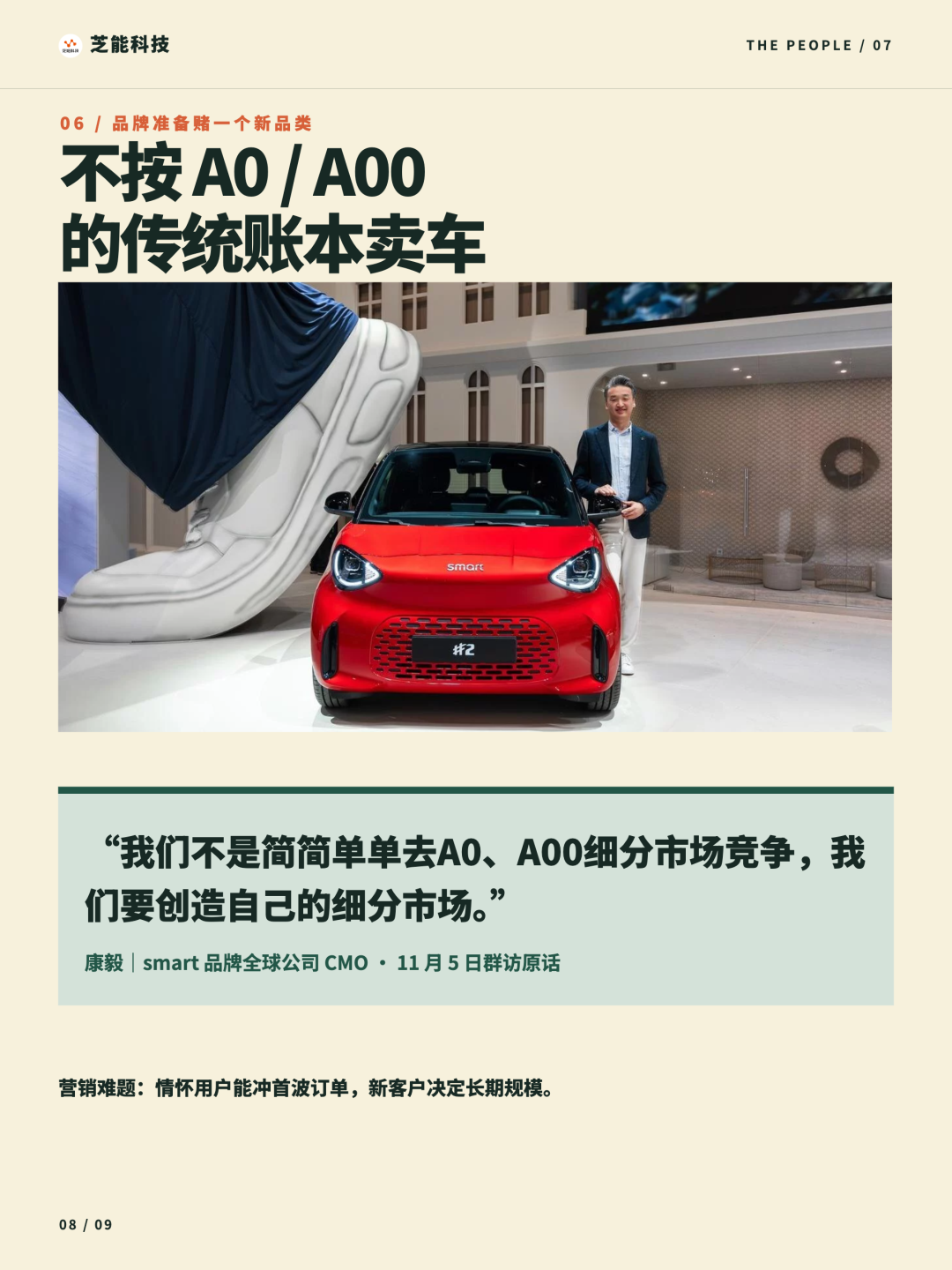
Chen Xiaofei summarized this as "pleasing oneself after pleasing the family."
The family's MPV or six-seat car handles family duties, and the individual then buys another car they like; single people, pet-owning families, or young people who have just graduated may also directly choose a two-seat car.
About 130,000 existing customers in China form the initial potential base.
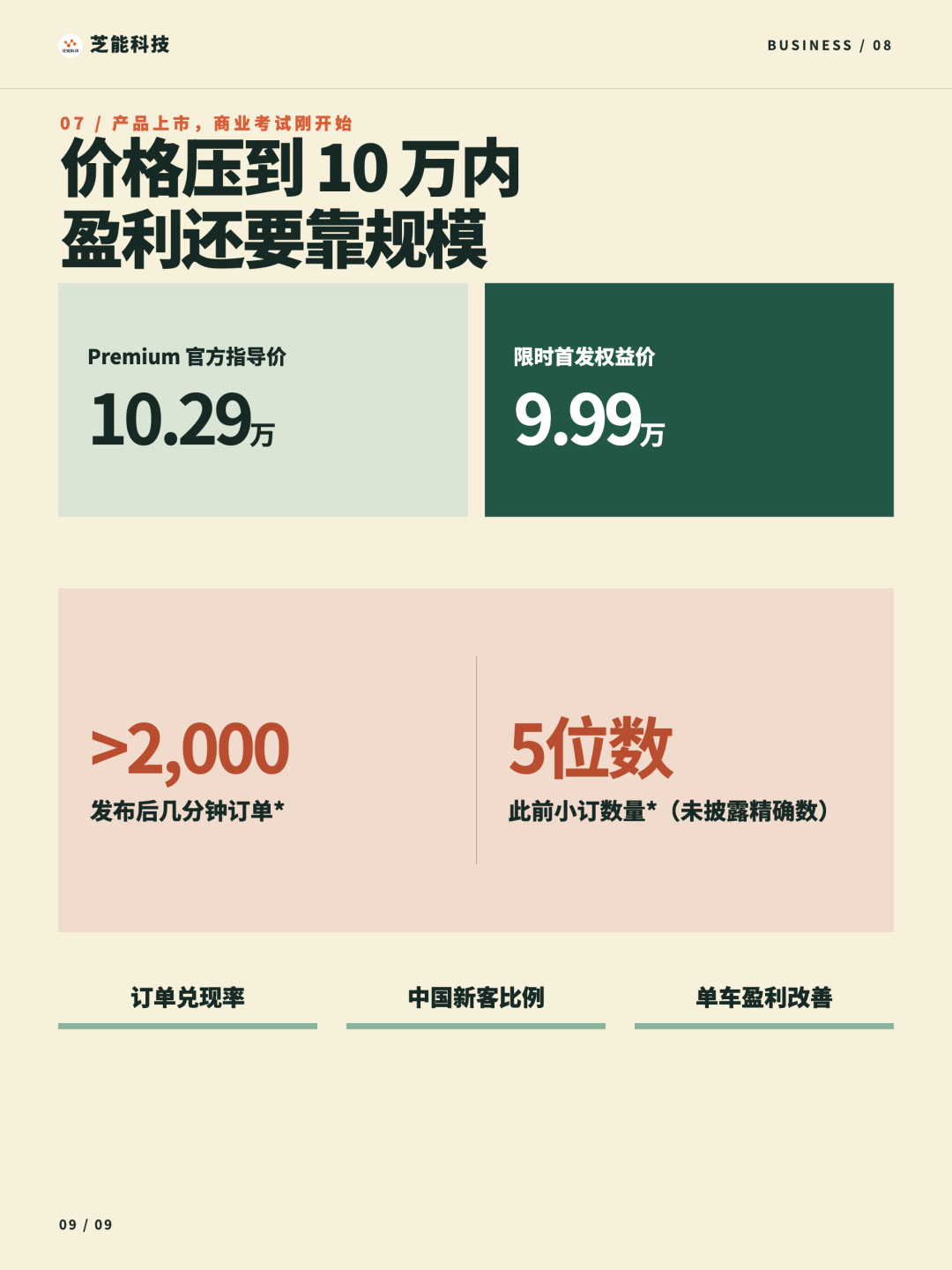
The sharpest issue is pricing.
The Premium Luxury Edition has a guide price of 102,900 yuan and a debut benefit price of 99,900 yuan, yet behind it are costs such as the dedicated architecture, rear five-link suspension, and Sennheiser audio. Kang Yi said profitability depends on scale; Chen Xiaofei relayed the CFO's judgment: at this price it is temporarily unprofitable, and only after scaling up will there be a chance.
Setting the price below the 100,000 yuan threshold helps win orders, but costs for materials, manufacturing, channels, and after-sales remain.
If sales are insufficient, the investment in the dedicated platform will be difficult to amortize; if the price is raised too high, the number of people willing to buy a two-seat car may decrease.
Conclusion
smart used a dedicated architecture to solve engineering challenges and a 99,900 yuan debut price to win users.
Next, watch three sets of data: how many of the initial orders are actually fulfilled after delivery; whether the proportion of new customers in China and the structure of European luxury edition orders can remain stable; and whether, after production ramp-up, the cost of the dedicated architecture can be gradually amortized by scale.
-
![]()
Valuation in the Hundreds of Billions, Revenue Just Over a Billion—Can Kling AI Carry Kuaishou's Second Growth Dream?
-
Alibaba Cloud Token Plan Boosts Quota by 70% Starting Today
-
![]()
Just the Facts, No Emotions—Has AI Actually Crashed or Not?
-
![]()
New Forces' Annual Targets in Jeopardy?
-
![]()
In 2026, Tencent Is Frantically Playing Catch-Up
-
![]()
Optical Brain-Computer Interface Paves the Way for Chip Integration! Huichuang Medical Makes Strategic Investment in Westlake Neuralicorn
-
![]()
First Three Quarters Non-Recurring Profit Jumps 116.94%! Why Is Wavelength Optoelectronics Betting Another 150 Million?
-
![]()
TV Distortion vs. Optical Distortion: How Exactly Do You Convert Between Them?