Halved! Europe Caps Chinese Plug-in Hybrid Imports at 350,000 Units, Dealing a Heavy Blow to BYD and Others
 11/25 2026
 417
Shortly after a Dutch court issued a temporary injunction banning the sale and production of BYD vehicles contracted there, the EU rolled out a new policy targeting plug-in hybrid vehicles exported to Europe.
On November 24, the European Commission released a preliminary ruling on global safeguard measures for hybrid vehicles, setting caps on hybrid vehicle imports from China, Japan, Turkey, the United Kingdom, and other countries. Under the ruling, the first-year cap is set at 350,000 units for China, 310,000 for Japan, 230,000 for Turkey, 190,000 for the United Kingdom, and 105,000 for South Korea. The measures will officially take effect on December 1 and will run for four years, with quotas increasing by 6% annually starting from the second year.
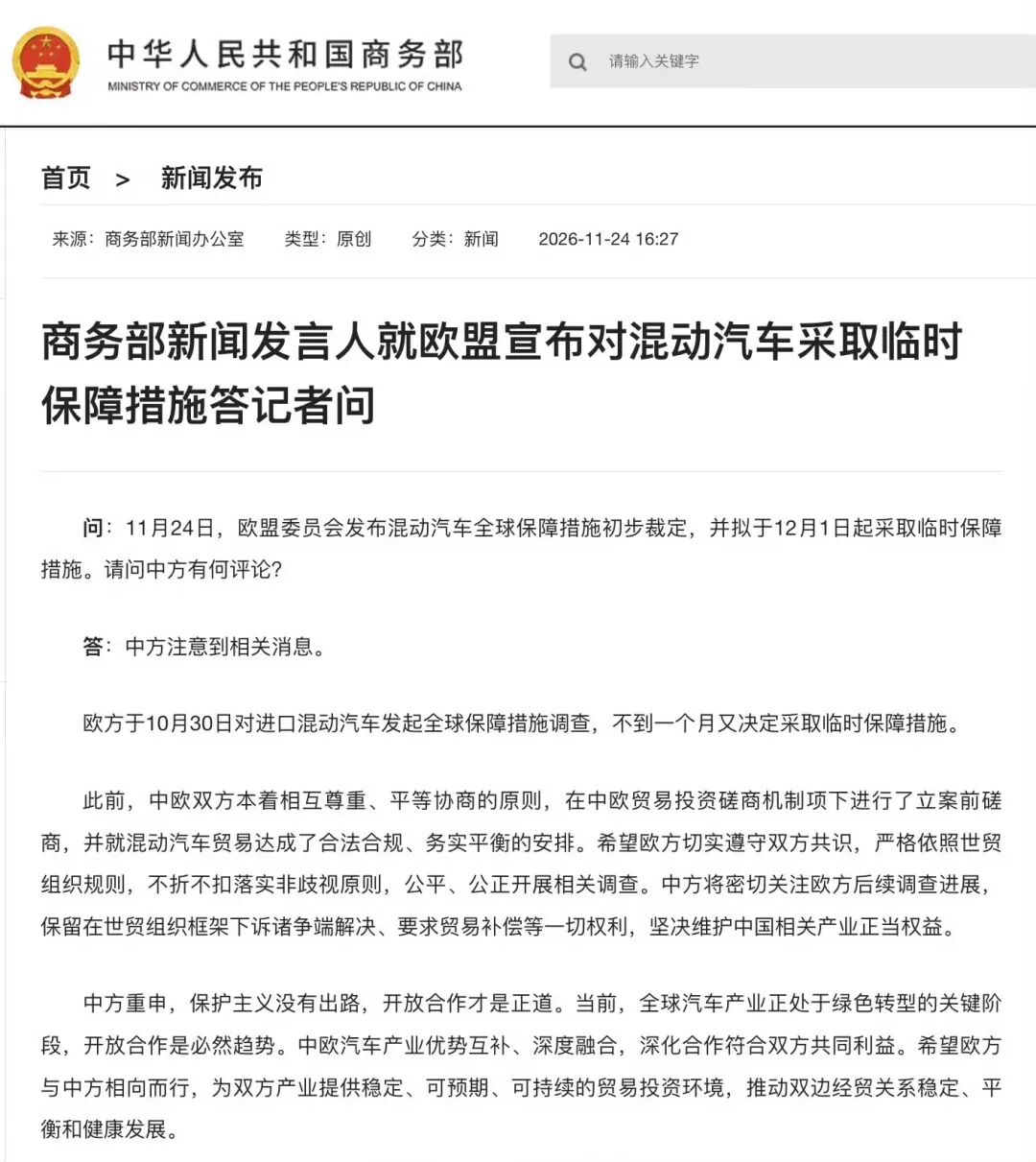
With the EU about to impose new quota restrictions on hybrid vehicles manufactured in China, Chinese automakers face a fresh round of adjustments to their market access in Europe. This may push them to export more vehicles that fall outside the quotas because they use niche powertrain systems.
This red line deals a direct blow to the rapid expansion of Chinese plug-in hybrids in Europe and will reshape the China-EU new energy vehicle trade landscape. From clashes involving individual companies to Europe's restrictions expanding from pure electric to plug-in hybrid vehicles, the shift reflects an increasingly serious protectionist mindset in Europe toward its own automotive industry. Reports indicate that the plan officially takes effect on December 1.
Unlike the previous single anti-subsidy duty targeting pure electric models, the EU this time invokes global safeguard measures under the WTO framework, formally setting limits on all source countries—Japan, South Korea, and Turkey included—simultaneously. The move comes with a non-discriminatory procedural shell but clear policy targeting. The new rules cover HEV conventional hybrids and PHEV plug-in hybrids, with the determination standard based on origin rather than brand: as long as a vehicle is manufactured in China, it counts toward the quota; if manufacturing is completed within the EU, it is fully exempt from quota constraints.
The most noteworthy differentiated clause is that extended-range electric vehicles (EREV) fall under the pure electric customs tariff code and do not occupy the 350,000-unit hybrid quota, but they still need to accept the anti-subsidy duty constraint of up to 35.3% for pure electric models. This has also become the most important strategic fork for automakers in this game.
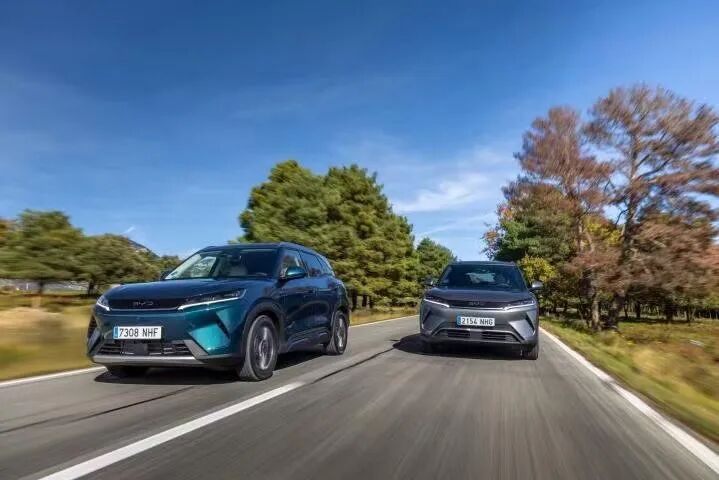
Data shows that in 2025 the EU imported 302,000 hybrid vehicles from China. In the first eight months of 2026, Chinese brands sold 282,000 plug-in hybrids in Western Europe, capturing a 29% share of Europe's plug-in hybrid market and overtaking Volkswagen Group, the long-standing leader, for the first time in history. BYD, Chery, SAIC, and Geely accounted for the vast majority of that share, with the BYD Seal U DM-i even topping Europe's plug-in hybrid sales chart. Institutions predict that China's hybrid vehicle exports to Europe will reach 800,000 units in 2026, and the new rules are equivalent to directly halving export capacity.
Looking at the quota setup, the four-year progressive mechanism with an annual increase of 6% is not a random number. On the one hand, it satisfies the WTO safeguard measures' compliance requirement of "gradual relaxation year by year" to avoid losing disputes; on the other hand, in the first 10 months of 2026, China's hybrid vehicle exports to Europe surged 270% year-on-year, and the 6% increment almost locks out high-speed growth space, buying a four-year transition window for European local automakers such as Volkswagen, Stellantis, and Renault. At the same time, this also just matches the 2.5–4 year ramp-up cycle for overseas vehicle factories, forcing Chinese automakers to accelerate localized production capacity layout in Europe.
Over the past two years, pure electric vehicles have been suppressed by high anti-subsidy duties, and plug-in hybrids and strong hybrids have become the main track for Chinese automakers to break into the European market. After the quota takes effect, the growth ceiling is hard-locked, and the market logic shifts from "grabbing share" to "grabbing quota."
The outside world expects that quota allocation will most likely refer to historical export performance, with the three leading companies BYD, Chery, and SAIC splitting over 80% of the quota, but at the same time they are also the groups most affected by the new rules. Under the premise of a capped total and scarce quotas, automakers' subsequent choice may be to "protect profits" by cutting low-priced products and slowing the pace of sales expansion.
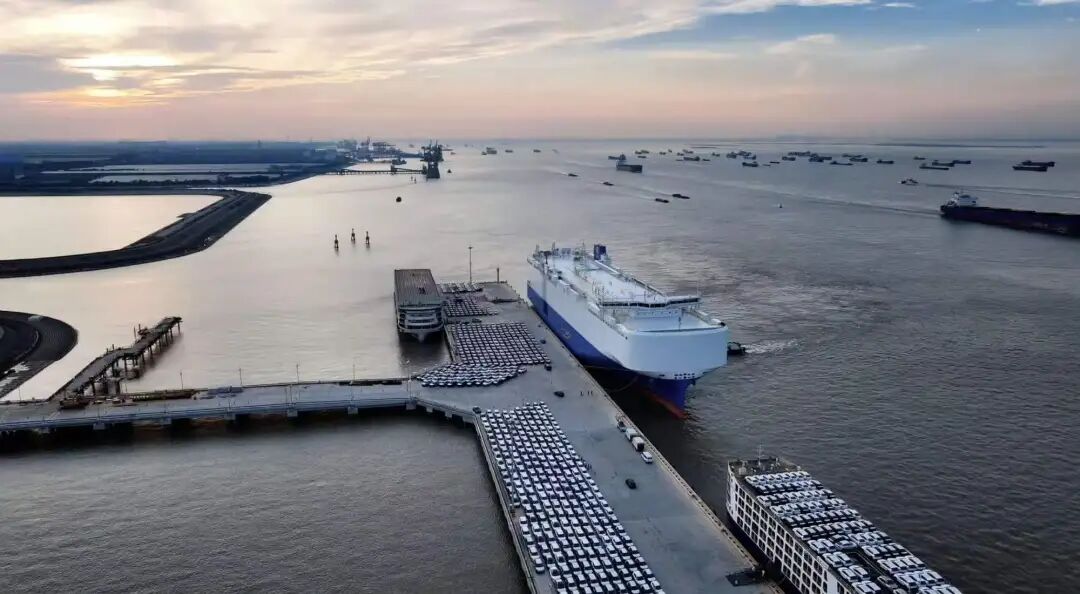
This also means that the core revenue increment of major plug-in hybrid exporters will be hit. They must not only participate in the quota scramble but also simultaneously advance European factory construction and localized production to break free from origin restrictions, entering a new investment cycle. Plug-in hybrid models produced at Volkswagen Group's Chinese factories also count toward the quota, and Volkswagen is also included in the competitive pool; while the SAIC Volkswagen ID. ERA 9X extended-range version that Volkswagen plans to introduce can bypass the hybrid quota, becoming a workaround for multinational automakers.
In addition, new forces such as Li Auto and AITO, which focus on the extended-range route, are not subject to the 350,000-unit hybrid red line, but they cannot enjoy the pure electric minimum price exemption. Currently, only Volkswagen Anhui's Cupra Tavascan has obtained pure electric price undertaking eligibility. Extended-range is their shortcut to bypass quotas, but high anti-subsidy duties still raise costs. XPeng chose Magna for contract manufacturing, and Leapmotor relies on Stellantis channels to launch extended-range models, all to avoid such policy risks.
It is worth mentioning that the pure electric minimum import price (MIP) negotiations are still at a deadlock, and Chinese local automakers have not yet made a breakthrough. This means that neither pure electric models nor extended-range models using the pure electric tariff code have a low-cost customs clearance solution in the short term. Localized factory construction in Europe is the only certain long-term solution. In fact, since the export surge began, it meant that the golden period of this business would gradually pass. Recently, the risks of automakers' exports have also been increasing, with a typical example being Fangchengbao being sued by Jaguar Land Rover for plagiarism.
Currently, the models related to Fangchengbao have been temporarily banned from sale and production, and the matter will still need to be resolved through lengthy legal proceedings, which may lead to unsatisfactory outcomes. This hybrid siege is essentially not a simple quantity restriction, but Europe using trade tools to redefine the rules of new energy competition. For Chinese automakers to open up the European market, they must change their approach. And the same applies to other markets.
-
Why Are Listed Companies' Financial Reports Starting to Take Douyin E-commerce's Business Logic Seriously?
-
AI Steps on the Gas: A 167-Year-Old Cold Case Finally Hears an Echo
-
![]()
Short Dramas: Big Tech's Q3 Earnings Scapegoat or Lifeline?
-
![]()
Coating Material Selection: Four Critical Gates — Contrast, Absorption, Stress, and Process Window
-
![]()
Maishi Optoelectronics Completes IPO Coaching Acceptance Inspection, Securing 2 Billion Yuan in Financing This Year
-
Second Financing Round of the Year! Chengfeng Technology Secures Tens of Millions of Yuan in B+ Round
-
![]()
Why Can't Hongguo Swallow Bilibili?
-
![]()
The Day After Jensen Huang's Return: The Fed Pours Cold Water on the Rally