Buick's Firm Stance Against Building Range-Extender MPVs: What Exactly Is Buick Opposing?
 11/26 2026
 512
On the evening of November 19, Buick made a clear statement on its official social media account that it firmly will not build range-extender MPVs, offering its own judgment that range extenders are a transitional technology for MPVs. The next day, Buick reposted promotional content for the Xiangjie V8 with the caption "True Dragon Plug-in Hybrid MAX accepts all challenges." On the same day, SAIC-GM officially released the third-generation True Dragon Plug-in Hybrid MAX, which debuts in the Zhijing Shijia; the new vehicle will be publicly unveiled at the Guangzhou Auto Show on November 27.
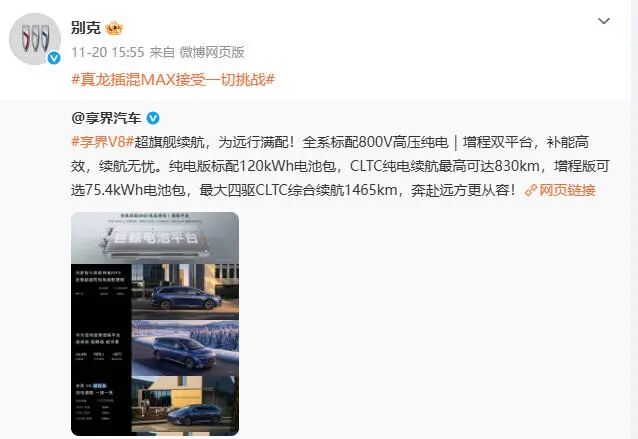
The timing of these statements is noteworthy. On one hand, the all-range-extender Zhijie V9 has achieved monthly deliveries exceeding 10,000 units; on the other hand, Buick chose this moment to publicly define its own technical route. Many readers may not know that GM is actually one of the world's earliest automakers to achieve mass production of range extenders. Is Buick's insistence rooted in confidence in its technical route, or is it a response to market changes? To answer this question, we need to first sort out the facts and logic.
What Exactly Is Buick Opposing?
To judge whether Buick rejects range extenders, it is worth first reviewing its technical track record. GM's Chevrolet Volt was one of the world's earliest mass-produced range-extender models; GM at the time defined it as an electric vehicle equipped with a gasoline range extender. Back in the domestic market, Buick launched the VELITE 5 in April 2017, one of China's earlier mass-produced range-extender products.
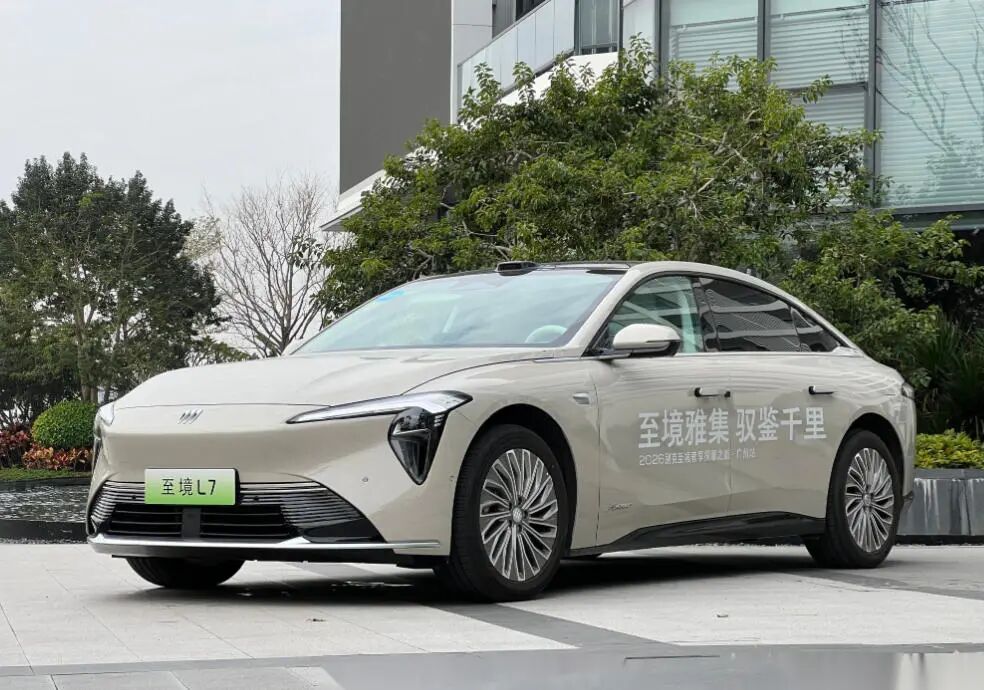
Last year's Buick Zhijing L7 range-extender version even used the promotional slogan "The inventor of the range extender is redefining the range extender." From this track record, Buick is no stranger to range extenders; its technical accumulation in this field can even be called deep.
From this a clear conclusion can be drawn: what Buick opposes is not range-extender technology itself, but the combination of range extenders and MPVs. Buick openly uses range extenders in its sedan products, but in the MPV category it has operated for more than twenty years, it chose the plug-in hybrid route with an engine capable of direct drive and placed it in its flagship model. Behind this tradeoff is Buick's insistence on the power to define the MPV powertrain route. Whether this insistence can hold still depends on whether its technology and products can support it.
True Dragon Plug-in Hybrid Aims to Build a Technical Moat
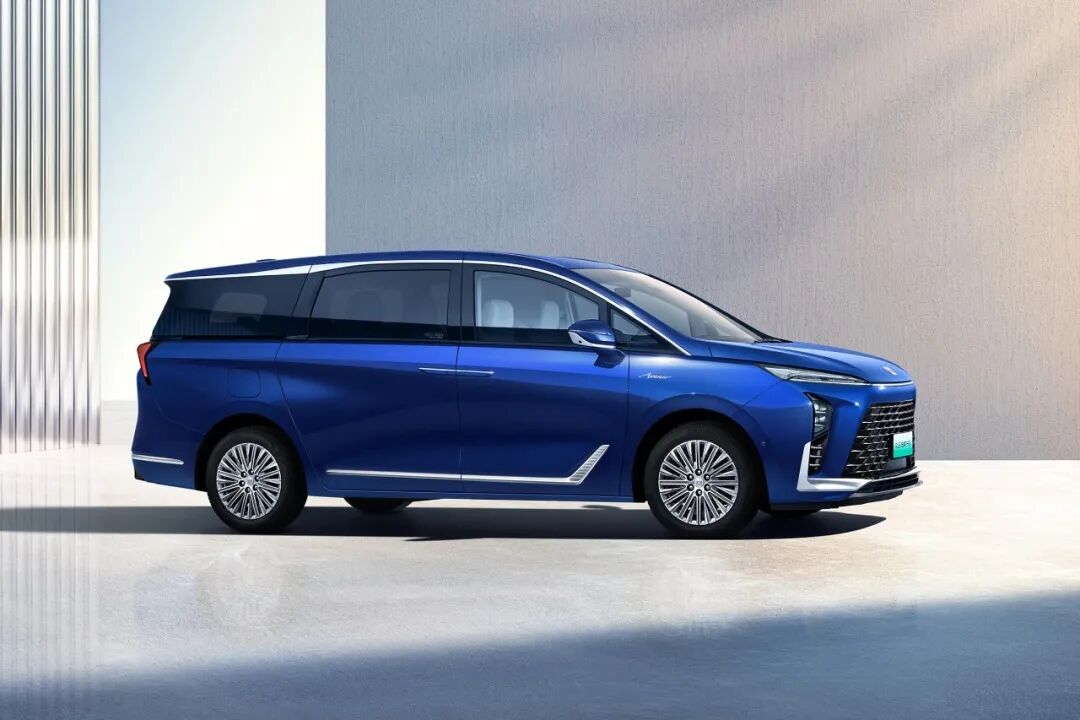
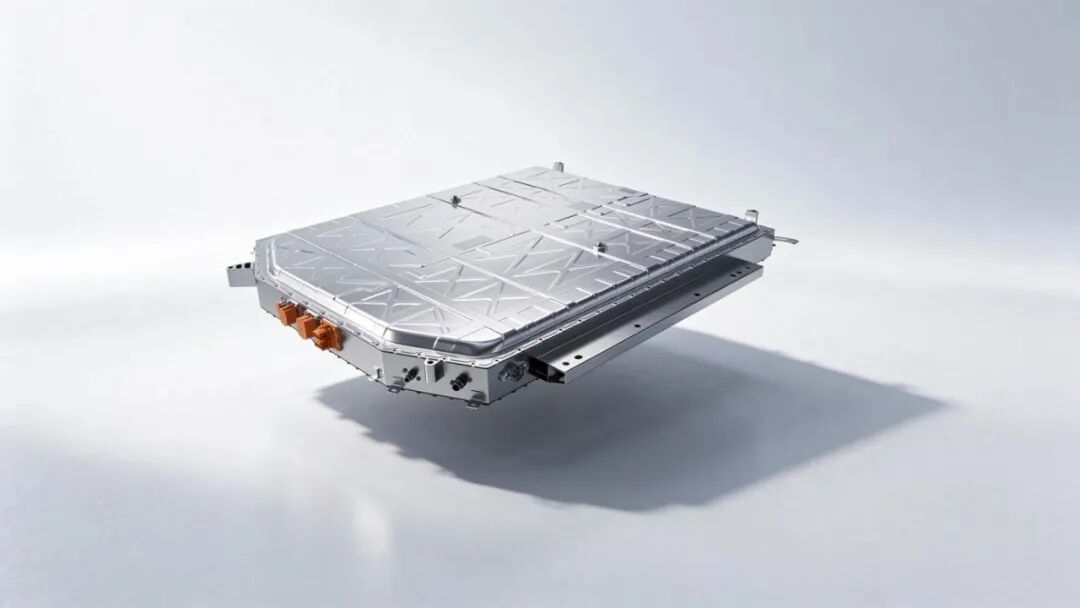
A clear technical statement needs corresponding product strength to support it. The True Dragon Plug-in Hybrid system first landed in 2024 with the GL8 Lu Zun PHEV, was upgraded in 2025 to True Dragon Plug-in Hybrid Pro and equipped in the Zhijing Shijia, and the True Dragon Plug-in Hybrid MAX released on November 20 this year is already the third generation. According to the manufacturer, True Dragon Plug-in Hybrid MAX consists of a 2.0T hybrid-specific engine, a full-domain 800V high-voltage platform, and a 6C battery, with a system combined power of 550 kW and combined torque of 815 Nm. Zero-to-100 km/h acceleration is 5.7 seconds with a full charge and 5.8 seconds with a depleted battery—a difference of only 0.1 seconds. The Zhijing Shijia is equipped with a 67 kWh battery and has a CLTC pure electric range of 402 kilometers.
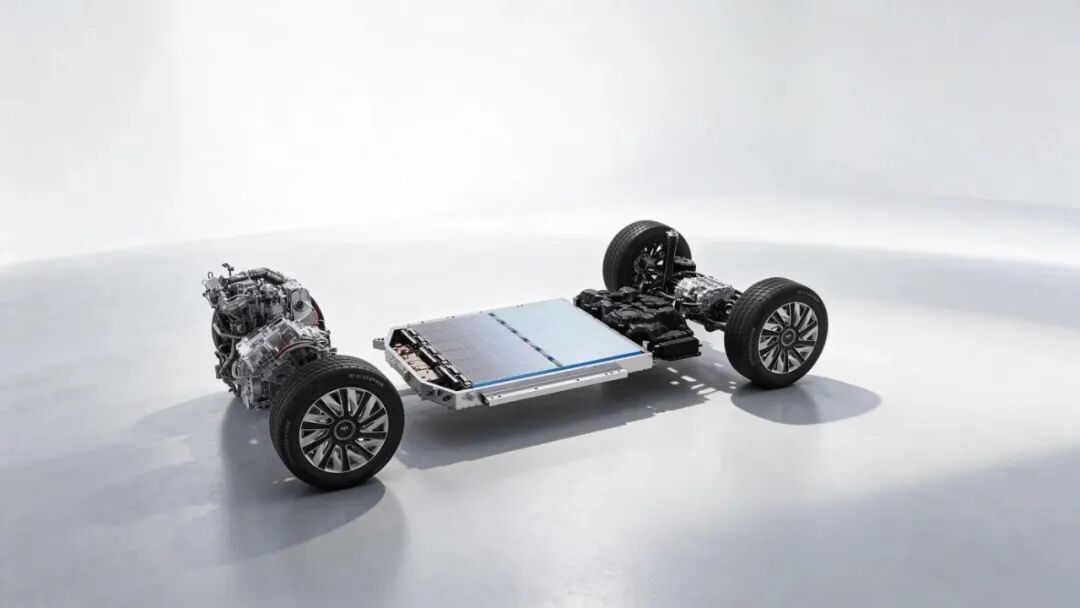
Beyond the parameters, the engineering differences between the two routes deserve more attention. In a range extender, the engine is only responsible for generating electricity and does not directly drive the wheels, so energy must undergo two conversions. A plug-in hybrid retains the engine direct-drive path; during high-speed cruising the engine can directly drive the vehicle, theoretically reducing one energy conversion. MPV usage scenarios are also relatively special: fully loaded with seven people, long periods of high-speed cruising, and continuous climbing mean the vehicle is often under high-load conditions. Buick believes direct drive has more advantages in such scenarios, which constitutes the engineering basis for its insistence on the plug-in hybrid route.
In addition to technological iteration, Buick also has a market base. Sales data show that in October this year, wholesale sales of the Buick GL8 PHEV were 4,760 units, ranking second among new energy MPVs. At the same time, it should be noted that this model fell 13.9% year on year, though the decline narrowed compared with the earlier period; pressure across the industry also exists.
The Xiangjie V8's Appetite Goes Beyond Family Use
Buick's choice to make a high-profile statement at this time is directly related to the current competitive situation in the MPV market. In Harmony Intelligent Mobility Alliance's MPV matrix, the Zunjie V800 and V680 cover the 648,000 to 1.016 million yuan range, the Zhijie V9 is guided at 389,800 to 519,800 yuan, and the newly launched Xiangjie V8 is priced at 319,800 to 429,800 yuan; the three models closely connect across price bands.
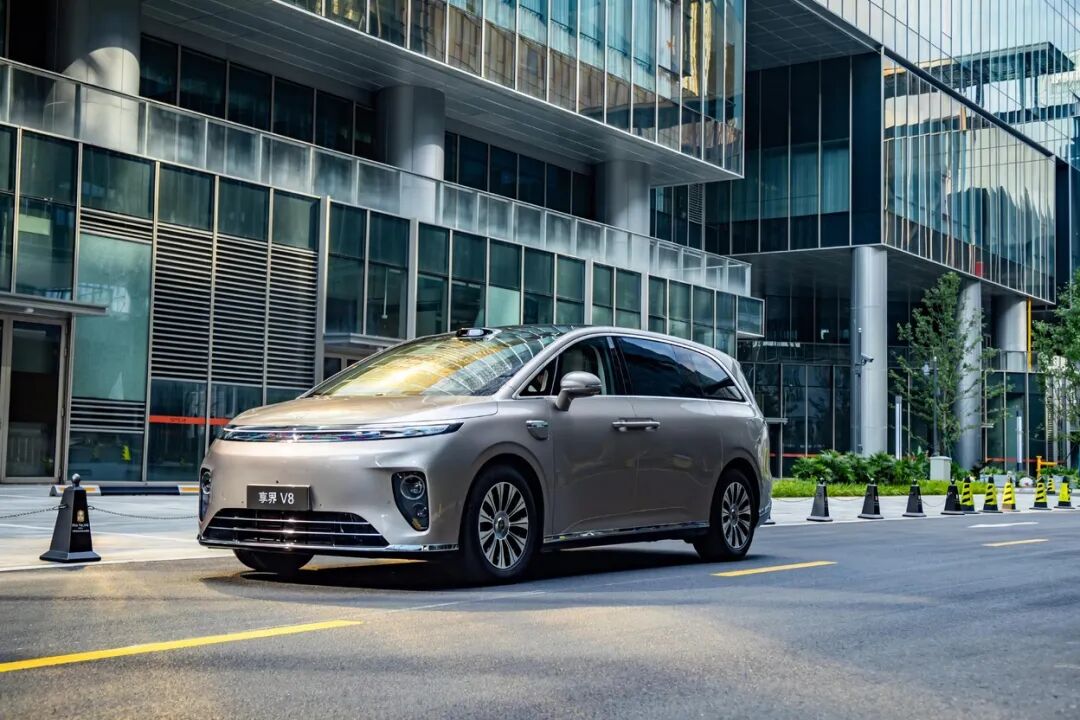
Buick's new energy MPVs currently on sale mainly include the GL8 PHEV and the Zhijing Shijia series. Comparing the price ranges, it is not hard to find that the Xiangjie V8's starting price of 319,800 yuan has entered the core range of the GL8 PHEV, while upward it also broadly overlaps with the entry version of the Zhijie V9. From a market perspective, the Xiangjie V8 has the most direct impact on the GL8 and Zhijie V9, while the higher-positioned Zunjie is relatively less affected.
Xiangjie's product thinking is also worth noting. Officially, the Xiangjie V8 is positioned as a family smart flagship MPV; it appears to focus on family travel, but its actual layout goes beyond that. Public configurations show that the Xiangjie V8's second-row seats support 150 mm lateral sliding and multi-angle rotation, with a maximum face-to-face mode spacing of 1,920 mm, and it is equipped with a smart privacy light curtain with 99.4% shading rate.
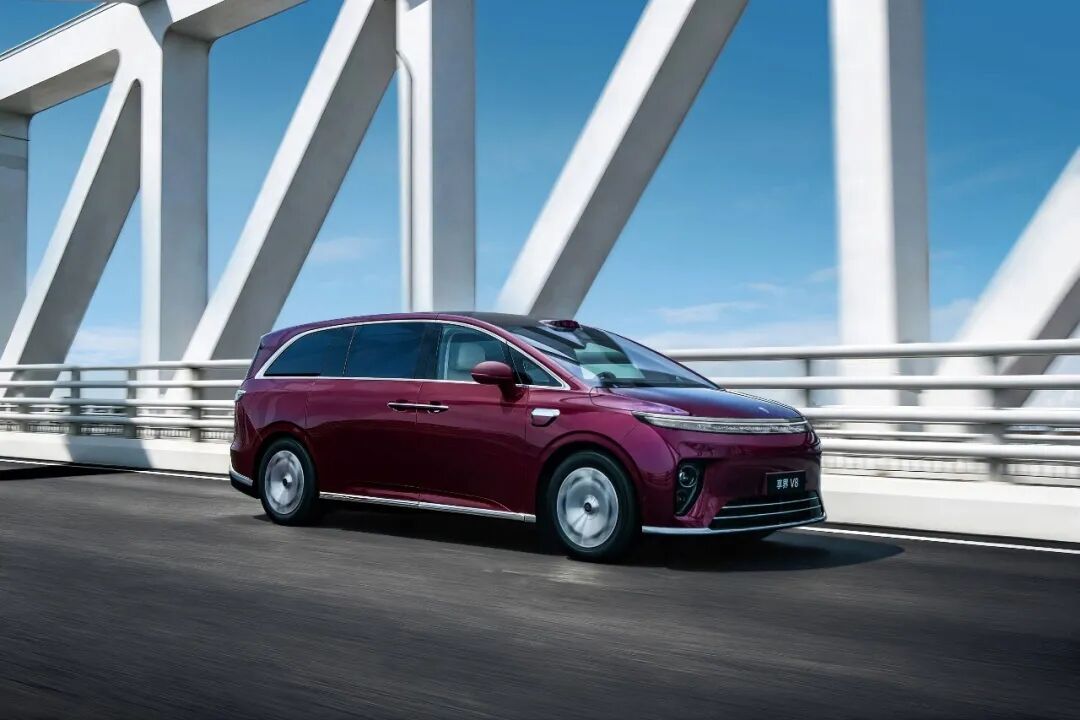
During Huawei's Mate X8 launch event on November 24, a fleet of Xiangjie V8 vehicles handled shuttle service for attending guests. Privacy protection, reception standards, and riding etiquette—capabilities traditionally valued by business MPVs—all have corresponding arrangements in the Xiangjie V8. Its target is clearly not only family users; it is also competing for share in the business travel market.
Taking a longer time line, industry changes are more obvious. In the first ten months of this year, domestic MPV retail sales were 707,000 units, down 21.3% year on year. Total market volume is shrinking, but the structure is adjusting rapidly: range-extender MPVs grew from zero to a 15.1% share within a year, and the Zhijie V9 also took the monthly sales championship across all categories in July.
In fact, in the market, no brand can hold onto an established pattern for long. The Toyota Alphard was once highly sought after in the market, even with premium markups, but its topicality has now clearly declined. Following this pattern, the GL8's business base will most likely face continued diversion by new players in the future. This judgment is a trend analysis; the user overlap and actual diversion scale of each model still need to be further verified with insurance registration data, and it is too early to determine the winner of the route battle.
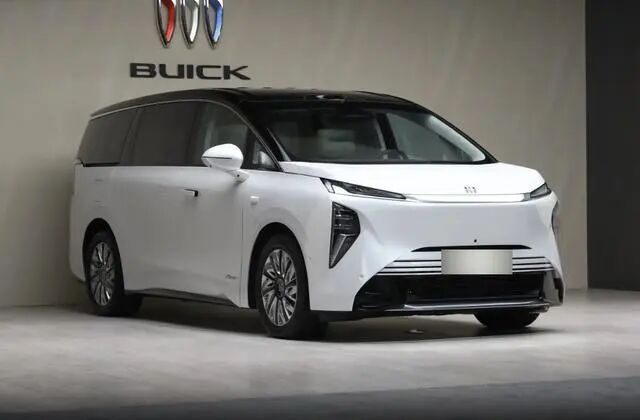
Sorting this out shows that technical correctness and market correctness are not entirely equivalent. A plug-in hybrid with an engine capable of direct drive has its rationality in engineering theory, and Buick also has three generations of iterative technical accumulation, which is the confidence behind its insistence on the route. At the same time, range extenders, which it defines as transitional technology, are being chosen by more and more users—and this is the market reality Buick must face.
At present, the pricing of the new vehicle equipped with True Dragon Plug-in Hybrid MAX has not yet been announced, and the manufacturer's stated parameters still await third-party verification. The final direction of the technical route is not yet settled. For potential users, rather than rushing to take sides, it is better to first understand the logic and bargaining chips of both sides. The Guangzhou Auto Show on November 27 is the next observation window, but it is far from the end of this route discussion.
-
![]()
Million Satellites Approved: SpaceX to Move Data Centers into Space
-
![]()
Q1 Orders Top Ten Million! How Did Metalens Secure Over 100 Million Yuan in Financing?
-
![]()
Zhongrun Optics: New Facility Enters Capacity Ramp-Up Phase in First Half of 2026
-
![]()
AI Helps Citizens Mass-Produce FOIA Requests as Startups Mine Public Data, Straining Transparency Systems
-
Used Car Sales Stall as Small Dealers Begin to Band Together
-
![]()
Why Have Japanese Coffins and Robot Clothing Become Caoxian's Business?
-
Three Ministries Issue Landmark Document: The "Policy Floor" for Optical Communications Has Arrived
-
5. FSD V15 Major Upgrade: Deconstructing the Engineering Core UVE Behind Reality View