The Day Before the Guangzhou Auto Show
 11/26 2026
 548
A Great Migration of Traffic
By Qin Zhangyong
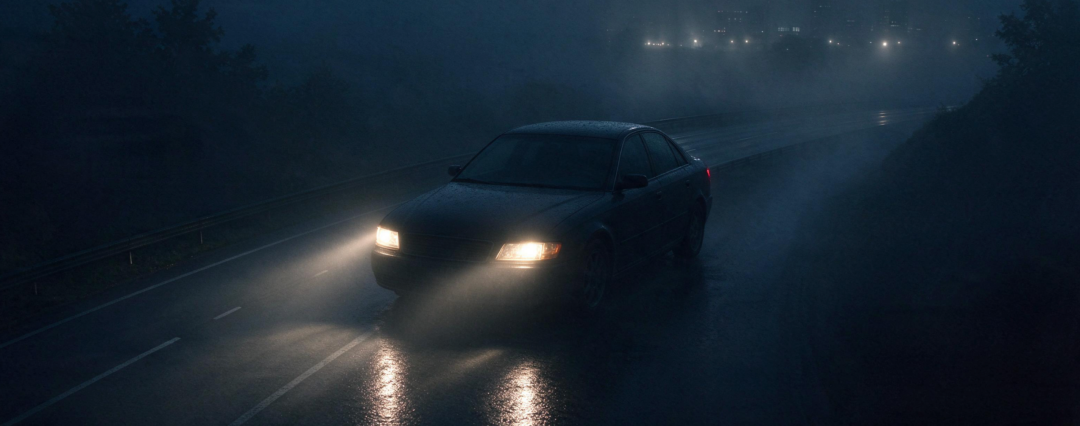
This year's Guangzhou Auto Show feels exceptionally cold—cold in the literal, physical sense.
After landing at Baiyun Airport, I had assumed I could change back into short sleeves. But the overcast weather carried a chill rarely felt in Guangzhou—so cold that I didn't even need to take off my light down jacket. In previous years, I would have been running around the exhibition booths in short sleeves; this year, I'm afraid that won't be possible.
Once this preconception takes hold, my mood about attending the auto show becomes complicated as well.
Many people have remarked that this year's Guangzhou Auto Show is quiet. In previous years, media day was packed to the rafters. This year, more than half the space was empty, and automakers didn't even bother with the grand gala on the eve of the show—no private light shows, no celebrity appearances.
But simply labeling it a cold winter for the auto market feels a bit lazy. After all, there were still press conferences before the show—XPeng's Tech Day, for instance, drew more than 2,000 media outlets on site, with hundreds of overseas journalists flocking to Guangzhou from around the world. NIO and Huawei Qiankun also made their moves.
So the number of people hasn't shrunk; what has changed is where the industry's attention is directed.
In the past, auto shows were a natural platform for building momentum, capturing traffic, and telling stories. Automakers could generate buzz generously—even regardless of cost. Now every yuan is treated as if it must be split in half, and every cent must yield a return. What's being calculated now is input-output, channel conversion, and global layout.
The popularity of auto shows has always been a byproduct of the incremental era. As China's auto industry collectively shifts from an expansion logic to a survival logic for the first time, the importance of auto shows appears to be declining as well.
There are other factors at play. In the past, traffic was a public resource—television stations and portals held the power of discourse—so automakers naturally wouldn't miss the auto show as a key window.
Now traffic has become private and even tradable, so automakers' budgets naturally flow there too: livestream rooms, short-video platforms, and social media. The diversification of traffic channels has also left auto shows somewhat deserted.
More dangerous still is user aesthetic fatigue. Over the past five years—from large screens to LiDAR, from 800V to end-to-end—after wave upon wave of technology concepts bombarded the market, the market has grown numb. There is no entirely new product that can make everyone's eyes light up.
When all brands are telling similar smart-driving stories and stacking similar hardware specs, the cost for companies to capture attention keeps rising. The marginal effect of relying on grand launch events to create surprises has dwindled to nearly zero. Users won't place orders because of a launch event, and investors won't put in money because of a concept car.
Rather than spending a fortune on a launch event that no one remembers, it's better to spend some of that money on traffic-driven launches. After all, in China's auto market, what's least lacking is self-media.
So it's true that automakers' budgets are tight—but it's not that there's no money; it's that the flow of money has completely switched tracks.
After two years of price wars, per-vehicle gross margins have come under relentless pressure. The first things to be cut are the pomp, ceremony, and gimmicks that can't be directly monetized, while real R&D investment and overseas expansion are instead being increased against the trend.
We no longer see the massive eve galas of BBA, but we do see BMW placing its locally co-developed smart-driving solution at its core booth, Mercedes-Benz pushing the price of its main pure-electric models down to the 300,000-yuan range, and Audi directly integrating Huawei's smart driving into its flagship fuel sedan. It's not that they don't value the Chinese market—it's that they no longer rely on keeping up appearances to prove that they do.
You won't see new forces clustering for concept-car debuts, but almost all top independent brands' booths are crowded with overseas dealers and media from around the world. Multilingual materials and overseas channel negotiation areas have become the new standard.
Of course, this quietness has always been structural. Top independent automakers such as BYD, Chery, and GAC are still pushing forward major moves. Those truly quietly withdrawing from the show and reducing booth space are marginal joint-venture brands whose market share continues to shrink, weak new forces that have long lost their voice, and ultra-luxury brands that no longer rely on mass auto shows to keep up appearances.
It's foreseeable that the Matthew effect—the strong getting stronger and the weak leaving the field—has been put on full display at this auto show. As the industry enters a mature phase and returns to business fundamentals, competing on system capabilities, cost control, and global competitiveness is inherently an unavoidable path.
Today's quietness is more like an industry cooling down. The good news is that everyone has begun to compete on hard power and no longer needs to rely on the bustle of an auto show to prove themselves. When the noise fades, the companies that can truly survive cycles will slowly emerge.
The coldness of this auto show will not be the end of the industry either. It merely declares that the main battlefield of China's auto industry has long been more than this one exhibition hall.
-
![]()
Million Satellites Approved: SpaceX to Move Data Centers into Space
-
![]()
Q1 Orders Top Ten Million! How Did Metalens Secure Over 100 Million Yuan in Financing?
-
![]()
Zhongrun Optics: New Facility Enters Capacity Ramp-Up Phase in First Half of 2026
-
![]()
AI Helps Citizens Mass-Produce FOIA Requests as Startups Mine Public Data, Straining Transparency Systems
-
Used Car Sales Stall as Small Dealers Begin to Band Together
-
![]()
Why Have Japanese Coffins and Robot Clothing Become Caoxian's Business?
-
Three Ministries Issue Landmark Document: The "Policy Floor" for Optical Communications Has Arrived
-
5. FSD V15 Major Upgrade: Deconstructing the Engineering Core UVE Behind Reality View