What is Insta360 Betting on with One-Fifth of Revenue Invested in R&D?
 09/15 2026
 348
348
Insta360 Innovation released its semi-annual report, continuing to attract market attention. It achieved 5.5 billion yuan in sales in the first half but only 30.4 million yuan in profit, a significant year-on-year drop. More puzzlingly, its revenue continued to rise, increasing by 50% year-on-year. A rapidly growing company suddenly saw its profits hit rock bottom. The most common sentiment online is that revenue is increasing but not profits, yet few explain why this is happening or what the future holds. 
I. 1/5 of Revenue Invested in R&D
Let's look at some numbers. In the first half of 2026, Insta360's R&D expenses exceeded 1 billion yuan, a nearly 80% year-on-year increase, accounting for 18.78% of operating revenue. 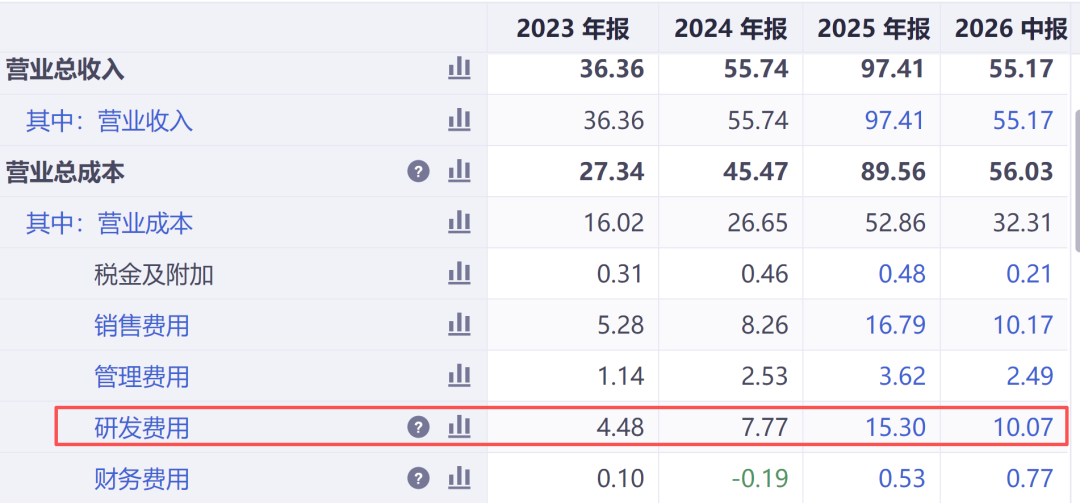
In other words, for every 100 yuan Insta360 earns, nearly 20 yuan is reinvested into R&D. What does this number mean in the consumer electronics industry? Among all A-share listed companies, an 18% R&D expense ratio exceeds that of most tech companies. Looking at a longer timeframe: In 2025, Insta360 invested 1.53 billion yuan in R&D, a 96.95% year-on-year increase, accounting for 15.70% of revenue.
In the first quarter of 2026, revenue continued to grow by 83.11%, with R&D investment increasing by about 101% year-on-year. This means the faster revenue grows, the faster R&D investment grows. 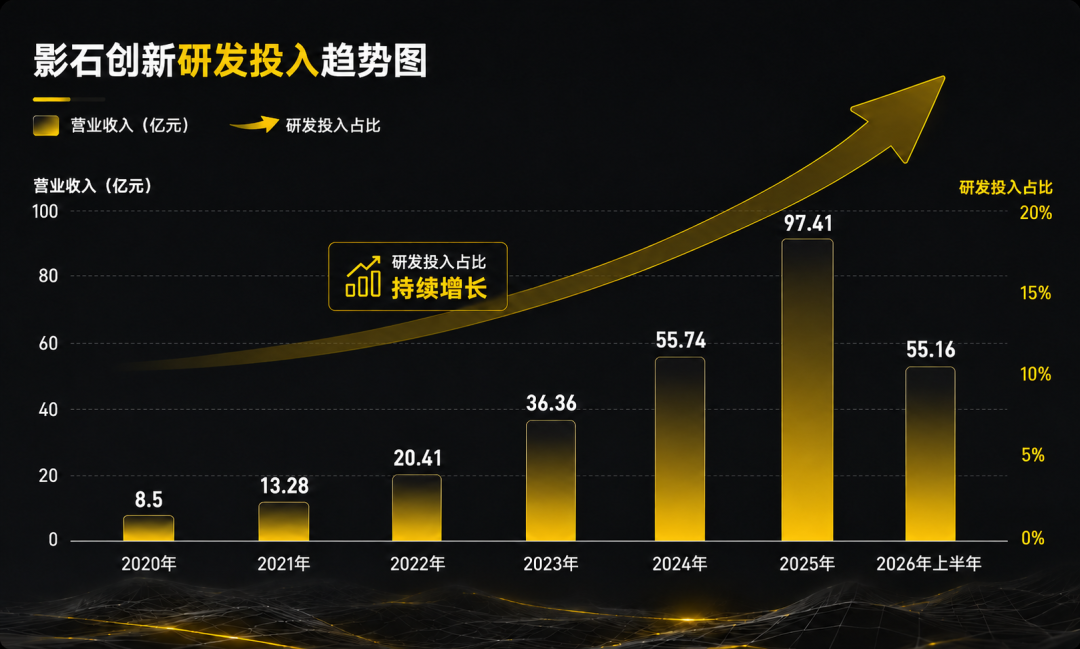
"Rising in tandem," it seems this is not passive pressure but an active choice. Founder Liu Jingkang stated bluntly in his last annual report letter to shareholders: "High-intensity strategic investments support the company's long-term development Layout (layout), but also lead to short-term declines in relevant profit metrics."
He also revealed a more detailed figure: In 2025, Insta360 strategically invested 762 million yuan in R&D for new categories such as drones, gimbal cameras, wireless microphones, and three custom chips outside its core business, equivalent to 80% of its net profit attributable to shareholders for the same period. By the first quarter of 2026, this ratio soared to 300%, with nearly 3 yuan invested in the future for every 1 yuan of profit earned.
This matters greatly to investors.
II. Where Are the Products After All This Spending?
The question many investors care about most is: What has all this spending produced?
The answer: In 2026, Insta360's product density reached an all-time high.
Let's review the timeline:
In March, Insta360 launched the Snap phone selfie screen, featuring magnetic direct connection and real-time preview, entering the mobile imaging accessory market with a starting price of 499 yuan.
In May, it released the flagship wireless microphone Mic Pro, building an audio creation ecosystem.
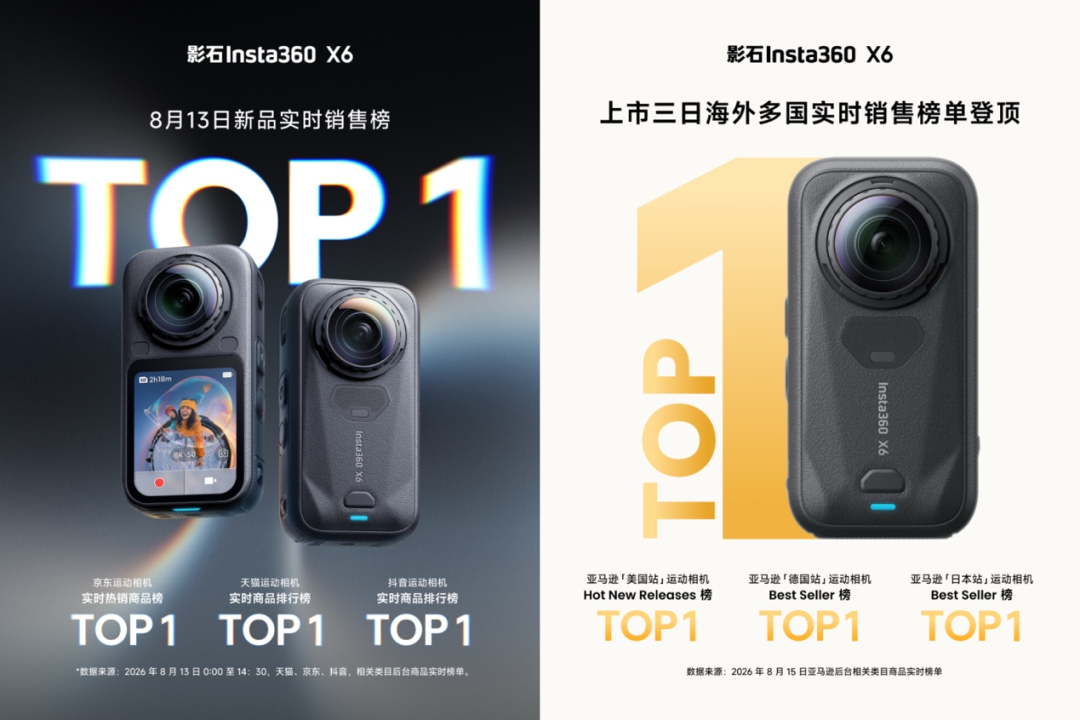
In June, it launched the Luna Ultra 8K dual-lens gimbal camera co-developed with Leica. Equipped with dual Leica Summicron optical lenses, it supports 8K 30fps Dolby Vision and 4K 120fps slow-motion. On its launch day, it ranked first in sales for single sports camera models on Douyin and JD.com, and first in overall livestream sales on Tmall. It also topped the BestSeller list on Amazon US. Shortly after, the single-lens version Luna Pro was released, lowering the starting price for handheld gimbal products to 3,399 yuan.
In August, the flagship 360-degree camera X6 was officially released. Equipped with a Sony-customized 1/1.1-inch square large sensor, it supports 8K 50fps 360-degree video and 120-megapixel 360-degree photos. More critically, the X6 continues the AI triple-chip design of its predecessor: a 4nm Qualcomm chip provides 5x computational power, while two custom professional imaging chips handle noise reduction and image quality tuning.
Additionally, the thumb camera Go Ultra features an AI voice assistant, integrating Tongyi Qianwen and Google Gemini large models, achieving a breakthrough in AI voice interaction for action cameras. There are also reports that Insta360 plans to update its sports camera Ace Pro 3 by year-end, upgrading the sensor from 1/1.3-inch to 1-inch. 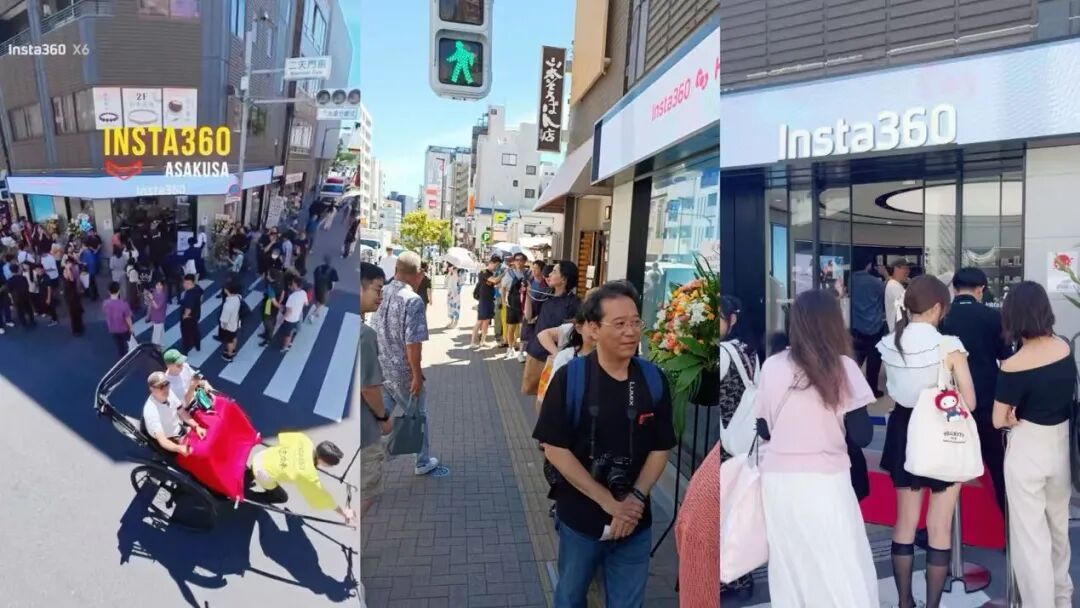
In just six months, over five new products were densely launched, covering gimbal cameras, 360-degree cameras, microphones, mobile accessories, and other categories. Each product is a standout—for example, when the Luna launched, global retail locations saw queues for purchases, even causing a stir in traditional camera powerhouses like Japan, with Tokyo retail points seeing "long lines" for the Luna. This hardly looks like "burning money"—it's more like "mobilizing troops." 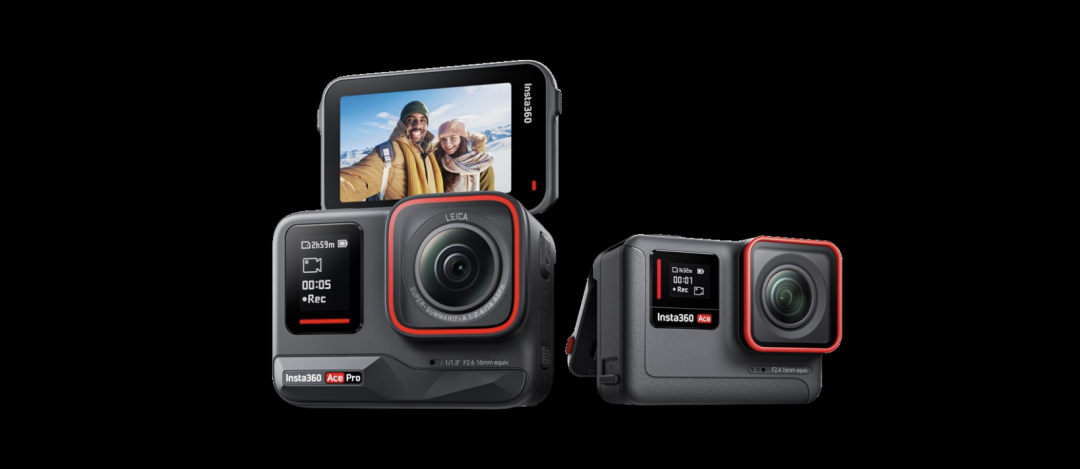
III. 2 Billion Yuan Chip Stockpile: Preparing for Winter
If Intensive push (dense product launches) indicate Insta360's "offensive" strategy, another expenditure reveals its "defensive" thinking.
The semi-annual report shows Insta360's strategic procurement of memory chips reached nearly 2 billion yuan in the first half. Why memory chips? The reason is simple: global prices for DDR and other memory chips continue to rise, prompting Insta360 to stockpile heavily at this time.
The financial report states: "This proactive stockpiling is expected to secure a stable supply and cost control of memory chips, providing strong support for the company's future development." 
In plain terms: If we don't buy now, it'll be more expensive later.
In fact, research from multiple semiconductor industry institutions and top global investment banks points to the same conclusion: Under structural supply-demand imbalances driven by AI demand, memory chip prices will likely continue rising throughout 2026 and may even extend into 2027-2028.
Insta360's move essentially achieves two things:
First, cost locking. By stockpiling chips at current prices, cost advantages emerge when prices rise later.
Second, supply locking. Amid global chip shortages, securing supply matters more than price.
The results are already visible in the financial report's inventory section. As of the report's end, the company's inventory book value reached 6.212 billion yuan, an 112.82% increase from the start of the period, with memory chips alone accounting for 1.748 billion yuan in book balance.
Of course, "chip stockpiling" carries risks. If memory chip prices fall, these inventories face devaluation risks. Insta360 also disclosed this risk in its financial report.
But from another perspective, a company willing to spend nearly 2 billion yuan in cash to stockpile chips while already under profit pressure shows confidence in future sales volumes.
Otherwise, hoarding chips in warehouses would be truly dangerous.
IV. Cameras Are Just the Gateway
Viewing R&D, new products, and chip stockpiling together, Insta360's strategy becomes clear. It doesn't want to be just a "camera seller." Liu Jingkang described a vision in his shareholder letter: "Could there be a future where everyone has a portable 'photography robot,' like hiring a professional photographer for travel or team-building, automatically moving through spaces, finding angles, and capturing brilliant (wonderful) moments while you simply enjoy the present?"
To achieve this, Insta360 has done three things in the past six years: Accumulated technologies in optical modules, sensors, and imaging algorithms through different camera categories—these are the "eyes." Developed two types of drone and gimbal technologies—these are the "torso."
Since six years ago, it began researching auto-editing technologies, developing panoramic flight simulation, panoramic depth prediction, and other technologies—these are the "brain." Now, the "eyes" and "torso" have physical products, while the "brain" is rapidly evolving. The PanoMind multimodal model in the X6 can automatically recognize scenes, intelligently match camera movements and filters, and achieve zero-editing one-click video generation. The AI voice assistant on the Go Ultra lets users control the camera with natural language.
The cloud-based auto-editing feature "Moment Pro" in the app now has a 60% export rate. Users shoot, then edit, then store, continuously extending the relationship between devices and users. This is the business Insta360 truly wants to build.
V. A Well-Prepared Battle
Returning to the original question: What is Insta360 betting on? It's betting on using R&D to buy time and products to expand space. Over the past few years, Insta360 has validated a path: Identify new categories, create hit products, and sell globally. 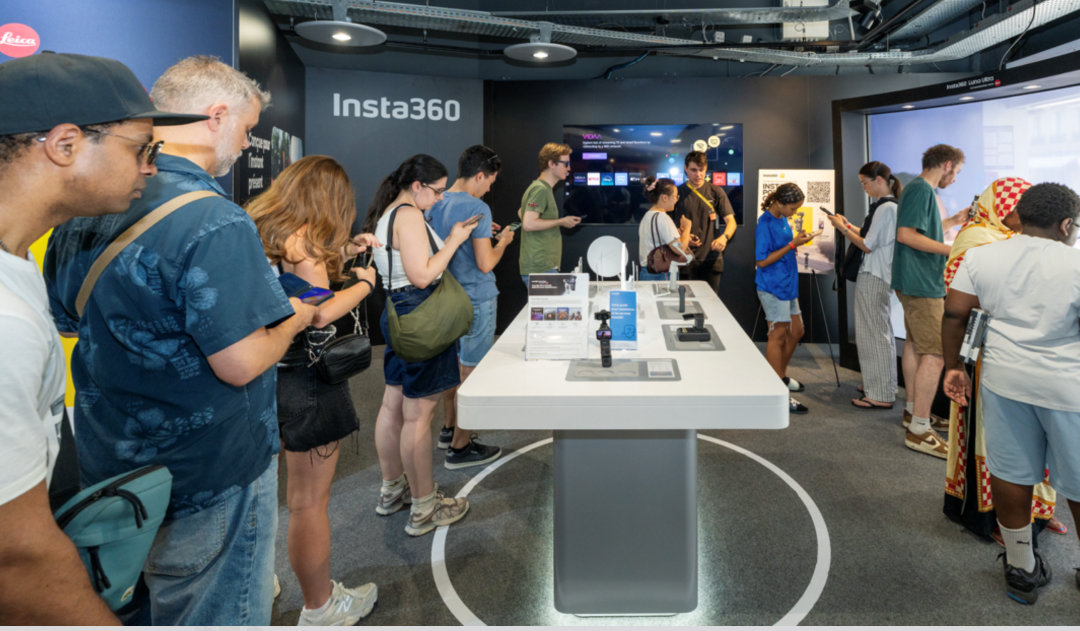
It has succeeded on this path. Now comes a harder challenge: Using hardware to acquire users, then using software, AI, and data to retain them. On this path, products like the Luna Ultra, X6, Go Ultra, Mic Pro, and Yingling drones are all strategic moves. The 2 billion yuan chip stockpile is ammunition for this battle.
Investing one-fifth of revenue in R&D is building moats for the next phase of competition. Short-term profit pressure is the price for this transformation.
It's too early to judge Insta360.
But one thing is certain: This company's management is fighting a well-prepared battle.
The signs are emerging, and the future looks promising.
-
The 'Three-tier Deconstruction' of the Restructuring Intentions Between FAW and GAC
-
![]()
"Living Room on Wheels": Pie or Trap?
-
![]()
Zhipu Secures Nearly US$5 Billion in Funding
-
![]()
FAW and GAC Integration: Will China's North and South Toyota Further Merge, and Will Dongfeng Continue Its Consolidation Efforts? | MINGJINGpro
-
![]()
Goldman Sachs Sets Its Sights on a City: Ulanqab!
-
![]()
The City in Goldman Sachs’s Spotlight: Ulanqab!
-
How Should Gas Stations Adapt Amid Declining Fuel-Powered Vehicle Sales?
-
![]()
Should GAC Shareholders Be Concerned: FAW Opts Not to Invest Cash but Lightens Its Joint Venture Load to Become Second-Largest Shareholder!