Whose Golden Week Desperately Needs a Pair of AI Glasses?
 09/25 2026
 581
581
Can AI Tour Guide Glasses Be the Perfect Travel Companion?
Written by / Li Jinlin
Edited by / Li Ji
Layout by / Annalee
Recently, Shanghai has seen a wave of 'strange' tourists.
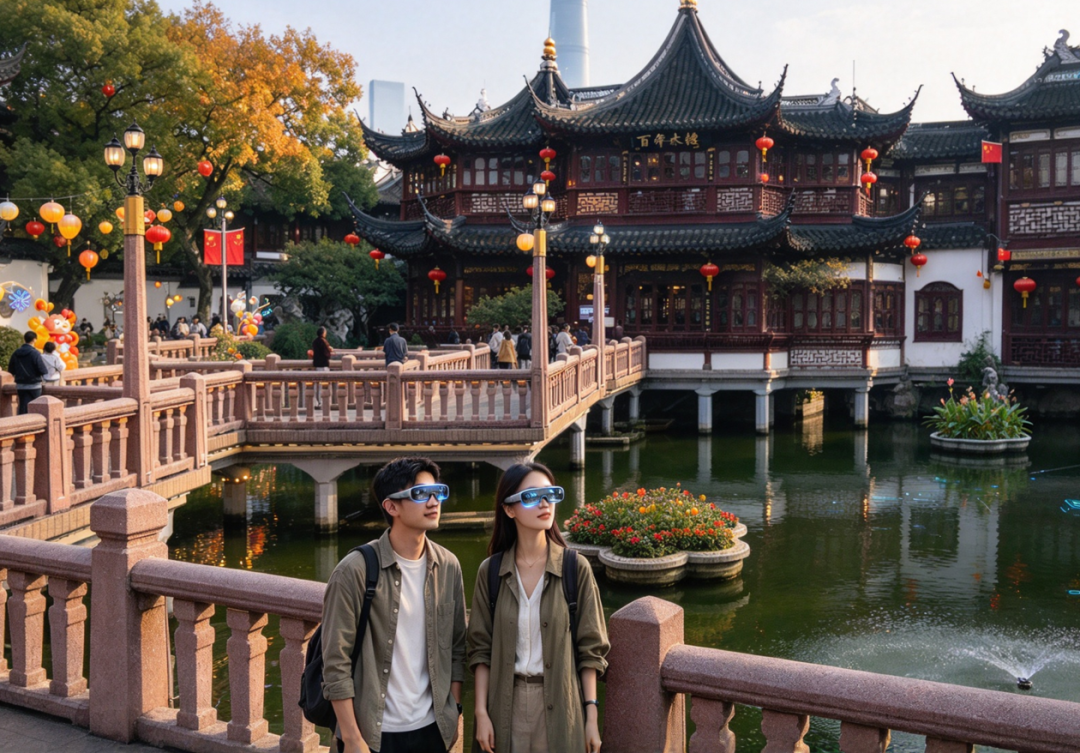
Wearing the same model of AI glasses, they stop at the Nine-Zigzag Bridge and, without pulling out their phones, hear the story of the century-old tea house at the center of the lake. Passing by the Nanxiang Steamed Bun Restaurant, they mutter a phrase and walk straight in to pick up their freshly ordered xiaolongbao.
Previously, iFLYTEK's AI glasses gained popularity in the outbound travel circle with their real-time translation capabilities for cross-border trips, with many international travelers viewing them as essential hardware for overseas travel.
On one hand, real-world cultural tourism pilots are being implemented in domestic urban districts; on the other, consumption in cross-border travel scenarios is exploding. Combined, these two phenomena raise a highly valuable industry question: Will AI glasses break out of the geek niche and become a universal travel companion for ordinary tourists?
For a long time, AI glasses have occupied an awkward position in the industry. Tourism could very well be the first killer scenario for AI glasses to achieve mainstream adoption. However, usability does not equal widespread adoption. The question remains whether the travel companion narrative is merely a marketing fantasy from hardware manufacturers or a genuine turning point for the commercialization of wearable devices. The upcoming peak travel season will serve as a critical test.
From explanations and translations to consumption, what kind of AI glasses do users need?
Most tourists are all too familiar with the frustrations of holiday travel. In scenic areas, they juggle phones for navigation and strategy (guides); to learn about historical buildings, they must raise their phones to take photos, switch to search apps, and piece together information. Abroad, menus and street signs become indecipherable, requiring constant translation app usage. When interested in scenic details, the narrow phone screen forces them to look down while walking, fragmenting the experience and creating safety hazards.
Smartphones address information access but occupy both hands, forcing constant visual shifts between screens and real-world scenery—an unavoidable pain point of current travel tools.
The Shanghai Yu Garden pilot demonstrates an alternative tourism paradigm. When tourists wear Qianwen AI glasses and approach Huabao Building, the glasses explain its architectural features. At the Hai Shang Li Yuan (Sea Pear Garden), the content shifts to opera culture. Near the Huxin Pavilion, they hear the history of the century-old teahouse.

AI glasses usage scenarios. Source: AIUI official website
The key difference between this 'wherever you go, explanations follow' interaction logic and traditional voice guides lies in proactivity. Traditional guides require users to scan codes, enter numbers, and click play—essentially still a 'person seeking service' model. After continuous iteration, AI glasses now deliver a 'service seeking person' experience. The device knows your location, orientation, and recent queries, then proactively delivers relevant information.
Moreover, tourists can place orders directly through the glasses and pick up meals in-store. From spotting a restaurant to completing a purchase, there are no app switches, search comparisons, or payment redirects—a process that would take at least four to five steps on a smartphone is compressed into a single voice command for the glasses.
The technological foundation supporting this experience is Ant Group's self-developed GPASS framework. First unveiled at the 2025 Bund Summit, it previously integrated with the summit's AI agent 'Tong Xiaowu' to provide route navigation, voice explanations, information push, convenient payment, real-time translation, and intelligent consulting via AI glasses. In May, urban tour guide functions launched in Hangzhou. Later, GPASS's integration with the agent 'Fu Xiaocuo' enabled voice Q&A, architectural recognition, route planning, and storytelling.
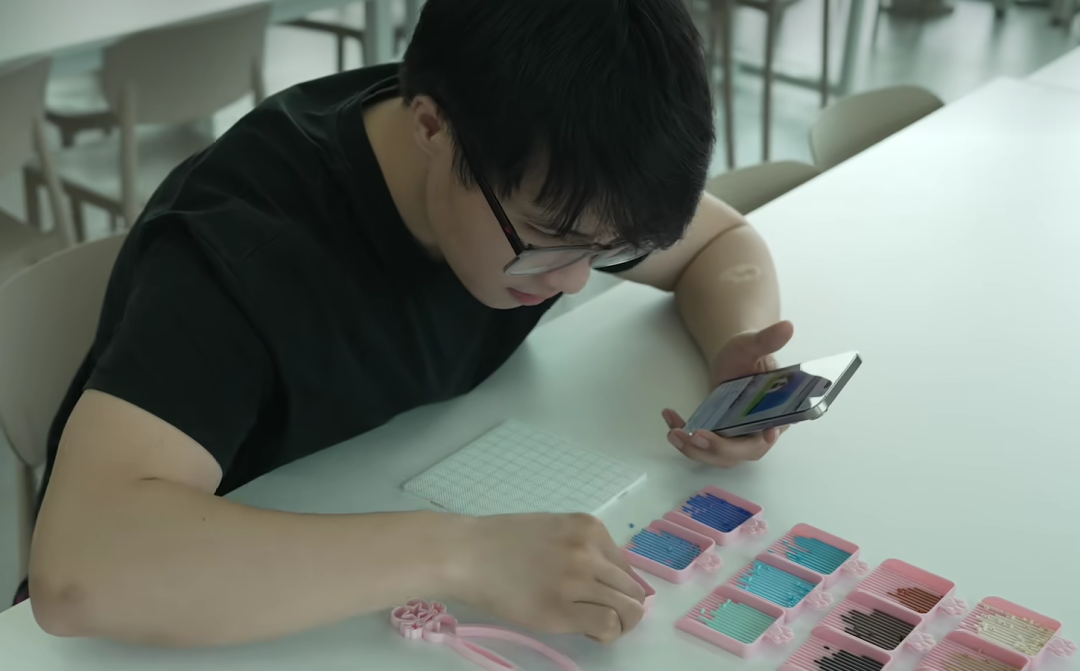
A color-blind blogger, 'Taike,' modifies AI glasses for bead art
iFLYTEK's AI glasses also gained traction in outbound travel by addressing real user pain points. Many international travelers report that in European countries, restaurant menus, subway signs, and museum exhibit descriptions previously required phone-based photo translations—inconvenient while walking. AI glasses now directly recognize text, display translations on the lens, provide real-time subtitles during face-to-face conversations, use multi-microphone arrays for noise reduction in noisy environments, support hundreds of languages, and perform basic translations offline.
Behind these two scenarios emerge two models for AI glasses in tourism: 1) Domestic deep travelers, primarily young groups and families, seeking immersive experiences and flexible, personalized guide services over rushed checklist tourism. 2) Outbound travelers, including business travelers and tourists, whose core need is cross-language communication.
Triple Bottlenecks Hindering 'Travel Companions' from Going Mainstream
The market and consumers are brimming with anticipation for AI glasses. Omdia data shows a 306% YoY surge in AI glasses shipments in mainland China in H1 2026, with domestic manufacturers accelerating their breakthroughs. Morgan Stanley predicts global AI glasses shipments could hit 35 million by 2028, maintaining high industry growth rates.
Yet despite rapid growth, the base remains small. Compared to over 1 billion annual smartphone shipments, AI glasses are still in their introduction phase. Even with clear demand in tourism scenarios, three practical bottlenecks—hardware, content ecosystem, and business models—must be overcome for products to reach millions of ordinary tourists' backpacks.
The first bottleneck is the industry's long-standing hardware 'impossible trinity': balancing weight, battery life, and display performance directly determines the travel experience.
For tourism, comfort is the first hurdle. Touring scenic areas with heavy glasses pressing on the nose bridge quickly degrades the experience. While domestic AI glasses have achieved lightweight breakthroughs, with multiple products around 40g (close to regular glasses), adding waveguide displays significantly increases weight.
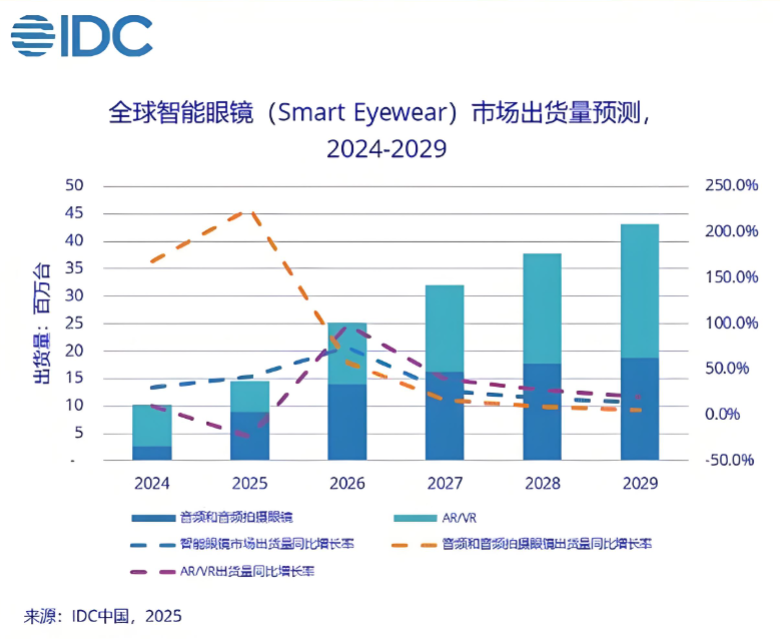
Source: IDC China
Battery life is another critical shortcoming for outdoor travel. Current consumer AI glasses with displays typically last 2–5 hours on a single charge. A full day of urban or scenic area exploration (6–8 hours) exceeds their endurance.
Meanwhile, interaction reliability in noisy environments remains a tough challenge for tourism scenarios. 'I've tested translation in quiet places like homes and meeting rooms—it works well. But in noisy outdoor areas, malls, or scenic spots, recognition accuracy drops noticeably,' says Vicky, a frequent international traveler and business traveler, to Zinke. 'Poor network connections also cause delays and stuttering, which happens often abroad.'
The second bottleneck is the insufficient supply of cultural tourism content. Hardware exists, but high-quality localized service content is severely lacking.
The success of the Yu Garden pilot relies not just on hardware but on the GPASS framework connecting geographical data, local historical archives, and other services—with hardware as merely the output terminal. Most ordinary scenic areas lack such digital content infrastructure.
Currently, hardware products proliferate, but vertical cultural tourism content is costly to build. For AI glasses to function as proper tour guides in ancient towns or districts requires massive information input and rigorous local verification. Generic large models often output incorrect historical facts, misleading tourists. Each new cultural tourism site demands meticulous content processing, incurring high labor costs.
In contrast, traditional smartphone mini-programs and official account guides have low deployment costs and require no hardware changes—tourists simply scan codes. AI glasses' urban tour guide system, however, involves hardware, content, and technical framework coordination, driving up implementation costs.
Hardware is the skeleton, but cultural tourism content is the flesh and blood. Without a robust content ecosystem, even advanced hardware remains an empty shell.

Source: Upowner 'Daliz Qieqieli'
The third bottleneck is the business model dilemma: high personal purchase costs versus difficult-to-scale profitable public rental models.
Mainstream consumer AI glasses with screens retail from 2,000 yuan to over 10,000 yuan. Convincing most ordinary tourists to buy dedicated devices for infrequent travel involves a high decision-making threshold.
Yet Scenic area (scenic area) rental models also face commercial challenges. Operating rentals requires purchasing large quantities of hardware and incurring ongoing costs for maintenance and staffing. During holidays, demand surges, but devices sit idle during off-peak seasons, lowering asset utilization.
Despite these current shortcomings, AI glasses' immense potential in cultural tourism offers hope for the industry.
Smartphones weren't originally designed for travel either—they evolved into all-purpose devices for communication, socializing, entertainment, and payment, with tourism as just one use case. Similarly, tourism could be AI glasses' breakthrough catalyst, but not their sole purpose. If the industry defines AI glasses merely as 'travel gadgets,' their ceiling becomes obvious.
As the Mid-Autumn Festival and National Day crowds approach, the Yu Garden pilot represents not just a new cultural tourism experience but a real-world test of next-gen wearable computing for the general public. The travel companion story has begun, but the industry still has a long journey ahead before achieving universal adoption.
-
Online Rumors Abound as Audi Refutes Claims of Disowning AUDI Amid Legal Action
-
Apple Finds Itself in a Tight Spot: Can't Sidestep Qualcomm's Reach, Even with Its Own Baseband Chips!
-
When Did Samsung Products Fade from Our Lives?
-
The Next Battle in AI Computing Power: The Rise of "Light"
-
![]()
Whose Golden Week Desperately Needs a Pair of AI Glasses?
-
Yunbao Intelligence Charges Towards IPO: Over 5,000-Fold Revenue Surge in 2.5 Years, Tencent Contributes Nearly 98% of Revenue
-
Field Test of Doubao at Work: Can a Company That Helps Users Kill Time Build a Product That Saves Them Time?", "Doubao, AI, Office Agent, User Growth, Commercialization
-
Ofilm Wins Consecutive Orders for Xiaomi’s Flagship Periscope Telephoto Modules Across Two Generations!