Dialogue with Phoenix Optics: Riding the 'Optics + AI' Wave with Six Decades of Expertise
 09/29 2026
 431
431
In September 2026, the 27th China International Optoelectronic Exposition (CIOE) was held with great fanfare at the Shenzhen International Convention and Exhibition Center. During the event, OFweek Optoelectronics had the distinct privilege of interviewing Guo Jingyun, the Brand Supervisor of Phoenix Optics, to gain insights into how this 61-year-old optical industry stalwart is navigating new opportunities amidst the 'Optics + AI' revolution.
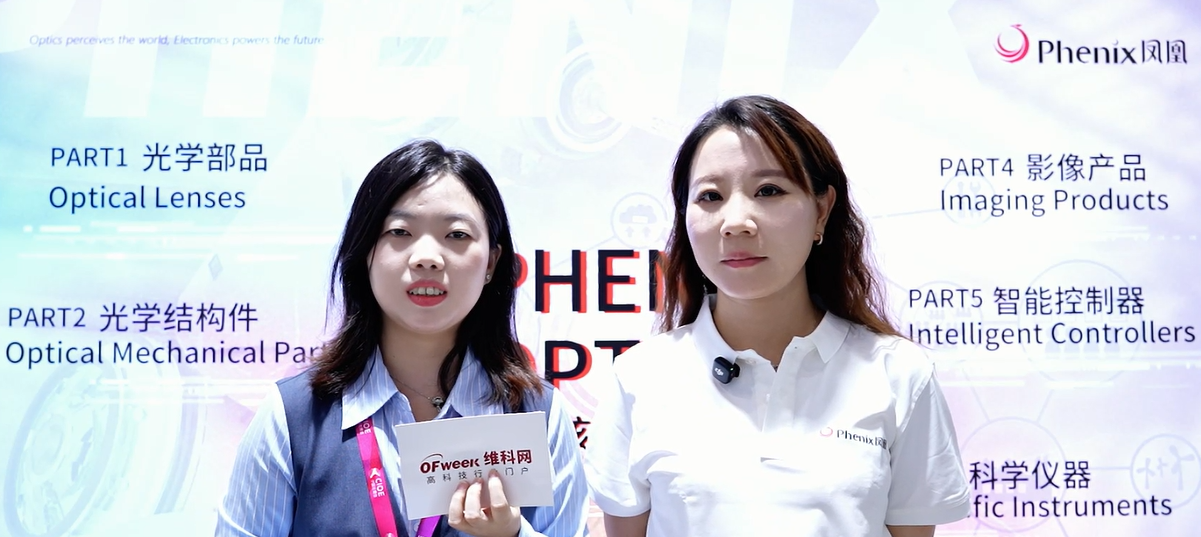
As the first listed company in the entire optical sector, Phoenix Optics was established in 1965 and has since traversed a remarkable 61-year journey. Since the inaugural CIOE, Phoenix Optics has been a consistent presence, participating in all 27 editions to date. At this year's expo, Phoenix Optics showcased nine core business segments, encompassing optical components, metal parts, visible light lenses (for security, automotive, consumer, and industrial applications), infrared thermal imaging lenses, machine vision/industrial lenses, medical endoscopes, scientific instruments, intelligent controllers, and intelligent imaging products. This comprehensive display underscored its full-chain synergy capabilities, spanning from core components to intelligent systems.
New Product Launch: Insight3 Panoramic Multi-Dimensional Microscopic Imaging System Makes Its Debut at CIOE
At this year's exposition, Phoenix Optics' scientific instrument division unveiled the newly launched Insight3 panoramic multi-dimensional microscopic imaging system, which quickly became one of the most buzzed-about highlights. As Phoenix Optics' latest breakthrough in scientific instrumentation, the Insight3 system signifies a major leap forward in microscopic imaging technology, transitioning from traditional optical microscopes to intelligent, multi-dimensional imaging solutions.
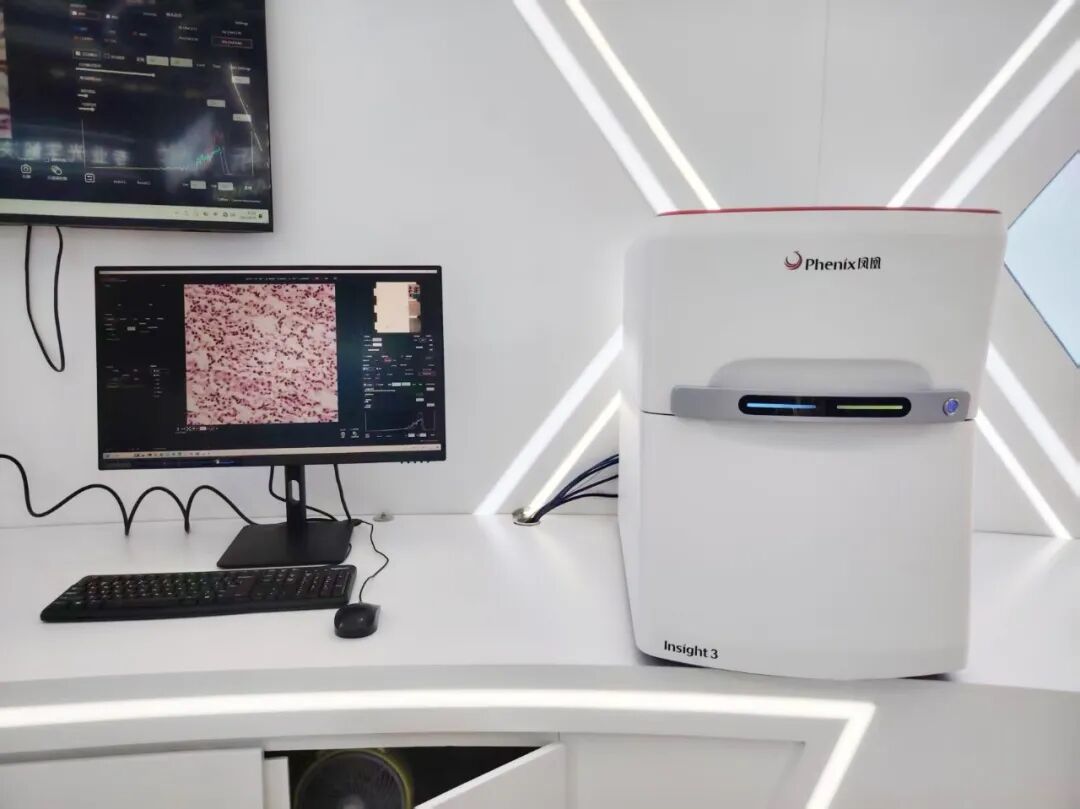
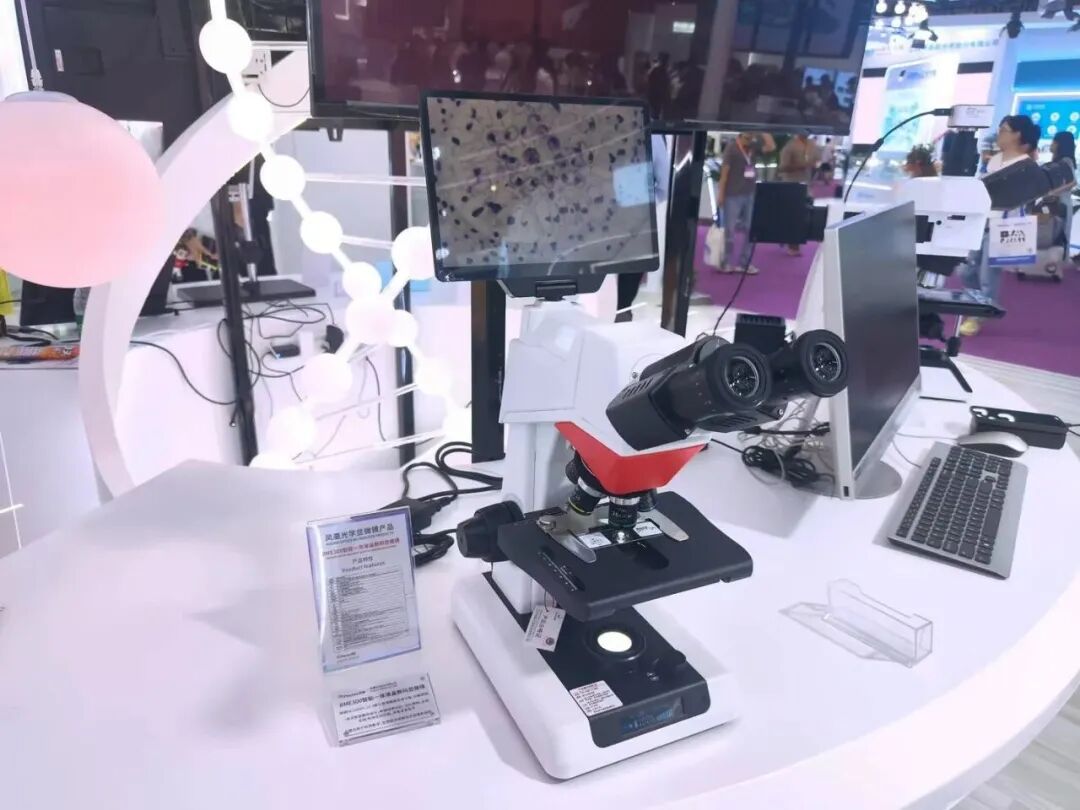
Phoenix Optics boasts a rich heritage in optical instrumentation, offering a comprehensive range of products including biological microscopes, fluorescence microscopes, digital microscopes, polarizing microscopes, stereomicroscopes, and industrial microscopes. The introduction of the Insight3 system further enhances the company's scientific instrument portfolio, highlighting Phoenix Optics' deep integration capabilities in the vertical domains of 'optics, mechanics, electronics, and computing'.
From the concentrated showcase of its nine business segments to the debut of the Insight3 product, Phoenix Optics sent a resounding message at this CIOE: this 61-year-old optical veteran is meeting market demand for high-end optical instruments with smarter, more systematic product offerings.
Industry Trends: AI and Optical Communication Heat Up, LiDAR Emerges as a Key Opportunity
With the exponential growth in demand for artificial intelligence computing power, the optical industry is experiencing a fresh wave of technological innovation and market expansion. AI large model training and inference necessitate ultra-large-scale data center support, imposing extreme demands for high-speed, low-latency, and high-bandwidth network transmission. In the optical module sector, 800G has emerged as the standard for short-distance high-speed optical modules, while 1.6T transmission rate optical modules are also gaining momentum in development. Emerging technology directions such as CPO/LPO and silicon photonics are garnering significant attention.

Currently, Phoenix Optics focuses on two primary areas: precision optics and intelligent controllers. Its business primarily revolves around the research, development, manufacturing, and sales of precision optical and intelligent controller products. Phoenix Optics can tailor optical and electronic-related components to customer specifications, a capability rooted in its 61 years of technical accumulation and extensive practical experience with overseas clients.
When discussing shifts in market demand since the latter half of the year, she observed that the overarching themes and trends at the Beijing Supply Chain Conference held earlier in the year were closely intertwined with AI. However, at the CIOE, the most striking impression was the overall resurgence in the optical communication sector.
Future Outlook: Vietnam Base Established, Global Expansion Unlocks Growth Potential
Looking ahead one to two years, Phoenix Optics anticipates that the greatest growth opportunities in the optoelectronic industry will continue to revolve around AI. "We are also aligning ourselves in this direction while exploring opportunities along the way," she disclosed. During this exploration, Phoenix Optics has made significant strides in the LiDAR sector. The company has excelled in the LiDAR lens business this year and is currently a partner of several leading companies in the domestic LiDAR field.
According to reports, Phoenix Optics boasts full-industry-chain collaborative manufacturing capabilities in the LiDAR sector, with products catering to scenarios such as automotive main radars, blind-spot filling radars, robots, and consumer-grade lawn mowers, all adhering to automotive-grade reliability standards. Both primary and auxiliary materials have achieved localization substitution. As the LiDAR market transitions from a singular focus on autonomous driving to widespread affordability across all scenarios, Phoenix Optics is well-positioned to capitalize on this trajectory.
Beyond industry trends, Phoenix Optics' market strategy is equally noteworthy. According to a company announcement, Phoenix Optics plans to establish a wholly-owned subsidiary, Phoenix Optics (Vietnam) Co., Ltd., in Vietnam and invest in constructing a production base there, primarily focused on the manufacturing and assembly of optoelectronic products.

Guo Jingyun stated in the interview that this strategic move is based on the premise of international cooperation and mutual benefit, taking into account the global landscape. "We have already commenced construction in Vietnam," she said, noting that specific details will be disclosed to the public at an appropriate juncture.
Conclusion
From the launch of the Insight3 panoramic multi-dimensional microscopic imaging system to its astute assessment of AI trends, and culminating in the establishment of a base in Vietnam, Phoenix Optics exemplifies a clear development trajectory: responding to market demands with product innovation, embracing trends with technical prowess, and forging ahead with a global outlook.
Sixty-one years are sufficient for a company to witness multiple industry cycles. Through its unwavering participation in 27 consecutive CIOE editions and its continuous introduction of innovative products and strategic layouts, Phoenix Optics has established itself as a formidable force in the optoelectronic industry. As the 'Optics + AI' fusion wave surges, this optical veteran is poised to pen a new chapter with a more open and progressive mindset.
-
![]()
Office Agent Showdown: Kingsoft, SenseTime, iFLYTEK, Youdao - Who Makes the Cut, Who's Just Along for the Ride?
-
![]()
Starting at 118,800 yuan with standard LiDAR, the new Lynk & Co 20 is all business this time around.
-
COSTAR Auto Optoelectronic Display Branch Passes Supplier Admittance Review by a Leading Headlamp Enterprise!
-
![]()
Domestic Memory Behemoth Unveils Plan to Invest 34.9 Billion Yuan in Production Scale-Up
-
![]()
Why Is Luxshare Precision Covering the Costs for Chenling Optics, Despite Harson’s Aborted Acquisition?
-
![]()
Dialogue with Phoenix Optics: Riding the 'Optics + AI' Wave with Six Decades of Expertise
-
![]()
Competing on Assets, Not Just Price: 10 Key Insights from NIO and Geely's Battery Swap Integration
-
![]()
Fliggy is Becoming More and More Like a Plugin