Apple's Unreleased AI Glasses: Chinese Manufacturers Have Already Broken into the Overseas Top 3
 11/20 2026
 376
Chinese AI Glasses Sprint Ahead Overseas
By VR Top
Apple's first AI glasses may be more "simple" than imagined.
Recently, Bloomberg once again disclosed more details about Apple's first smart glasses. The product, internally codenamed N50, is reportedly planned to debut in 2027. The first-generation product is expected not to feature an AR near-eye display system, but instead to revolve around the camera, Siri, and the iPhone application ecosystem.
This is somewhat unexpected. After all, the Apple Vision Pro released two years ago pushed high-specification display and spatial interaction to new heights. Now, the first pair of AI glasses Apple is preparing to launch does not even have an AR display.
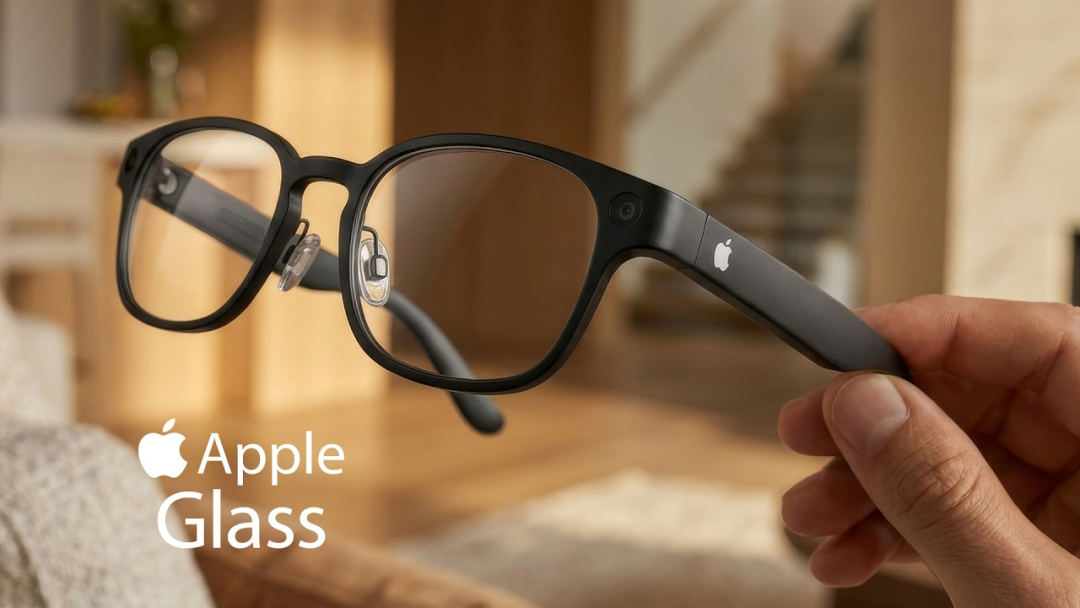
Third-party overseas render of Apple Glasses
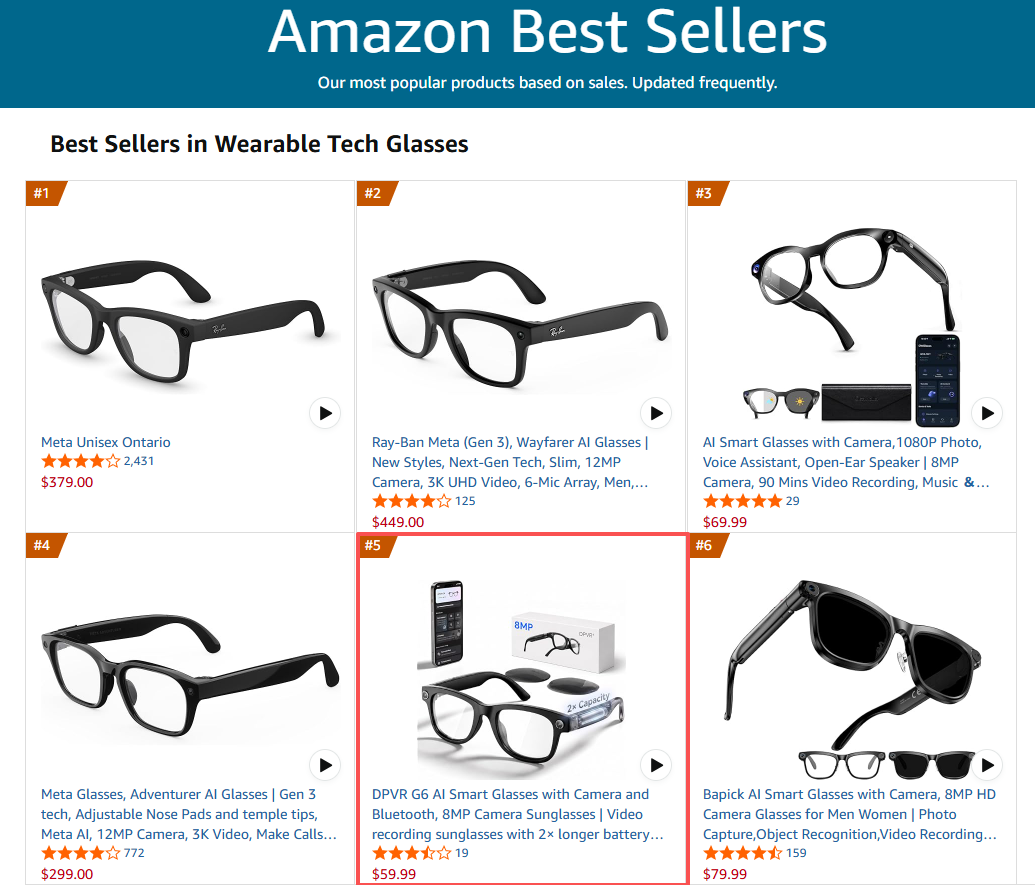
It is worth mentioning that before Apple officially entered the market, Chinese manufacturers such as RayNeo, Rokid, and DPVR had already begun their layouts. From display-free AI glasses focused on shooting and voice interaction to products integrating AR display and AI interaction, different technological routes are being advanced simultaneously. Among them, DPVR's AI sunglasses recently announced that they had achieved a market ranking of top three brands and top five individual products on the smart glasses subcategory lists on Amazon in the United States and Japan.
These technological forms and market results mean, for Apple, both that consumer demand for AI glasses has been preliminarily verified, and that the market this tech giant is about to enter already has a group of Chinese players who entered first. It would not be an exaggeration to call it a red ocean.
01
From 750g down to 50g, Apple re-examines "spatial computing"
Apple's seemingly "downgraded" product choice this time may be another rethinking of its "spatial computing."
In 2024, Apple officially opened its spatial computing era with the Apple Vision Pro, attempting to bring users a brand-new XR experience with high-specification 4K-per-eye display, eye tracking, gesture interaction, and spatial audio. The subsequent M5 version further improved performance, but its weight of up to 750g still limited long-term daily wear of the device.
By contrast, Apple's upcoming AI glasses are heading in another direction. The latest disclosures show that Apple's first AI glasses will adopt an appearance closer to traditional glasses, with built-in cameras, microphones, and speakers, mainly interacting with users through voice. Its prototype runs a streamlined version of visionOS and is equipped with a processor developed based on Apple Watch chip technology.
As for product weight, Apple has not yet announced specific parameters, but referring to the form of mainstream display-free AI glasses such as Ray-Ban Meta, it is speculated that the weight may be controlled within 50g.
From 750g to 50g, it can be seen that Apple is reweighing what kind of performance and daily experience a device that needs to be worn on users' faces for long periods really requires. Vision Pro pursues high-specification immersive spatial experience, while AI glasses pay more attention to lightweight design, daily wear experience, and deep integration of AI capabilities. For wearable devices aimed at the mass market, the latter is clearly closer to ordinary consumers' daily use needs.
What actually underpins Apple's shift in product route is, most crucially, the continuous development of multimodal AI. Since 2024, Apple has accelerated its layout in generative AI technology. Its Apple Intelligence has gradually integrated capabilities such as visual intelligence, real-time translation, and Siri intelligent interaction into the iPhone. In November this year, the first batch of Apple Intelligence features also entered the Chinese mainland market through the iOS 27.3 developer beta.
These capabilities are also expected to extend to AI glasses, allowing display-free AI glasses to cover enough AI scenario needs while reducing hardware costs and wearing burden. At present, display-free AI glasses remain the dominant market form. Counterpoint Research data shows that in the first half of 2026, global AI glasses shipments increased by 263% year on year, of which display-free AI glasses accounted for 96% of total shipments.
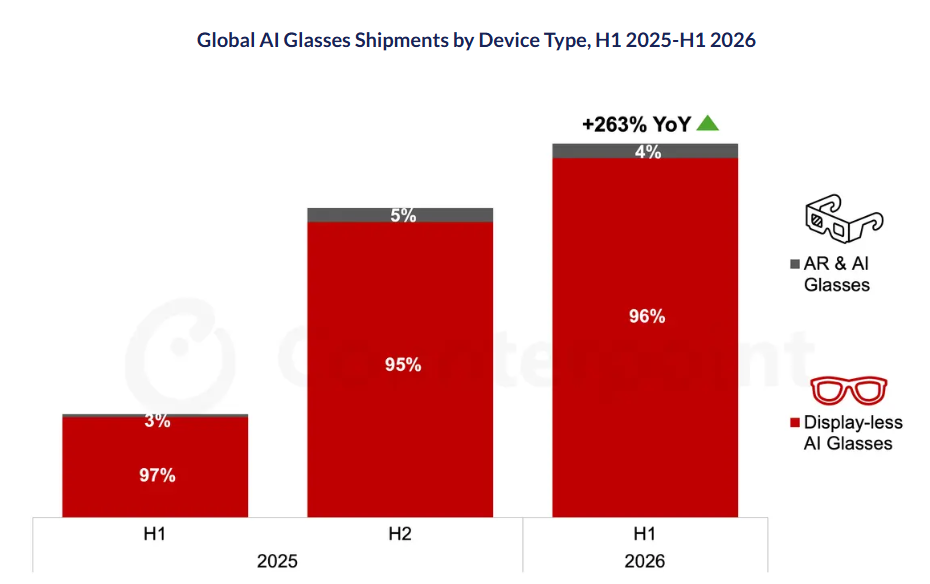
Source: Counterpoint Research
However, what Apple is really betting on is clearly not just the hardware itself.
02
Giants compete on ecosystems, startups race for speed
The core competitiveness of Apple's first AI glasses is very likely to come from its huge software ecosystem. According to Bloomberg, Apple is promoting deep integration between Siri and iPhone applications. In the future, users can issue voice commands through the glasses and directly invoke applications on the phone to complete operations such as restaurant reservations, ride hailing, and shopping. This deep synergy between software and hardware is Apple's differentiated advantage in entering the AI glasses market and its natural barrier as a phone manufacturer.
However, although Apple has ecosystem barriers, Chinese manufacturers also have their own first-mover advantages. Over the past two years, a group of Chinese manufacturers ranging from RayNeo and Rokid to DPVR have successively launched various AI glasses in different technological forms. Some companies have even entered overseas markets, continuously strengthening brand awareness and expanding market share through cross-border e-commerce, local channels, and product iteration.
Taking DPVR as an example, this spatial computing company, which has struggled in the VR field for more than ten years, began its layout in 2024 and extended its product line to lighter smart wearable devices. Similar to Apple's product thinking for AI glasses, DPVR chose to start with cameras, audio, and AI interaction, integrating these functions into the appearance of traditional glasses, especially sunglasses.

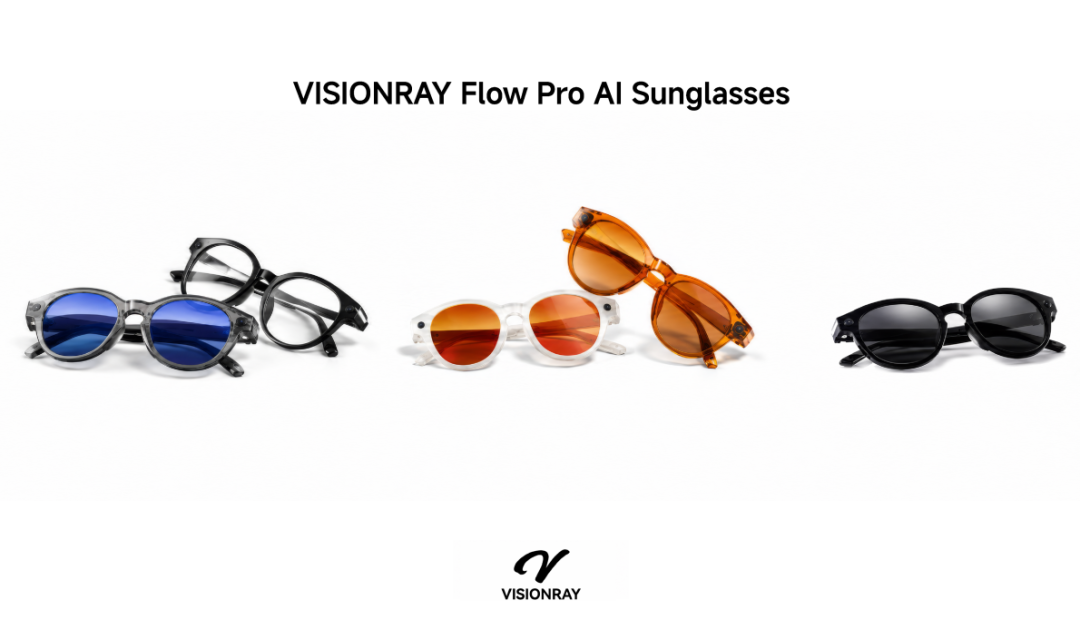
Around different consumer needs, DPVR has successively launched multiple series such as G1 to G7 and VisionRay Flow, offering different frame shapes, imaging configurations, and lens options. For example, products such as G1 and G3 mainly meet basic first-person shooting, audio, and AI interaction needs; G7 further upgrades imaging capabilities, equipped with a 20-megapixel camera, while keeping weight at about 35g; at the same time, VisionRay Flow also offers different appearance versions such as Pilot and Crystal to adapt to daily, travel, and outdoor scenarios.
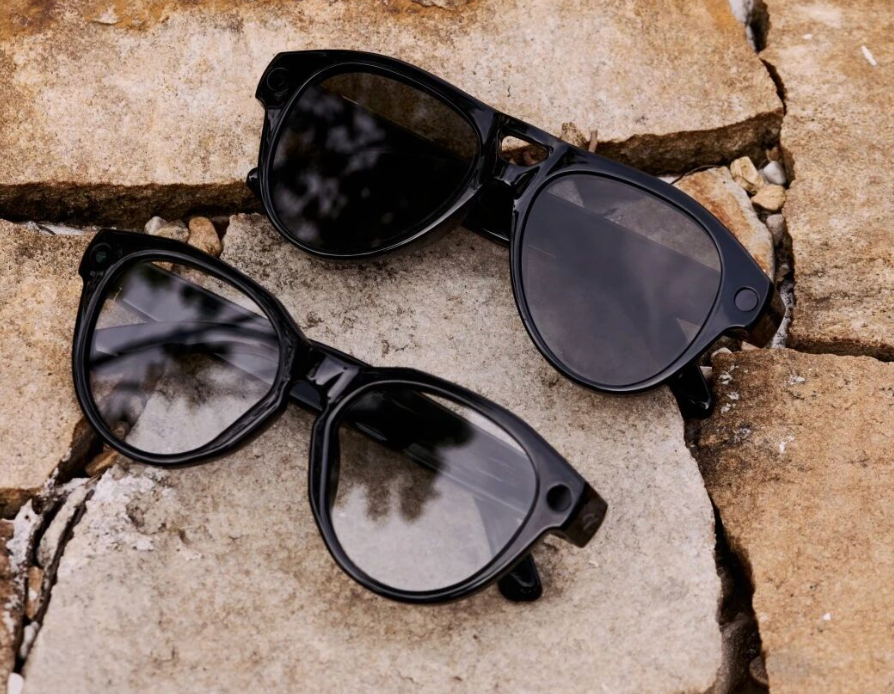
In terms of AI capabilities, for overseas markets, DPVR's AI sunglasses have integrated mainstream large models such as ChatGPT and Google Gemini, supporting functions such as AI voice interaction and real-time translation in 80+ languages. At present, it is also exploring the combination of multimodal perception and proactive AI capabilities, hoping to let AI glasses gradually move from passively responding to voice commands to understanding the user's environment and providing more proactive intelligent services.
Compared with betting on a single flagship product, the value of this multi-SKU layout lies in the ability to bring different product solutions to market faster, test consumers' real acceptance of appearance, functions, and prices, and provide a basis for subsequent product adjustments.
This strategy has also achieved results in overseas markets. According to the historical category rankings of Amazon Smart Glasses, DPVR's AI sunglasses once entered the top five best-sellers in the smart glasses subcategory on the US and Japan sites, and ranked among the top three by brand. In addition to the US and Japan markets, last December DPVR also disclosed that after the first batch of mass-produced AI glasses shipped, they quickly sold out, and cumulative bulk order demand from Southeast Asia, Europe, the Middle East, and other regions reached tens of thousands of units.
From launching products to entering overseas channels, and then to various localized AI functions, DPVR has already gained opportunities in actual sales to validate products and adjust strategies. In the AI glasses market, where new product iteration cycles are constantly shortening, this feedback from real users and channels is itself part of the first-mover advantage.
This pace of advancement is also related to DPVR's years of accumulation in its previous VR business. After more than ten years of development, DPVR has formed a sales network covering nearly 40 countries and regions, and has accumulated experience in hardware R&D, supply chain coordination, mass production delivery, and overseas customer service. After entering the AI glasses market, these capabilities can be directly used in new product development, manufacturing, and channel expansion, reducing the exploration cost from product R&D to overseas sales.

Overseas users share their experience using DPVR AI sunglasses
By comparison, although Apple has a mature software and hardware ecosystem, its first AI glasses are expected to debut only in 2027. Before that, Chinese manufacturers such as DPVR have already entered the market first, validating product demand through actual sales and adjusting product directions through continuous iteration.
This is also the important significance of Chinese AI glasses manufacturers entering first: not only launching products earlier than Apple, but also striving for more opportunities for product trial and error, market validation, and user accumulation before the giant officially joins the competition.
03
From "spatial display" to "spatial intelligence," Apple, DPVR, and others continue to explore the boundaries of spatial computing
The development of AI is bringing new possibilities to spatial computing.
In the past, technological competition in spatial computing devices mainly revolved around display effects, spatial positioning, motion tracking, and interaction experience. With the rapid development of multimodal AI, devices can not only perceive the external environment but also further understand user intent, identify scene information, and provide corresponding intelligent services.
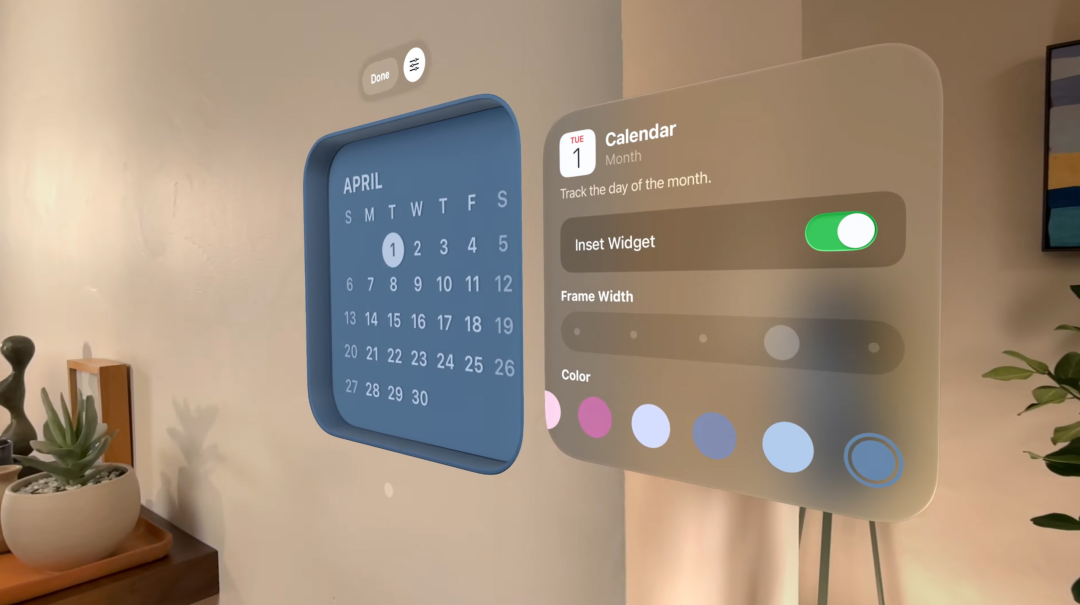
This also gives spatial computing a chance to break away from dependence on traditional headset forms and enter broader consumer and industrial scenarios. Apple's product layout has already shown this change. Vision Pro is still exploring high-performance spatial display and immersive interaction, while the upcoming AI glasses attempt to integrate capabilities such as visual perception and voice interaction into daily wearable devices with the help of Apple Intelligence. The two routes are not contradictory, but rather Apple's exploration of spatial computing product forms for different use scenarios.
Similar trend changes have in fact long been reflected in DPVR, which has "sprinted ahead." In recent years, DPVR's product layout is no longer limited to traditional VR headsets, but has extended in two directions: high-performance spatial display and applications of spatial interaction technology, continuously exploring the implementation of spatial computing in different scenarios.
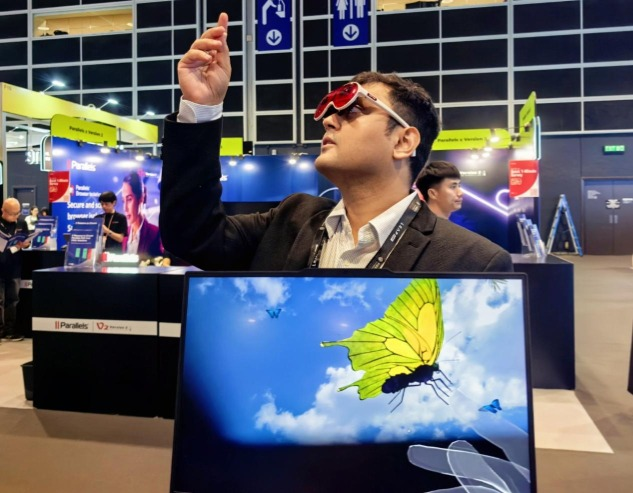
On the one hand, DPVR launched the lightweight PCMR product Project TITAN this year. Through the architecture of Micro-OLED microdisplay, color VST passthrough, and an external computing unit, it achieves an 8K-level display experience while keeping the headset weight at about 110g, further exploring the balance between high-performance spatial display and lightweight wear.
On the other hand, DPVR is also applying the spatial positioning, motion tracking, and low-latency interaction capabilities accumulated in its VR business to the field of embodied intelligence. Its RoboPilot solution launched this year uses 6DoF spatial positioning and motion tracking to enable robot teleoperation and training data collection, allowing technology originally serving VR interaction to enter robot training scenarios. It has successively reached cooperation with well-known embodied intelligence companies such as Unitree, JAKA, Dobot, OYMotion, and AgiBot.
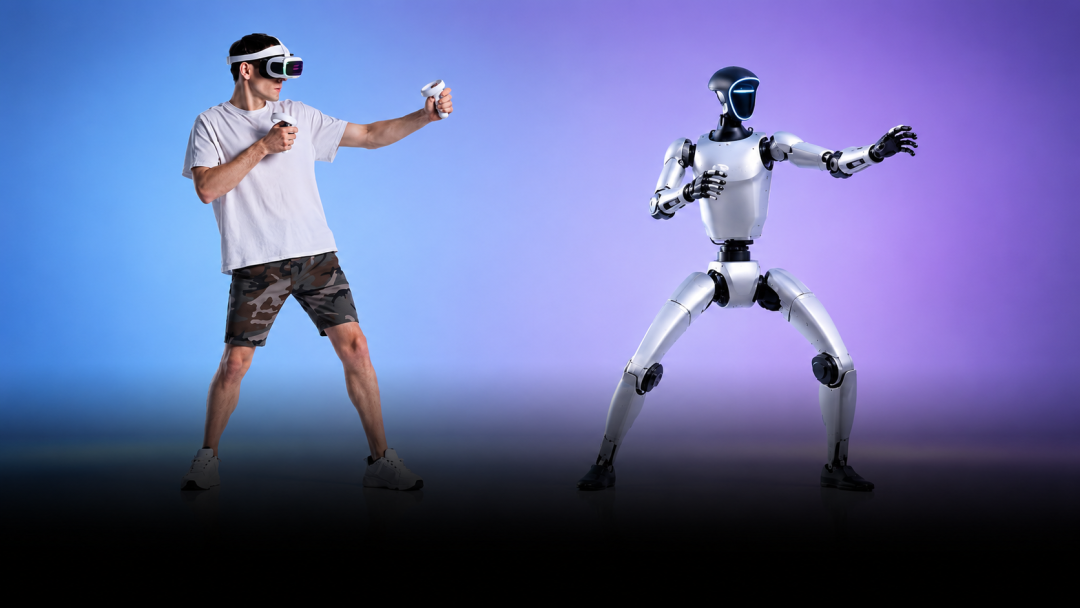
From AI sunglasses to lightweight PCMR, and then to robot teleoperation, although DPVR's product layout spans different markets, all of it is related to the technical capabilities it has accumulated in the XR field in the past. The difference is that these capabilities are no longer only used to improve the experience of VR headsets, but are gradually entering new application scenarios such as daily wearables, professional displays, and robot training.
To some extent, Apple and DPVR are exploring new opportunities in the spatial computing industry from different directions. The former relies on AI and software ecosystems to try to bring spatial perception and intelligent interaction into the mass consumer market; the latter seeks the commercial value of XR technology in more industrial scenarios through cross-domain applications of display, positioning, tracking, and interaction technologies.
Moving from "spatial display" to "spatial intelligence" does not mean that high-performance displays will be replaced by AI. Rather, as AI becomes more deeply integrated with spatial perception and interaction technologies, the application scenarios of spatial computing are expanding from traditional head-mounted displays to more devices and industries.
04
Final Thoughts
To some extent, the currently booming AI camera glasses may be just an "appetizer" served up by these spatial computing companies.
Display-free AI glasses have already provided preliminary validation of market demand and are getting more consumers accustomed to wearing AI capabilities on their bodies. But for companies like Apple and Dapeng that have long been deeply engaged in spatial computing, the current product forms are clearly not yet enough to demonstrate the full extent of their technological accumulation.
Only when AR optical waveguides, cameras, 6DoF spatial positioning, SLAM, and multimodal AI are further integrated will smart glasses have the opportunity to move from simple information recording and voice interaction toward continuous perception, understanding, and spatial interaction with the real environment. Of course, the arrival of that day will still take time. There remain many engineering challenges to solve across optical displays, overall power consumption, weight, battery life, and cost.
The current display-free AI glasses may be cultivating user habits and building a market foundation for more complex spatial computing products. And for spatial computing companies like Apple and Dapeng, the competitive phase in which they can truly and fully unleash their technological accumulation may still lie ahead.
-
![]()
AI in This Year: The Apps That Fell
-
What Pinduoduo Left Unsaid on Its Earnings Call
-
![]()
Full Capacity Orders: This Optics Company's Revenue Hits 88.44 Million Yuan in First Ten Months
-
![]()
Personnel Change: Sun Gaofei, Independent Director of Zhongguangxue, Resigns
-
MoJie Technology Makes Its APEC Debut Following 600 Million Yuan Financing: A Full-Chain Optical Layout
-
![]()
Tencent: The Biggest Earner Takes the Hardest Fall
-
![]()
Seedance vs. MiniMax vs. Qwen: 3 Rounds of Continuous Edits — Which One Is More Usable?
-
![]()
Smart Glasses Offline Experience Stores—Why Can't They Get Off the Ground?