Why Are AR Glasses Increasingly Paired with Interaction Rings: Filling a Gap, or a New False Need?
 11/25 2026
 519
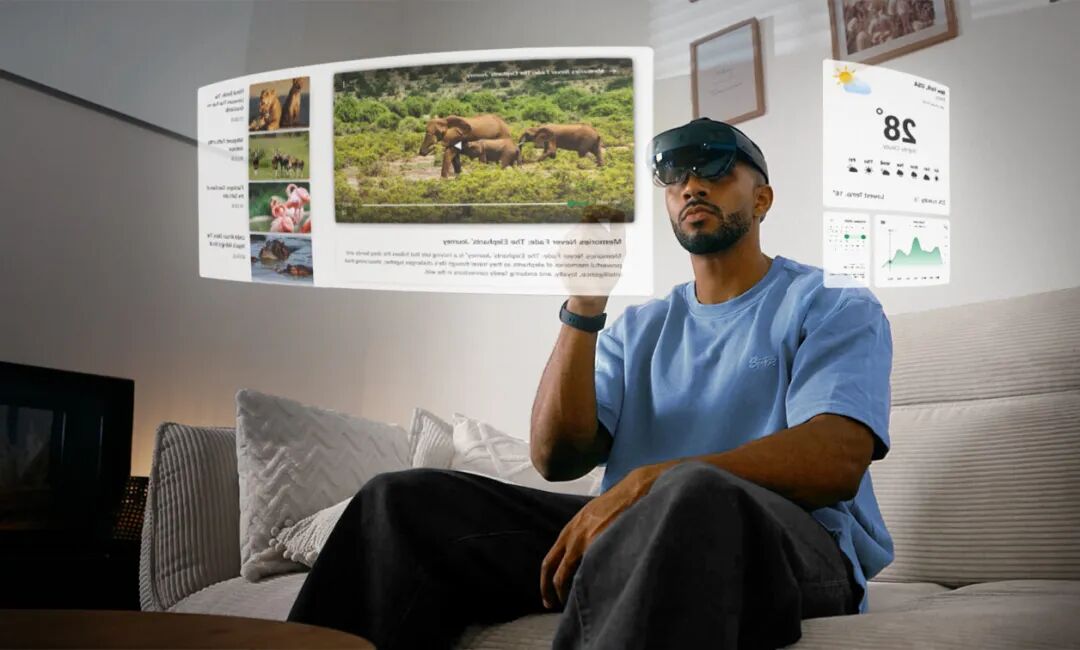
Let us first imagine a scenario: a person wearing AI/AR glasses is riding the subway.
Now they want to listen to music and skip tracks, but have to repeatedly raise a hand to touch the temple and swipe—which is very inconvenient. If they want AI to look up some information, speaking out loud to wake it on the subway is too embarrassing. Visual gestures are even more out of the question, because the hand must be raised into the field of view to be recognized, and in a crowded space there isn't even room to raise a hand.
As a result, many people have pinned their hopes on rings. Since the beginning of this year, more and more brands have combined these two seemingly unrelated things: glasses and rings.
In 2026, AR interaction rings suddenly moved from laboratory prototypes to the forefront of the consumer market. Upstream chip and sensor manufacturers successively launched technical solutions, and domestic AR manufacturers were the first to bring finished products that can be purchased directly to market.
A slight movement of the fingertip can control the glasses. It sounds like a perfect solution to the interaction pain points in public scenarios—but is the ring an interaction breakthrough or a gimmick?
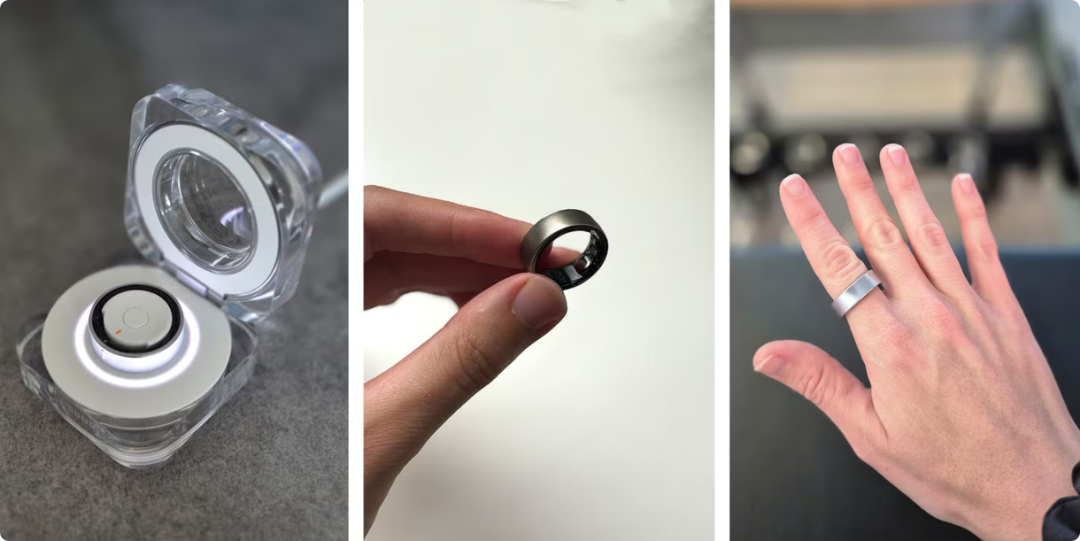
01 The Year Interaction Rings Move Toward Commercialization
First of all, 2026 is the year in which the industrial path for interaction rings becomes clear.
In the first half of the year, upstream manufacturers such as Bosch and Qualcomm laid the groundwork, launching sensor and platform-level technical solutions; in the middle of the year, technical iteration and optimization were completed; by the fourth quarter, domestic terminal brands were the first to bring consumer-grade finished products to market. The entire route advances step by step from underlying technology to terminal products. There are not many ring products truly designed for AR spatial interaction—most still remain at the solution level.
① Bosch BMI5 ‖ Preliminary Groundwork for Underlying Perception Technology
In January 2026, at the CES International Consumer Electronics Show, Bosch officially released the BMI5 AI MEMS sensor platform. This is not a finished ring sold directly, but an underlying sensor solution for terminal manufacturers, providing high-precision motion perception support for various subsequent interaction rings.
The platform includes three sub-models, among which BMI560 is specially optimized for XR headsets and smart glasses, and BMI563 is aimed at XR controller peripherals. The entire solution is equipped with a customized inertial measurement unit and features low noise, low latency, and high dynamic range. It can accurately capture micro-gestures such as thumb rubbing, tapping, and sliding, while reducing the probability of misrecognition through on-chip AI algorithms.
Bosch officially introduced that the advantage of this sensor suite lies in extremely low power consumption, adapting to the battery life constraints of AR glasses, and not relying on cameras, so it can work normally in environments with no light or strong light. In an on-site report from Electronic Engineering Album at CES, it was mentioned that Bosch's solution is one of the core technical foundations for XR interaction peripherals in 2026, and many domestic glasses manufacturers are developing adaptations based on it.
② Qualcomm Second-Generation Smart Ring Controller ‖ Ecosystem-Level Reference Design Iteration
In June of this year, at AWE Global Augmented Reality Expo in the United States, Qualcomm released the second-generation Smart Ring Controller reference design, which belongs to the Snapdragon AR ecosystem support system, and all third-party AR glasses equipped with Snapdragon AR series chips can adapt to it. Qualcomm does not directly make consumer retail products, but instead outputs standardized design solutions to partner brands, lowering the development threshold for terminal manufacturers.
LEDinside on-site reports show that the second-generation solution is built on the Snapdragon S7+ Gen1 platform, adopts a dual connection mode of Bluetooth Low Energy + low-power Wi-Fi, recognizes users' micro-gestures through on-chip AI, serves as a low-power input interface for XR glasses, and also integrates health monitoring functions.
The solution has a built-in microphone and supports users to wake the AI assistant in a low voice, solving the privacy issue of voice interaction in public scenarios. It can also switch control across glasses, mobile phones, and car systems. Qualcomm officially stated clearly that the current smart ring is positioned as an interaction accessory for wearable devices and will not yet be pushed as an independent product category. As of November 2026, this solution remains the most mature underlying AR ring interaction solution in the industry.
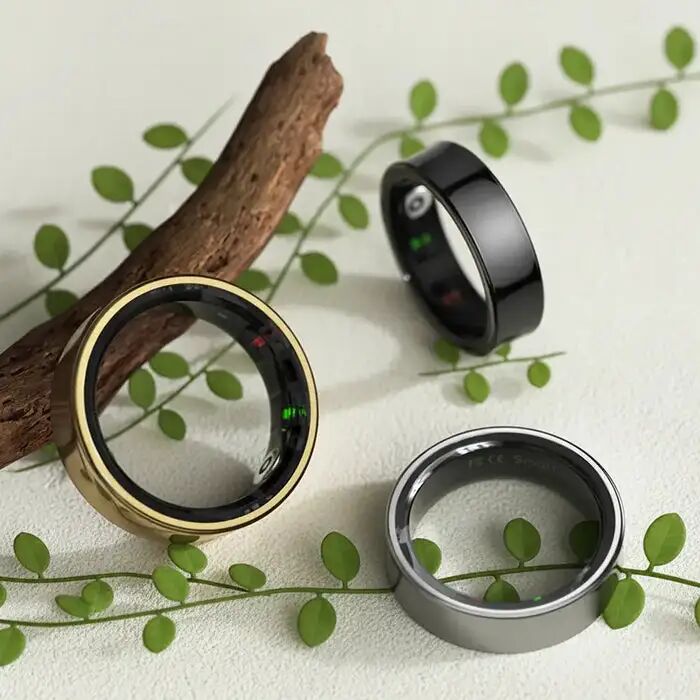
③ Rokid Ring ‖ Domestic Consumer-Grade AR Companion Ring Lands
On October 27, 2026, Rokid launched the Rokid Ring interaction ring at the Jungle 2026 new product launch event. This is China's first native companion ring officially sold by an AR glasses brand, with an official price of 1,699 yuan and a loyal customer price of 998 yuan for existing users.
The product is compatible with the entire Rokid Glasses 2 and Rokid Color series of glasses, forming a complementary input system with temple touch control and voice wake-up. In terms of functions, Rokid Ring supports micro-gestures such as single tap, double tap, and left-right sliding; it also integrates heart rate, blood oxygen, body temperature, and sleep monitoring functions, balancing the attributes of smart jewelry.
One detail is that by controlling the glasses through AI micro-gestures, a snap of the fingers can take a photo. A Meta engineer commented on this detail as somewhat "chuunibyou," but indeed impressive.
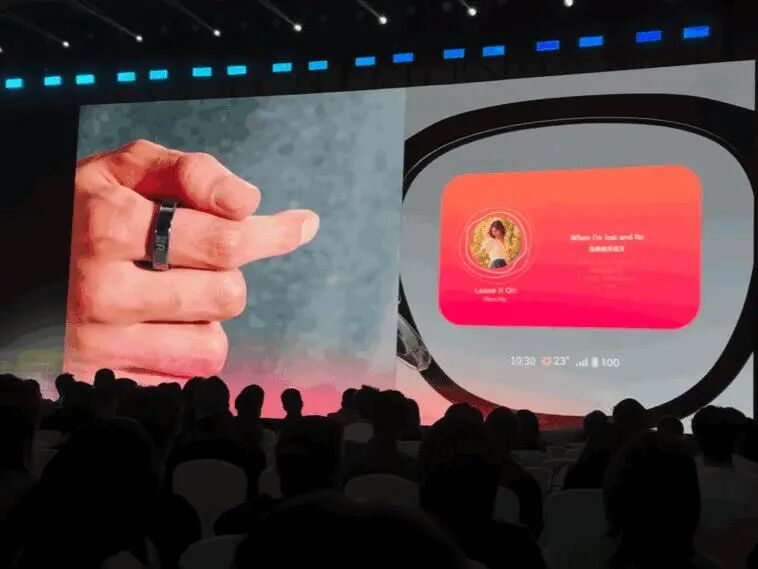
Obviously, the interaction capabilities of rings are constantly improving, and the accompanying question is whether it will bring entirely new experiences and progress to the entire AR interaction method.
02
Interaction Rings Can Fill the Gap,
but Cannot Yet Become the Ultimate Solution
Frankly speaking, the popularity of interaction rings essentially addresses the collective pain points of current AR glasses interaction. Some existing mainstream native interaction methods each have unavoidable scenario defects, and none can simultaneously be discreet, continuous, and usable in all environments.
Among them, the temple touchpad is currently standard on consumer-grade AR glasses, and its problems are obvious: the operation dimension is single, allowing only clicking and one-dimensional sliding; the movement of raising a hand to touch the temple is large and very conspicuous in public places; long-term continuous operation easily causes hand fatigue, and it completely fails when wearing thick gloves.
Voice interaction is the core input method of AI glasses. It is highly efficient in laboratory scenarios, but its scenario limitations are extremely strong. In noisy environments, recognition accuracy drops significantly. Speaking aloud in multi-person offices, public transportation, and quiet scenarios is both embarrassing and prone to privacy leaks. For high-frequency continuous browsing operations, issuing voice commands sentence by sentence is actually more cumbersome than manual operation.
Visual gesture recognition sounds the most natural, but its problems are equally prominent. The hand must remain within the field of view of the glasses camera; if the hand is lowered to the side of the body, tracking is lost; in strong light, backlight, and low-light environments, the recognition rate drops sharply; continuously turning on camera tracking consumes high power and also raises users' privacy concerns.
The ring happens to fill this gap, especially social discreteness. Operations occur only at the fingertips. Slight rubbing or tapping between the thumb and index finger is almost imperceptible to others, perfectly adapting to scenarios such as commuting, meetings, and cinemas that require low-key operation. This is also the core selling point highlighted by brands such as Rokid—moving operations from "the face" back to "the hand," reducing the social pressure of wearing glasses.
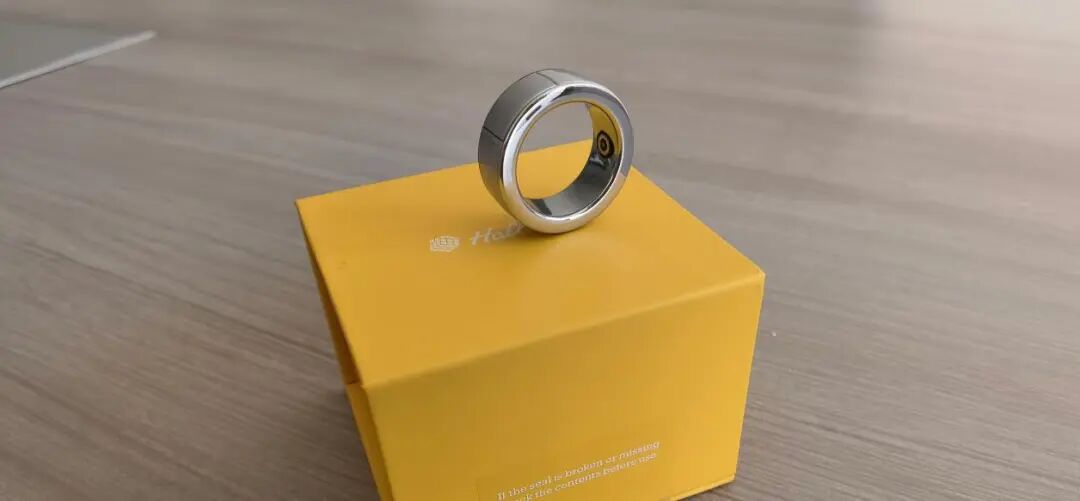
The shortcomings of ring interaction are equally distinct, and its capability boundaries are equally clear: it is a typical complementary interaction and far from being able to "replace all input methods."
For example, its 3D spatial interaction capability is insufficient. At present, all mass-produced solutions can only achieve one-dimensional/two-dimensional operations such as clicking and sliding. For high-precision 3D operations such as dragging, scaling, and rotating 3D objects in AR space, the degrees of freedom and precision of a single ring are completely insufficient. Such scenarios still need to rely on visual gestures or spatial controllers.
03
If Multimodal Fusion Is the Endgame,
Is the Ring Just One Piece of the Puzzle?
Looking back from the end of 2026, the emergence of interaction rings is a sign that the AR interaction system is maturing. It has not overturned any existing interaction method; it has only filled in a missing piece of the puzzle within the multimodal framework.
How should this be understood? The future evolution direction of AR interaction will not be a single solution dominating everything, but different interaction methods each performing their own duties and cooperating with one another.
On the one hand, multimodal division of labor has become an industry consensus. Voice is responsible for long instructions, questions, and expression of complex needs; eye movement is responsible for rapid positioning and gaze selection; the ring is responsible for continuous browsing and confirmation operations; temple touch control provides emergency fallback; visual gestures handle 3D spatial interaction. Each method has its own optimal scenario, and only by combining them can the user's full-scenario usage needs be covered. The solutions from Qualcomm and Rokid are both moving in this direction. The ring has never been a replacement, but a supplement.
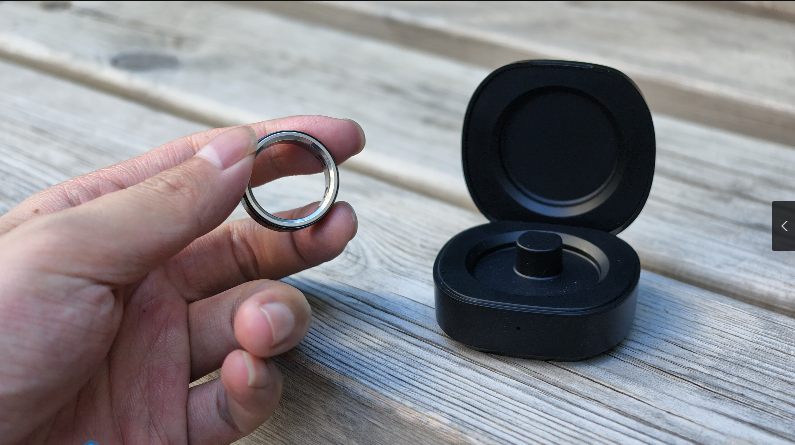
On the other hand, cost reduction is the prerequisite for rings to become widespread. The current pricing at the thousand-yuan level determines that it can only be an optional accessory for a small group of enthusiasts.
If in the future the cost of sensors and solutions decreases and the price of rings drops to the several-hundred-yuan range, it may become standard equipment for mid-to-high-end AR glasses. Before that, it will be difficult for it to break through the niche circle.
Moreover, the wait-and-see attitude of some giants is also worth noting. As of the end of 2026, overseas technology giants such as Meta and Google have not officially launched consumer-grade interaction rings supporting their own AR/AI glasses.
Meta's related technology still remains at the patent stage, and Samsung's smart ring focuses on health monitoring. This shows that within the industry, a unified consensus has not yet formed on the commercial value of ring interaction. Whether it is a rigid demand or a nice-to-have accessory still needs more user data for verification.
The ultimate goal of AR interaction is to make interaction between people and smart devices as natural as communication between people. From touch to voice, then to gestures and rings, every new solution takes one step closer in this direction. The ring has not provided the ultimate answer, but it has finally given glasses operation in public scenarios a more decent choice.
As for whether it can become the standard interaction of the next-generation computing platform? The bullet is still flying, so please stay tuned.
Text / R Xingren
-
Why Are Listed Companies' Financial Reports Starting to Take Douyin E-commerce's Business Logic Seriously?
-
AI Steps on the Gas: A 167-Year-Old Cold Case Finally Hears an Echo
-
![]()
Short Dramas: Big Tech's Q3 Earnings Scapegoat or Lifeline?
-
![]()
Coating Material Selection: Four Critical Gates — Contrast, Absorption, Stress, and Process Window
-
![]()
Maishi Optoelectronics Completes IPO Coaching Acceptance Inspection, Securing 2 Billion Yuan in Financing This Year
-
Second Financing Round of the Year! Chengfeng Technology Secures Tens of Millions of Yuan in B+ Round
-
![]()
Why Can't Hongguo Swallow Bilibili?
-
![]()
The Day After Jensen Huang's Return: The Fed Pours Cold Water on the Rally