Jiangsu Liyang: Leading County in the Power Battery Sector, Propelling Electric Vehicle Growth in Eastern China
 09/14 2026
 537
537
Produced by Zhineng Technology
In the bustling industrial expanse of the Yangtze River Delta, Jiangsu Liyang might easily escape notice.
It lacks a coastal location and is not a provincial capital; administratively, it is merely a county-level city. Yet, a glance at a map belies the fact that it harbors one of the nation's highest concentrations of power battery nodes.
◎ CATL's Jiangsu Branch boasts an annual operational production capacity of approximately 106 GWh for battery cells;
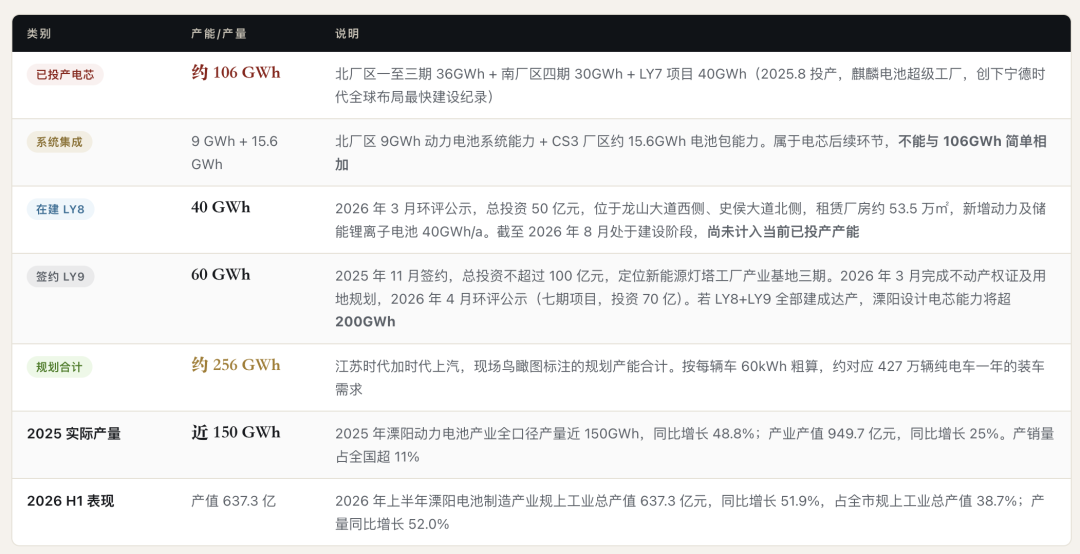
◎ By 2025, Liyang's power battery industry is projected to achieve a comprehensive output of nearly 150 GWh, marking a 48.8% year-on-year surge, with an output value of RMB 94.97 billion, up 25%, and production and sales accounting for over 11% of the national total;
◎ In the first half of 2026, the output value is expected to reach RMB 63.73 billion, up 51.9% again, representing 38.7% of the total industrial output value of the city's enterprises above a designated size, with production volume increasing by 52.0% year-on-year.
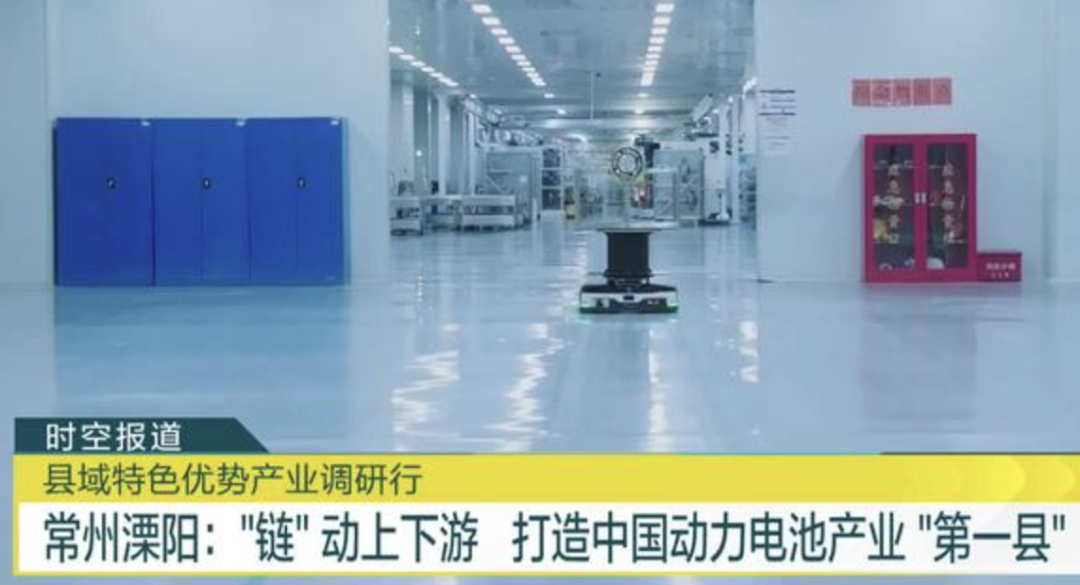
Jiangsu Branch stands as the vital artery of the new energy industrial chain in eastern China, drawing upstream materials, equipment, and structural components within a few kilometers while supplying power and energy storage products to vehicle manufacturers and various applications across the Yangtze River Delta and the entire nation.
A hundred-GWh-scale base is reshaping the industrial landscape of a city and even a region. Here, battery cells and systems are produced, attracting materials, equipment, structural components, R&D institutions, and logistics services to congregate.
Liyang High-Tech Zone currently hosts hundreds of upstream and downstream enterprises in the power battery industry, with an industrial chain completeness rate of 97%. Some suppliers are located just a few kilometers from Jiangsu Branch: battery structural components produced on the same day can be delivered to downstream factories within 24 hours.
Thus, a single factory has evolved into an industrial cluster with a radius of only a few kilometers and an output value exceeding RMB 100 billion.
01 A Quarter of CATL's Battery Production
According to publicly available environmental impact assessments and project commissioning information from Jiangsu Branch, as of September 2026, the confirmed commissioned battery cell projects include:
◎ Phases 1-3 of the North Plant: 36 GWh
◎ Phase 4 of the South Plant: 30 GWh
◎ The LY7 project, commissioned in August 2025 with a designed capacity of 40 GWh
These three projects total approximately 106 GWh. The LY7 is a Qilin Battery super factory, setting the record for the fastest construction in CATL's global layout from commencement to commissioning.
◎ LY8 plans to add 40 GWh, with an environmental impact assessment public notice issued in March 2026, a total investment of RMB 5 billion, and leased factory space of approximately 535,000 square meters, still under construction as of August;
◎ LY9 plans for 60 GWh, signed in November 2025, positioned as the third phase of the New Energy Lighthouse Factory Industrial Base, with an environmental impact assessment in April 2026.
Once both are fully operational, Liyang's designed battery cell capacity will exceed 200 GWh. The combined planned capacity of Jiangsu Branch and SAIC-CATL will be approximately 256 GWh. Based on a rough estimate of 60 kWh per vehicle, this is sufficient to power approximately 4.27 million pure electric vehicles for a year.
The impact of Jiangsu Branch on its surroundings can be viewed through three concentric circles.
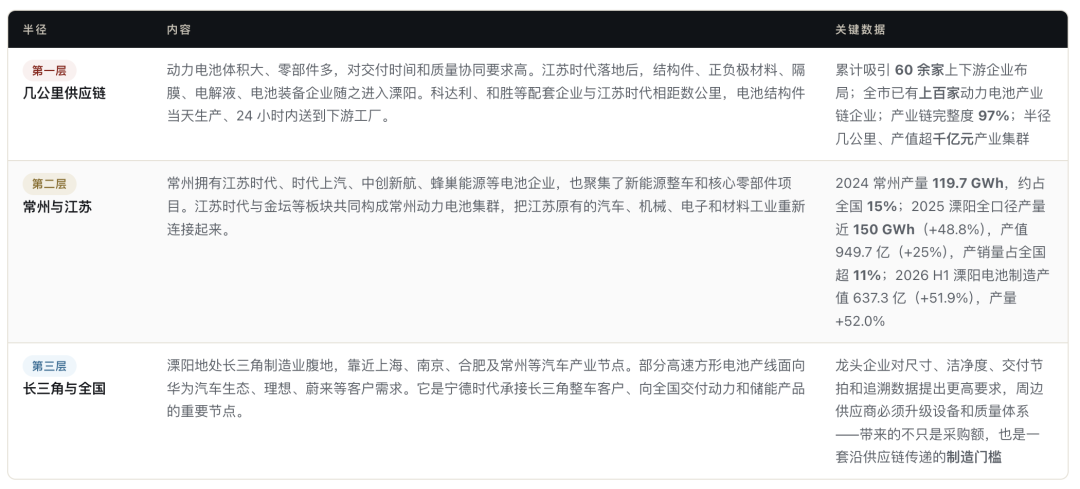
◎ The innermost circle encompasses the supply chain within a few kilometers.
Power batteries are bulky with many components, requiring high delivery time and quality coordination.
After Jiangsu Branch's establishment, enterprises producing structural components, positive and negative electrode materials, separators, electrolytes, and battery equipment entered Liyang.
Local public information reveals that Jiangsu Branch has attracted over 60 upstream and downstream enterprises; currently, the city hosts hundreds of power battery industrial chain enterprises. Supporting enterprises such as KDLI and Heshen are located a few kilometers from Jiangsu Branch, forming close collaboration in raw materials, structural components, and battery manufacturing.
◎ The second circle represents the industrial radius of Changzhou and Jiangsu.
Changzhou itself is home to battery enterprises such as Jiangsu Branch, SAIC-CATL, Calb, and SVOLT, as well as new energy vehicle and core component projects.
◎ In 2023, Changzhou's power battery production accounted for 44.6% of Jiangsu's total, ranking first in the province;
◎ In 2024, Changzhou's power battery production reached 119.7 GWh, accounting for approximately 15% of the national total. Among them, Liyang's power battery shipments accounted for nearly 40% of Jiangsu's total.
Jiangsu Branch, together with Jintan and other sectors, forms Changzhou's power battery cluster and reconnects Jiangsu's existing automotive, machinery, electronics, and materials industries.
Orders from battery enterprises are transmitted upstream, driving material and equipment factories to expand production; battery capabilities are transmitted downstream, supporting new applications such as vehicles, energy storage, battery swapping, and zero-carbon parks.
◎ The third circle extends to the customer radius across the Yangtze River Delta and even the whole country.
Liyang is located in the manufacturing heartland of the Yangtze River Delta, close to automotive industry nodes such as Shanghai, Nanjing, Hefei, and Changzhou.
Local public information indicates that some of Jiangsu Branch's high-speed prismatic battery production lines cater to the needs of customers such as Huawei Automotive Ecosystem, Li Auto, and NIO.
Specific customers and products may change with orders, but the significance of the Liyang base extends beyond local support: it is an important node for CATL to serve vehicle customers in the Yangtze River Delta and deliver power and energy storage products across the country.
Its influence is also reflected in manufacturing standards. Leading battery enterprises impose higher requirements on dimensions, cleanliness, delivery rhythms, and traceability data, necessitating upgrades in equipment and quality systems for surrounding suppliers.
Jiangsu Branch brings not just procurement volume but also a set of manufacturing thresholds passed along the supply chain.
◎ A small factory may occasionally make mistakes, affecting a batch of products;
◎ A hundred-GWh-scale base experiencing the same probability of fluctuations may replicate them across a vast number of battery cells, which then enter different vehicle models, cities, and usage scenarios. The larger the scale, the more minor deviations cannot be treated lightly.
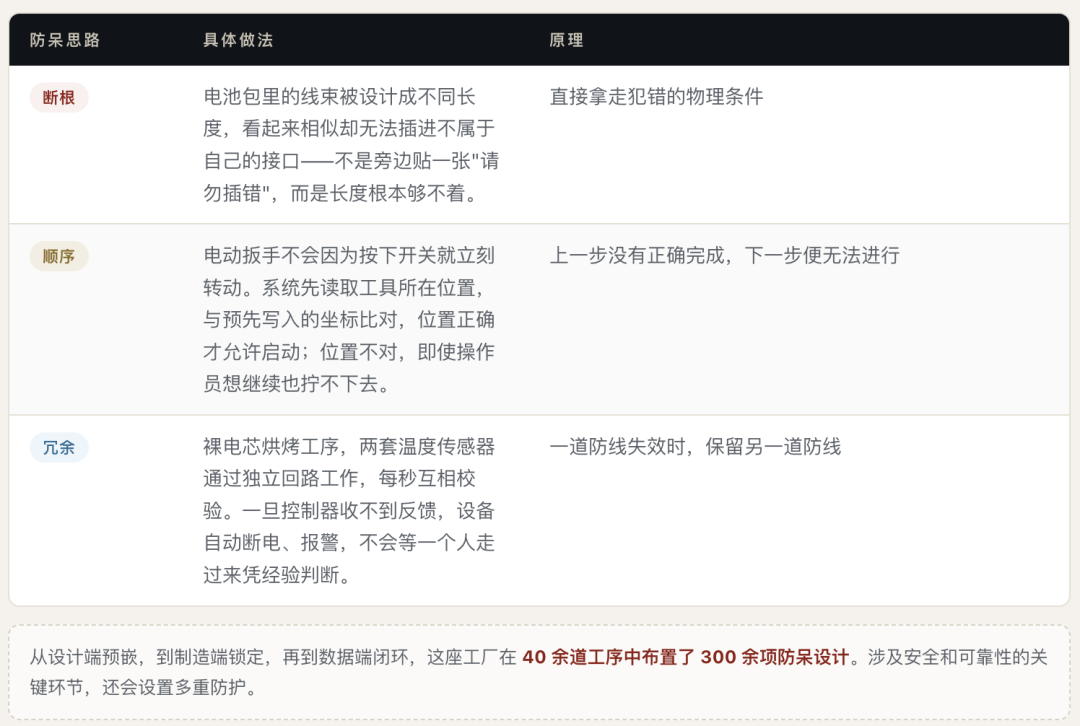
An electric wrench that cannot be screwed in the wrong position will not turn immediately just because the operator presses the switch.
The system first reads the tool's location and compares it with pre-written coordinates.
◎ Only if the location is correct is the wrench allowed to start;
◎ If the location is incorrect, it cannot be screwed even if the operator wants to continue.
Wire harnesses inside battery packs are designed with different lengths. They may look similar but cannot be plugged into interfaces that do not belong to them because the lengths simply do not reach.
In the bare cell baking process, two sets of temperature sensors work through independent circuits, mutually verifying every second. Once the controller receives no feedback, the equipment automatically powers off and alerts.
02 Why Does a Factory Anticipate Human Errors?
CATL established a presence in Liyang in 2016 and has since successively laid out battery cell, battery pack, and related industrial projects. Over nearly a decade, Jiangsu Branch has expanded from an initial hundred-billion-yuan project into one of CATL's largest manufacturing bases.
The Changzhou Municipal Government disclosed that the combined annual production capacity of wholly-owned and joint venture enterprises laid out by CATL in Liyang High-Tech Zone has approached a quarter of the group's total.
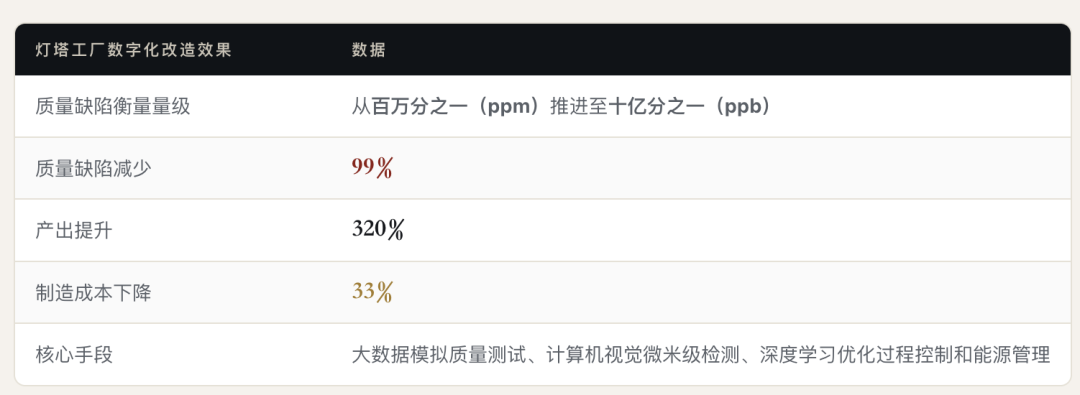
In 2023, this base was selected for the World Economic Forum's global network of 'Lighthouse Factories.'
In its case study, the World Economic Forum mentioned that the Liyang base uses big data to simulate quality tests, conducts micrometer-level inspections with computer vision, and optimizes process control and energy management through deep learning. These transformations have led to increased output, reduced manufacturing costs, and fewer quality defects.
Traditional quality management often emphasizes training, discipline, and responsibility:
◎ Writing operation steps into manuals and requiring employees to master them;
◎ Posting warnings at workstations to remind people to operate carefully;
◎ If problems occur, reviewing who failed to follow regulations.
These efforts are essential, but they have a natural limitation: humans get tired, distracted, interrupted, and form habits during long-term repetitive tasks.
No matter how detailed the operation manual is, it cannot guarantee that a person will never make a mistake in tens of thousands of actions.
What the Liyang base refers to as 'mistake-proofing' is not about training employees to be infallible but acknowledging that humans may make mistakes and designing to make errors difficult to occur.
◎ Different wire harness lengths use a 'root removal' approach: physically eliminating the conditions for incorrect insertion.
◎ If the bolt position is incorrect and the tool does not start, an 'order' approach is used: the next step cannot proceed if the previous one is not completed correctly.
Dual-circuit temperature sensors and independent control loops retain another line of defense when one fails.
From design-side pre-embedding to manufacturing-side locking and data-side closing the loop, this factory has deployed over 300 mistake-proofing designs across more than 40 processes. Key links involving safety and reliability also have multiple layers of protection.
A good manufacturing system does not constantly remind people 'not to make mistakes' but stops the process the moment an error occurs.
This is not mistrust in humans but respect for humanity.
03 Automation Does Not Eliminate Errors; It Only Changes Their Sources
Walking into a modern power battery factory, people are easily attracted by the highly automated production lines: electrode sheets moving at high speeds, robotic arms continuously picking and placing, industrial cameras constantly taking photos, and data automatically flowing between systems.
Automation does not mean risks have disappeared. When many actions are performed by equipment, occasional human errors decrease, but abnormalities in the equipment itself may become new sources of risk.
Sensors may drift, tools may wear out, lenses and light sources may degrade, and software parameters may deviate. Human operation errors usually affect a single action; equipment running with errors may quickly replicate a batch of problematic products.
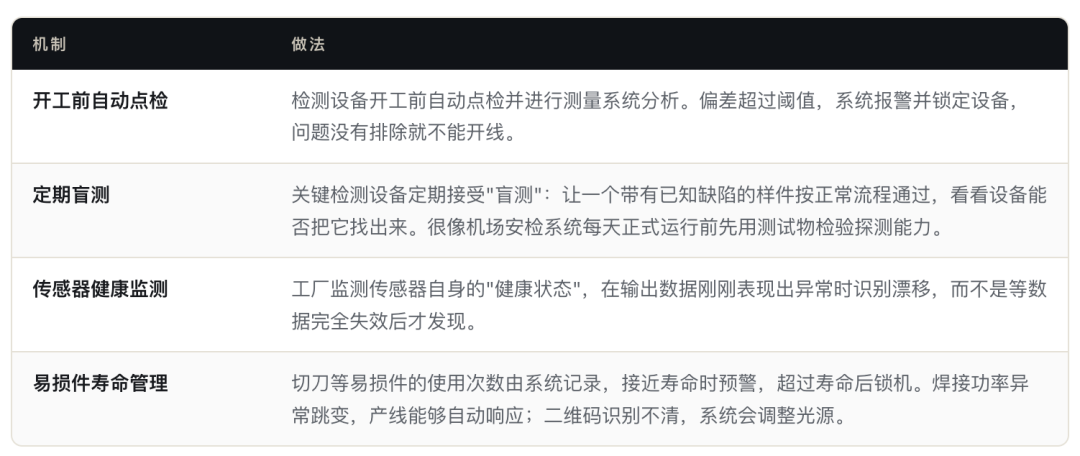
At the Liyang base, not only batteries are inspected; the equipment inspecting the batteries must also be checked. Inspection equipment undergoes automatic point inspections and measurement system analyses before starting work. If deviations exceed thresholds, the system alerts and locks the equipment, preventing operation until the issue is resolved.
Key inspection equipment also undergoes regular 'blind tests': a sample with known defects is passed through the normal process to see if the equipment can detect it.
This is similar to how airport security systems are tested with test objects before daily operations to verify detection capabilities.
◎ The factory also monitors the 'health status' of sensors themselves, identifying drift when output data first shows abnormalities;
◎ The usage counts of consumables like cutting tools are recorded by the system, with warnings issued when approaching their lifespan and equipment locked after expiration.
◎ If welding power jumps abnormally, the production line can respond automatically;
◎ If barcode recognition is unclear, the system adjusts the light source instead of waiting to remedy after information is lost.
The difficulty in battery manufacturing is that many problems cannot be seen from the finished product's appearance.
A slightly thicker or thinner electrode coating, a subtle misalignment in winding, tiny foreign objects mixed inside, or welding defects that are hard to notice may all appear normal during outgoing inspections but gradually amplify during long-term use and complex operating conditions.
The later problems are discovered, the higher the costs of rework and scrap; if inspection methods do not cover certain hazards, problems may even leave the factory with the products.
The Liyang base has deployed over 7,000 quality monitoring points in the incoming material, battery cell, and battery pack manufacturing processes, roughly forming four observation levels.
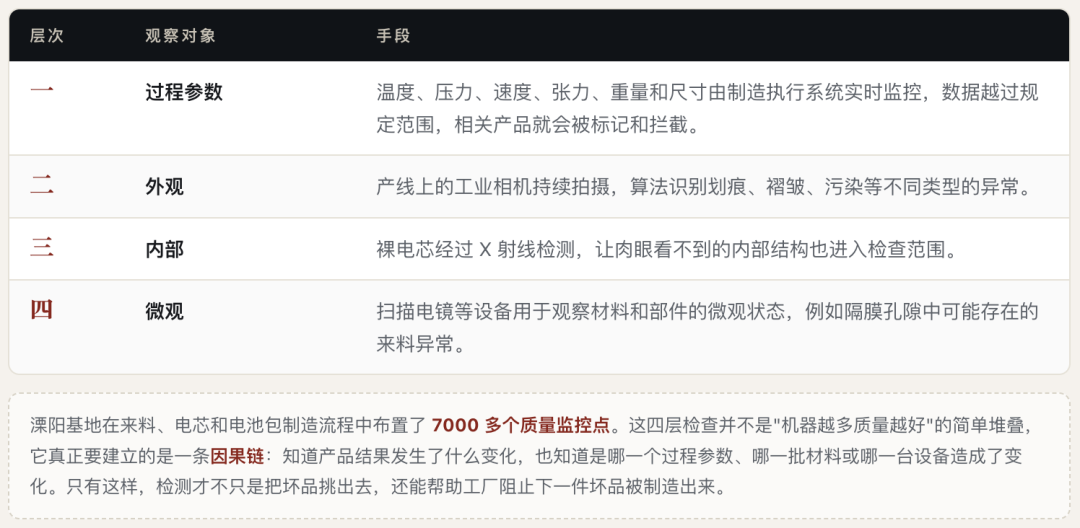
◎ The first level looks at process parameters. Temperature, pressure, speed, tension, weight, and dimensions are monitored in real-time by the manufacturing execution system. Data exceeding specified ranges results in relevant products being marked and intercepted.
◎ The second tier focuses on outward appearance. Industrial cameras installed along the production line continuously capture images, with algorithms employed to pinpoint various types of defects, including scratches, wrinkles, and contaminants.
◎ The third tier delves into the internal aspects. Bare cells are subjected to X-ray examinations, bringing internal structures, which are invisible to the naked eye, within the inspection scope.
◎ The fourth tier probes even further, reaching the microscopic level. Equipment like scanning electron microscopes is utilized to observe the microscopic conditions of materials and components, such as potential incoming material defects within separator pores.
These four tiers of inspection do not merely represent a straightforward accumulation of "more machines, better quality."
Instead, the true objective is to establish a causal chain: understanding not only what changes have occurred in the product results but also identifying which process parameter, which batch of materials, or which specific piece of equipment triggered those changes.
Only in this manner can inspection transcend the mere removal of defective products and assist the factory in preventing the production of the next defective item.
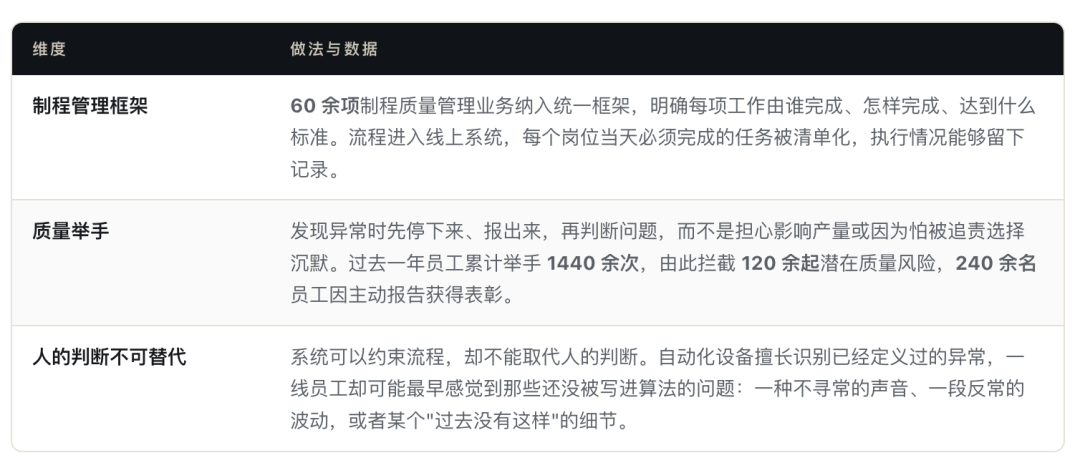
The Liyang base endeavors to dissect quality management into daily actions that are both executable and verifiable.
Over 60 process quality management tasks are integrated into a unified framework, clearly defining who is responsible for each task, how it should be accomplished, and what standards must be met. The entire process is entered into an online system, complete with checklists for tasks that must be completed by each position on a daily basis, and execution records are meticulously maintained.
This approach may appear trivial, yet it touches upon the most fundamental aspect of manufacturing: significant quality accidents often arise not because enterprises lack systems altogether but because a seemingly routine action failed to occur on that particular day, during that specific shift, or on that particular piece of equipment.
Systems can regulate processes but cannot supplant human judgment.
Automated equipment excels at detecting predefined abnormalities; however, frontline employees may be the first to detect issues that have not yet been programmed into algorithms: an unusual noise, an abnormal fluctuation, or a detail that "has never been like this before."
The base also emphasizes the importance of "raising hands for quality": when abnormalities are detected, the first step is to halt operations, report the issue, and then assess the problem, rather than remaining silent out of fear of disrupting production or being held accountable.
According to base data, employees have raised their hands over 1,440 times in the past year, intercepting more than 120 potential quality risks, with over 240 employees recognized for their proactive reporting.
The manufacturing of power batteries is entering an era of unprecedented scale.
A factory can continuously produce a vast quantity of battery cells, and a vehicle is composed of numerous such cells. At this juncture, a seemingly low defect probability, when multiplied by the enormous production volume, can transform into an absolute number that cannot be overlooked.
Problems with individual battery cells not only impact the user experience of a single product but may also be linked to the safety of the entire vehicle and a family.
The case study of the Liyang base published by the World Economic Forum reveals that its quality defect measurement has advanced from the parts-per-million level to the parts-per-billion level. Following digital transformation, quality defects have been reduced by 99%, output has surged by 320%, and manufacturing costs have decreased by 33%. If a mature manufacturing system can detect fluctuations earlier, minimize scrap and downtime, then quality improvement itself can become a source of efficiency and cost advantages.
Extremely low probabilities stem from a multitude of not-so-grand designs: a wire harness that cannot be inserted incorrectly, a wrench that cannot be activated unless in the correct position, a testing device that checks itself first every day, and an employee who dares to halt the production line when abnormalities are detected.
Summary
From the exterior of the factory building, the Liyang base appears as an industrial space comprised of production workshops, equipment, and logistics systems.
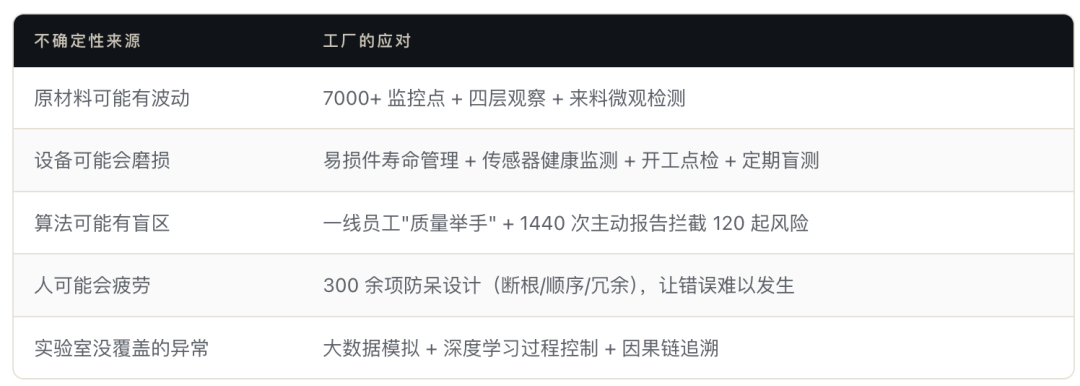
However, delving into the manufacturing process reveals it to be a system for managing uncertainty. The quality of manufacturing often resides in these "non-occurrences."
-
![]()
Rescuing Neta Auto: Even Taiyi Zhenren Steps In, and Associated Company’s Value Soars by 2.5 Billion Yuan
-
Why Does 'Taiyi Shenglian' Step In to Save Neta?
-
![]()
Registered Capital Sees Slight Reduction to 110.7291 Million Yuan! Yongxin Optics Finalizes Industrial and Commercial Registration Amendments
-
![]()
Renaming Marks the Start: Conant Optics’ Smart Glasses Business Gets a Full-Throttle Boost
-
Amazon’s Shift to Passkey Compels Home Furnishing Brands to Overhaul Backend Access Controls
-
![]()
Doubao Mobile Phones: Opting for the Path of Maximum Public Discourse
-
![]()
OpenAI Hits Pause on the AI Race: The Hype Around Large Models Cools Down, and Enterprise AI Enters the Era of Results-Based Adoption
-
![]()
Li Feifei's Atlas Opens the Door to a New World for Embodied AI