Hong Kong’s Maiden Five-Year Plan Paves the Way for Cross-Border Autonomous Driving
 09/17 2026
 346
346
This marks the 122nd original article from the Thinking AI Club.
Approximately 1,540 words, with an estimated reading time of 5 minutes.
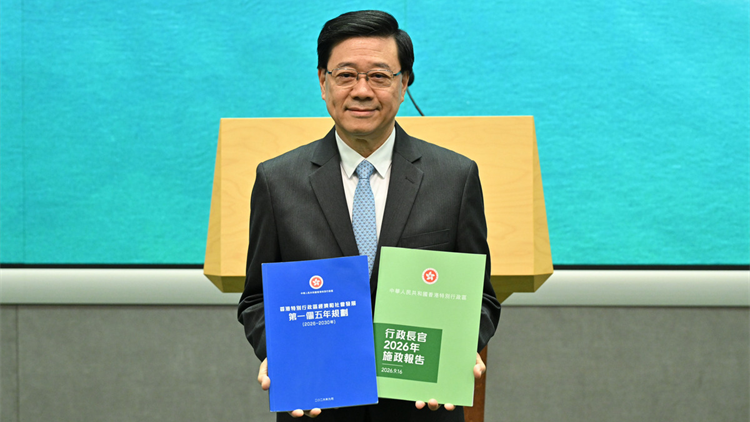
On September 16, Hong Kong unveiled its inaugural five-year plan since its return to China, encompassing 7 sections and 28 chapters, totaling over 60,000 words.
I turned to the chapter on "hard connectivity" in infrastructure and was struck by an inspiring statement: Hong Kong should "proactively plan and execute cross-border autonomous driving demonstration projects of strategic significance," while also fostering their scale and commercialization.
Autonomous driving has been a topic of discussion for years, yet it has largely been restricted to specific urban zones or enclosed campuses.
This marks the first inclusion of autonomous driving in a local five-year plan, particularly with the added emphasis on "cross-border" operations.
Why the Greater Bay Area? Why now?
First, the groundwork was laid before autonomous vehicles could take the wheel.
Many people's initial reaction is: Will driverless cars go through customs? Hold your horses; things happen step by step.
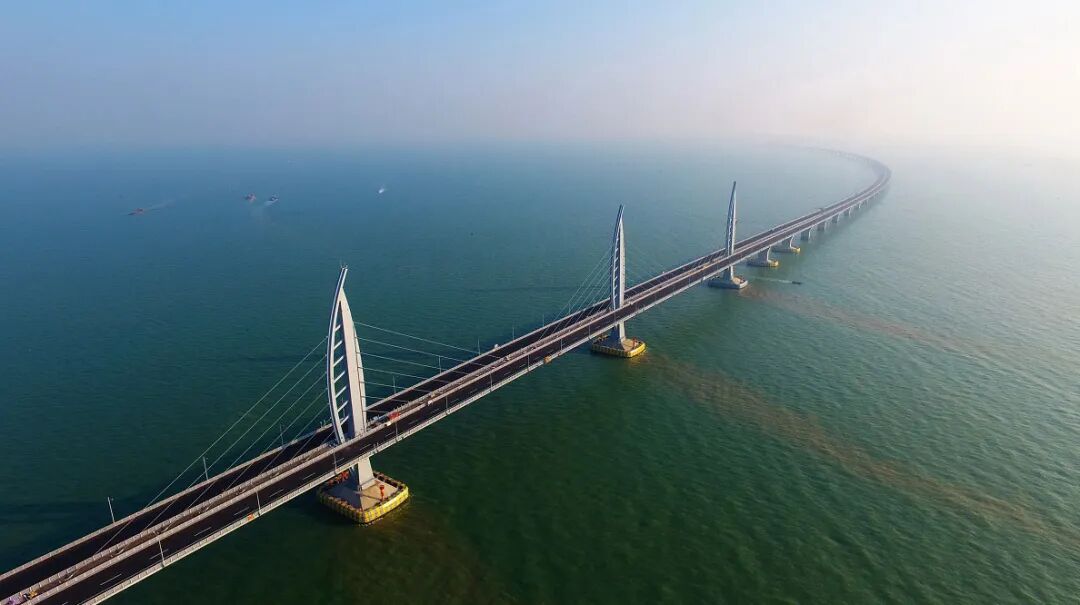
In recent years, the Hong Kong-Zhuhai-Macao Bridge has been a hive of activity, with human drivers at the helm.
The "Hong Kong Vehicles Northbound" scheme, launched in mid-2023, has seen over 140,000 Hong Kong private cars participate to date—meaning one in every four eligible vehicles has made the journey. In May this year, the bridge witnessed an average daily traffic of 17,000 vehicles, up 17% year-on-year, with Hong Kong vehicles northbound accounting for 40%.
The reciprocal "Guangdong Vehicles Southbound" scheme is catching up: Guangdong private cars crossing the bridge to Hong Kong expanded from four cities (Guangzhou, Zhuhai, etc.) at the end of last year to all nine Greater Bay Area cities (including Shenzhen and Foshan) by June this year. Daily entry quotas into urban areas increased from 100 to 200 vehicles, with plans to extend to all 21 Guangdong cities in the first quarter of next year.
This data, I believe, serves as the "prelude" for autonomous driving in the plan—routes, border crossings, parking, and insurance all need to operate seamlessly with human drivers first before driverless cars can "take the reins."
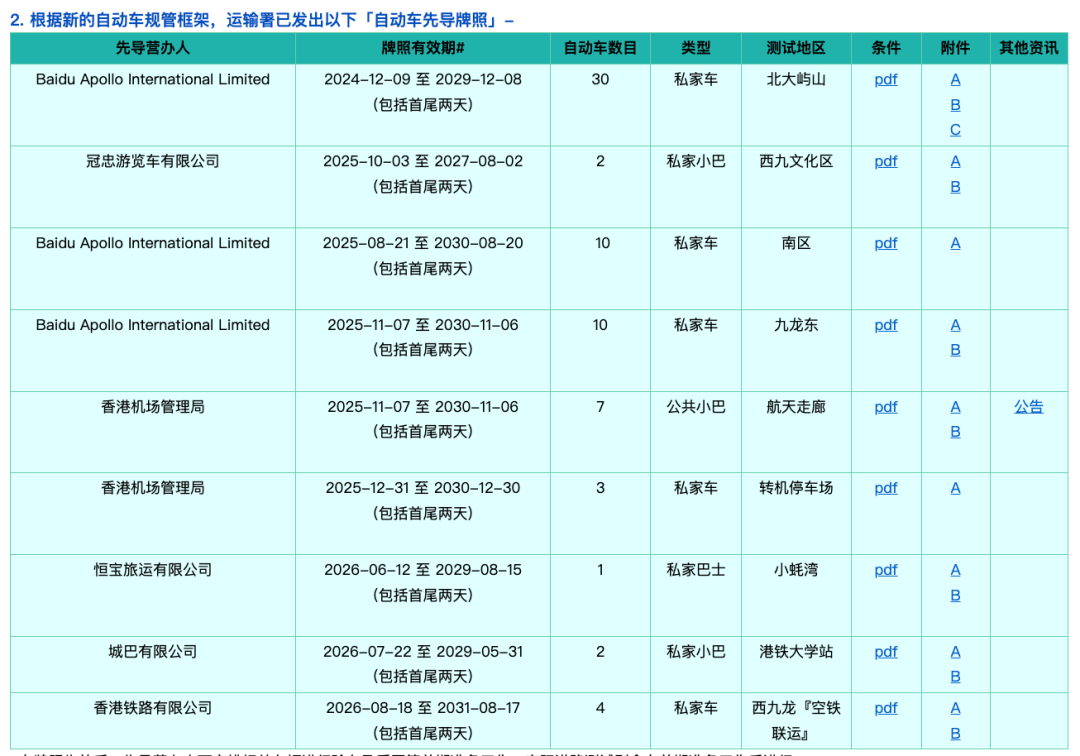
And the first scenario is already in motion. In December last year, the Hong Kong Transport Department granted an autonomous driving pilot license to test driverless shuttles between the transfer parking lot at the Hong Kong-Zhuhai-Macao Bridge border crossing and the airport, with a backup operator on board during the initial phase.

According to the policy address, the next step will involve trialing autonomous driving for cross-border passenger vehicles on the Hong Kong-Zhuhai-Macao Bridge—Hong Kong’s inaugural "cross-border + highway" autonomous vehicle scenario.
This isn't just idle talk; it's a gradual transition from parking lots to the bridge.
Three key pieces of the puzzle were already in place.
Focusing solely on Hong Kong’s document might make this seem abrupt. However, a broader perspective reveals that the Greater Bay Area’s three essential pieces have long been in position.
Shenzhen sets the rules. In 2022, China’s first local regulations on intelligent connected vehicles emerged from Shenzhen, with amendments in May this year taking effect on July 1, explicitly permitting "orderly exploration of full-area operations." Shenzhen’s legislation paved the way for full autonomous driving access, implemented on July 1.
The amendments introduced a crucial provision: promoting "standard recognition, scenario interoperability, data sharing, and regulatory coordination" among Greater Bay Area cities. This was clearly tailored for cross-border operations.
Hengqin provides the scenarios. On this 106-square-kilometer island, drones, driverless cars, and unmanned ships are already integrated under a unified network, with dozens of autonomous vehicles connected to the control center.
This year’s new application scenario regulations in Zhuhai are even more direct: Smart border crossings and cross-border corridors are open to unmanned systems, with priority given to pilot programs for emergency medical supplies and fresh cold-chain cross-border transport. The International Organization for Unmanned Systems is also set to be "registered in Macao, operated in Hengqin."
What Hong Kong contributes is access and international connectivity. The Transport Department has already issued nine pilot licenses, with over 60 autonomous vehicles undergoing testing in multiple districts. Commercial applications for individual projects will commence this year, with the "Aerospace Corridor" connecting the bridge border crossing and Aerospace City aiming to become Hong Kong’s first commercially operated autonomous driving project.
Shenzhen establishes the rules, Hengqin conducts the experiments, and Hong Kong opens the door to the world. Previously operating in isolation, this plan uses "cross-border" to link them for the first time.
The toughest challenge isn't technical.
As thrilling as this is, I must temper the enthusiasm.
The real obstacle for cross-border autonomous driving isn't whether the car can maintain its lane on the bridge—it's regulations.
License plates, insurance, accident liability, mapping data, and even driving habits (left-hand vs. right-hand drive) vary between the two regions. If a car crosses from Zhuhai to Hong Kong and crashes, who is liable? Which jurisdiction’s laws apply?
Shenzhen’s regulations already provide a starting point—liability is divided based on whether the "autonomous driving system is activated." However, cross-border determination (recognition) remains unresolved, which is precisely what demonstration projects aim to address: Technology is the least of our concerns.
Thus, my interpretation of this plan is that its most significant aspect isn't "autonomous driving" but "proactively plan and implement."
Instead of waiting for companies to approach, the government is placing strategic projects on the agenda. Demonstrate first, scale up next, then commercialize—a rhythm nearly identical to the Hong Kong Vehicles Northbound scheme.
The Greater Bay Area’s strategy is now clear: Let private cars pave the way for people and logistics flows first, then let driverless cars take over.
Sooner or later, a driverless car will cross the Hong Kong-Zhuhai-Macao Bridge. When that day arrives, looking back, Hong Kong’s first five-year plan in September 2026 will likely be the starting gun.

Article content is sourced from publicly available information.
Represents personal views only.
Interested? Click the profile to follow.
-
Huawei Relinquishes AITO, Seres Assumes Control
-
Entering a New Phase of Auto Exports: BYD and Chery Pursue 'Vehicle Parity Growth'
-
Seres’ Ascendancy in AITO: A Journey Built Over Time
-
![]()
An Apple Product Seven Years Late Enters a Market Where It Can't Set Prices
-
![]()
2026 China Automotive Net Promoter Score (NPS) Index Research: Product Experience Fuels Word-of-Mouth, Brand Marketing Holds the Key to Breakthroughs
-
![]()
Beauty Joins In, ByteDance Ramps Up Investment Game
-
![]()
Jensen Huang Hits Back at Ray Dalio: Is AI the Next Big Financial Bubble?
-
![]()
Battle for the Gateway to the World Model: ByteDance Leans Left, JD.com Leans Right