Exploring the Phenomenal Rise of OpenClaw: Three Pivotal Trends Shaping the Future of AI Agents
 02/11 2026
 466
466
An AI tool, crafted by a self-funded retired programmer in a mere ten days with minimal coding effort, has Silicon Valley's elite scrambling to purchase Mac minis—a narrative that echoes the hallmarks of a technological saga.
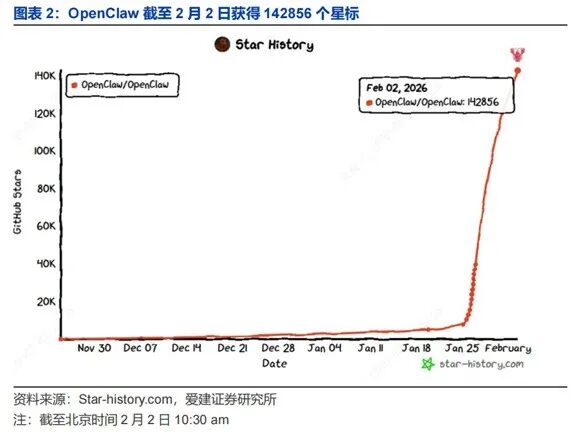
Peter Steinberg probably never anticipated that his personal endeavor, born out of a desire to fill the void of retirement, would catapult into a global tech sensation overnight. In January 2026, OpenClaw, an open-source AI agent initially christened Clawdbot, surged through the global developer community with breathtaking speed.
01. Trend 1: The Accessibility Revolution: AI Agents for Everyone
When everyday users engage with OpenClaw on platforms like WhatsApp, Telegram, or Discord, they encounter an unprecedented experience. This AI tool transcends the realm of mere chatbots, evolving into a digital concierge adept at "getting things done."
Much like Jarvis from the Iron Man series, OpenClaw can manage emails, schedule meetings, automate tasks, surf the web, and even execute scripts.
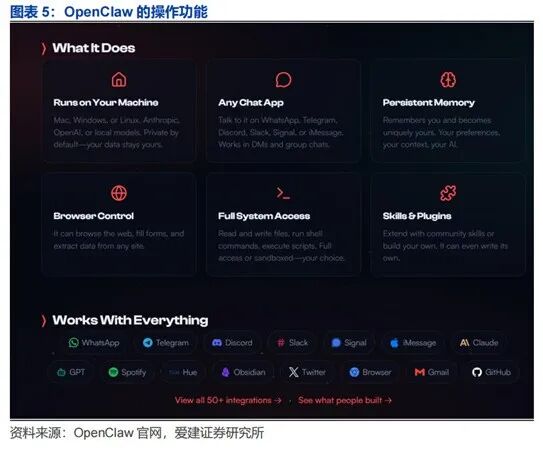
For the industry, OpenClaw's standout feature is its solution to the "cross-platform control" dilemma. While traditional agents were largely confined to "computer-to-computer" interactions, Clawdbot transformed AI from a desktop-bound software into a portable gateway, such as chat apps, enabling users to issue commands anytime, anywhere.
Moreover, its ethos of sharing lowers economic barriers and fosters knowledge dissemination through community collaboration. Users can tap into a vast resource library, swiftly customizing functions without reinventing the wheel. This open ecosystem democratizes AI technology, gradually integrating it into daily life. As participation grows, the application scenarios for AI agents will continue to diversify, catering to individual needs in more pragmatic ways, from personalized assistants to professional tools.
In the long haul, this trend towards democratization will fuel greater innovation. When everyone possesses an agent, society's productivity and creativity are poised to soar, with technological dividends more equitably distributed among the general populace. OpenClaw is not merely a tool; it's a key unlocking the door to the intelligent era, making technology genuinely human-centric and accessible.
02. Trend 2: From Words to Deeds: Specialized Agents for Every Workflow
OpenClaw's seismic impact stems from its pivotal shift from "conversational response" to "task execution." Traditional AI models, such as ChatGPT, primarily focus on information retrieval and simple instructions. In contrast, OpenClaw has constructed a comprehensive closed-loop system encompassing demand analysis, task planning, tool invocation, and result feedback.
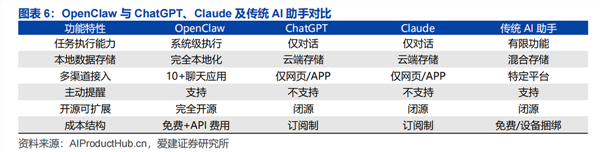
Previously, AI resembled a learned recluse—fluent in language, capable of discussing any topic, yet confined to the textual realm. Today, agents have ushered this recluse into the real world. They no longer merely think and respond; they've learned to invoke tools, operate software, and execute commands, transforming abstract knowledge into concrete actions. This marks a crucial leap for AI from "thinker" to "doer."
Looking ahead, we may witness highly specialized agents infiltrate every facet of work processes. For instance, within a marketing team, there could be an agent dedicated to market analysis, processing vast datasets in real-time to forecast trends; another specializing in content creation, automatically generating copy and visual sketches based on strategies; and yet another handling media distribution and performance tracking, forming a seamless闭环 (closed loop). These agents are not omniscient generalists but deeply collaborative experts in specific domains, akin to highly skilled, tireless digital colleagues.
This evolution will reshape workflows themselves. Human practitioners will concentrate more on top-level planning, creative inspiration, and complex decision-making, while standardized, process-driven, data-driven tasks will be effortlessly handled by agents. Ultimately, this is not mere replacement but a profound efficiency revolution, enabling humans and machines to excel in their respective realms and jointly construct a more efficient, creative work paradigm.
03. Trend 3: Heightened Permissions, Soaring Privacy and Security Concerns
However, as the adage goes, every coin has two sides. OpenClaw (Clawdbot) has garnered massive attention for its ability to take over computers and execute tasks directly, precisely foreshadowing the tight link between future agent permission expansion and escalating personal privacy needs.
OpenClaw's allure lies in its leap from "suggestion" to "action." Users need only send a message, and it can manipulate local files, process emails, or even complete payments. To fulfill this "capable" role, it must be granted top-tier access to one's entire digital life, from chat logs and banking credentials to confidential files. This "super-employee" convenience essentially means users cede their "digital sovereignty" to AI.
Yet, such high permissions come with immense risks. Security agencies have discovered that, for convenience, tens of thousands of OpenClaw instances worldwide are directly exposed on the public internet, left vulnerable. A more insidious threat is "indirect prompt injection"—hackers need only send an email with malicious instructions. When Clawdbot reads and "comprehends" it, they may manipulate it to steal data or execute destructive commands. Given its persistent memory, the impact of a single attack may linger for weeks before erupting.
OpenClaw's case is not an anomaly; it reveals a broader trend: future AI agents will possess wider permissions, deeply integrating into our lives. By then, people will no longer settle for passive privacy protection but will develop a strong "digital sovereignty awakening," paying closer attention to whether they can control what information AI accesses, shape its behavior, and safely exit when necessary. Thus, the more powerful agents become, the more urgent the need for a robust security framework centered on user control.
04. Conclusion
The ascent of OpenClaw is not merely a tech tale but a mirror reflecting three pivotal trends in AI agent development: democratization, action-orientation, and permission complexity. It symbolizes a new phase of technological democratization—lowering tool barriers enables everyone to possess a dedicated digital assistant, while the agent's leap from "conversation" to "execution" redefines the boundaries of human-machine collaboration.
However, permission expansion also sounds the alarm for privacy and security, reminding us that convenience never comes without a price.
The real challenge ahead may not lie in constructing more powerful agents but in establishing matching governance frameworks that empower ordinary people while safeguarding everyone's digital autonomy. This spark, accidentally ignited by a retired programmer, has illuminated a path toward a new normal of human-machine symbiosis—only by carefully balancing innovation and security can agents truly empower humanity rather than become hidden concerns.
- End -
-
![]()
Li Bin Claims, 'Denying the Pure EV Trend is Like Ostrichism.' What's Li Xiang's Take?
-
Lenovo: Liu Jun Turns Left, Yang Yuanqing Turns Right
-
Lenovo: Liu Jun Goes Left, Yang Yuanqing Goes Right
-
![]()
MiniMax Shares Unlock: Cornerstone Shareholders Show Long-Term Optimism, Yet Stock Plummets Nearly 30% in Two Days; Zhipu Also Sees Nearly 20% Drop Today
-
![]()
Single-Day Plunge of 40%: The 'First AGI Stock' Faces More Than Just Share Price Concerns
-
![]()
Ricoh and Fuji Hike Prices on Legacy Edge; Insta360 Poised to Disrupt Mirrorless Camera Market
-
![]()
Ricoh and Fujifilm Raise Prices in Tandem, Relying on Established Reputations; Insta360 Poised to Disrupt Mirrorless Camera Market
-
![]()
Strategic Shift in Photoelectric Sensing: Maxvision Secures Controlling Stake in CAS Optotech