The Hurdle of Car Subscription: Overcoming Chinese Users' Mental Resistance
 04/03 2026
 456
456
It is often said that a car is a smartphone on wheels. Whether this notion has truly resonated with users remains debatable, but it has certainly captured the attention of many automakers. In particular, the recurring revenue model associated with smartphones has struck a chord within the automotive industry.
At present, a rough estimate reveals that over 90% of mainstream automakers have embraced a pricing strategy that involves pre-installing hardware such as LiDAR, high-performance chips, and advanced sensors across all vehicle models. However, they restrict the advanced functionalities of these components through software locks. To unlock features like intelligent driving, cabin enhancements, sensor capabilities, and even seat heating, users are required to pay monthly or yearly subscription fees or make a one-time purchase.
Of course, automakers are not merely replicating the smartphone business model wholesale. Many are taking cues from Tesla, a pioneer in software subscription services. Tesla has achieved an impressive FSD (Full Self-Driving) subscription rate of over 30% in the North American market, transforming software subscriptions into a sustainable, low-cost, and high-margin revenue stream for the company.
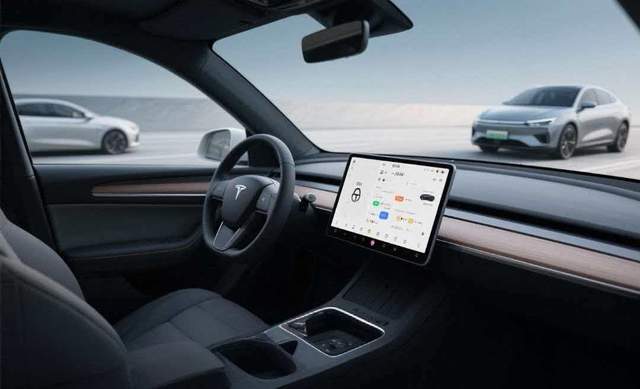
Envious of Tesla's success, Chinese automakers have rushed to adopt 'car subscription models,' 'software-defined vehicles,' and the promise of 'one-time purchase, long-term revenue.' However, while the vision is ambitious, the execution has been fraught with challenges. The subscription rates for intelligent driving services among leading Chinese automakers hover around 5%, with some brands even falling below 1%. Survey data indicates that less than 20% of Chinese users are willing to embrace subscription models. As car subscription models gain traction in the Chinese market, a surge of consumer complaints and regulatory disputes has emerged.
It appears that the hardware pre-installation and software subscription business model has encountered significant resistance from Chinese car owners almost immediately. Car subscriptions have swiftly transformed from a promising avenue into a dim dead end.
Why are Chinese users reluctant to pay for automotive software? Let's explore the reasons.
Technological Challenges
The primary reason for the low software subscription rates in the Chinese automotive market is not overly complex: inadequate technology leads to eventual failure.
Tesla's success in popularizing software payments is largely attributable to its widely adopted and highly effective FSD system. In major North American cities, FSD has achieved a series of core functionalities, including end-to-end large models, city-wide Navigate on Autopilot (NOA), automatic parking, and summon features from parking lots. These functionalities are available across various driving scenarios, including highways, urban areas, and parking lots. While Tesla's aggressive approach to intelligent driving has sparked controversy, it has also compellingly demonstrated the company's technological prowess in this field.
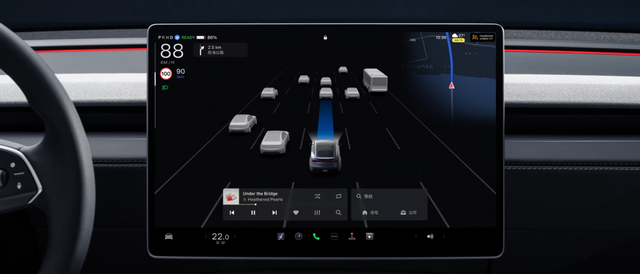
The resulting paid experience is tangible and evident for users. Many users even equate FSD with autonomous driving. Regardless of the potential issues this conclusion may raise, the payment orientation driven by this technological experience is exceptionally clear.
In contrast, the domestic market is still grappling with unclear definitions of intelligent driving, autonomous driving, and assisted driving. The functionalities that users ultimately pay to unlock are mostly intelligent driving features with high takeover rates and limited coverage of urban NOA. Among various software subscription features, intelligent driving is the most compelling and valuable. Beyond the underdeveloped intelligent driving technology, most entertainment and comfort-oriented auxiliary features appear non-essential and 'nice-to-have.' If intelligent driving—the cornerstone capability—fails to excel, it becomes difficult to adapt to the new wave of competition in automotive intelligence.
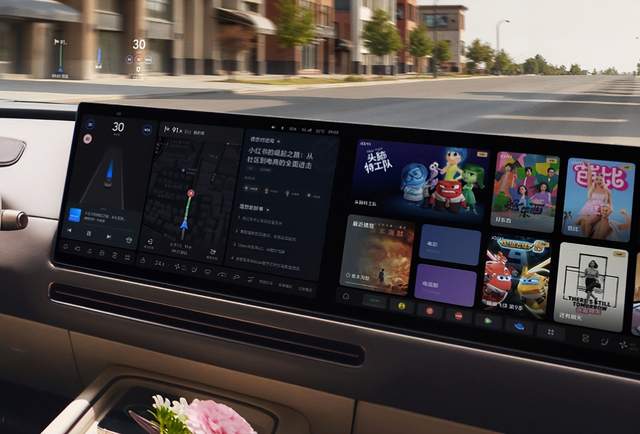
Further evidence that technological capability is the core reference point for automotive software payments is Huawei's ADS (Autonomous Driving Solution), which has achieved an optional purchase rate exceeding 60%. This proves that the path of automotive subscriptions is feasible if technological capabilities are widely recognized. However, if technological barriers cannot be overcome, attempting to bypass them and reach the 'utopia' of software-based revenue will only lead further astray.
Market Hurdles
Beyond technological differentiation, another issue lies in the stark contrast between the current domestic automotive market environment and Tesla's position in North America. In North America, Tesla enjoys a near-monopolistic market position in automotive intelligence and software OTA (Over-the-Air) updates, facing virtually no competition. In contrast, the domestic new energy vehicle market has entered a fiercely competitive phase, where manufacturers must continuously reduce prices while offering more technological options to maintain competitiveness.
The reality is that automakers have begun introducing a significant amount of intelligent capabilities and high-cost hardware into the mainstream market segment of RMB 100,000 to RMB 300,000. The ongoing price war has created a paradoxical situation: automakers aim to further reduce prices to capture market share while simultaneously attempting to emulate Tesla by adding software services as profit centers. This has made determining whether and how much to charge for software subscriptions a dilemma. Charging too much for software risks reducing cost-effectiveness and losing customers. Failing to charge for software risks missing strategic opportunities and even lowering brand valuation. As a result, Chinese automakers have adopted a 'Schrödinger's car subscription' strategy. On one hand, they extensively use hardware pre-installation schemes while hesitating to impose obvious charges. Ultimately, many new vehicles offer limited-time free trials of intelligent driving features, transforming software charges from a profit-growth tool into a promotional gimmick amid price wars. Faced with competitors' promotional tactics, other automakers have no choice but to follow suit.

This has prevented the effective cultivation of a market base for car subscriptions. Users continue to perceive automotive software as inexpensive or even as a bargaining chip when negotiating with dealers.
Thus, Chinese automakers have found themselves trapped in a deadlock of 'wanting to charge but daring not to accept it, charging but no one buying.' The imagined windfall from software subscriptions remains out of reach, with automakers ultimately lamenting Tesla's fortunate circumstances.
Mental Barriers
An even greater obstacle to car subscriptions in the Chinese market may stem from the mental barriers erected by users. These barriers encompass various factors, including entrenched consumer habits and a lack of trust in automakers, dealers, and the overall vehicle usage environment.
Objectively speaking, Chinese consumers lack a strong willingness to pay for software. While the mobile internet era has successfully cultivated a habit of paying for software, most payments are for content and services rather than unlocking basic functionalities.
For the vast majority of consumers, a car should be a deliverable asset like real estate or jewelry—something that is fully owned and 'what you see is what you get.' Having to pay monthly fees after purchasing a car creates inherent psychological discomfort. In other words, while automakers accept that cars are 'mobile terminals' and that software payments are a given, users do not share this perspective. Especially the setup of pre-installing hardware that cannot be used without subsequent payments naturally evokes a sense of deception, making it difficult for users to quickly accept such practices.
Superimposed on this resistance is a lack of trust in every aspect of car subscriptions. First, many dealers employ ambiguous or even wordplay tactics to induce consumers into purchasing hardware such as LiDAR and high-performance chips, which point to intelligent driving capabilities. However, during the sales process, they fail to explain that these hardware features require ongoing payments to unlock. When users realize they have been deceived, a genuine sense of disgust arises, feeling as though they are being exploited twice.
As this sense of deception festers, it extends to the automakers behind the dealers. A major dilemma with current car subscriptions is that many automakers, eager to explore this new revenue model, hastily designate a vast array of features as pay-to-unlock. Users are overwhelmed by the multitude of unlockable options, unsure which are truly useful, and quickly become alert to potential consumption traps. At the same time, users must contend with issues such as poor functionality after unlocking, automakers subsequently making paid features free (thereby betraying early adopters), and automakers failing to take responsibility for paid features by neglecting updates and upgrades. Widespread problems like these create a trust gap, leading users to prefer immediate and guaranteed value over ongoing payments for unknowns.

Further eroding trust is users' concern about the long-term implications of these paid intelligent capabilities. For example, can software features subscribed to before a car transfer be transferred to the new owner? How are safety issues and liabilities divided when accidents occur due to paid intelligent driving features? How are insurance claims, accident determinations, and liability assessments handled?
Recent data shows that complaints related to automotive software payments received by the China Consumers Association from January to March 2026 surged by 128% year-on-year. It is evident that the car subscription models aggressively promoted by automakers have not only failed to attract a broad audience but have also left paying users deeply dissatisfied.
Breaking through these mental barriers requires more than just technological upgrades and market growth. More importantly, automakers must convince users that they are approaching car subscriptions with sincerity and determination. How to break through these barriers represents the greatest challenge for China's automotive industry as it moves toward a software-defined era.
-
![]()
Model Giant Jieyue Xingchen Steps into Smartphone Arena: A Strategic Alliance with Huaqin Technology
-
![]()
Big Model Firm Dives into Phone Market: StepFun and Wingtech Forge a ‘Dynamic Duo’
-
![]()
Zhongrun Optics Makes a Bold Move with 1 Billion Yuan Investment: Is a Turning Point on the Horizon for the Precision Optics Industry?
-
![]()
Deploy CLBO Crystals and YIG Single Crystals! Erythritol Leader Invests 30 Million in Youwei Optoelectronics
-
CXMT’s July 16 Subscription: Leading Domestic Memory Manufacturer—What’s the Earning Potential per Lot?
-
![]()
Rhythm Discrepancy and Premium Value Erosion: Foreign Luxury Brands Must Re-evaluate Their China Strategy
-
![]()
Half-Year, 1 Billion Yuan Financing, 7 Billion Yuan Valuation: A New Dark Horse Emerges in the Embodied AI Sector
-
![]()
Strong Rebound for Tech Stocks in Hong Kong Stock Market: Is It Time to Bottom-Fish?