Major Organizational Restructuring: Alibaba Enters the Critical Phase of AI Offensive
 04/10 2026
 719
719
Author: Zhang Yao
Editor: Hu Zhanjia
Operations: Chen Jiahui
Produced by: LingTai LT (ID: LingTai_LT)
Header Image: Publicly available online
On April 8th, an internal letter from Alibaba quietly went viral. Without lengthy preambles or vague statements, it directly dropped a 'blockbuster': the establishment of a Group Technology Committee, the upgrade of Tongyi Labs to a business division, a redistribution of roles among three top technology executives, and a change in leadership for Taobao Flash Sales.
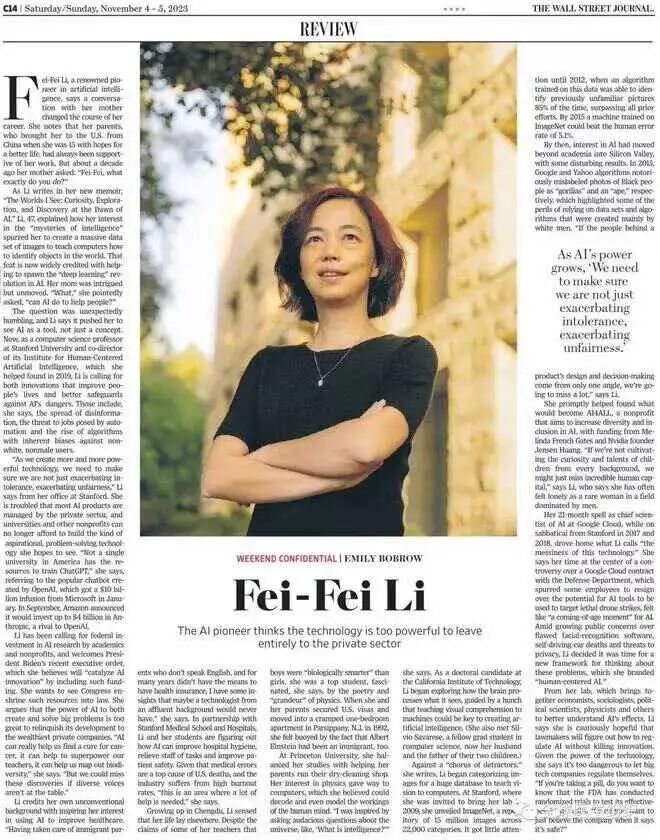
According to the organizational restructuring announced by Alibaba CEO Wu Yongming, Li Feifei has been appointed as CTO of Alibaba Cloud, responsible for technology and AI cloud infrastructure construction, and will join the Group Technology Committee. The original Tongyi Labs has been upgraded to a business division, led by Zhou Jingren, who will also serve as the Chief AI Architect of the Technology Committee. Additionally, Wu Zeming will focus on his role as Group CTO, while Lei Yanqun takes over as CEO of Taobao Flash Sales.
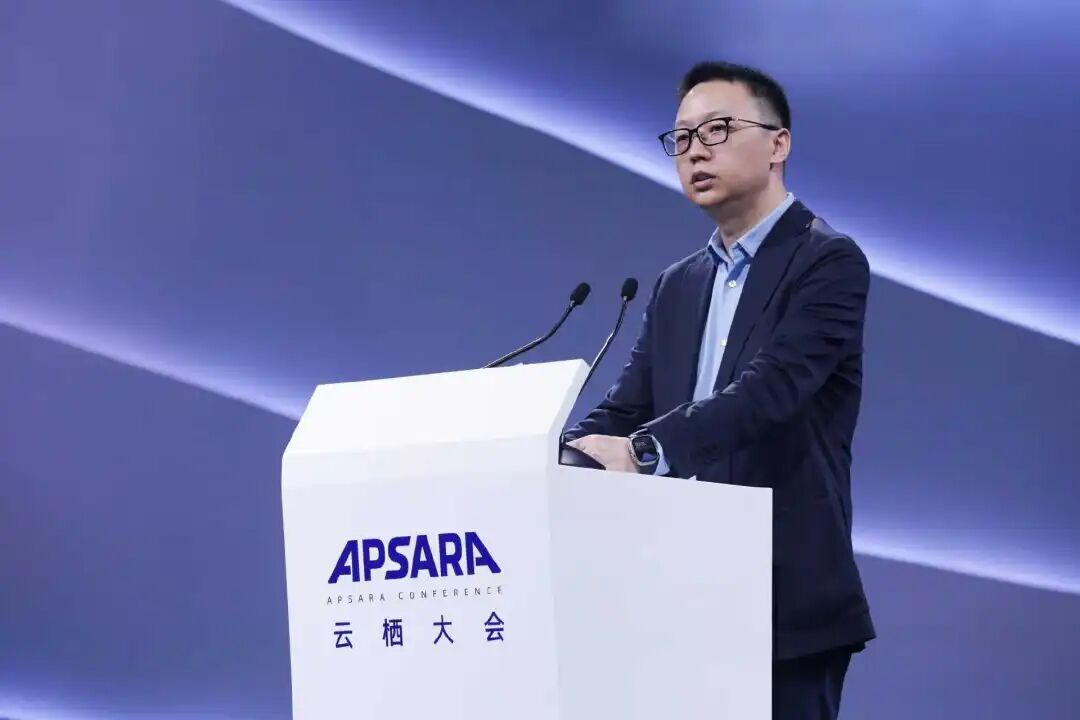
According to comprehensive media information from Tianyancha, just 23 days after the establishment of the ATH (Alibaba Token Hub) business group, Alibaba has adopted a 'rapid march' pace, declaring its full entry into the 'critical phase of AI offensive.' As the industry shifts from a 'hundred-model battle' parameter competition to the large-scale implementation stage where 'Tokens are production factors,' the tech giants are sounding the assembly call in this AI century struggle, frantically competing to secure a ticket for the next era.

Concentrating Resources for Major Initiatives
The 'specialization + BU system' is a distinctive feature of Alibaba's organizational structure. Historically, Alibaba's AI capabilities have been scattered like elite troops across various locations: Tongyi Labs within the DAMO Academy, Alibaba Cloud providing the computing power foundation, and business units independently utilizing AI capabilities. While this 'scattered stars' model worked in the internet era, it requires centralized operations in the era of large models.
Traditional AI serves as a single-point tool that can be distributed and called upon, whereas large models represent a systemic engineering endeavor that relies on the closed-loop collaboration of data, computing power, and scenarios. Therefore, Alibaba needs to undergo a complete transformation from 'scattered troop operations' to a 'group army offensive.' The essence of this adjustment is to 'concentrate resources for major initiatives.'
The newly established Group Technology Committee aims to first form a decision-making hub at the top level—the 'AI Supreme Command.' CEO Wu Yongming personally leads as the team leader, with core members including Zhou Jingren, Wu Zeming, and Li Feifei. Simply put, Zhou Jingren builds the 'models,' Li Feifei builds the 'computing power,' and Wu Zeming turns their achievements into tangible profits, making Tokens the core carrier connecting technology and commerce.
In short, previously, each entity was crafting its own ammunition. Now, the three top technical minds of the group sit at the same table, uniformly building aircraft carriers and commanding operations. For example, the technological achievements of Tongyi Labs can be directly implemented on the Taobao merchant side without crossing multiple departments for coordination. The decision-making hub directly makes arrangements for execution, eliminating the inefficiency of intermediate communication.
Comprehensive media reports from Tianyancha also highlight Alibaba's determination to commercialize AI. The Tongyi large model, as the core technological carrier of Alibaba's AI, has been upgraded to an independent business division, marking its transition from a 'cost center that only burns money' to a 'profit center that generates revenue.' In terms of talent allocation, Wu Zeming, a seasoned technical veteran who rose through the ranks at Taobao, has relinquished his role as CEO of Taobao Flash Sales, a crucial move in completing the commercialization closed loop (closed loop).
This organizational restructuring represents a comprehensive efficiency revolution and strategic upgrade.

The Need to Be 'Aggressive': Falling Behind Means Failure
Alibaba's two adjustments, seem (seemingly) 'aggressive,' are actually 'deeply strategic.'
The global 'AI arms race' has entered a white-hot stage. Domestically, ByteDance's Doubao has reached 172 million monthly active users, with Douyin's 800 million daily active users providing a bloodline for Doubao by seamlessly embedding AI capabilities into Douyin search, creator backends, livestream rooms, and even the e-commerce system. Tencent has dissolved its AI Lab and integrated its forces into the Hunyuan large model, leveraging WeChat's 1.2 billion monthly active users to drive AI implementation in social scenarios. Baidu's Wenxin Yiyan has been fully opened, focusing on the integration of search and AI scenarios. Overseas, OpenAI, Google, Meta, and others are crazy (frantically) burning money to compete in computing power, with single model training costs exceeding $1 billion.
These victors of the internet era understand better than anyone that missing out on large models in the AI era could turn them into the next Nokia.
In this bloody struggle, Alibaba's AI was previously hindered by its scattered organizational structure, leading to resource dispersion, slow decision-making, and inefficiency, which slowed its pace. The AI revolution is forcing organizational change. If Alibaba continues to remain dispersed, it will lose its future. This is why Alibaba has made two adjustments in just 23 days—first establishing ATH to unify commercialization logic, then using the Technology Committee to unify technical command, thoroughly achieving full-link collaboration in computing power, models, and commerce.
The core of both adjustments points to a single keyword: Tokens.
They are the 'core currency' of the AI era. Every AI query, every AI call by merchants, and every model training by enterprises consumes Tokens, and the consumption volume of Tokens is also the core standard for AI cost accounting and commercialization billing. Alibaba possesses the world's largest e-commerce transaction system, the richest consumer data, and the most enterprise merchants. When hundreds of millions of users and tens of millions of merchants consume a massive volume of Tokens daily, Alibaba can build the world's largest AI commercialization closed loop (closed loop), directly converting technological advantages into cash flow. Facing the immense and long-term growth momentum of the AI market, Wu Yongming announced that over the next five years, the annual revenue from cloud and AI commercialization, including MaaS, will exceed $100 billion.
In this battle, it's either win or die.

The Three-Dimensional AI Contest Determines the Future
The AI competition among tech giants is not just about whose model has more parameters or whose functions are more comprehensive. This war has long surpassed superficial comparisons, with the core being the ultimate struggle across three dimensions: computing power, models, and commercialization. Alibaba's two adjustments precisely target these three cores.
Computing power is the 'oil war' of the AI era. The essence of large models is 'stacked with computing power.' Whoever can control more GPUs, has lower computing power costs, and higher scheduling efficiency will take the initiative in the AI competition. Comprehensive media reports from Tianyancha show that Li Feifei's dedicated role as CTO of Alibaba Cloud is core to seizing 'computing power hegemony.' Her deep expertise in cloud infrastructure can transform Alibaba Cloud into the world's largest AI computing power pool, supporting the crazy (frenetic) iteration of the Tongyi large model internally to solve the problems of 'insufficient computing power and high costs,' while also selling computing power services externally to 'choke opponents' with computing power.

If computing power is the 'utilities,' then models are the 'brains' of AI. Without self-developed large models, everything is just a castle in the air. The Tongyi large model is Alibaba's 'technological lifeline.' From Qwen1.0 to 3.6Plus, Tongyi has ascended to the global top tier, with OpenRouter's weekly call volume reaching the top, and an increasingly mature open-source ecosystem, with over 600 million global downloads, over 170,000 derivative models, and access by over 1 million customers. Having Zhou Jingren focus on model development is a clear signal from Alibaba to 'control model sovereignty.'
However, the essence of business is still 'profitability,' a harsh truth that no matter how cool the technology is, it cannot avoid. Continuously burning money for growth has never been a sustainable strategy.
Currently, many giants are still 'searching for scenarios with technology,' while Alibaba has directly inserted AI into its most profitable businesses—e-commerce, cloud, and enterprise services—gradually forming the prototype (embryonic form) of a commercialization closed loop (closed loop). Taobao's AI search and recommendation, Qianniu Claw merchant AI assistant, Alibaba Cloud's AI computing power services, and ATH's Token commercialization each represent a trillion-dollar market. The core of Alibaba's two adjustments is to 'use the fastest speed to connect through (break through) the closed loop (closed loop) from technology to product to commerce.'

The Game Has Just Begun
Alibaba's continuous reshuffles are just a microcosm of the AI competition among tech giants. Today's Alibaba, Tencent, Baidu, and ByteDance resemble the players vying for internet portals twenty years ago and mobile internet tickets ten years ago—winner takes all, loser exits. This war has no halftime, no shortcuts. The struggle for computing power, models, and commercialization in every dimension determines life or death over the next decade.
The true showdown does not lie in an internal letter or an organizational adjustment but in who can best let go of the past and iterate most rapidly. The AI offensive has begun, and tickets are limited in this race against time. This time, Alibaba doesn't want to be late again.
-
![]()
The Allure of 'Acquisition Spree': Li Shufu's Left Turn, Xu Jiayin's Right
-
![]()
Strategic Transformation Yields Results: Phoenix Optics Reports 10.9% YoY Rise in Core Net Profit for H1 2026
-
![]()
Three Key Growth Trajectories Synergize! Crystal-Optech Reports 3.478 Billion Yuan in Revenue for H1 2026
-
![]()
Semi-Annual Report Sparks XPENG Motors Buzz
-
![]()
1.6 Billion Big Order Secured! SeeYA Technology's Revenue Soars by 287.87% in the First Half of the Year
-
![]()
Baidu's Profits Plunge by 68%: Unraveling the Mystery Behind the Numbers
-
![]()
Baidu’s Profits Tumble by 68%! Where Has All the Money Gone?
-
![]()
Hynix’s Taobao Store Shuts Down Abruptly: What Should Customers Do About Warranty Services for Memory Modules?