'Equal Intelligence for Fuel and Electric Vehicles': The Road Ahead
 04/10 2026
 702
702
Many drivers report that only after switching to a new energy vehicle (NEV) do they realize the discomforts they once tolerated with fuel vehicles. In summer, the first few minutes inside a fuel car can be unbearable, with scorching seats, while in winter, shivering is often the only way to stay warm. In contrast, electric vehicles (EVs) allow you to pre-condition the cabin—adjusting the air conditioning and seat ventilation via your smartphone—before you even step outside.
Passengers also experience a stark contrast. In a fuel car, the front-seat passenger might pass the time by scrolling on their phone. However, in an EV, the large central display enables them to watch videos, listen to music, or even play games, effectively eliminating boredom and restlessness during the journey.
This significant gap has made consumers less tolerant of traditional fuel vehicles that lack intelligent features. As a result, the concept of 'equal intelligence for fuel and electric vehicles'—bringing EV-exclusive intelligent technologies to fuel vehicles—has become a key focus for fuel vehicle innovation in recent years.
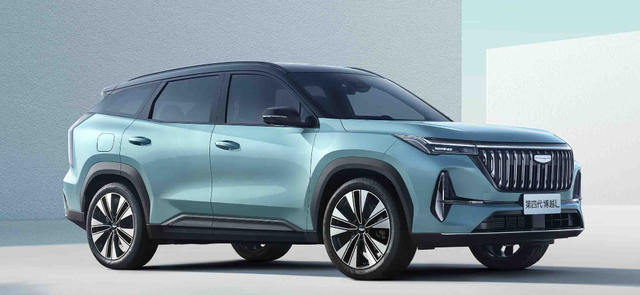
On April 3, 2026, Geely unveiled the fourth-generation Boyue L 'Little Blue Light' edition, featuring the Qianli Haohan assisted driving H3 solution. This marked the first time high-level NOA (Navigate on Autopilot) functionality was introduced to the 110,000 RMB fuel SUV market.
Shortly before, on February 19, 2026, the new SAIC-Audi A5L was announced as the industry's first fuel vehicle model equipped with Huawei's intelligent driving technology, addressing a gap in the intelligent luxury B-segment fuel vehicle market.
In October 2025, Bosch's mid-level intelligent driving solution was adopted in over ten models from five automakers, including JETOUR, Dongfeng, and BAIC.
It is fair to say that fuel vehicles across all price segments—from high-end luxury models to affordable family cars—have now narrowed the intelligence experience gap with NEVs. This raises the question: After achieving 'equal intelligence for fuel and electric vehicles,' what path should fuel vehicles take next? Is mimicking EVs the best approach for fuel vehicle intelligence?
Equal Intelligence for Fuel and Electric Vehicles: The Intelligent Evolution of Fuel Vehicles
The term 'equal intelligence for fuel and electric vehicles' implies that EV intelligence not only sets the benchmark for fuel vehicle intelligence but also serves as the primary standard for measuring its advancement.
When discussing this concept, the most visible and user-centric aspect is the leveling of the intelligent cockpit experience. The cockpit is where users interact most frequently with their vehicles. However, constrained by the physical limitations of fuel vehicles—which lack the space for EVs' 'fridge, TV, and sofa' setup—how can fuel vehicles achieve cockpit intelligence? Industry explorations reveal that the first step is addressing underlying hardware deficiencies.
Traditional fuel vehicles often suffer from low bandwidth and insufficient computing power, making smooth cockpit interactions difficult. Automakers are upgrading fuel vehicle-specific domain control electronic architectures to enhance computing power and data transmission efficiency, bringing infotainment systems, voice interactions, and multi-device connectivity on par with EVs.
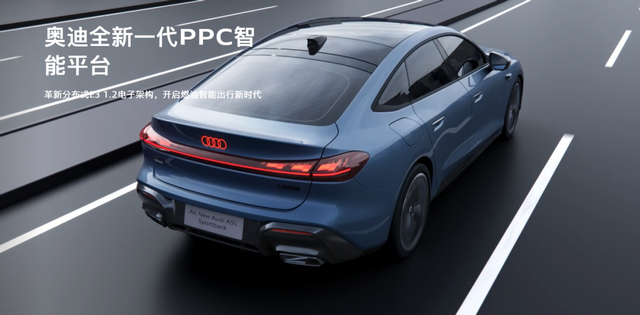
For instance, the SAIC-Audi A5L features Audi's exclusive e³ 1.2 domain control electronic architecture, with five domain controllers working in tandem to provide hardware support for deep integration with Huawei's advanced intelligent driving system.
The next challenge lies in improving application interactions. Building on traditional physical buttons, practical touchscreen and voice interactions are added to eliminate the hassle of complex button operations. Some fuel vehicles also incorporate customized upgrades based on their positioning. For example, off-road models like JETOUR focus on optimizing cockpit intelligence for off-road scenarios, adding features like voice-controlled terrain modes and off-road data display.
In summary, fuel vehicle cockpit intelligence is gradually achieving parity with EVs in terms of functionality, convenience, and smoothness.
Compared to cockpit intelligence, integrating autonomous driving systems with fuel vehicles presents greater challenges, primarily due to inherent contradictions between hardware characteristics and software systems:
1. Low Voltage vs. Power Consumption: Fuel vehicles typically use low-voltage power platforms, which cannot fully support the power demands of high-computing-power intelligent driving systems throughout their lifecycle.
2. Engine vs. Cooling: Fuel vehicle cooling systems are designed around core mechanical components like the engine, making it difficult to meet the cooling requirements of high-computing-power intelligent driving domain controllers. Insufficient cooling can lead to system lag or failures, preventing stable operation of advanced intelligent driving functions.
3. Mechanical vs. Intelligent Control: Mechanical components like engines and transmissions inherently exhibit delayed power responses, while intelligent driving systems require precise and rapid execution of control commands, making it difficult to achieve the same level of driving smoothness as EVs.
Fortunately, these barriers have been systematically addressed in recent years.
The SAIC-Audi A5L, equipped with Huawei's advanced intelligent driving system, is considered a benchmark for intelligent driving breakthroughs in luxury fuel vehicles. The secret lies in its self-developed Audi e³ 1.2 domain control electronic architecture, which works in deep synergy with Huawei's Qiankun ADS to achieve native coordination between the intelligent driving system and the vehicle's mechanical systems.
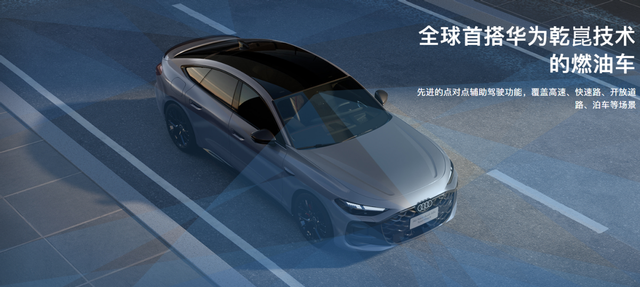
Beyond these hardware limitations, achieving stable intelligent driving in fuel vehicles' inherent core advantage scenarios also presents significant challenges.
Take off-roading as an example—a unique strength of fuel vehicles that adds complexity to intelligent driving implementation. Technicians from Great Wall Motors have shared that adding intelligent driving to off-road models is more difficult than for other vehicle types because it requires adaptation to various complex unpaved surfaces, such as deserts, rocks, and mud. Each terrain type demands separate parameter calibration to ensure the intelligent driving system can accurately identify the terrain and adjust commands accordingly.
This raises a critical question: Is fuel vehicle intelligence simply about emulating EVs? If consumers are attracted to intelligent configurations similar to those in EVs, why not just buy EVs instead?
Intelligence: Fuel Vehicles Must Forge Their Own Path
Now that 'equal intelligence for fuel and electric vehicles' has been preliminarily achieved, it is time to reconsider: Is good intelligence simply about being identical to that of new energy vehicles?
A senior executive from a new energy vehicle company once shared an experience with me. When expanding into overseas markets, particularly Germany, their team avoided using new energy vehicles for visits to local high-ranking officials and industry figures. Instead, they prioritized well-known local fuel vehicles. In mature markets like Germany, driving fuel vehicles has become a cultural belief deeply rooted in local traditions. Germans take pride in owning finely crafted, powerful fuel vehicles from a young age. To conduct business locally, one must respect this culture and acknowledge the special status of fuel vehicles in the hearts of locals.
In many markets, fuel vehicles still enjoy a solid user base and appeal. Those willing to pay for fuel vehicle intelligence are primarily core fuel vehicle users who value the unique strengths of fuel vehicles above all else: driving culture, reliability, durability, resale value, convenient refueling, and hassle-free maintenance. Everything else is secondary.
In the Chinese market, where new energy vehicle penetration has surpassed 58% and monthly NEV sales now reach 1.4 times those of fuel vehicles, there remains a group of users who still choose fuel vehicles. Why do they continue to prefer fuel cars? Have their intelligence needs been met?
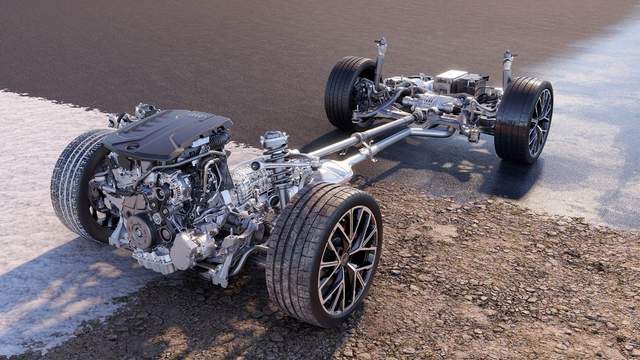
One group consists of high-end business users. The mechanical refinement and brand heritage of fuel vehicles remain unmatched in business settings. SAIC Audi's approach offers valuable insights. Rather than blindly pursuing novelty at the expense of fuel vehicles' core strengths, it emphasizes deep integration of traditional fuel vehicle traits with intelligence. Take the SAIC-Audi A5L Sportback, for example. Built on Audi's latest PPC luxury fuel vehicle platform, it features the fifth-generation EA888 engine paired with Porsche-derived VTG variable turbocharging technology and a mild hybrid system, along with a race-tuned sports suspension. These elements preserve the unique driving dynamics of fuel vehicles, which remain central to its position in the luxury market. The role of Qiankun Intelligent Driving is to enhance the fuel vehicle's inherent power and handling advantages. For such scenarios, intelligence should complement rather than overshadow the vehicle's core strengths.
Most fuel vehicle users face challenges with charging and refueling convenience. This includes urban family car owners unable to install home chargers, residents of third- and fourth-tier cities, towns, and rural areas with low charging infrastructure coverage, as well as overseas markets where many countries and regions lack sufficient charging stations, have unstable power grids, and poor road conditions, leading them to prefer the convenience and reliability of fuel vehicles.
For these owners, current fuel vehicles are not lacking in intelligence; in fact, they often have surplus performance akin to smartphones. Many fuel vehicle owners complain that minor issues that could once be fixed at a local garage for a few hundred yuan now require dealer visits after the addition of infotainment systems, assisted driving, and large screens. Repair shops either cannot or dare not service these systems for fear of accidentally altering core programs and facing legal consequences. As a result, system failures now necessitate trips to the 4S dealer, undermining the cost and maintenance convenience advantages traditionally associated with fuel vehicles.
Other groups, such as those in professional off-road, heavy-duty transport, or enthusiasts passionate about mechanical refinement and modifications, also remain loyal to fuel vehicles.
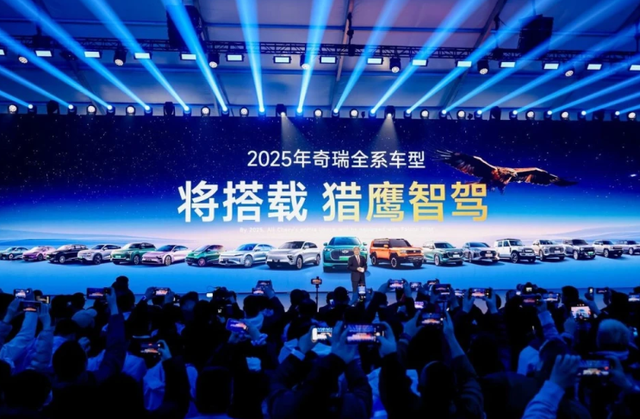
For them, the core value of fuel vehicles lies in their robust power performance and reliable mechanical behavior. Intelligent features that cater to these needs, such as Falcon Intelligent Driving Off-Road's voice-controlled terrain modes and real-time terrain scanning—which allow quick mode switching without manual operation—are well-received by novice off-roaders. Heavy-duty scenarios, like trucks equipped with load monitoring and fatigue driving alerts, and some models featuring intelligent tire pressure monitoring, have also garnered positive feedback online.
Conversely, flashy features popular among EV users, such as in-car fridges, TVs, and recliners, are seen as unnecessary by fuel vehicle users. These features drive up vehicle prices, increase purchasing costs, and may even impact power output.
It is clear that once basic intelligent functions are leveled, the needs of EV and fuel vehicle owners begin to diverge. Forcing 'equal intelligence for fuel and electric vehicles' at the expense of fuel vehicles' strengths in convenience, reliability, and handling will not attract EV users and may alienate longtime fuel vehicle enthusiasts.
Fuel Vehicles Need Intelligence—Their Own Kind of Intelligence
Using EV intelligence as a benchmark is both a challenge and an opportunity for fuel vehicles. The opportunity lies in the ability to quickly replicate intelligent features like voice interaction and assisted driving onto fuel vehicles.
However, if fuel vehicles become constrained by EVs' vision of intelligence, their late-mover disadvantage will become apparent, leaving them perpetually playing catch-up in intelligence. Due to inherent hardware differences, fuel vehicles can never achieve the same level of system-wide coordination as EVs with their direct motor drive. This pursuit may even sacrifice fuel vehicles' core strengths.
The most acclaimed and popular intelligent fuel vehicle practices are those rooted in the vehicles' core usage scenarios, with tailored development.
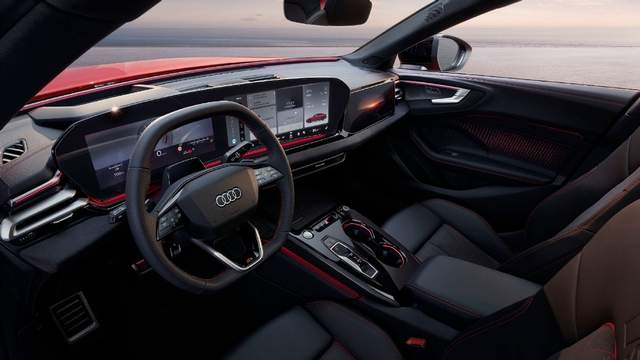
For example, the high-end fuel vehicle SAIC-Audi A5L Sportback features multi-directional electric seat adjustments and a PDLC adjustable panoramic sunroof, extending German luxury cockpit aesthetics while enhancing comfort through intelligent configurations. Externally, it retains iconic elements like a liftback coupe silhouette and frameless doors, preserving German luxury design heritage.
Falcon Intelligent Driving Off-Road, tailored for fuel vehicle off-roading, addresses pain points in this scenario with customized hardware adaptations and upgrades. It features an XWD fully automatic intelligent four-wheel-drive system paired with an exclusive off-road intelligent driving hardware suite, integrating multi-sensor fusion perception modules to ensure precise terrain information capture in complex conditions like mud pits, gravel, and trackless areas. Its interface taps into the social needs of off-road enthusiasts, with features like an Eco-Route Book function that provides real-time information on popular global off-road routes, supply point coordinates, and camping recommendations, solving the challenges of route-finding and resupply in remote areas. The Smart Travel Photography Assistant automatically generates personalized off-road vlogs, enabling easy documentation and sharing of outdoor adventures.

These intelligent fuel vehicle models transcend the conventional logic of electric vehicles (EVs), steadfastly leveraging their unique strengths as fuel-powered vehicles and catering to their core user base. In the realm of competition, it is the champions who are etched in human memory.
Why do certain automakers excel in crafting distinctive intelligent fuel vehicle experiences, while others merely replicate EV solutions in a passive manner?
A pivotal factor lies in the automakers' lack of a clear and compelling vision, which renders them reliant on suppliers. Providers of intelligent solutions tend to advocate for standardized, scalable solutions to cut costs, lacking the inherent drive for customization. To steer clear of passively accepting supplier standardization and avoid being reduced to mere assemblers, automakers must either be willing to pay a premium or demonstrate profound technical engagement in the development process. Only then can they achieve a synergistic effect, where the intelligence of fuel vehicles surpasses the sum of its parts (1+1>2).
Ultimately, the notion of 'equal intelligence for fuel and electric vehicles' merely represents the initial stride in the transformation of fuel vehicles. It serves as a bridge to narrow the experience gap with New Energy Vehicles (NEVs), yet it is neither the final destination nor the entirety of fuel vehicle intelligence.
-
![]()
The Allure of 'Acquisition Spree': Li Shufu's Left Turn, Xu Jiayin's Right
-
![]()
Strategic Transformation Yields Results: Phoenix Optics Reports 10.9% YoY Rise in Core Net Profit for H1 2026
-
![]()
Three Key Growth Trajectories Synergize! Crystal-Optech Reports 3.478 Billion Yuan in Revenue for H1 2026
-
![]()
Semi-Annual Report Sparks XPENG Motors Buzz
-
![]()
1.6 Billion Big Order Secured! SeeYA Technology's Revenue Soars by 287.87% in the First Half of the Year
-
![]()
Baidu's Profits Plunge by 68%: Unraveling the Mystery Behind the Numbers
-
![]()
Baidu’s Profits Tumble by 68%! Where Has All the Money Gone?
-
![]()
Hynix’s Taobao Store Shuts Down Abruptly: What Should Customers Do About Warranty Services for Memory Modules?