Huawei: A Cost-Effective Choice for Seres
 04/10 2026
 593
593
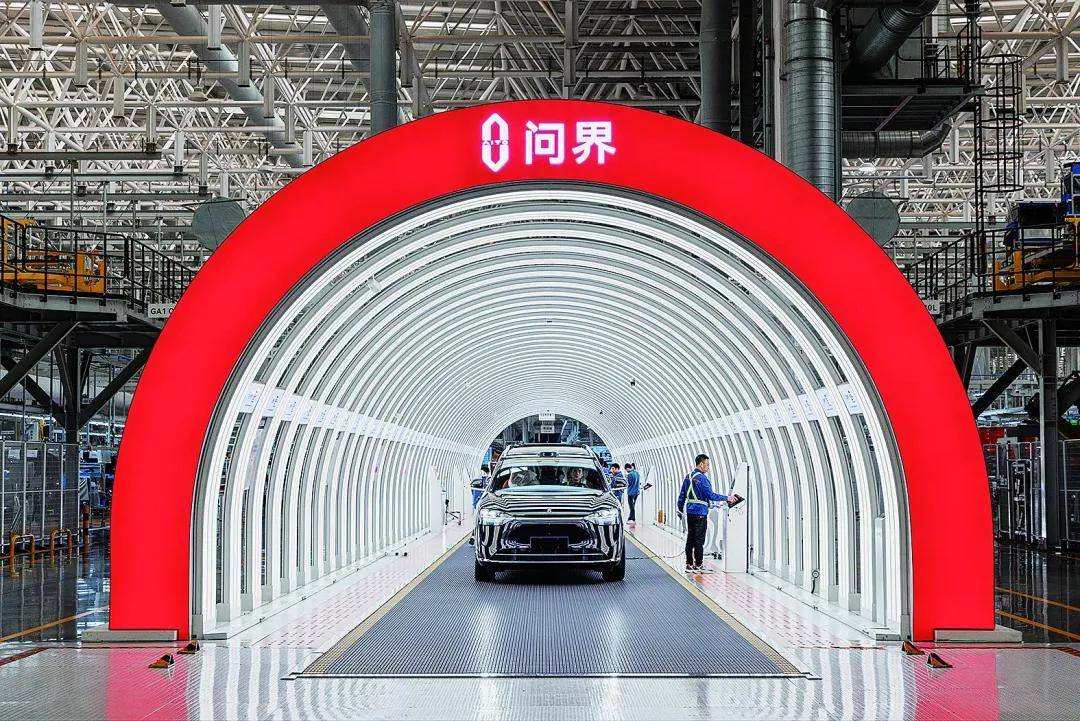
When it comes to technological acquisition, Seres finds a more favorable option in purchasing from Huawei rather than investing in self-research.
Author | Hua Yinglong
Editor | Gu Nian
Investors in Seres are feeling uneasy.
On March 30, Seres unveiled its financial report for 2025. The annual revenue soared to 165 billion yuan, marking a 13% increase year-on-year. Net profit attributable to shareholders stood at 5.957 billion yuan, experiencing a marginal uptick of 0.18% year-on-year. However, net profit after non-recurring gains and losses dipped by 7.8% year-on-year to 5.137 billion yuan. The day following the report's release, Seres' stock price took a nosedive, plummeting by 3.62%.
Taking a longer-term perspective, after reaching a peak of 174 yuan per share in September of the previous year, the stock price has been on a downward trajectory for over six months, nearly halving in value.
On an investor forum, a flood of posts emerged, such as "How many concerns can one bear? It's as if Seres' stock price keeps plummeting without a sign of recovery" and "Seres, don't take advantage of honest investors."
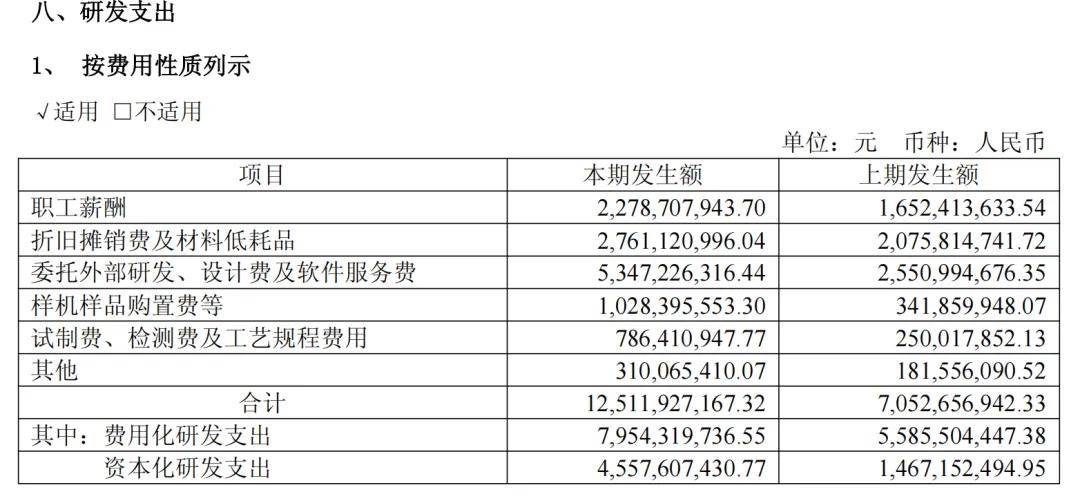
Behind the revenue growth that fails to translate into increased profits lie unprecedentedly high sales expenses and R&D investments. In 2025, Seres' sales expenses ballooned to 24.194 billion yuan, up 26.12% year-on-year, while R&D investment surged to 12.512 billion yuan, a 77.4% increase year-on-year. In both sales expenses and R&D investment, Seres far outstripped NIO, XPeng, and Li Auto.
However, when it comes to R&D outcomes, NIO boasts its Adam chip, Li Auto has its Mach, and XPeng showcases its Turing. All three have developed intelligent driving systems based on self-research. Beyond that, NIO is heavily investing in battery swapping, Li Auto is betting big on embodied intelligence, and XPeng is renowned in the industry as a tech enthusiast and AI pioneer. Their R&D investments not only yield products but also shape their respective brand images.
Yet, for Seres, apart from the halo effect of Huawei, the public seems to have no other distinct impression.
This leads to a peculiar phenomenon: on one hand, there is a continuous, substantial annual R&D investment; on the other hand, there is a near-absence of technological breakthroughs in the public eye. The high R&D investment has failed to translate into recognizable tech labels, prompting people to wonder: what has Seres accomplished with its billions in R&D?

Billion-Yuan Self-Research Fails to Make a Splash
In 2025, Seres achieved a net profit attributable to shareholders of 5.957 billion yuan. After fully embracing Huawei, Seres has entered a phase of relative prosperity.
However, there's no such thing as a free lunch. Under the Smart Selection model, Seres has to pay a price.
From 2022 to 2025, Seres procured products from Huawei HiCar worth 5.8 billion yuan, 7.2 billion yuan, 42 billion yuan, and 22.3 billion yuan, respectively.
The procurement items primarily include core intelligent electric components such as HarmonyOS smart cockpits, Huawei ADS high-level intelligent driving systems, and DriveONE electric drive platforms.
Additionally, according to previous public reports, Seres pays an 8% sales channel fee and a 2% technology licensing fee for each vehicle sold.
Based on the 2025 financial report data, AITO sold 426,000 vehicles with an average price of 391,000 yuan. With a procurement price of 22.3 billion yuan, each AITO vehicle needs to purchase components worth 52,300 yuan from Huawei. Adding the 10% channel service fee and technology licensing fee, each AITO vehicle needs to pay Huawei approximately 91,400 yuan.
While Huawei takes a significant share, from a market performance standpoint, Seres' investment is worthwhile. Leveraging Huawei's technological edge, according to the financial report, AITO's average transaction price increased from 377,000 yuan to 391,000 yuan, up 3.7% year-on-year, benefiting from the increased sales of high-end models.
In an industry collectively entering a price war, being able to maintain an average transaction price of 300,000 yuan demonstrates that Huawei remains a crucial brand asset for Seres.
However, what puzzles many investors is that while Seres purchases the most expensive batteries from CATL and core intelligent driving systems from Huawei, why are its R&D expenses still so high?
In 2025, Seres' R&D investment was 12.512 billion yuan, while NIO, XPeng, and Li Auto invested 10.6 billion yuan, 9.49 billion yuan, and 11.3 billion yuan, respectively. If we convert this into per-vehicle R&D investment, Seres and NIO, XPeng, and Li Auto invested 26,500 yuan, 32,500 yuan, 22,100 yuan, and 27,800 yuan per vehicle, respectively.
Seres' R&D investment is on par with NIO, XPeng, and Li Auto, but in terms of R&D outcomes, Seres seems to be much less visible.
In the same year, NIO released the world's first 5nm automotive-grade intelligent driving chip, Adam NX9031, which is now in mass production; XPeng launched its second-generation VLA large model, IRON robot, and is working on a flying car and Robotaxi; Li Auto introduced its VLA driver large model last year and is now heavily investing in embodied intelligence.
In comparison, Seres' story is less "exciting." In 2025, Seres premiered its Magic Cube technology platform 2.0 at the Guangzhou Auto Show and later introduced its fifth-generation 2.0T super extended-range system. However, these are mostly enhancements to traditional automotive technologies, lacking eye-catching breakthroughs.
One investor commented, "Seres' puzzling move is to emphasize that you're still a gas-guzzling car when everyone is thinking about buying electric cars due to high oil prices."
From a breakdown of specific R&D expenses, in 2025, Seres' external R&D commissions, design fees, and software service fees accounted for the majority of R&D expenses, totaling nearly 5.347 billion yuan, or 43% of the total. Additionally, Seres capitalized 4.558 billion yuan of R&D investment, accounting for 36.43%. Capitalizing R&D investment can beautify profit and asset statements in the short term but carries long-term amortization and impairment pressures.
Compared to the certainty of directly buying solutions from Huawei, self-research seems to offer no cost-effectiveness. However, such advanced investment is also a necessary sacrifice for Seres to gain autonomy.

Seres' Ambition to Reclaim Its Independence
Under the dual pressure of the immense benefits brought by Huawei's halo and doubts about being a mere contract manufacturer, Seres is not without a desire to seek alternative paths, although its efforts sometimes seem unsteady.
In 2023, Seres established Landian Automobile, targeting the affordable new energy brand segment with prices between 100,000 and 150,000 yuan. Seres attempted to create a high-low match with its high-end brand AITO. However, since its launch, Landian's market performance has been disappointing, with annual sales not exceeding 30,000 vehicles in 2025. The 100,000-150,000 yuan price segment has always been the most competitive, with BYD, Leapmotor, and other automakers already forming scale effects and supply chain barriers. Landian Automobile's brand effect and differentiation are not prominent enough.
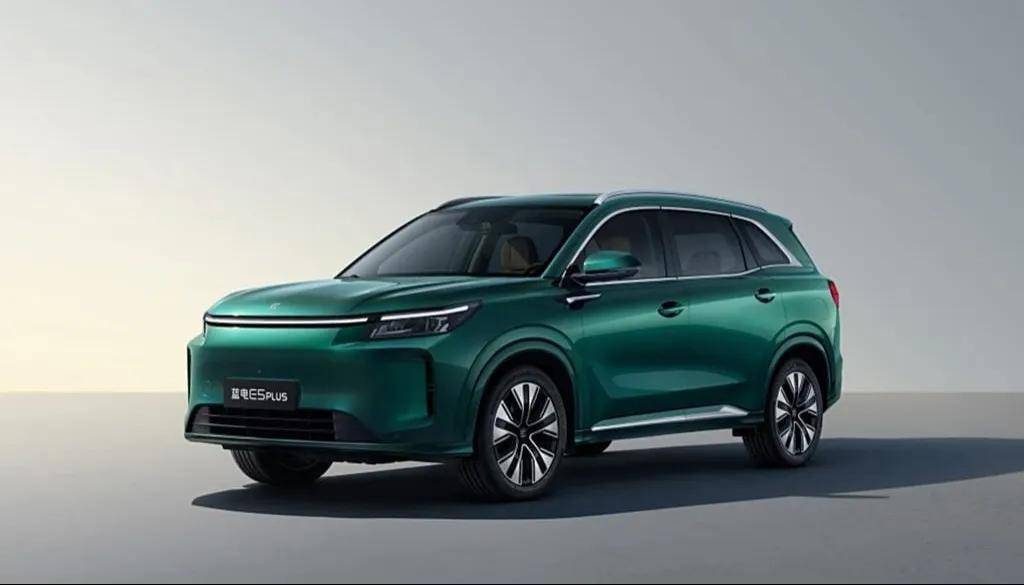
In February 2026, Seres announced plans to divest its continuously loss-making Landian-related assets, with Chongqing state-owned assets taking control, aiming to reduce burdens. However, just a month and a half later, the plot suddenly reversed, and Seres regained 100% ownership of Landian Technology by acquiring state-owned shares.
Some market analysts believe that outside the super IP of AITO, deeply defined by Huawei, Seres seems to have changed its mind and hopes to regain control of Landian, cultivating it as a technology testbed and growth point entirely under its own control. This back-and-forth reflects Seres' subtle hesitation between relying on Huawei and seeking autonomy.
A larger "new bottle" is being blown towards more cutting-edge and imaginative tech frontiers.
In the field of embodied intelligence, in July 2025, Chongqing local state-owned assets listed minority stakes in Seres' subsidiaries, including Jinkang Power and Phoenix Innovation, paving the way for subsequent capital operations. Three months later, Seres' Phoenix Innovation signed an agreement with ByteDance's Volcano Engine to collaborate on core areas such as decision-making, control, and human-machine interaction in intelligent robots.
At a recent analyst briefing, Seres' management stated that bipedal, quadrupedal, wheeled, and wheeled-legged composite intelligent robots are expected to debut this year. The prospect of embodied intelligence is vast, but currently, few companies worldwide have achieved mass-scale production. Seres' layout in this area is both a bet on the future and inevitably faces initial challenges in mass production and profitability.
Seres has also ventured into the low-altitude sector. At the end of 2025, it established a joint venture with military drone leader Aerospace CH UAV through a participating company, focusing on the R&D and manufacturing of low-altitude logistics aircraft and manned aircraft. On February 1, the Rainbow YH-1000S hybrid-powered unmanned transport aircraft, released by the 11th Academy of Aerospace, made its maiden flight in Chongqing, using a hybrid system modified from Seres' 2.0T extended-range engine for aviation.
Notably, in subsequent disclosures, Seres withdrew from the joint venture's shareholder list, citing "failure to reach complete agreement on core intellectual property arrangements and long-term commercial strategies among all parties."
It is evident that Seres does not just want Huawei as a partner; it attempts to replicate the "AITO Model" in bulk to fields like embodied intelligence and low-altitude flight. As Seres' founder Zhang Xinghai put it, "We leverage whoever has a strength."
This ship-jumping model has obvious advantages. By partnering with leading players in various fields, it helps Seres bypass the lengthy primitive accumulation stage and quickly enter cutting-edge sectors, achieving leapfrog development, as validated by the huge commercial success of the "AITO Model" in the new energy vehicle sector.
However, under this cooperation model, a problem remains. Whether collaborating with Huawei or new partners, Seres mainly plays the role of industrial implementation and manufacturing, providing scenarios and production capacity, while core algorithms and intelligent technologies are dominated by partners. In the long run, this model will keep Seres in a passive position in the value chain.
Cross-border integration is not inherently wrong, but the key lies in role positioning. If Seres cannot change its role to be the provider of core technologies in collaborations, then from new energy vehicles to embodied intelligence and then to the low-altitude economy, while the track may switch on the surface, it is essentially just putting old wine in new bottles, unable to escape the fate of being a contract manufacturer.
-
![]()
The Allure of 'Acquisition Spree': Li Shufu's Left Turn, Xu Jiayin's Right
-
![]()
Strategic Transformation Yields Results: Phoenix Optics Reports 10.9% YoY Rise in Core Net Profit for H1 2026
-
![]()
Three Key Growth Trajectories Synergize! Crystal-Optech Reports 3.478 Billion Yuan in Revenue for H1 2026
-
![]()
Semi-Annual Report Sparks XPENG Motors Buzz
-
![]()
1.6 Billion Big Order Secured! SeeYA Technology's Revenue Soars by 287.87% in the First Half of the Year
-
![]()
Baidu's Profits Plunge by 68%: Unraveling the Mystery Behind the Numbers
-
![]()
Baidu’s Profits Tumble by 68%! Where Has All the Money Gone?
-
![]()
Hynix’s Taobao Store Shuts Down Abruptly: What Should Customers Do About Warranty Services for Memory Modules?