Industrial Integration: Kepler Chooses a Smarter Path
 05/22 2026
 489
489
Author|Maoxinru, Wangyufei
In 2026, the humanoid robot industry is undergoing an unprecedented wave of capitalization.
According to incomplete statistics, the financing scale in the humanoid robot industry in 2026 has surpassed the total financing for the entire year of 2025, indicating a more intense industry momentum.
The primary market is bustling with activity, while numerous leading companies in the secondary market are also accelerating their push into the capital markets.
Some companies are opting for IPOs, others are planning backdoor listings, and some are being acquired by industrial capital.
On May 19, Hangzhou Colinet announced its intention to acquire a 41.57% stake in Kepler Robotics for RMB 300 million.
Prior to this, Hangzhou Colinet had already acquired a 9.43% stake in Kepler. Upon completion of this transaction, its shareholding will increase to 51%.
This means that Kepler has become the first domestic humanoid robot company to indirectly enter the capital market by being controlled by a listed company.
This acquisition has sparked industry discussion on a question:
For a humanoid robot startup, is being acquired by industrial players a viable path besides independent listing?

Hot money remains in the industry, but it's becoming more selective
Looking back at 2025, capital enthusiasm for humanoid robots was highly concentrated on technical routes, founding teams, and future narratives.
At that time, many companies were still in the Demo verification stage, with unclear commercialization paths. An imaginative roadshow, coupled with a few smooth live demonstrations, was sufficient to attract capital attention.
Goldman Sachs found in its research that there is currently significant overvaluation in the robotics sector, with approximately 60% of robotics companies worldwide valued at over 100 times their revenue, and the global robotics industry may face a 25% overcapacity rate in 2025.
As more companies enter the fray, capital investment logic has shifted.
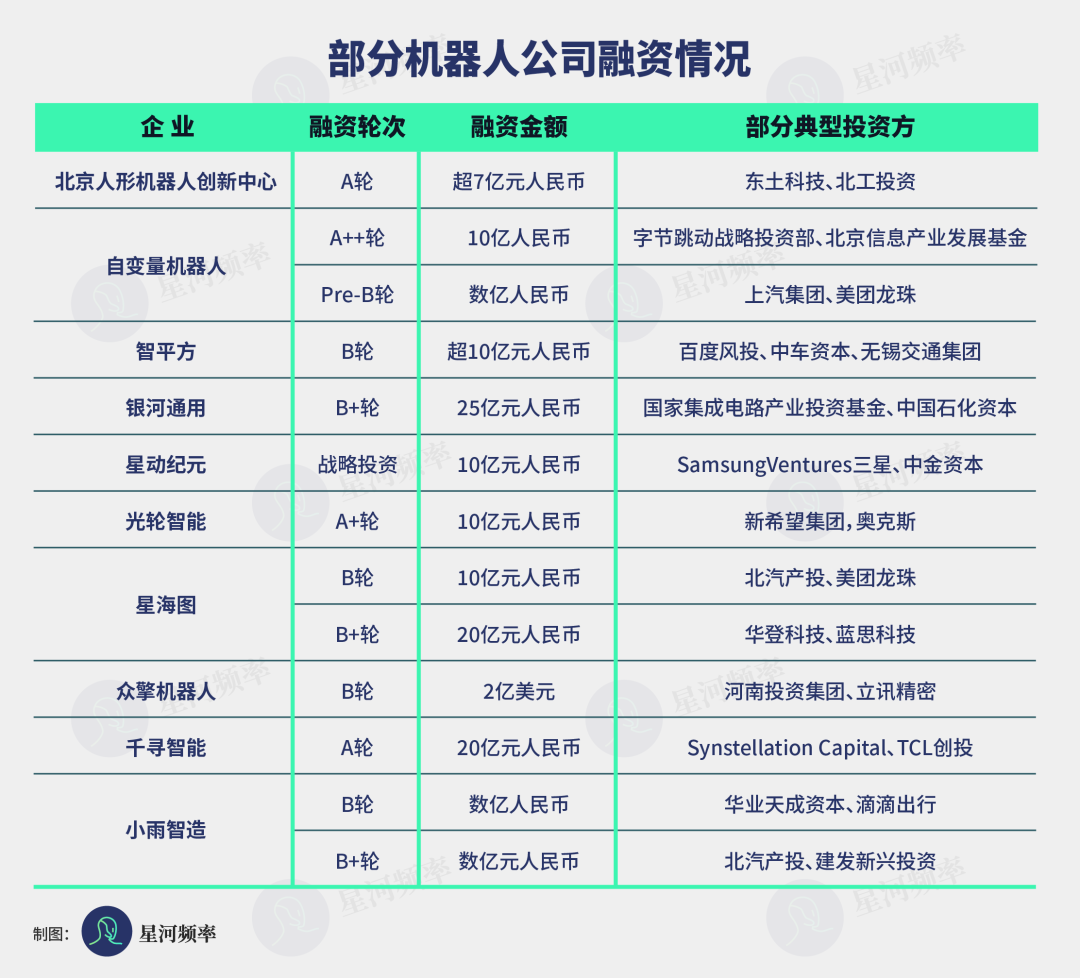
According to statistics, there have been 27 Series B/C financing events exceeding RMB 1 billion each in 2026 so far, 4.5 times the total for the entire year of 2025.
While financing scales have surged, investors' focus has narrowed to leading companies. The number of companies valued at over RMB 10 billion has reached 18, showing a clear Matthew effect.
Some leading humanoid robot companies continue to secure large investments, such as Yinhe General and Xinghaitu.
Among their investors are national funds like the National Artificial Intelligence Industry Fund, Sinopec, CITIC Group, and Bank of China, as well as industrial giants like Walden International and Lens Technology.
Zibianliang also garnered attention from multiple capital sources, including ByteDance, Sequoia China, and the Beijing Industrial Development Fund, during its A++ round.
Meanwhile, other rising companies like Linjiedian and Qingtianzu have recently completed financing rounds worth hundreds of millions of RMB, rapidly increasing their valuations and officially joining the unicorn ranks.
Upon closer inspection, a clear trend emerges:
Leading companies are more favored by capital, able to secure higher valuations, larger amounts, and faster financing rhythms.
Financing entities are expanding from purely financial capital to include industrial capital, local state-owned forces, and strategic investments from listed companies.
This indicates that the industry's focus has shifted from storytelling to genuine competition in engineering capabilities and industrial synergy.
Whether it's industrial capital, local state-owned entities, or strategic investments from listed companies, they value not just technology and narratives but also tangible order and delivery capabilities.
After all, the industrial side also requires robots capable of continuous and stable operation in real, complex industrial scenarios, forming data loops to enhance automation and intelligence capabilities at the industrial end.
Against this backdrop, leading companies, armed with more funds and resources, can calmly navigate industry shifts.
Meanwhile, more mid-tier companies need to urgently find partners capable of providing industrial scenarios, supply chain resources, and long-term financial support.
Clearly, the acquisition between Hangzhou Colinet and Kepler was based on this consensus.

This acquisition is a mutual endeavor
As a traditional electrical company, Hangzhou Colinet's acquisition of a robotics company is not merely to chase trends.
For it, electrical equipment remains the core business, but the growth potential of traditional electrical equipment is becoming clear. Finding a second growth curve is a common challenge for all industrial companies.
Humanoid robots, especially those designed for industrial scenarios, naturally synergize with its existing customer base.
From its inception, Kepler has focused on the industrial-grade general-purpose humanoid robot sector, emphasizing engineering capabilities. Its flagship product, the K2 "Bumblebee" humanoid robot, has a clear commercialization path targeting industrial scenarios.
Kepler Robotics designed a hybrid architecture for the K2 "Bumblebee" to ensure load capacity while reducing energy consumption, enabling continuous, high-intensity, and reliable operation.
It also features a humanoid robot architecture centered around its self-developed hierarchical model VTLA, integrating visual perception, language understanding, and action decision-making for multimodal interaction, achieving closed-loop control from semantic understanding to physical execution.
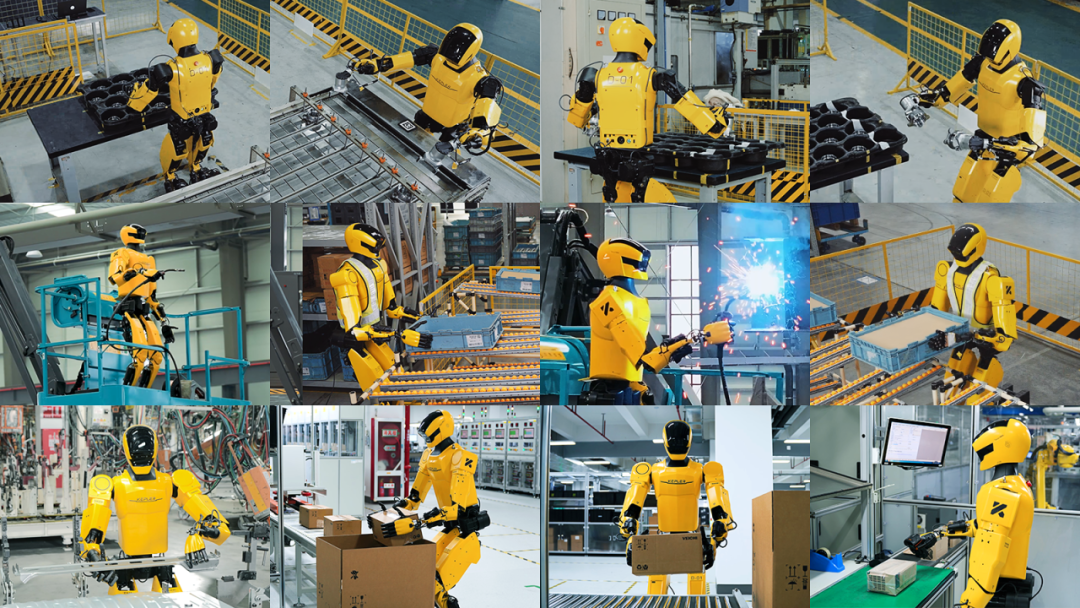
In terms of scenario deployment, the Kepler K2 "Bumblebee" has already been deployed in SAIC General Motors' logistics factory, Zhaofeng Co., Ltd.'s component production workshop, Chunmi Technology's factory, and has participated in the world's first human-robot collaborative high-altitude welding operation, fully proving its validation in complex scenarios.
For Hangzhou Colinet, its core customers are primarily in the power grid and energy sectors. These scenarios are highly standardized, repetitive, and involve a high proportion of hazardous operations, making them one of the most promising areas for industrial robots to land first.
Whether for inspection, maintenance, or auxiliary operations in complex environments, power grid scenarios have clear demands for robot stability, reliability, and continuous operation capabilities.
Compared to building a team from scratch, directly acquiring a company already equipped with product development, scenario validation, and engineering capabilities is clearly a more efficient path.
Technological complementarity is also worth mentioning.
Kepler's embodied intelligent foot bones and hybrid actuators fill Hangzhou Colinet's gaps in the humanoid robot field.
Meanwhile, Hangzhou Colinet's six-dimensional force sensors, dexterous hands, and other core components complement Kepler's capabilities across the entire chain of perception, decision-making, and execution.
This merger is not about one party buying the other but about complementing each other's capabilities.
For Kepler, joining Hangzhou Colinet is equally significant.
In 2025, Kepler's revenue was RMB 4.3372 million, not particularly impressive, but its current order backlog has reached RMB 47 million, over 10 times its 2025 full-year revenue.
Moreover, its revenue in the first quarter of 2026 already exceeded 50% of its 2025 full-year revenue, showing clear growth momentum.
It's necessary to address the widely discussed personnel issues.
According to Kepler's official clarification announcement on May 21:
Former CEO Hu Debo ceased to serve as CEO in June 2025, focusing solely on market sales, with his equity incentives canceled and transferred in compliance, completing all exit procedures by February this year. The initial lack of public disclosure was to ensure a smooth operational transition and stabilize internal momentum.
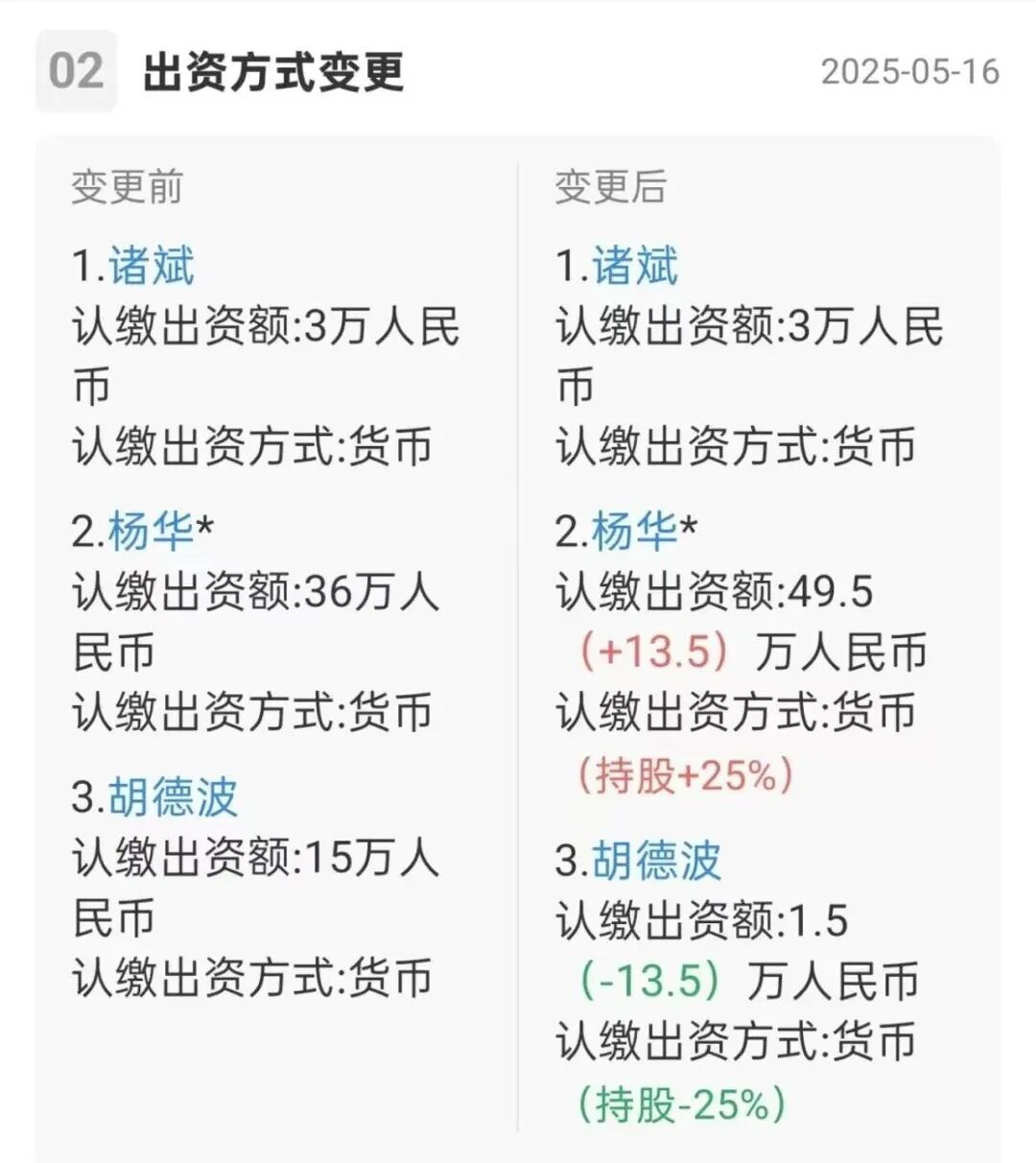
It is understood that the core reason for this management adjustment was Kepler's systemic management upgrade and team strategic optimization initiated in June 2025, an active layout (strategic move) unrelated to this acquisition or valuation.
After the management iteration, Kepler introduced young technical talent, achieving further breakthroughs in embodied intelligence architecture, VTLA, and other areas. The effects of this round of adjustments were already evident in the first quarter's operating data this year.
High R&D investment, low commercial returns, and few orders are the common predicaments of most robotics startups currently.
The current bottleneck for humanoid robot commercialization is time, yet most robotics startups lack sufficient funds to withstand this passage of time.
With capital now focusing more on leading companies, Kepler's integration into an industrial capital system allows it to leverage external forces, securing more stable financial support while sharing industrial customer and scenario resources to accelerate robot commercialization.
Hangzhou Colinet's acquisition of a 51% stake in Kepler for RMB 400 million represents a rational valuation, not a bubble.
Kepler has not indulged in the high valuations based on storytelling in the primary market but has chosen a immediately realizable and liquid valuation, reflecting its team's rational and pragmatic approach.
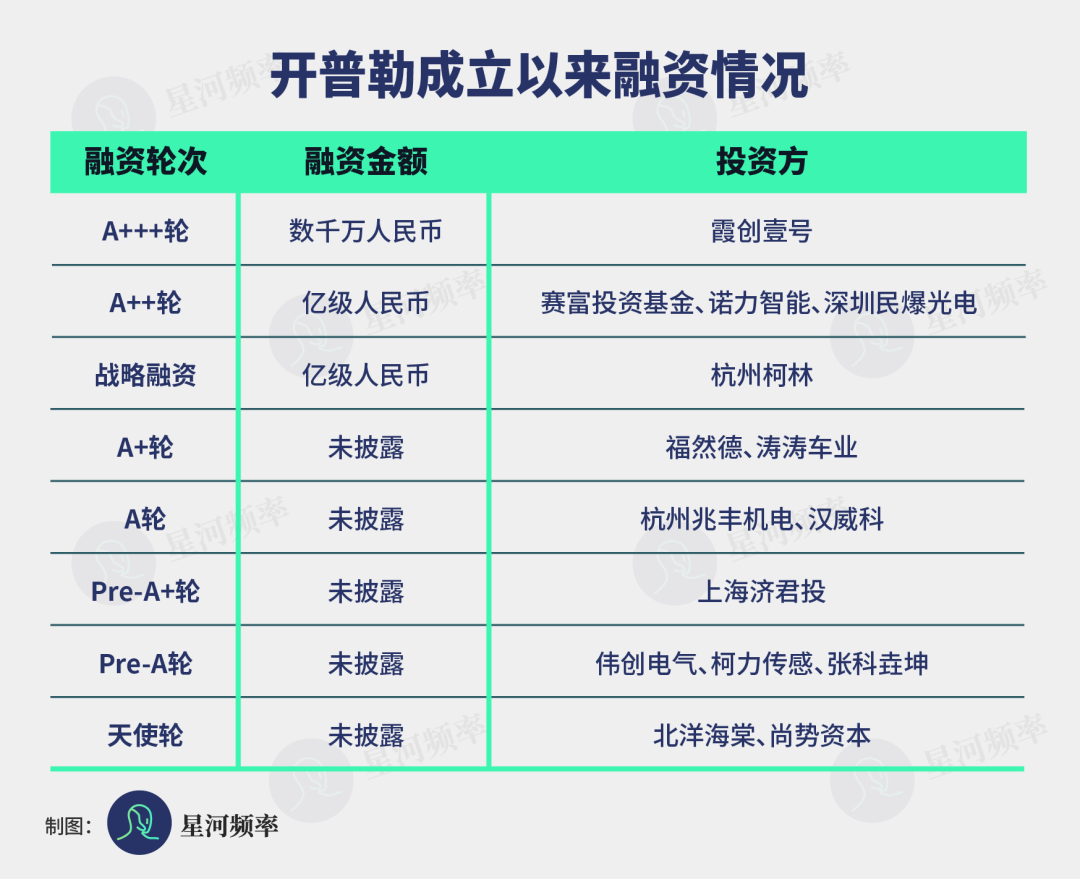
Reviewing Kepler's previous financing history, each round has been highly oriented towards industrial capital, indicating that Kepler seeks not just money but also the scenarios, channels, and supply chains behind the money.
As a listed company with a mature customer base and supply chain capabilities, Hangzhou Colinet can provide these core resources for Kepler.
On one hand, leveraging Hangzhou Colinet's listed platform, Kepler can secure more stable R&D investment, enhance its industry value through the capital market, and expand its business scope.
On the other hand, by sharing Hangzhou Colinet's mature supply chain system, Kepler can effectively reduce procurement and production costs, shorten product delivery cycles, and accelerate the large-scale deployment of its robot products.
More importantly, after joining Hangzhou Colinet, Kepler can continuously access real power grid scenarios, accelerating the deployment and large-scale replication of industrial robots.
The synergy and interchange of government and enterprise customer resources can not only open doors for Kepler to enter industries like energy and power but also create new business spaces in intelligent manufacturing for Hangzhou Colinet.
It's worth noting that Hangzhou Colinet's move was not impulsive.
As early as late last year, Hangzhou Colinet had already invested RMB 100 million to acquire a 9.43% stake in Kepler. Based on this investment price, Kepler's overall valuation at the time was approximately RMB 1.06 billion.
Six months later, Hangzhou Colinet doubled down on its control, investing RMB 300 million in cash. In the current financing environment, this represents a significant vote of confidence.
This timeline indicates that after its initial investment, Hangzhou Colinet saw Kepler's technology, orders, and internal transformation highlights firsthand, leading to its continued heavy investment.
Therefore, this acquisition was an active choice made by both parties after thorough understanding and deep binding, proving that Kepler's "internal value" far exceeds what is currently reflected in its financial statements.
From this perspective, Kepler's acquisition by Hangzhou Colinet aims to complement its capabilities and go further in the humanoid robot race.

There is no standard answer for survival capital paths
For humanoid robot companies, there is no one-size-fits-all answer when it comes to choosing a capital path.
IPO, backdoor listing, acquisition by industrial players, or remaining independent without listing—each path has been taken by some and abandoned by others.
These paths are not inherently superior or inferior; the choice depends on the company's stage, the team's core objectives, and its judgment of its long-term competitiveness.
Currently, pursuing an IPO is the most mainstream path in the robotics industry.
An IPO opens direct fundraising channels in the public market, providing continuous R&D funds and brand endorsement, as well as an exit path for early-stage investors.
However, the flip side is that listed companies must face strict financial disclosure, performance pressure, and market sentiment fluctuations, with every quarterly report becoming a major test.
This year, IPO applications from Unitree, Deep Robotics, and RoboTech have been accepted. Meanwhile, companies like Yinhe General, Xinghaitu, Qianxun Intelligence, and Lingxin Qiaoshou are also planning to list on the Hong Kong Stock Exchange.
The fact that leading star companies are all aiming for IPOs indicates that capital market acceptance of the robotics industry is rapidly increasing.
As for backdoor listings, strictly speaking, this path has not been fully proven yet, but last year's acquisition of Shangwei New Materials by Zhiyuan Robotics attracted significant attention.
Although Zhiyuan has gained control, it explicitly stated there are no plans for a backdoor listing within 36 months of the acquisition.
The advantage of a backdoor listing over a direct IPO is its shorter timeframe and faster process.
However, the drawbacks are equally clear: shell resources are scarce and expensive, market overinterpretation can trigger reputational risks, and policy regulations are continuously tightening.
Currently, backdoor listings in the humanoid robot industry remain an unproven option, but Zhiyuan's pioneering steps at least show that leading companies are exploring more flexible ways to go public.
The third path is acquisition by industrial players, which is actually the final destination for many tech startups.
Kepler is taking this path, following the precedent of Boston Dynamics being acquired by Hyundai Motor Group.
The core advantage of this route is the rapid acquisition of industrial resource endorsements, gaining access to real-world scenario data, mature supply chains, and customer channels.
For teams with a clear technological direction but limited commercialization capabilities, this is a pragmatic choice.
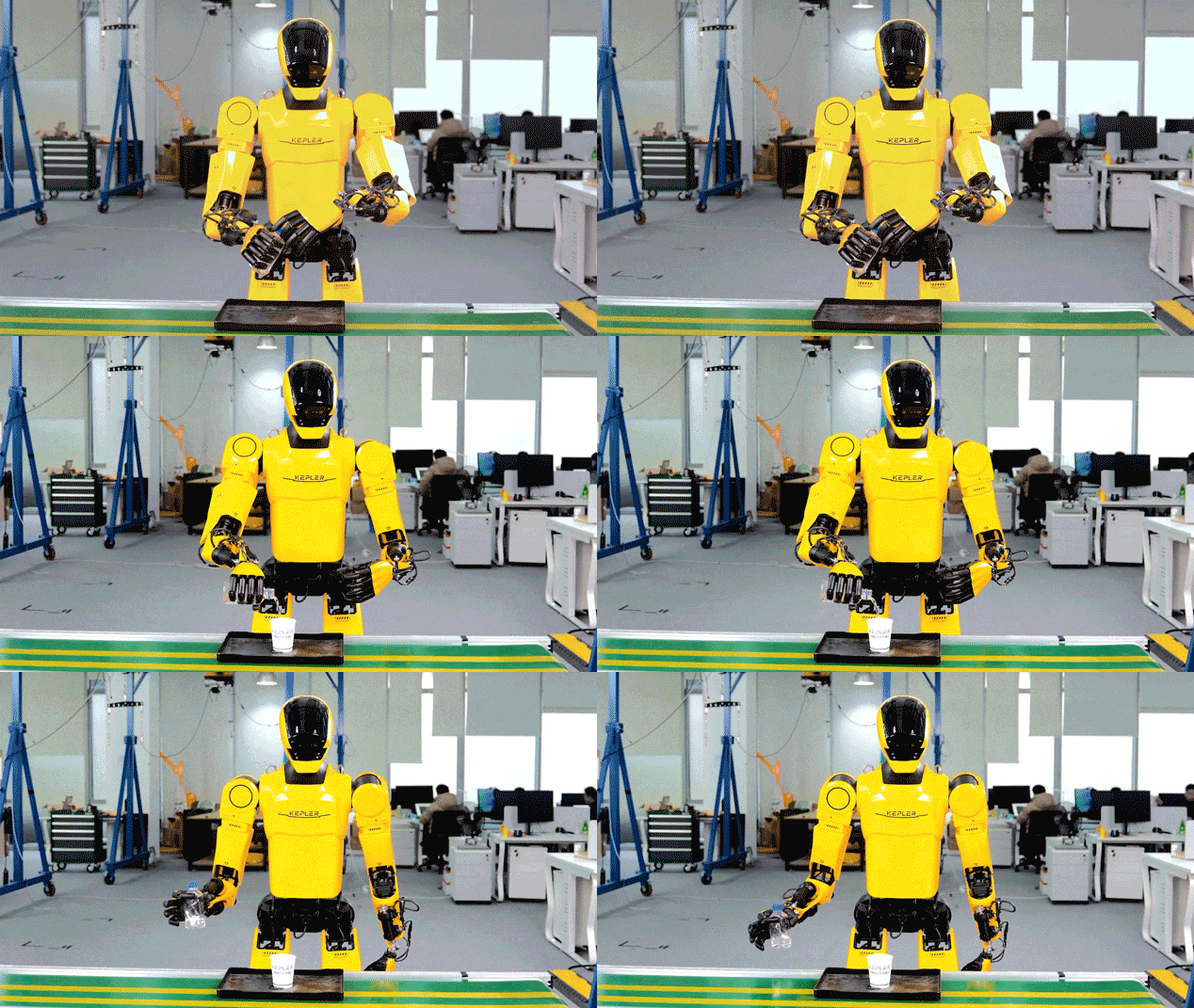
There is a detail that is easily overlooked. Kepler entered the path of industrial integration with real orders:
It had over 47 million yuan in orders on hand and had already completed validation in multiple complex industrial scenarios, demonstrating its capability for embodied mass production.
Through this acquisition, Hangzhou Colin effectively filled its technological gaps in the field of humanoid robots, forming a full-chain system of perception-decision-execution.
Let's return to the question (questioning) of 'valuation inversion.' According to data from Lianchuang Securities, the median merger and acquisition premium rate fell to 62.4% in 2024, reaching a ten-year low. Discounted mergers and acquisitions have become the norm, and capital sentiment has become more rational.
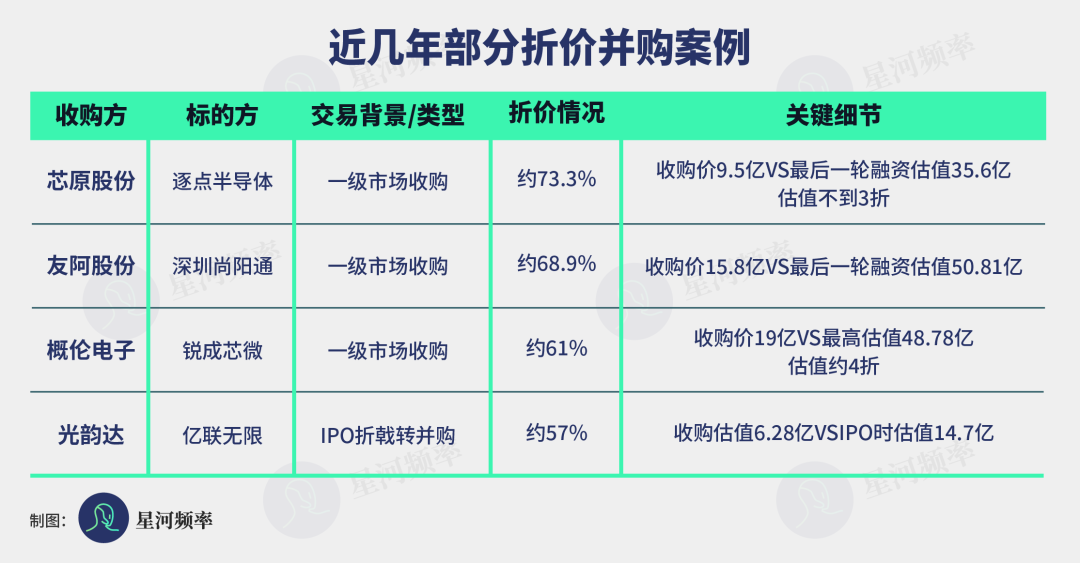
More critically, the public market financing in April 2026 involved minority equity financing and did not involve a transfer of control, naturally leading to a higher valuation.
This transaction, however, is a bona fide acquisition of controlling equity, with reasonable room for discounting, which is an industry norm.
Additionally, it is understood that Kepler did not simply use price as the criterion for cooperation. The industrial resources, listed platform, and full-chain layout behind Hangzhou Colin were also important components of this transaction.
The last path is to remain independent and not go public. This path is rarely proactively mentioned, but it is precisely the choice of a considerable number of companies in the robotics industry, especially those that have been deeply involved in core components for many years.
For component companies with strong technological barriers and clear market demand, going public is not the highest priority; having stable self-sufficiency capabilities is more important.
Their survival logic relies more on real customer orders and sustained technological leadership rather than short-term growth in valuation multiples.
Overall, none of the four paths is inherently superior to the others.
The choice of path essentially represents a balance between a company's capabilities, stage, and aspirations. It is not a test of technology but rather a test of the founder's clear judgment of their own position.
The path chosen by Kepler precisely sends a signal worth noting: being controlled by Hangzhou Colin is not a simple capital operation but a typical industrial integration.
The industry player values not Kepler's short-term profitability but its technological strength and the commercialization prospects indicated by its orders on hand.
This means that the humanoid robotics industry is moving from a competition of technical parameters into an era of industrial integration.
Whether the technology is cool or the valuation is high may not be the decisive factors for survival. What truly matters is finding real implementation scenarios and forming a sustainable business closed loop (closed loop).
Backed by a powerful listed company, once Kepler successfully develops an intelligent core brain for exclusive vertical fields, it can break free from the traditional PE valuation system for hardware companies and secure high expected premiums in the robot brain track (track).
For Kepler, this acquisition is not a passive 'sale' but a rational landing that deeply binds industrial capital, eliminates outdated teams, and secures the only A-share ticket.
It is taking a pragmatic path to victory that is starkly different from the foam (bubble) in the primary market.
This is the bet Kepler is making.
-
![]()
Doubao Work Unveiled! Domestic AI Leaders Fully Commit to the 'Work' Sector
-
![]()
Who’s Sounding the Alarm on ‘Rushed Vehicles’?
-
![]()
Over 5.3 Billion Yuan in Losses Over Three and a Half Years! Can Yonyou Reverse Its Fortunes Through Streamlining and AI Transformation?
-
![]()
Baidu AI Adopts Free Model: A Strategic Maneuver in Traffic and Monetization
-
![]()
Silicon-Based OLED Pioneer Unveils Financial Results: H1 Shipments Outpace Entire 2025 Volume
-
![]()
AI's First "Lost Summer"
-
![]()
Zeiss Makes Another €2.2 Million Bet: Will Eye Tracking Be the Next Big Thing in the Smart Glasses Industry?
-
![]()
RUNTO Ranking | Global Top TV ODM Factories' Shipment Figures for July 2026