Google CEO's Latest Interview: Google Leads in Multimodal Capabilities but Lags in Coding
 05/25 2026
 720
720
Author|Lin Yi
Editor|Key Focus Editor
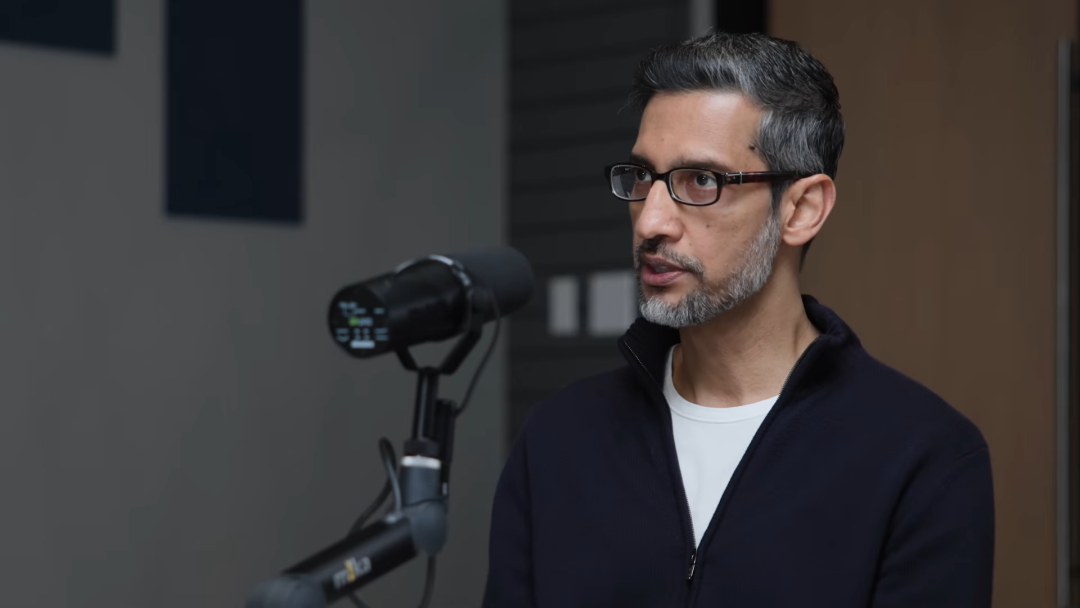
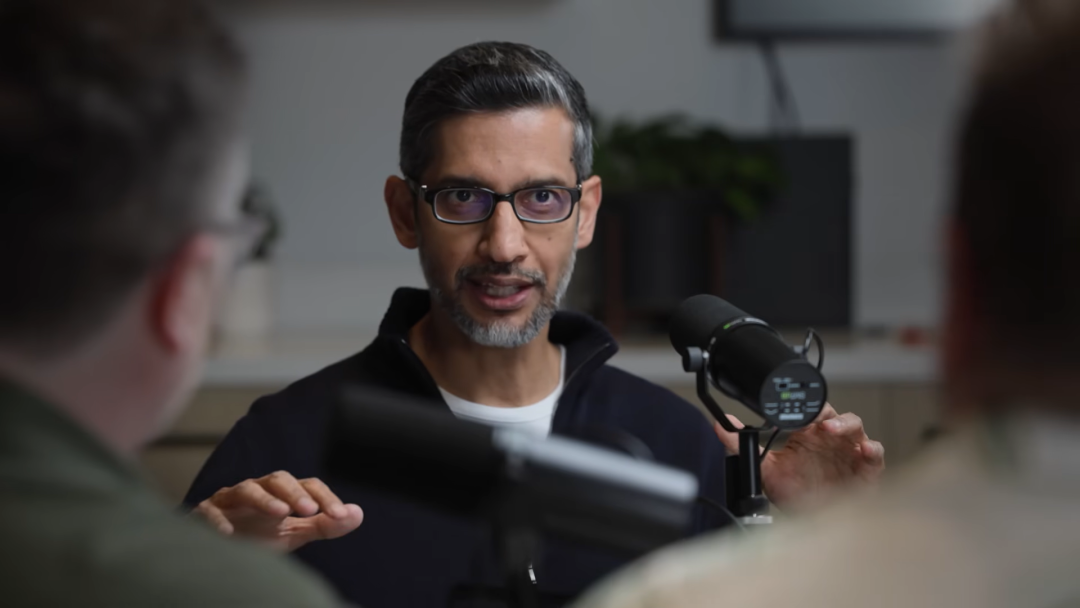
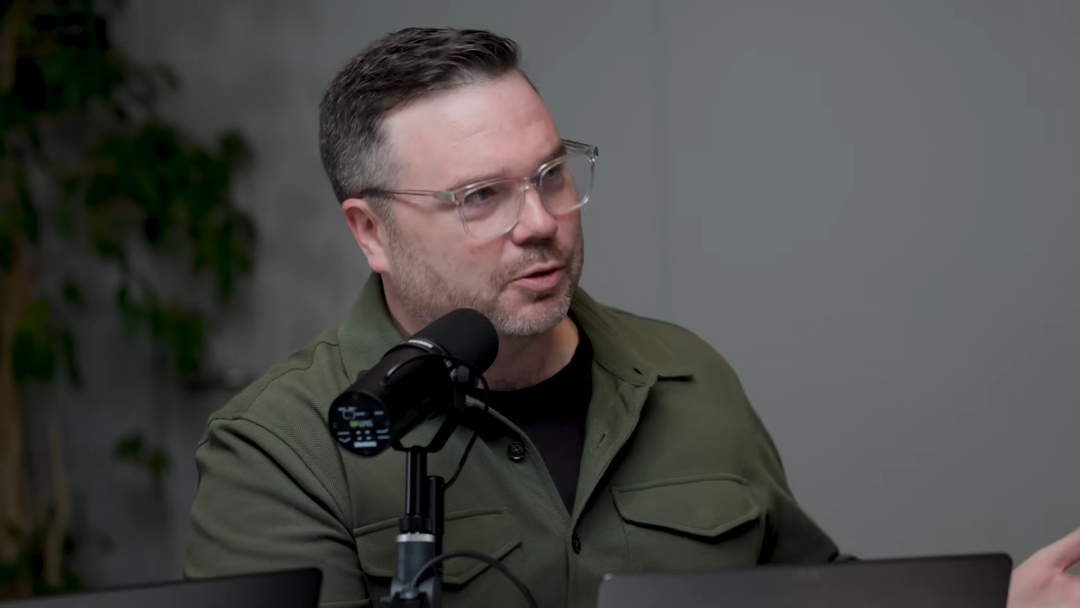
After the conclusion of Google I/O, Google CEO Sundar Pichai accepted an exclusive interview with the well-known tech podcast Hard Fork.
Regarding the capabilities of Google's large models, which are of greatest concern to the outside world, Pichai stated that Google's models are highly competitive in terms of overall intelligence but still lag behind industry frontiers in agentic coding and long-cycle tasks. The newly released Gemini 3.5 Flash model has issues with artifacts and performance degradation, which the team is rapidly addressing through post-training fixes.
We have summarized the key information from this interview, and here are the highlights:
1. Google's model is at the forefront of multimodal capabilities but lags in programming and long-cycle tasks
In response to external concerns about the strength of Google's large models, Pichai said that Google's models are at the industry's highly competitive frontier in terms of overall intelligence dimensions such as text, multimodal input, voice and audio processing, and general reasoning. However, Google currently lags behind in agentic coding, instruction following, and long-cycle task processing. Long-term tasks performed by senior developers on complex codebases are critical areas where Google must hold its ground and fully catch up.
In addition, regarding the performance degradation and behavioral anomalies in the newly released Gemini 3.5 Flash model, Pichai stated that these are common phenomena in exploring new domains. The team will quickly address them through post-training fixes and gradually relax usage restrictions set to prevent service interruptions.
2. Google Search will not aggressively switch to a full AI mode; sources and links will persist long-term
Google will not aggressively switch search to a full AI mode. Pichai said that guiding users through technological changes together and ensuring products meet user expectations are crucial. Although Google is comprehensively advancing AI, users still need a quick way to establish connections through search nodes. Therefore, sources and links will always exist as part of search.
At the commercial model level, Pichai believes that economic value always depends on the total value technology provides to users. Under the AI model, agents will create more total value for users than in the past. Therefore, Google will continue to adopt a commercial model combining subscriptions and advertising, a commercial principle that will not change in the new technological cycle.
3. Google's agent products will adopt a gradual promotion strategy to win user trust and prevent hacker attacks
Google's latest agent product, Spark, is scheduled for release this summer. Pichai shared his personal testing experience: Spark can autonomously read meeting schedules, directly color-code them by category in the calendar, and clearly mark different meeting categories and working hours.
When discussing the promotion strategy for agents, Pichai said that the key to winning user trust lies in a step-by-step approach, providing people with absolute control and system transparency. If agents exhibit unexpected behavior, users will become hesitant. Additionally, from a security perspective, agent systems are vulnerable to external hacker attacks. Therefore, it is essential to ensure boundary security during technological advancement and avoid crossing boundaries in the wrong way.
4. Google opens up TPU computing power to competitors to maintain hardware frontier advantages
To meet the massive computing power demands of model iteration, Google, while supplying its self-developed models, still sells access rights to TPU chips to competitors and external companies. Providing technology allows Google to stay at the forefront, prompting the team to develop the best next-generation hardware and gain economies of scale in various aspects. Without the support of a massive external cloud business, the company would never plan for such high-volume chip manufacturing.
5. The evolution speed of AGI in the past one to two years has exceeded original expectations
The progression of underlying technologies toward AGI is an inevitable trend that is currently unfolding. Although Pichai did not provide a specific timeline for achieving AGI, he admitted that the technological evolution speed in the past one to two years has exceeded original expectations, making the realization of this goal seem closer. Even if the full realization of AGI still takes time, the technology in three years will be much more powerful than today. Therefore, the public should not relax their preparations just because they believe AGI is still some time away. Society as a whole must prepare in advance to internalize and respond to it.
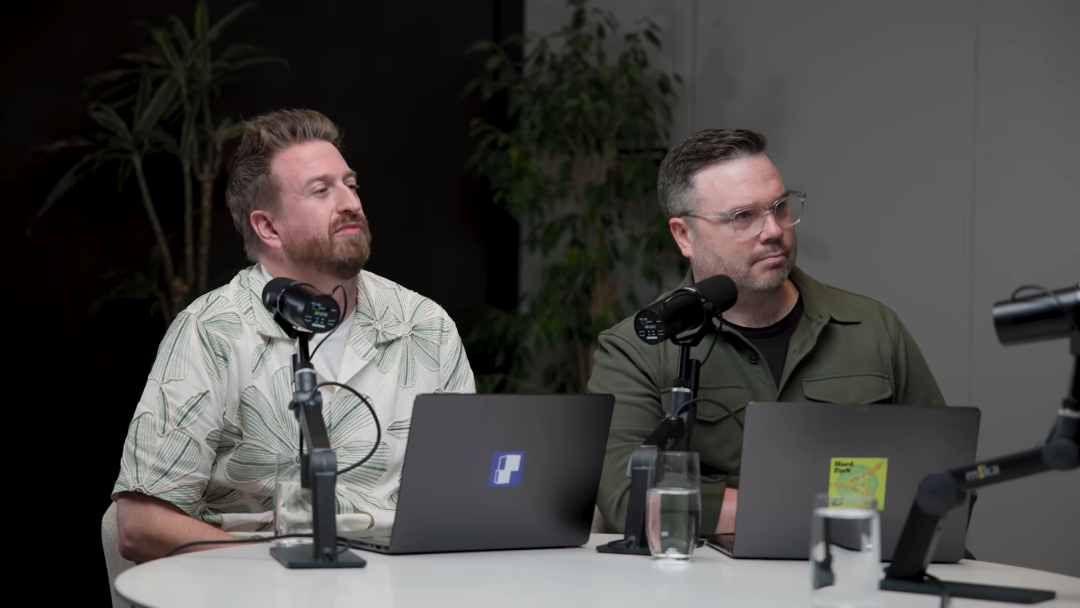
Here is the transcript of Sundar Pichai's interview:
1. Google's model capability assessment in the AI race
Kevin Roose: Sundar Pichai, welcome back to Hard Fork.
Sundar Pichai: Thank you for having me. I'm glad to be here.
Kevin Roose: The last time we had you on the show was in 2023. At that time, Bard had just been released, and I think the general consensus then was that Google was in a catching-up position in the AI field. How do you view your position in this race now?
Sundar Pichai: That brings back memories. It feels like a long time ago, and these three years have felt like a long time. But I think the progress made in this technology has been astonishing. As a company, we have also made significant strides. I believe this is a dynamic moment for the entire industry.
Our models are at the frontier level in some areas and lag behind the frontier in others, a coexisting state. If you observe overall capabilities, including text, multimodal input, voice or audio, and general reasoning, in terms of overall intelligence, I believe we are highly competitive. When it comes to agentic coding combined with tool usage, as well as instruction following and long-cycle tasks, I think we are currently slightly behind.
But we are working hard. This field is full of vitality, and all leading labs have their pre-training cycles, so there are different rhythms that may not fully align. The competition is extremely fierce right now. Three months ago, people were saying, 'We are in the lead, and no one can catch up,' and now the Public opinion direction (public opinion) has reversed. But this is the norm when you are at the frontier.
We are the only major company truly at this frontier. Currently, several startups have made extraordinary progress. We have been deeply involved in this area for a long time, and I believe we took a big step forward with Gemini 3.5 Flash, which has indeed addressed some areas where we were previously behind. Bringing the model into the real world and iterating based on feedback data has been very helpful to us.
I believe programming is an area where accessing data stream access is crucial. We may not have had enough coverage at that time, such as with Claude Code or Anthropic's similar collaboration with Cursor. So, after launching Anti-gravity 2.0, we have been using it internally at Google for some time.
I shared the Token usage at Google I/O. I have never seen such a scene inside the company before. Our scale is doubling every week, and everyone is genuinely putting these models to work. This is helping us continuously climb and make significant progress. Although the frontier is highly dynamic, I am very optimistic and confident that we will make breakthroughs there.
Casey Newton: It sounds like if there's an area where you feel you haven't fully achieved the leading position you truly want, it's programming. Is that the case? Is that where you're applying pressure?
Sundar Pichai: I believe programming will ultimately become the foundation of everything we do, so this is a critical frontier that must be held. In the field of programming, we have consistently performed very well. We are very good at creating single-generation web frontends and related content. However, in terms of long-running tasks performed by senior developers working on complex codebases, we are making progress but still have a gap compared to the leading level others have achieved. But we are working hard, and we are very clear about this and are making progress in this regard.
Casey Newton: Gemini 3.5 Flash has been released for a day. I do think it usually takes a few days to truly conduct a comprehensive stress test on these models. However, we have also seen some complaints about pricing and model quality. I'm curious about your thoughts on the market reaction so far.
Sundar Pichai: I'm looking forward to finishing the interview so I can spend more time with the team. It takes a day or two to adapt. This is a new model in a new area where we have made some progress. There may be some performance degradation, but I believe we will be able to resolve it very quickly through post-training processing.
We have observed some artifacts and behavioral issues, which are all easy to solve, so we will handle them. Considering that we tightened usage restrictions to avoid service interruptions just one day after releasing a large amount of content. But you will soon see our progress in relaxing usage restrictions. When you encounter this situation, it's natural to feel frustrated, and I feel the same way. But these are areas we will address, and progress will be made soon.
Kevin Roose: It seems that one of the secrets to success for some AI companies is focus. Anthropic and OpenAI have an almost obsessive focus on the programming field, and OpenAI was criticized last year for being too diversified in their investments because they were trying to do too many things at once. Now they have contracted and strengthened this focus. Do you feel that Google has invested enough effort in the programming field, or are all the other attempts you are making dispersing the resources, time, and focus needed for the main offensive?
Sundar Pichai: We have all seen a turning point emerge in the programming field. We are all responding to it, and we have a rather serious layout in this area, so I don't think this will be a problem. We are a large company with scale advantages, so we can focus on a few different areas simultaneously. I don't think there are any fundamental issues as long as we are making progress. I believe in this field, we are at a moment where 30 to 60 days feel like five years have passed.
2. The future of AI search transformation and business models
Kevin Roose: Another thing that has attracted widespread attention is the changes you made to the Google portal—the search bar—this week, the biggest change in 25 years. I think many people expected that at some point in the future, the conventional Google classic search interface would disappear, those 10 blue links might disappear, and you would directly make this AI mode the default option. But you haven't done that yet. Although there is a lot of integration, if users need to, they can still see those 10 blue links. Do you think this situation will disappear at some point? Will you directly enter a full AI mode like ripping off a Band-Aid?
Sundar Pichai: Guiding users through this process together and ensuring the product meets their expectations are both important. So I try not to rush things. Very clearly, as we go through these changes, people's reactions have been positive. We can see this very clearly from the product's long-term metrics, so we understand this.
However, people want search to be fast, and establishing connections with content on the web through search is important to us. So you will see us continuously improving the product in an orderly manner. A year ago, we didn't have an AI mode, but now many people are experiencing it, and we have made the process of entering that mode much more seamless than before. This is an ongoing process, and sources and links will always exist as part of search.
Kevin Roose: Casey told me on the way over that he feels like he hasn't done a traditional Google search in basically the past year and is now completely doing this AI search. When you hear things like that, is your reaction 'That's cool, that's the kind of user I want now'? Or do you feel a chill because the traditional search advertising business has been a pretty good business for you?
Sundar Pichai: If anything, in AI mode, agents will be able to do more for you than they could 10 years ago. I believe economic value always depends on the total value you provide to users. We would all agree that over time, the value we provide to users has been increasing, competition has become fiercer, and there are more choices. So I feel very reassured about the model combining subscriptions and advertising, and the right business model will persist. In this new world, Adam Smith's principles will not change.
3. Public anxiety about AI and societal responses
Kevin Roose: Let's talk about public perception of AI. The New York Times and CNN conducted a public opinion poll this week and found that only about 16% of people believe AI is primarily positive, while about 35% believe it is primarily negative. How do you view this resistance to AI that we are currently seeing? How much influence do you think Google has in changing this perception?
Sundar Pichai: I have always viewed AI as the most profound technology that humanity will develop. It is moving forward at an extraordinary pace. Humanity's current level of evolution is not sufficient to cope with such a massive transformation. I believe people are naturally anxious about the future that this technology will bring, and I completely understand. Accompanying such profound technological changes, this reaction is very natural.
We have experienced much simpler technological changes before, which also triggered anxiety, but the scale of this one is different from anything we have seen before. As an industry, we must make more efforts to continuously promote and demonstrate the benefits that this technology can bring, which is something we can control. We still have more work to do in expanding infrastructure investment scale to ensure these systems run better.
But I think people's concerns are more fundamental than that. The anxiety surrounding this transition goes beyond these technical aspects. A natural part of this is people's anxiety about their economic prospects in this world. Much discussion points to radical changes in jobs, with some positions disappearing.
I tend to think the future outlook is better than those pessimistic predictions, but as a society hearing these voices, I'd be surprised if people didn't feel anxious. Change is happening so fast that we need citizens to engage, be aware of what's happening, and express their preferences. This is what drives social action. So this ongoing dialogue has its healthy side. Given the pace of technological progress, both the concerns and the need to take them seriously are entirely valid.
Casey Newton: You're giving a commencement speech at Stanford next month. Recently, many commencement speakers have been booed by college students due to public concerns about AI. What are you planning to tell the graduates about AI? Do you have a strategy ready for dealing with boos?
Sundar Pichai: Whenever we advance technology, it helps drive progress in the world. These graduates will be an essential part of driving this progress and addressing the impact of technology, something we must pay close attention to. I've always been extremely optimistic about the next generation. Even though we're always anxious about the world and worry about the next generation, I believe they'll rise to the challenge and build a better world. This is no different from other turning points in history. My goal is to share my experience.
Kevin Roose: I'd love to hear more details about that perspective. While jobs may change significantly, for graduates entering the workforce, the economic prospects still seem bright. What does that look like in your mind?
Sundar Pichai: At a fundamental level, we'll all have a new ability to handle various tasks. I wasn't in the industry when spreadsheets became widely available to the public, and I have no idea how people did financial analysis before that. Spreadsheets changed everything, and similarly, AI will change the starting point for many people. Just looking at programming, fast-forward to the progress we're seeing now—more people around the world will be able to write code. I've heard the two of you might be examples of that. Along the way, we'll solve problems that were once underestimated in new and even accidental ways. People will become more efficient and have more leisure time, both of which will become reality simultaneously.
In many fields, like healthcare, doctor burnout rates are extremely high. Their calling should be to spend time caring for patients, but in reality, the proportion of time they spend with patients is pitifully low. AI will actually help them devote more time to patient care. The analogy with radiologists has been fascinating for a full decade. I look at myself—I've had far more scans done in my lifetime than my father. Due to digitization, each scan now contains more than 10 times the information it did in the past. I think that number will increase 10-fold again in the next 10 years. We need AI to keep up with the immense demand coming our way. The impact of all this will be nonlinear.
I don't want to downplay this at all. Every technological change brings shocks, and as a society, we need to take it extremely seriously and engage with it. Many of the current dialogues are rightly thinking about this. But I do think there are many positive dimensions of AI that haven't been fully discussed, and at the same time, I don't fully agree with some of the overly deterministic pessimistic predictions.
4. Application Scenarios of AI Agents and Building User Trust
Kevin Roose: Let's talk about agents, as this is closely related to what will make us more efficient in the future and how it will change our work. Later this summer, you'll be releasing Spark, which seems to be an agent for ordinary people. Could you give us an example of what this agent is currently doing for you personally?
Sundar Pichai: I use it more in professional settings, mainly through my enterprise account. In that context, it's incredibly convenient for preparing for any meeting. I just used the Hard Fork podcast as a test case.
Kevin Roose: Honestly, if you email it to us, we'll put it up on the big screen. We want to know how Gemini is tracking us.
Sundar Pichai: There's some content about the two of you in there, so I don't think I can project it, half-jokingly. Recently, this feature also went live in my personal account. I asked it to review my upcoming meetings and color-code them by category to clearly understand how my time is allocated. Watching it do that was truly incredible. It suggested two color schemes for me to choose from and directly changed the colors in my calendar. It felt very sci-fi. It clearly marked private meetings, health-related meetings, and work time. This was my personal query test to check on progress.
For agents, we must give people a sense of control. It's like letting people feel comfortable sitting in the backseat of a self-driving car—we need to do it step by step. If something unexpected happens with the agent, people will pull back. So winning their trust, giving them a sense of control, and transparency are crucial. More importantly, from a security perspective, these systems could be hacked, so we need to ensure we don't push beyond the frontier in the wrong way.
5. The Compute Race, Open-Source Strategies, and AGI Safety
Kevin Roose: I want to ask a question related to safety. All the top labs are racing to achieve recursive self-improvement, which means building AI systems that can rapidly improve themselves. Do you think this can be achieved safely? Do you feel like you can already see its realization now?
Sundar Pichai: These models are getting better and better at coding and agenting workflows. You can see that today in Antigravity, where over a 12-hour period, it can build a simple operating system from scratch. These tasks would take thousands of hours for humans to do. You're already seeing some of these results in the workplace, with agents and sub-agents being orchestrated to collaborate and build things together.
This is a continuous process, and we've certainly made some progress. But in terms of what people describe as artificial general intelligence (AGI), I don't think we've reached that stage. AGI will represent the next phase of acceleration, which will have many implications, but we haven't fully reached that point yet.
Casey Newton: Is there a contingency plan? For example, when we've just reached the self-improvement rate, are we going to break with convention or what will happen?
Sundar Pichai: For all responsible AI applications, if you're facing a moment like that, it shouldn't just be an internal conversation. This must be a broader societal dialogue. We all must avoid competitive risks at those stages of AGI.
Casey Newton: Currently, all the labs are racing to acquire more compute power, and the demand for it seems endless. Everyone is doing their best to hoard resources, strike deals, and build their own data centers. Google is still selling access to TPUs to competitors and other companies in this race. Why? Why don't you keep these for yourselves and your own models?
Sundar Pichai: I think the two aren't mutually exclusive. As long as we can manufacture enough chips, it's not a constraining factor. We have Google DeepMind (GDM) and first-party services, but we also have Google Cloud, a business with revenue and cash flow. We're making long-term plans for this. If we didn't have the cloud business, we wouldn't be planning for such a massive chip output anyway.
Providing TPUs to others has many advantages. The fact that researchers at Anthropic use TPUs drives us to develop the best next-generation hardware. We also use and collaborate with NVIDIA's excellent next-generation chips. I've dedicated my life to developing numerous platforms like Chrome, Android, or Google Cloud. Open-sourcing something or providing this technology has intrinsic value. It keeps us at the forefront, and economies of scale help in every aspect.
Kevin Roose: The last time we had you on, we asked you about AGI. At the time, you replied that whether we've reached AGI or not doesn't matter because these systems will become very powerful, and Google's strategy should remain unchanged. I noticed you didn't mention AGI in this year's keynote. Demis did, but you didn't. How do you view the term AGI now and the idea that all these advancements are heading toward a single, world-changing ultimate goal?
Sundar Pichai: The march toward AGI is an inevitable trend that's happening, and we do believe that. I understood this early on; otherwise, I wouldn't have transformed the company 10 years ago to put this technology at the core. What I meant before was that even if AGI takes 10 years to achieve, the technology will be much more powerful in three years than what we have today. I don't want people to think that just because AGI is still 10 years away, they don't need to take action or prepare.
Casey Newton: Are you a believer in AGI?
Sundar Pichai: I'm certain that this technology is making fundamental progress toward AGI. I'm not entirely sure whether it will be achieved in a three-to-five-year or five-to-ten-year timeframe. But the pace of progress in the past year or two makes me feel it's closer than we thought. As someone who manages one of the world's largest companies and has a responsibility to society, I might use more cautious language than others. But as a company, 10 years ago at I/O, I announced TPUs and AI-first data centers. We're very clear about the direction this technology is heading.
Kevin Roose: This might be the last question. One of the most memorable phrases from this year's keynote came from Demis, who said we're standing at the foot of the singularity. Can you tell us what that specifically means from Google's perspective? Should people be excited, fearful, or both?
Sundar Pichai: Obviously, I've had many conversations with Demis on this topic. I think he defines the singularity as the arrival of AGI. If I remember correctly, he's elaborated on achieving AGI around 2030. If you believe that, then this expression makes sense. For him, that's how he defines the singularity. Demis and I, and many of us, feel that if you truly believe this, it's important to state it clearly because we're all at the forefront of building this technology. Hopefully, people are listening, and as a society, we need to internalize this and prepare for it.
Kevin Roose: Sundar Pichai, thank you so much for coming. It's been great talking to you.
Sundar Pichai: Thank you very much.
-
![]()
Doubao Work Unveiled! Domestic AI Leaders Fully Commit to the 'Work' Sector
-
![]()
Who’s Sounding the Alarm on ‘Rushed Vehicles’?
-
![]()
Over 5.3 Billion Yuan in Losses Over Three and a Half Years! Can Yonyou Reverse Its Fortunes Through Streamlining and AI Transformation?
-
![]()
Baidu AI Adopts Free Model: A Strategic Maneuver in Traffic and Monetization
-
![]()
Silicon-Based OLED Pioneer Unveils Financial Results: H1 Shipments Outpace Entire 2025 Volume
-
![]()
AI's First "Lost Summer"
-
![]()
Zeiss Makes Another €2.2 Million Bet: Will Eye Tracking Be the Next Big Thing in the Smart Glasses Industry?
-
![]()
RUNTO Ranking | Global Top TV ODM Factories' Shipment Figures for July 2026