990,000-Yuan Cyber Companion: UBTECH Sparks Debate on the Future of Humanoid Robots
 07/08 2026
 692
692
What truly captivates the public about UBTECH is its striking product design, which aligns with the aspirations many hold for humanoid robots. Whether successful or not, this endeavor brings the industry back to a fundamental question: How can robots seamlessly integrate into human life?
On June 30, in Shenzhen, UBTECH held its annual global product launch event.
As the lights dimmed, a "human-like" figure appeared on stage. Standing 1.75 meters tall and dressed in a light gray short-sleeved T-shirt, its silicone skin shimmered with a soft matte finish under the spotlight.
It raised its right hand and waved to the audience, with finger joint movements almost indistinguishable from those of a real person. Some in the crowd instinctively waved back before realizing—it was UBTECH's newly launched U1 Pro bionic humanoid robot.
UBTECH announced that pre-orders for the U1 Series across all channels had exceeded 13,361 units.
Throughout 2025, the company delivered a total of 1,079 full-size humanoid robots for industrial use.
In other words, the pre-order volume for this new consumer-grade product in just one month was 12 times the total B2B sales for the entire previous year.

In the capital markets, UBTECH's stock price surged by over 18% shortly after the launch event, with its market capitalization rebounding to the HK$50 billion mark. Just four months earlier, its stock had dipped below its IPO price.
From 1,079 to 13,361, while other manufacturers focus on making robots run marathons, UBTECH seems to have carved out its own unique path.
Part 1: Searching for the 'Breakthrough Moment'
One product launch propelled UBTECH from the sidelines to the spotlight.
Despite being the "first humanoid robot stock" and the first robotics company to appear on the CCTV Spring Festival Gala, UBTECH often found itself overshadowed by rising stars like Unitree and Zhiyuan.
In 2025, UBTECH's humanoid robot revenue reached RMB 821 million, soaring by 2,203.7% year-on-year. Despite this explosive growth, humanoid robots accounted for only 41.1% of total revenue.
The 1,079 units sold represented about 7% of the estimated 13,000 humanoid robots shipped globally in 2025, far behind Zhiyuan's 39% and Unitree's 32%.
That year, UBTECH's commercial applications primarily focused on industrial settings. Its Walker S series industrial humanoid robots had been deployed in bulk across automotive manufacturing, smart logistics, 3C electronics manufacturing, semiconductor fabrication, and aerospace manufacturing, handling core tasks like material handling, sorting, and quality inspection.
This sector represents a major global focus for embodied AI, yet UBTECH's market share positions it as a challenger in the competition.
Starting in late February 2026, as capital market activities from stars like Unitree emerged, UBTECH's stock price declined steadily from above HK$140 to as low as HK$85.4, once again falling below its IPO price.
Market concerns centered on three key areas:
Production capacity and order fulfillment. Founder Zhou Jian had boldly stated, "We aim to complete delivery of over 10,000 robots this year." However, UBTECH had only delivered 1,079 units in the past year, requiring a tenfold increase in production capacity within 12 months—a daunting challenge.
Meanwhile, 1,079 humanoid robots generated RMB 821 million in revenue, averaging approximately RMB 760,000 per unit. In comparison, Unitree's most expensive high-performance research humanoid robot, the Unitree H1, cost just RMB 650,000. This suggests UBTECH lacks pricing advantages in potential future price wars.
The competitive landscape is rapidly evolving. Currently, UBTECH significantly trails Zhiyuan and Unitree. With Unitree, Deep Robotics, and Loju having already filed IPO prospectuses, and Zhiyuan pursuing alternative listing routes, UBTECH faces mounting competitive pressure.
Beneath these production, order, and competitive challenges lies concerns over financial health. UBTECH reported a net loss of RMB 790 million in 2025, with cumulative losses exceeding RMB 4.2 billion from 2022 to 2025. Operating cash flow remained negative, with RMB 780 million flowing out in 2025 and RMB 3.89 billion over the past five years.
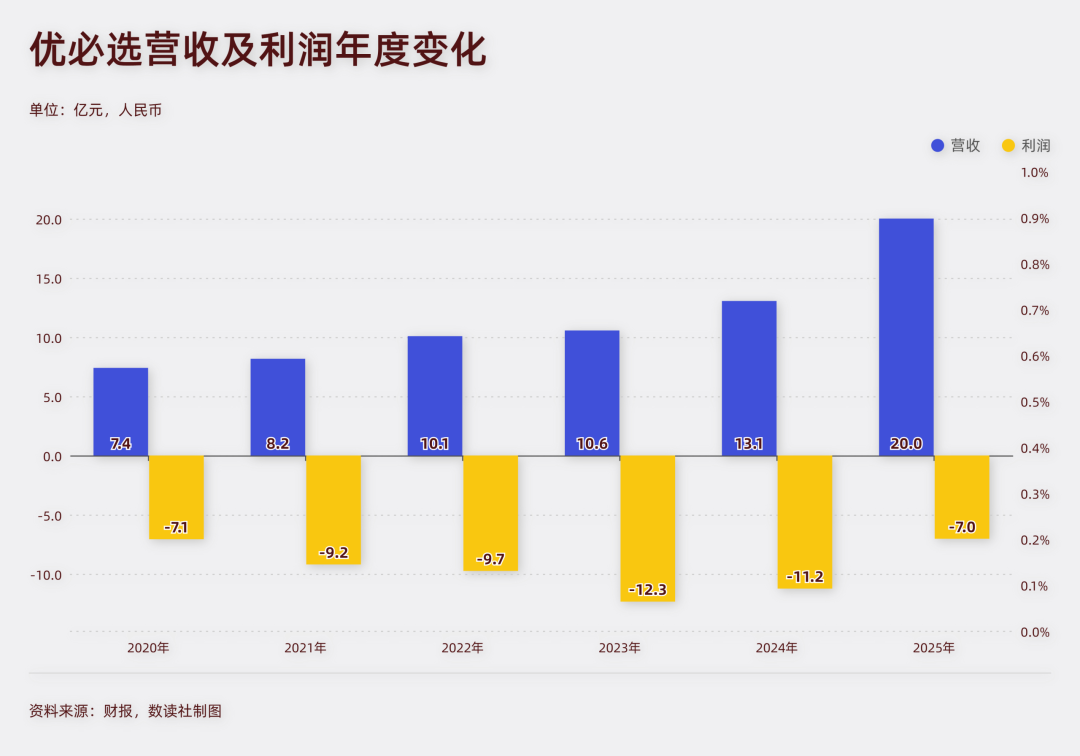
Since its listing, UBTECH has conducted six private placements, with each round raising larger sums than the last. Including its IPO, the company has raised a cumulative HK$8.5 billion, primarily for daily operations and repaying credit lines from financial institutions—highlighting immense operational pressures.
This product launch may mark a turning point, as UBTECH attempts to create its own "breakthrough moment."
On June 30, UBTECH announced its "Human-Robot Symbiosis" strategy for the next decade, officially launching the full-size ultra-bionic U1 Series humanoid robots—including the half-body U1 Lite (RMB 119,800), high-specification full-body U1 Pro (RMB 169,800), and high-dynamic full-body U1 Ultra (male version RMB 990,000, female version RMB 880,000).
Clearly, these are consumer-grade products rather than industrial ones. Moreover, they differ from Unitree's G1 or H2 models by striving for near-human indistinguishability.
The U1 Series features 88 degrees of freedom and an innovative dual-pivot bionic cervical spine, covering 90% of basic human movements. It incorporates the world's first emotional large model designed for long-term companionship, capable of recognizing over 20 fine-grained emotions with over 90% accuracy.
From photos taken at the launch event, the U1 Series appears to leap over the "uncanny valley."

This model represents a radical departure from UBTECH's previous strategy. Historically, the company pursued a "full-stack self-research + industrial deployment" approach, independently developing everything from servo joints and controllers to complete robot structures, while focusing on precision industrial scenarios like automotive and aerospace manufacturing.
Now, abruptly pivoting from B2B industrial applications to B2C consumer markets constitutes a daring leap.
Part 2: 'Dual-Front War': From Factories to Households
According to UBTECH, the company is pursuing a three-phase strategy: "industrial first, commercial second, household third."
Zhou Jian believes "human-robot symbiosis" will evolve through three stages: first replacing high-risk, repetitive labor to free up human resources, then penetrating daily life to provide companionship services, and ultimately achieving deep human-robot integration. He further predicts, "Robots will replace smartphones as the core AI interaction terminal, with interaction shifting from manual operations to natural language."
Prior to the U1 Series, UBTECH primarily focused on industrial humanoid robots.
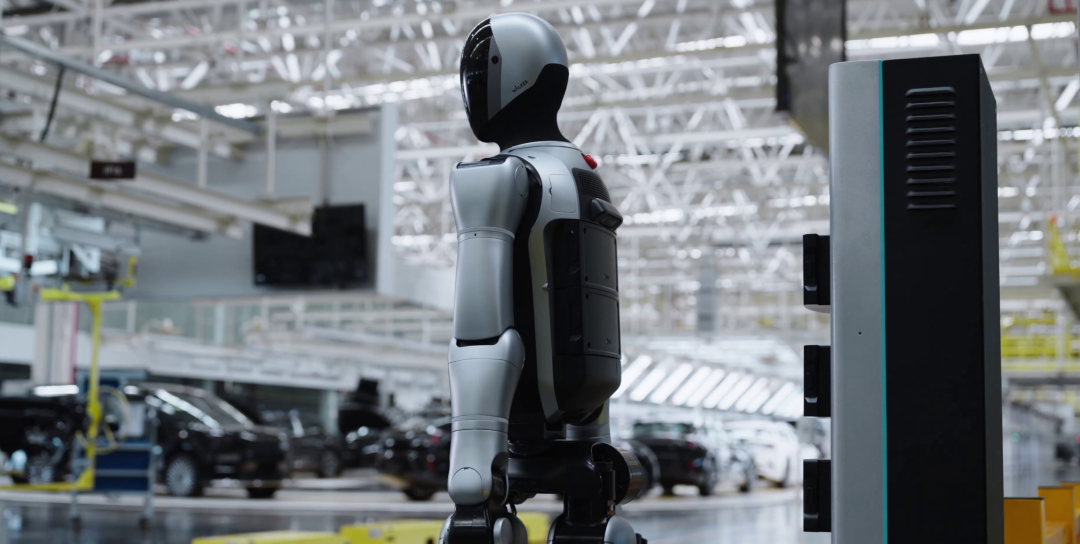
In this domain, UBTECH has concentrated its efforts in three key areas:
First, refining application scenarios. UBTECH has narrowed industrial humanoid robot applications to three core workstations: material handling, sorting, and quality inspection—areas with high staff turnover, management difficulties, and repetitive tasks where clients most urgently need robotic intervention.
Second, targeted technological optimizations. From the Walker S to the Walker S2, the company has progressively implemented technologies like hot-swappable autonomous battery replacement, Swarm Network 2.0, and the Collaborative Agent (Co-Agent).
Third, securing orders from core clients. Public information shows partnerships with Dongfeng Liuzhou Motor, Geely, FAW-Volkswagen, BYD, Foxconn, SF Express, and others. According to a J.P. Morgan report, the company has over ten clients in trial operations or with confirmed orders.
UBTECH appears to have established its industrial foothold.
Against this backdrop, UBTECH is now targeting consumer-grade products—the "new frontier" for embodied AI.
Consumer products follow two logical threads:
The first is commercial logic: C-end markets represent the ultimate path to scale. UBTECH's industrial robots lack pricing advantages, with enterprise clients facing long decision cycles, high deployment thresholds, slow repurchase rates, and demanding after-sales requirements.
In contrast, consumer markets offer exponentially larger potential user bases. The U1 Series has already surpassed 10,000 orders across channels, which at minimum pricing could generate nearly RMB 1.2 billion in revenue—equivalent to over half of 2025's total revenue.
Economies of scale would reduce costs, improve operations, and potentially lower robot prices.
The second is ecosystem logic: household scenarios represent the ultimate battleground for "human-robot symbiosis." Zhou Jian states, "Household companion robots hold the greatest imagination." While industrial robots solve "labor replacement" problems, household robots address "new demand creation"—emotional companionship, educational entertainment, and daily services. These needs barely exist in current markets but could unlock entirely new incremental spaces once activated.
Launching a major C-end push in 2026 represents a preemptive move before conditions fully mature.
Currently, bionic technology continues maturing. The U1 Series integrates 19 servos in its head, enabling over 30 micro-expressions. With 88 degrees of freedom, a bionic fast-slow brain architecture, and voice-lip synchronization within 20ms.
Market acceptance is also gradually increasing. Industry forecasts suggest 2026 will see commercial and consumer scenarios emerge as the "more interesting tracks" for humanoid robots, with many teams launching more human-like models for consumers. Unitree's R1 robot, priced from just RMB 29,900, has significantly lowered barriers, with consumers now willing to try embodied AI robots.
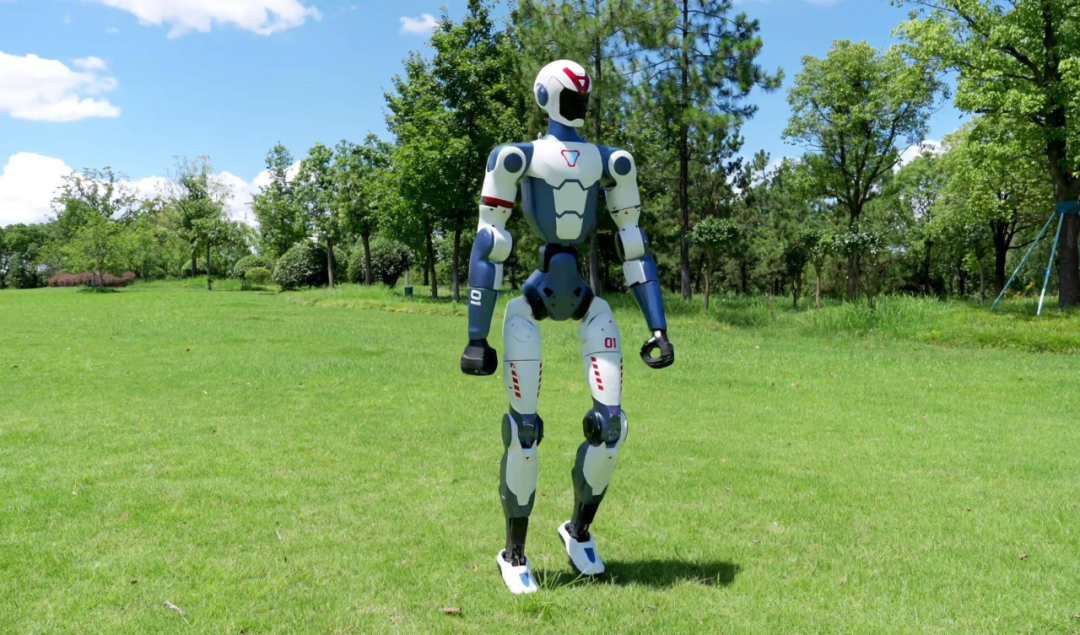
A breakthrough in consumer humanoid robots could instantly compensate for UBTECH's lagging industrial market share.
UBTECH appears to have found a differentiated competitive curve—not by selling more robots in factories, but by taking deeper root in households.
This "dual-front war" reflects structural shifts across the entire humanoid robot industry.
From 2023 to 2025, two clear paths emerged: one starting from AI models to pursue general intelligence (e.g., Figure AI, Tesla), and another starting from hardware to first solve "functionality" before "intelligence" (e.g., Unitree Technology).
Focusing solely on industrial scenarios risks confinement to the narrow "equipment sales" market, with limited scale, lengthy decision cycles, and intensifying competition. Pursuing only consumer scenarios risks falling into the "concept without product" trap, with immature technology, lagging supply chains, and unenthusiastic consumers. Most companies currently choose one path.
UBTECH has broken free from this constraint, first building hardware capabilities and engineering experience through industrial applications, then leaping to C-end markets with emotional companionship to unlock new demand spaces.
Industrial operations provide "survival capabilities"—cash flow, technological validation, and client relationships. Consumer markets offer "imagination space"—scale, ecosystems, and branding.
However, the premise is that UBTECH can truly establish itself on both fronts.
Part 3: The Humanoid Robot 'Big Brother'
Consumer humanoid robots indeed represent new territory, but the challenges to success are equally apparent.
Current technology, while relatively mature, resembles the "brick phone" era before smartphones emerged—expensive, with poor user experiences, and appealing only to early adopters.
After the U1 Series launch, "990,000-Yuan Robot Companion Can't Last a Night on Single Charge" quickly trended online. UBTECH responded helplessly, "Most full-size humanoid robots currently offer 2-4 hours of battery life—this is an industry-wide issue."
Beyond battery life, associated soft pornography and ethical concerns have drawn widespread attention. UBTECH claims, "Our positioning is emotional companionship, which the state promotes and recognizes—not boyfriends, girlfriends, or partners."
However, regardless of UBTECH's statements, the product's appearance and clothing strongly resemble adult products, making it difficult to avoid sliding into gray areas.

In April 2026, five departments jointly issued the "Interim Measures for Managing AI Human-Like Interactive Services," imposing strict regulations on virtual lovers, deep role-playing, and emotionally dependent AI.
Currently, both Doubao and Qianwen have announced the suspension of their agent functionalities. User-created personas, role-playing, virtual lovers, and emotional companionship services will likely enter an era of strict supervision.
UBTECH's emotional companion robots will probably come under regulatory scrutiny as their influence grows. In other words, the current U1 Series exists in a gray zone rather than a risk-free one.
Even if smooth development occurs, UBTECH may still "start early but finish late," as seen in its capital market maneuvers.
One issue is competitiveness. The U1 Series draws attention less for its intelligence than for its human-like appearance—essentially wrapping a steel skeleton in silicone. Actual interaction experiences remain to be validated by consumers, while competitors can likely replicate this approach.
Hardware-focused products may simply need interaction modules added later, while AI-focused products already possess interaction capabilities UBTECH cannot match.
This creates the risk that UBTECH's dual-front competition and early consumer market entry may leave it struggling on both fronts.
Another hurdle lies in production capacity. Deliveries of the U1 Series are set to commence in September, with UBTECH aiming to complete all orders within the same year. This ambitious goal necessitates the mass production and delivery of over 10,000 full-sized bionic robots in less than four months—a formidable task indeed.
UBTECH Vice President Jiao Jichao candidly acknowledges, "The head of the U1 Series alone comprises 2,000-3,000 components. Achieving mass production of over 10,000 units poses an immense challenge."
And this challenge is specific to the consumer (C-end) product line alone. UBTECH's dual-front strategy entails fulfilling consumer deliveries while simultaneously meeting industrial shipment obligations.
These two product lines lack reusable capabilities in terms of production logic, making it difficult to generate synergistic effects. Amidst immense delivery pressure, whether the failure rate and maintenance costs can be maintained within acceptable bounds remains a significant uncertainty.
If the dual-line strategy proceeds without a hitch, it could substantially enhance UBTECH's operations. However, if any one line encounters setbacks, it could potentially exacerbate the already precarious financial situation.
Zhou Jian disclosed that by 2026, UBTECH's revenue from humanoid robots will surpass 80% of its total income. UBTECH is transitioning towards becoming a 'pure humanoid robot company.' At this critical juncture, UBTECH's unveiling of the 'Human-Machine Symbiosis' strategy further accelerates this transformation. It signals a loftier ambition: to become an infrastructure provider in the era of human-machine symbiosis.
However, in practice, what truly garners attention for UBTECH is not this grand vision but rather its striking product design, which resonates with another expectation or desire some users have for humanoid robots. Whether UBTECH can fulfill such expectations remains a significant unknown.
Regardless of the outcome, UBTECH's exploration prompts the entire humanoid robot industry to revisit a fundamental question: How should robots integrate into human life?
-
![]()
Alibaba's AI Offensive: Over Half of Investment Allocated, Time to Reap Returns
-
![]()
Alibaba’s AI Push: Over Half of Investments Made, Time to Harvest Returns
-
![]()
Chinese Enterprises Going Global 3.0: From World Factory to AI Infrastructure Builder
-
![]()
Honor RobotPhone Review: Half Movie Camera, Half Robot
-
![]()
AI-Driven Cheating Surges in Universities! Online Exams Reduced to Mere Formalities, Degree Credibility on the Line
-
Insta360’s Decade in Panoramic Imaging: Making Cameras ‘Invisible’ and Returning Creation to the Masses
-
![]()
Foreign Media Claims Apple is Concentrating Resources on AI Development: Vision Pro and Siri Teams Lay Off 200 People
-
Big News! Huaneng and Huawei Hold Talks in Shenzhen with Ren Zhengfei in Attendance; Huawei Emerging as the 'Second Brain' of China's Energy System