Global Auto Market Outlook: Sales Decline in China, US, and Europe, Chinese Exports Approach 10 Million
 07/08 2026
 602
602
As July arrives, the first half of the year for the global automotive industry has largely concluded, delivering a less-than-optimistic report card. Growth in the U.S. market has stalled, demand in the European Union remains sluggish, and even China—the global growth engine for the past decade—is experiencing its most severe demand contraction since the explosion of new energy vehicles (NEVs). According to the latest "Global Automotive Market Outlook" released by global consulting firm AlixPartners, demand in major global automotive markets is projected to contract across the board by 2026.
However, focusing solely on contraction may overlook the truly noteworthy aspect of this report: amid a downturn in overall volume, the weight of China's automotive industry in the global landscape is being reassessed by overseas institutions.
▍Global "Triple Contraction," but China's Market Receives a "Vote of Confidence"
The report forecasts that among major global automotive markets in 2026, light vehicle sales in China will decline by 10% to 24.6 million units, with the U.S. market slipping 3% and the EU shrinking by approximately 1%. China has already recorded an 18% sales drop in the first five months of this year, as the conflict between the phase-out of NEV purchase subsidies and rapid prior capacity expansion intensifies.
Nevertheless, AlixPartners remains optimistic about China's long-term market value. The report suggests that after short-term pain, China's market will see a moderate recovery, gradually rebounding to 26.2 million units by 2030, while the U.S. and European markets face long-term stagnation.
This assessment implies that China's market "contraction" is cyclical. China still boasts the world's most complete electrification supply chain, the most dynamic intelligent connected ecosystem, and the most efficient vehicle manufacturing system. These foundational conditions remain unchanged despite short-term demand fluctuations.
▍From "Involution" to "Evolution": Chinese Auto Exports Expected to Reach Nearly 10 Million Units
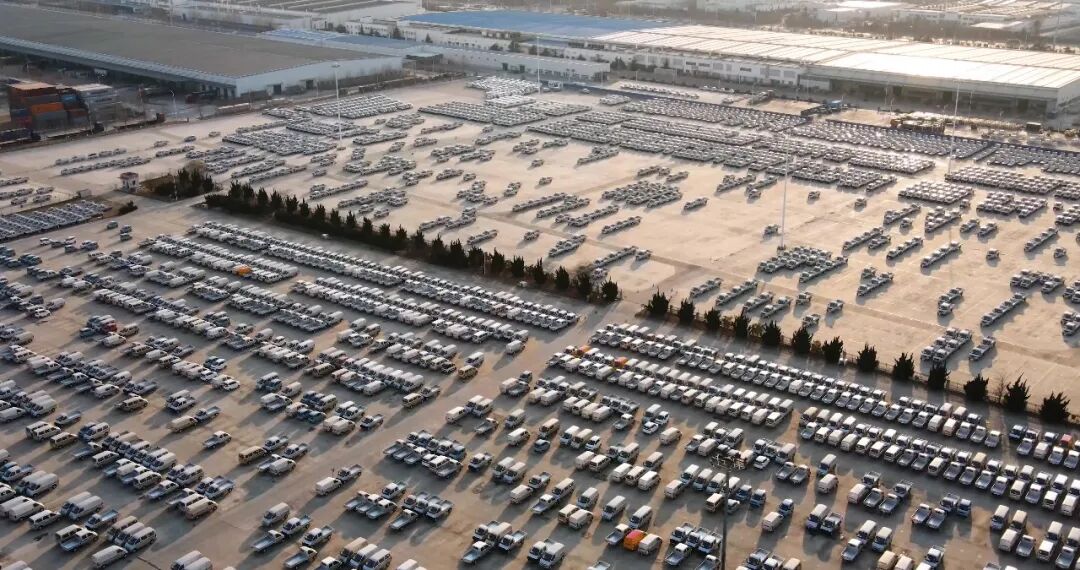
Fierce competition in the domestic market is unexpectedly driving Chinese automakers' global expansion. The report predicts that by 2026, Chinese auto exports will surge to nearly 10 million units, up significantly from 7.1 million in 2025. In AlixPartners' view, survival pressures from domestic price wars and technological convergence push firms to approach efficiency limits in cost control, product iteration, and supply chain responsiveness. When these capabilities spill over into overseas markets, they transform into significant competitive advantages. Survivors of "involution" possess organizational efficiency that enables them to "out-compete" rivals globally.
The report further notes that vehicle exports are just the first phase; localized manufacturing is the long-term goal. Notably, European factories currently have approximately 2.5 million units of idle annual capacity, providing structural opportunities for Chinese automakers' localized production. Several Chinese automakers have expressed intentions to utilize existing facilities for local manufacturing.
At the consumer level, the report expects Chinese auto brands' European sales to grow 25% to 2.3 million units by 2026, with particularly strong growth in Germany and France. By 2030, Chinese brands will capture 16% of the European market (including Russia).
However, overseas expansion is far from smooth. AlixPartners cautions that Chinese automakers face barriers beyond tariffs, including investment restrictions, ownership requirements, technology controls, and cross-market data security regulations. The next phase of globalization will test not cost advantages but "soft skills" in global compliance and local operations.
▍Industry Consolidation Accelerates: Only 7 of 30 NEV Firms Expected to Break Even
Focusing on the domestic market, the continued influx of new energy vehicle (NEV) brands has driven further capacity expansion, but overall factory utilization remains under pressure. Financial burdens are mounting, especially for smaller firms. While some manufacturers have improved their balance sheets through sales growth, even traditionally profitable automakers face declining profit margins.

The report reveals a critical statistic: among China's 30 NEV-focused automakers, only three were profitable in 2025. By 2030, just seven are expected to break even.
Stephen Dyer, AlixPartners' APAC Automotive & Industrial Practice Leader, states: "Profitability is no longer driven by scale but increasingly depends on organizational efficiency, product cycle agility, and integration of design, engineering, and commercialization. The gap between future winners and the rest will widen, making consolidation a structural outcome rather than a cyclical phenomenon."
▍Supplier Landscape Reshaped: China Rises to Third Globally
China's automotive industry competitiveness extends beyond vehicle manufacturing to global recognition of its upstream supply chain.
The report notes that as China's automotive industry matures, eight additional Chinese firms will join the global top 100 automotive suppliers by 2026, bringing the total to 25. China will surpass the U.S. as the world's third-largest supplier cluster. Critically, amid overall global supplier market contraction, many Chinese suppliers achieve double-digit growth in relevant categories while maintaining healthy capital returns.
This signifies a substantive upgrade in global perceptions of China's industrial chain integrity and resilience, from upstream critical components to system solutions. Overseas assessments now recognize not just vehicle export volumes but the systemic capabilities of China's entire automotive ecosystem.

▍Next Frontier: From "Software-Defined" to "AI-Defined" Vehicles
Yichao Zhang, Partner in AlixPartners' Greater China Automotive Advisory Practice, states that the industry's future will not be determined by sales growth or decline but by automakers' speed in adapting to shifting consumer demands, technological disruption, and geopolitical uncertainties reshaping markets. Chinese automakers' competitive edge now extends beyond electric vehicle (EV) technology to speed, cost competitiveness, and organizational agility, particularly in intelligent connected vehicle development. These strengths enable global competition even as overseas EV growth moderates.
The report forecasts the next major technological shift in automotive: from software-defined vehicles (SDVs) to artificial intelligence-defined vehicles (AI-DVs). Unlike SDVs, which rely primarily on over-the-air updates, AI-DVs continuously learn, adapt, and optimize performance throughout their lifecycle. Beyond driving smarter vehicles, AI-DVs promise to significantly boost product development efficiency, reduce engineering costs, and accelerate innovation across the automotive value chain.
Zhang argues that the next competition will be shaped by two challenges: building the data, models, and local supply chain capabilities required for AI-defined vehicles, and translating global ambitions into actual delivery through new collaboration models.
Layout 丨 Zheng Li
Source 丨 AlixPartners
Image Source 丨 Qianku.com
-
![]()
Registered Capital Slashed to 372 Million Yuan! Yutong Optical Finalizes Industrial and Commercial Change Registration
-
![]()
Zhuque-3 Successfully Lands, and 'Time Traveler' Secures Another ¥100 Million in Funding: China's Commercial Space Industry Experiences a 'Dynamic August'
-
![]()
Autohome Faces a Shrinking Window of Opportunity
-
![]()
Even a Titan Like Musk Has Faced Setbacks in Fulfilling Promises
-
![]()
AI Office: The End of the Racing Era, Context Becomes the Key to Success
-
![]()
Domestic Vehicle Chassis Revolution ②: The Steering Wheel Remains, But Mechanical Connections in the Steering System Are Decreasing
-
![]()
Exploring MiniMax Design: Can Video Editing Be as Simple as Speaking?
-
![]()
Why Can SenseTime Achieve Profitability While CloudWalk Still Faces Challenges, Despite Both Adopting Large Models?