Unitree and UBTECH: Two Commercial Experiments of Chinese Humanoid Robots in 2026
 07/09 2026
 447
447
Baker Street Detective

Silicon-Based Spirits Awakened by Physical Entities
Perhaps in 2006, when Elon Musk outlined the blueprint for future mobility in Tesla's first "Master Plan," it would be a full 15 years before he first showcased Optimus, a humanoid robot portrayed by human dancers, on stage.
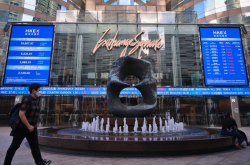
Back then, whether on Sand Hill Road in Silicon Valley or in cafes in Zhongguancun, the entire tech industry was enveloped in an inexplicable confidence that the ultimate form of AI would be a piece of sophisticated software code, a virtual brain with immense computational power. It was believed that with sufficient computational power and parameters, this cyber brain could solve all of humanity's problems in the virtual world.
In fact, by 2023, the rapid advancement of generative large models had pushed open the door to AGI (Artificial General Intelligence), but it soon collided with an insurmountable physical wall: virtual AI behind screens could not "screw in bolts" for humans, nor could it truly step into the real world to alleviate human loneliness.
Until 2026, the global tech industry finally reached a new consensus: AI without a physical body is just a cyber goldfish. AI must grow limbs and step into the mud of the physical world. This is "Embodied AI," the ultimate physical form of AI often discussed by netizens.
In early July, China's embodied AI sector reached a historic crossroads. Unitree Technology lightning (lightning-fast) passed the Sci-Tech innovation board (Sci-Tech Innovation Board) IPO registration, raising over 4.2 billion yuan in total funds, with an annual shipment target of 20,000 units for the year.
Almost simultaneously, veteran robotics giant UBTECH dropped a deep-water bomb in Shenzhen that will be remembered in tech history—its newly released consumer-grade " Optimal World U1 (YouWorld U1)" series of hyper-bionic robots not only overcame the "uncanny valley effect" that had plagued the industry for decades but also achieved a 1:1 replication of skin pores and subcutaneous blood vessels. Despite a top-tier price approaching one million yuan, it secured over 13,000 orders from wealthy buyers in just a few days.

One follows a "ultimate cost-effectiveness, hardcore industrial, lightning-fast IPO" steel industrial route; the other pursues a "hyper-bionic companionship, emotional large model, high-end consumer-grade" Westworld route.
This is not just a head-to-head battle between two leading Chinese companies but also two opposing, logically mirrored commercial experiments led by China's domestic supply chain on the eve of embodied AI's commercialization.
01 Unitree's "Fordism": Smothering Competitors with Price Wars
In the tech manufacturing industry, there is an unshakable "China Law": any high-tech product that appears lofty and unattainable will eventually become a mass-market industrial product sold by the ton or pound once China's supply chain fully understands and localizes it.
This law has proven true time and again, from early smartphones and photovoltaic panels to later new energy vehicles. Today, Unitree Technology is bringing this law to the robotics field.
Wang Xingxing, the founder of Unitree Technology, is a typical hardcore engineer. In his dictionary, there is no room for romantic fantasies or artistic discussions of the "uncanny valley effect"—only BOM (Bill of Materials) lists.
Earlier this year, Unitree's G1 robot army made a collective debut on the Spring Festival Gala stage, performing a set of high-difficulty cyber kung fu in unison. While the general public saw tech-savvy excitement, robotics peers in the audience felt a chill down their spines at the cost control on display.
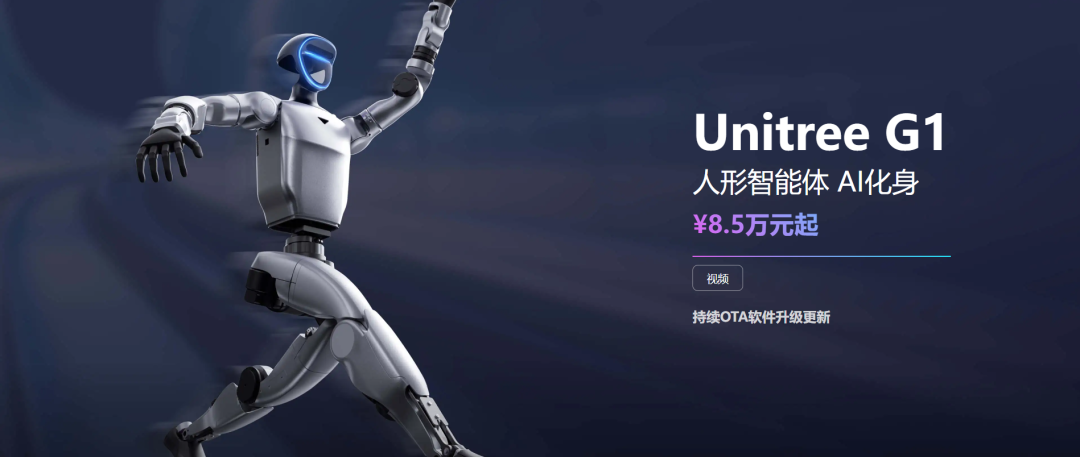
Sure enough, Unitree soon announced that the base model G1 robot would be priced at $13,500 (approximately 90,000 yuan). At the time, this price was akin to a dimensional strike nuclear explosion in the global embodied AI sector.
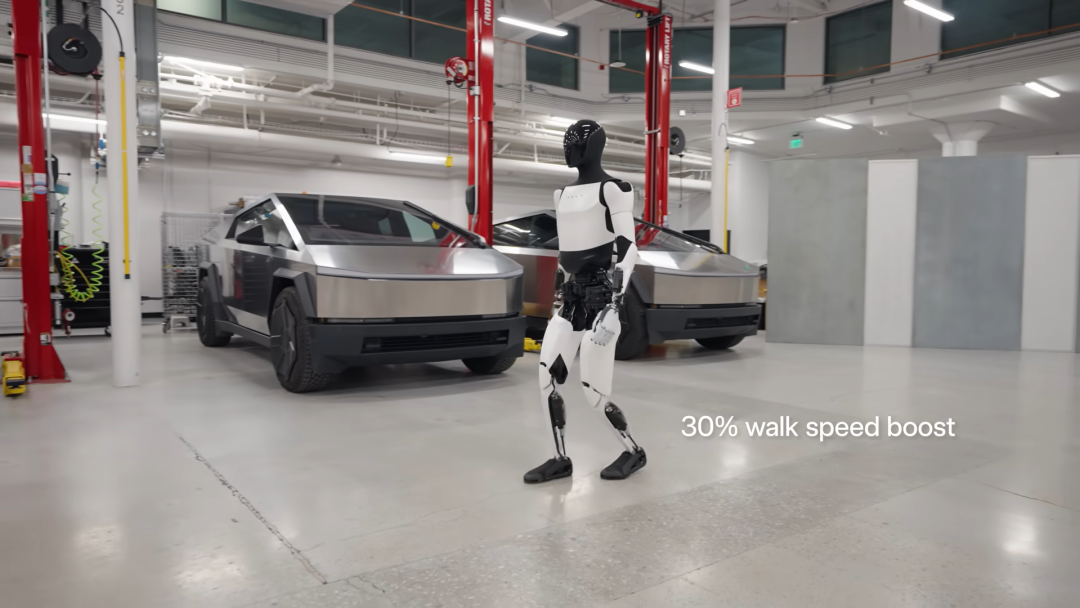
Horizontally, Boston Dynamics' Atlas, a hydraulic-driven robot capable of backflips and parkour that stunned the world, has an estimated R&D and manufacturing cost per unit in the millions of dollars, according to industry estimates. Since its debut, videos of it malfunctioning have gone viral online. Tesla's Optimus, heavily touted by Elon Musk, claims to aim for a price under $20,000, but due to lagging North American supply chain support, its timeline for mass C-end adoption continues to be pushed back.
Meanwhile, Unitree has priced a bipedal humanoid robot with over 30 degrees of freedom, autonomous navigation, and complex grasping capabilities in the same price range as a Wuling Hongguang car or a high-end 100-inch TV.
Why can Unitree be so aggressive? The secret lies in its "robot dog DNA."
Before pivoting to bipedal humanoid robots, Unitree was already the global invisible champion in quadrupedal robots (robot dogs). Through shipping tens of thousands of robot dogs worldwide, Unitree has thoroughly plowed the domestic supply chain for core robot components such as reducers, high-power-density brushless motors, micro-hydraulic systems, and sensors multiple times over.
While foreign peers still rely on expensive imported custom parts, Unitree has achieved self-research, self-production, and scaling (scaled) procurement of core components. Thus, when Unitree fully shifted to bipedal humanoid robots in 2024-2025, it didn't need to start from scratch on motors and algorithms—the components were readily available, and assembly processes were already streamlined.
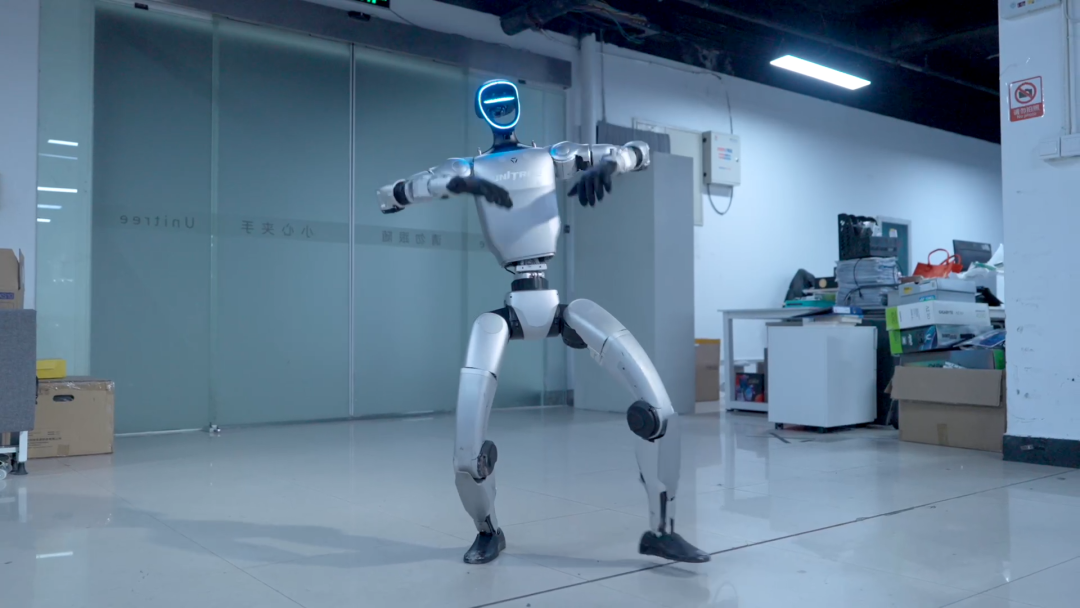
With the 4.2 billion yuan raised from the Sci-Tech Innovation Board, Unitree spared no hesitation in fully allocating funds to expansion and R&D. First, it further expanded its "super factory" in the Yangtze River Delta, pushing annual humanoid robot production capacity to industrial-scale levels of tens of thousands of units. Second, it doubled down on its latest WVLA2.0 (World-Video-Language-Action) embodied large model to enhance robots' generalized operational capabilities in complex physical environments.
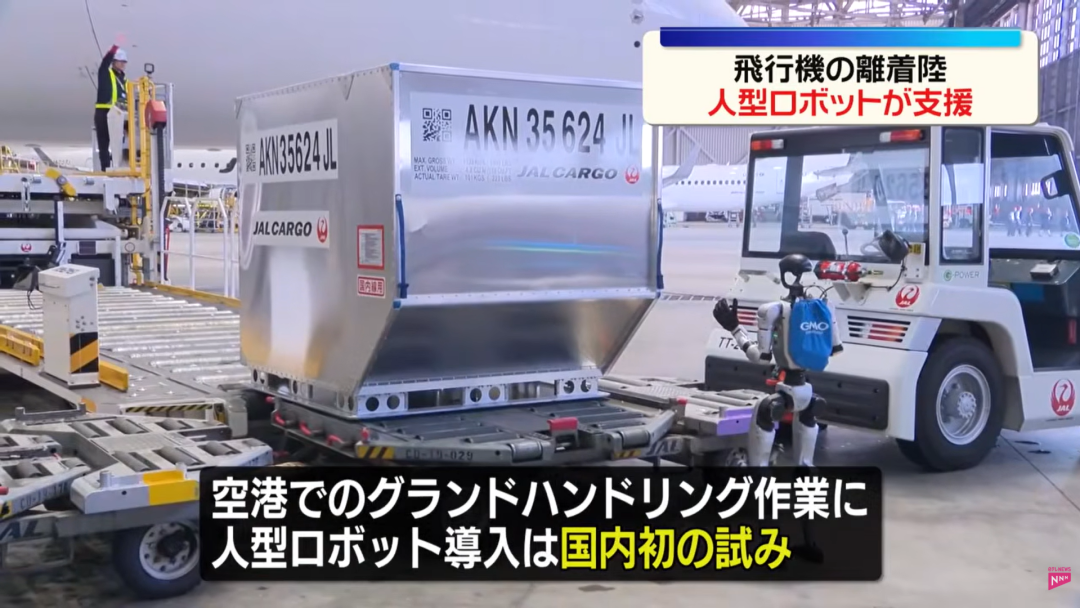
To boost R&D capabilities, Unitree also built an embodied AI community. In closed testing at Tokyo's Haneda Airport, Unitree's robots began operating like tireless mechanical mules, transporting large luggage 24/7 between conveyor belts and shelves.
Unitree's business logic is pure: it doesn't need robots to be good-looking, nor does it require delicate skin or an understanding of human poetry and romance. What it wants is "strong limbs, a solid chassis, and diligence." This is classic "Fordism"—driving costs down to suffocate competitors through extreme scale effects, flattening global industrial and logistics markets with a tidal wave of steel before overseas peers even finish lab testing.
02 UBTECH's "Hermès Logic": The Ultimate Antidote to Loneliness Economics
If Unitree is building "cyber Wuling Hongguangs" with an engineering mindset, then UBTECH, which Formally brandish the sword (officially unveiled its strategy) mid-year, has slammed the accelerator toward "cyber Hermès," pushing the other extreme of embodied AI.
On June 30, UBTECH's consumer-grade strategic launch in Shenzhen directly shifted the industry's tech focus from "industrial manufacturing" to the highly sci-fi-ethical "Westworld."
UBTECH chose to confront and overcome the "uncanny valley effect" that had haunted the robotics industry for half a century. These robots boast bodies perfectly aligned with human golden ratios (183cm for males, 168cm for females).
The visual details are astounding. When consumers approach this top-tier flagship robot priced at 990,000 yuan, they'll find its skin uses the latest generation of silicone bionic technology, featuring delicate pores and skin textures. Under lighting, faint blue subcutaneous blood vessels are even visible.
The robot's fingers are covered in unique fingerprints, and when shaking hands, it transmits a simulated body temperature slightly above room temperature. Eighty-eight high-precision servo-driven joints enable fluid, human-like movements when walking, bowing, or raising hands, free from rigid "mechanical" stiffness.
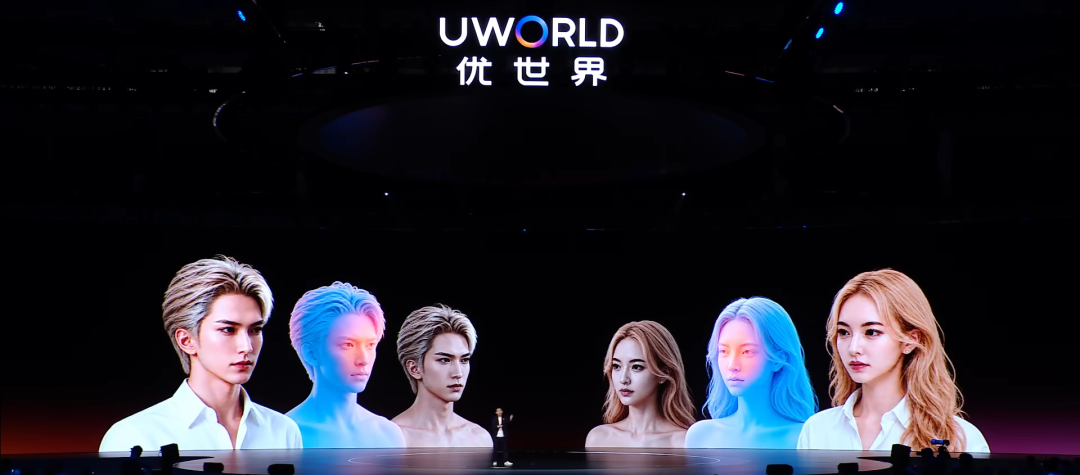
Notably, UBTECH didn't just create a Exquisite wax figures (delicate wax figure) to impress capital and markets. Its true core lies in its deeply customized emotional perception and multimodal interaction large model.
In the past, robots spoke in cold voice broadcasts. UBTECH's U1 series compresses the synchronization delay between speech, lips, and facial micro-expressions to under 20 milliseconds. To put it simply, when consumers converse with it, they receive timely feedback akin to interacting with a "normal person."
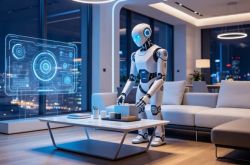
Its perception system identifies 20 subtle facial micro-expressions per second and captures even 10% of sense of loss (sense of loss) in the user's tone. When a user sighs after returning home from work, it won't stiffly ask, "How may I help you?" like a smart speaker. Instead, it silently walks over, hands the user a glass of warm water, adjusts the living room lights to a comforting warm hue, and says in a gentle, restrained tone customized to the user's preferences: "You've worked hard today."
After the launch, online opinion instantly polarized.
To many pragmatists and tech bloggers, this was the era's greatest "IQ tax": "For 990,000 yuan, why not buy a Porsche or a small apartment? What's the point of buying a blinking silicone robot?"
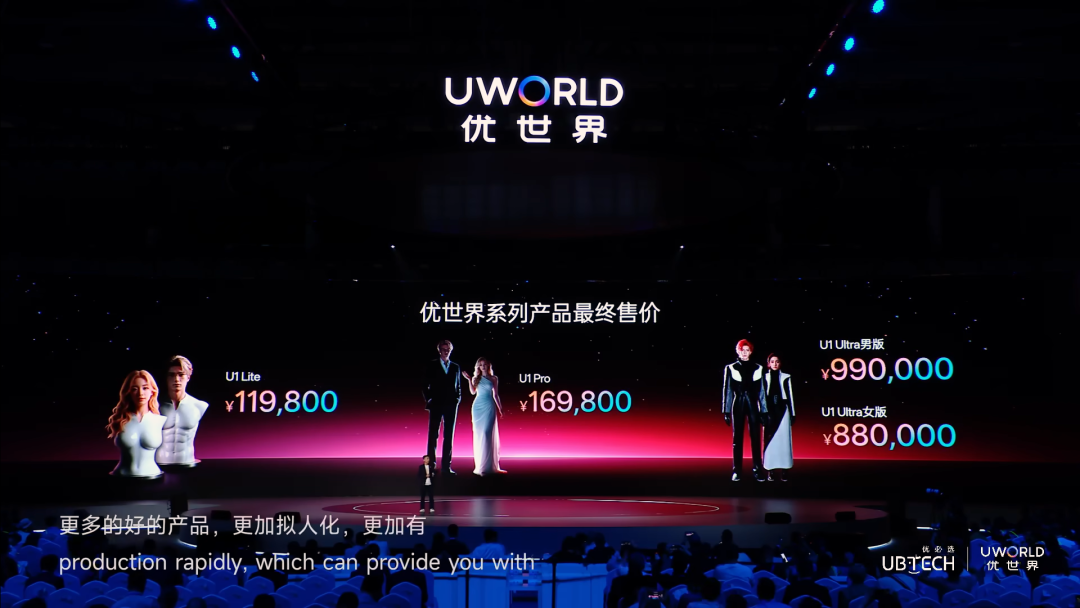
But subsequent market data silenced critics. All 13,000 pre-orders sold out in days, with most orders presumably from wealthy elites in first-tier cities, high-net-worth retirement households, and luxury clubs. This once again proved to the market that commerce isn't merely about calculating cost-effectiveness but selling the era's scarcest resource.
While Unitree addresses "labor scarcity," UBTECH instantly tapped into the most expensive and hardest-to-obtain luxury of 2026 human society: emotional companionship that never betrays, absolutely obeys, and provides immense emotional value.
Amid accelerating aging and the flood (proliferation) of "extreme loneliness economics," for many high-net-worth individuals, keeping a dog requires tending to its needs, while romantic relationships involve complex human game theory (games) and betrayal risks. However, a near-perfect, 24/7 available cyber companion with infinite patience and listening skills offers psychological healing value that far exceeds its 990,000 yuan price tag in the eyes of the wealthy.
UBTECH completely abandoned competing with Unitree in the cutthroat, low-margin industrial market. Instead, it turned left, sailing directly toward the high-end luxury blue ocean at the pinnacle of consumerism to capture staggering emotional premiums and profits.
Epilogue
Unitree Technology leveraged the unparalleled hardware manufacturing prowess of the Yangtze River Delta and Pearl River Delta to slash humanoid robot costs to the $10,000 level. This isn't just a numerical breakthrough—it means Unitree holds the trump card to disrupt global industrial logistics and household services. If willing, it could, like China's manufacturing revolution that reshaped the global home appliance market, equip factories and enterprises worldwide with "steel workers" made in China.
Meanwhile, UBTECH carved out a hyper-bionic companionship path in humanity's spiritual wilderness through China's application-layer innovations in internet large models and cross-disciplinary fusion of industrial arts and materials science. It showed the world that robots can not only rudely move boxes but also elegantly heal human hearts.
In this just-begun robotic showdown, whether it's the cold, cost-effective steel worker or the exquisite cyber lover who understands every sigh, their beating hearts are powered by China's manufacturing supply chain, and their veins flow with China's industrial steel and silicon-based blood.
The tide of technology surges forward, never looking back. The year 2026 may mark the inaugural year in human history when carbon-based life and silicon-based life truly begin to deeply coexist.
One day in the future, after a whole day of intense rat race and work, you drag your extremely tired body home and push open the door. One option is a Unitree robot purchased at a civilian price, which has tidied up the house spotlessly and can also go out to pick up takeout or deliveries under your command.
The other option is a UBTECH bionic robot, bought at a high price. Upon seeing your fatigue, it helps you change your clothes, assists you in sitting down on the sofa, and guides you to vent your emotions using your preferred style or even voice. It can even provide hours of completely customized, top-notch emotional value. Which of these two options would you ultimately choose?
© THE END
All materials are sourced from official public information.
This article does not constitute any investment advice.
This article is originally created by Baker Street Detective. Please do not reprint without permission.
The image is sourced from public information. If there is any infringement, please contact us for deletion.
-
![]()
Model Giant Jieyue Xingchen Steps into Smartphone Arena: A Strategic Alliance with Huaqin Technology
-
![]()
Big Model Firm Dives into Phone Market: StepFun and Wingtech Forge a ‘Dynamic Duo’
-
![]()
Zhongrun Optics Makes a Bold Move with 1 Billion Yuan Investment: Is a Turning Point on the Horizon for the Precision Optics Industry?
-
![]()
Deploy CLBO Crystals and YIG Single Crystals! Erythritol Leader Invests 30 Million in Youwei Optoelectronics
-
CXMT’s July 16 Subscription: Leading Domestic Memory Manufacturer—What’s the Earning Potential per Lot?
-
![]()
Rhythm Discrepancy and Premium Value Erosion: Foreign Luxury Brands Must Re-evaluate Their China Strategy
-
![]()
Half-Year, 1 Billion Yuan Financing, 7 Billion Yuan Valuation: A New Dark Horse Emerges in the Embodied AI Sector
-
![]()
Strong Rebound for Tech Stocks in Hong Kong Stock Market: Is It Time to Bottom-Fish?