High Demand, Low Stock Price: Can the Emotional Companion Robot Ease UBTECH’s Worries?
 07/14 2026
 333
333
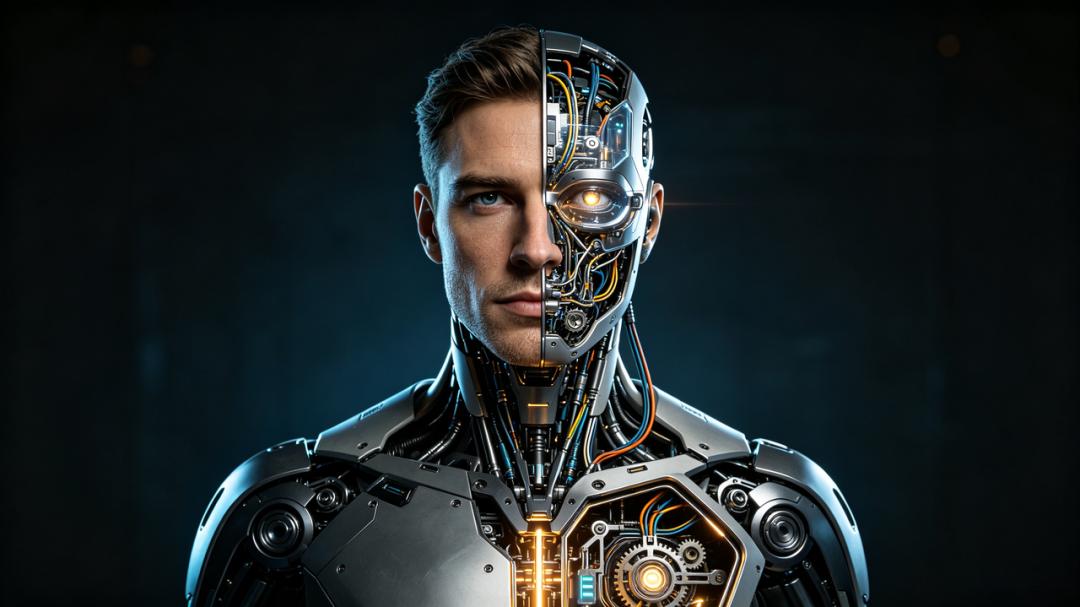
On June 30, 2026, UBTECH officially unveiled its emotional companion robot, U1, following nearly a month of market预热.
On the same day, UBTECH’s Hong Kong-listed shares soared more than 18% during intraday trading, closing with a 7.48% increase at HKD 102.8. However, market enthusiasm quickly cooled. On July 2, the stock plummeted nearly 10%, only to rally sharply by 17.6% on July 3.
In just a few days, the erratic K-line chart reflected the capital market’s complex and even contradictory attitude toward U1. On one hand, it represents a bold attempt to transition humanoid robots from the lab to household consumer use. On the other hand, it underscores that the industry still has a long way to go before achieving true household robot functionality.
However, influenced by market sentiment and external factors, UBTECH’s stock experienced a six-day losing streak after July 3. By July 13, the closing price had dropped to HKD 82.85.
As the stock gains driven by U1 evaporated, a critical question arose: Is U1 the key to unlocking the household robot era, or merely a premature move by UBTECH under industry competitive pressure?
I. Explosive Orders, Uncertain Fulfillment
After U1’s release, the first market divergence centered on pricing.
At the launch event, UBTECH announced a comprehensive pricing structure: the half-body U1 Lite at RMB 119,800, the full-size U1 Pro at RMB 169,800, and the top-tier U1 Ultra (male version) at RMB 990,000 and (female version) at RMB 880,000.
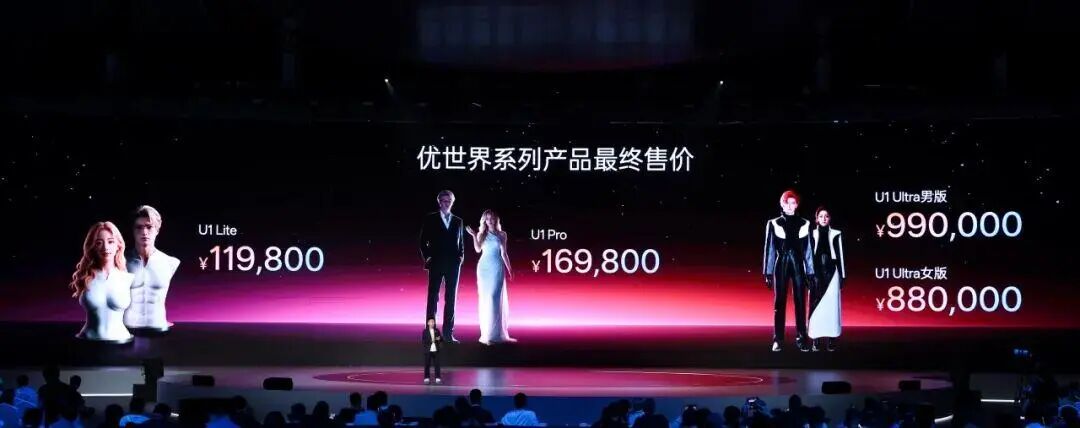
Previously, rumors suggested U1 might be priced at RMB 299,000. The final pricing, ranging from six to seven figures, prompted a reevaluation of the product’s target market.
One key reason for the high expectations surrounding U1 is its potential to help UBTECH penetrate the consumer (C-end) market and become a new growth driver. Pre-launch order performance seemed to support this view.
The current pricing and lack of household chore capabilities mean U1 will likely appeal mainly to tech enthusiasts, high-net-worth individuals, and robot aficionados. Breaking out of this niche will be challenging.
After the event, UBTECH released impressive data: cumulative orders for the U1 series across all channels exceeded 13,361 units. This figure is 12 times UBTECH’s 2025 full-year sales of 1,079 full-size humanoid robots, proving strong consumer interest in household humanoid robots.
However, the quality of these orders requires further observation.
The U1 series entered JD.com pre-sales on June 2, requiring only a RMB 3,000 deposit with refunds available until July 15. This means the 13,361 orders announced at the event do not equate to finalized transactions.
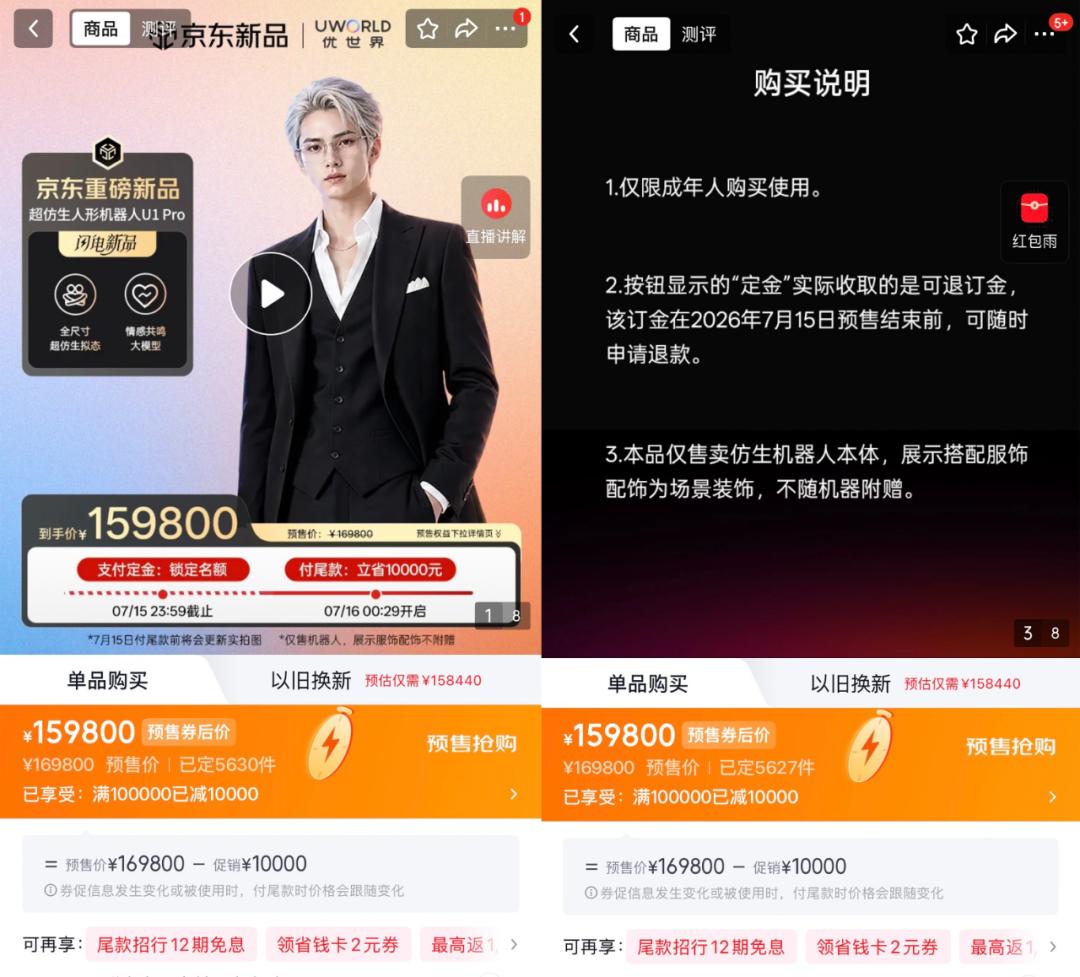
The true test of U1’s commercial viability will come after July 16, when final payments are due. The number of consumers willing to pay over RMB 100,000 for a humanoid robot will be the key indicator of market acceptance.
Order conversion rates depend not just on price but also on product experience approval.
In official promotions, U1 was portrayed as a highly human-like future robot: realistic skin texture, nuanced facial expressions, and natural human-machine interaction heightened expectations for a “future robot.”
However, when the product debuted, some viewers noticed gaps between ideal and reality. Online reviews pointed out that U1’s walking movements remained mechanical, facial expressions—though highly anthropomorphic—appeared stiff in details, and there were response delays and comprehension issues during prolonged interactions.
Of course, such controversies are not unique to UBTECH.
For all highly human-like robots, the uncanny valley effect poses a commercialization hurdle. When robots closely resemble humans but fail to achieve true naturalness, they can trigger user discomfort.
Battery life is another industry-wide challenge.
Full-size humanoid robots require numerous joints, motors, and sensor systems, while limited chassis space restricts battery capacity. Larger batteries increase weight, further affecting mobility, energy consumption, and costs. Thus, battery life isn’t solved by simply increasing capacity but requires balancing weight, mobility, safety, cost, and usage time.
UBTECH’s official U1 data shows a single-charge battery life of 2-4 hours. While acceptable for display robots, household robots emphasizing long-term interaction and companionship need continuous optimization.
After all, companionship isn’t a schedulable function. Users’ emotional expressions and communication needs arise randomly, not just during the robot’s operational hours.
From pricing to orders to product experience, U1 is undergoing genuine consumer market testing. These controversies reflect a reality: humanoid robots are transitioning from technical demonstration to commercial validation. Pioneers entering uncharted waters will inevitably encounter problems first.
II. Why Bet on Household Scenarios?
Why would UBTECH launch a household-oriented humanoid robot when technological maturity and market acceptance remain uncertain?
The answer lies in the company’s current situation.
Founded in 2012, UBTECH has frequently appeared on China’s Spring Festival Gala stage and was among the first domestic humanoid robot firms to gain public recognition. In late 2023, it became the “first humanoid robot stock” listed on the Hong Kong Stock Exchange, briefly capturing capital market attention.
However, the past two years have seen rapid warming in the humanoid robot industry, altering the competitive landscape. Public expectations have been continuously raised by more impactful products.
Unitree Technology exemplifies this trend. In 2025, Unitree shipped over 5,500 humanoid robots, generating RMB 1.699 billion in revenue and RMB 591 million in non-GAAP net profit, becoming one of the few globally profitable humanoid robot firms before going public.
In contrast, UBTECH faces clearer pressure.
In 2025, UBTECH sold 1,079 full-size humanoid robots. While its Walker series has entered industrial scenarios, the company remains unprofitable overall. From 2023 to 2025, net losses attributable to shareholders reached RMB 1.234 billion, RMB 1.124 billion, and RMB 703 million, respectively.
These losses stem from UBTECH’s commercialization strategy.
Previously, UBTECH planned a “three-step” commercialization path for humanoid robots: first entering industrial scenarios, then expanding to commercial services, and finally entering households for companionship and interaction.
Its Walker series already operates in some automotive manufacturing plants, handling component transportation, loading/unloading, and intelligent quality inspection. In 2025, Walker-related orders approached RMB 1.4 billion.
However, order growth doesn’t mean a closed commercial loop has formed.
Currently, some demand for UBTECH’s industrial robots comes from government or state-owned enterprise-driven embodied AI industrial projects. These projects focus more on data collection, technical verification, and industrial infrastructure building than immediately replacing human labor for economic gains.
Such orders often follow project-based patterns with long acceptance cycles, offering limited help for payment collection speed and cash flow improvement.
By end-2025, UBTECH’s accounts receivable reached RMB 1.842 billion, up 40% year-on-year and nearing annual revenue. Over 40% were over one year old, and accounts receivable over three years old surged more than threefold. The company attributed this pressure to long payment cycles from government clients.
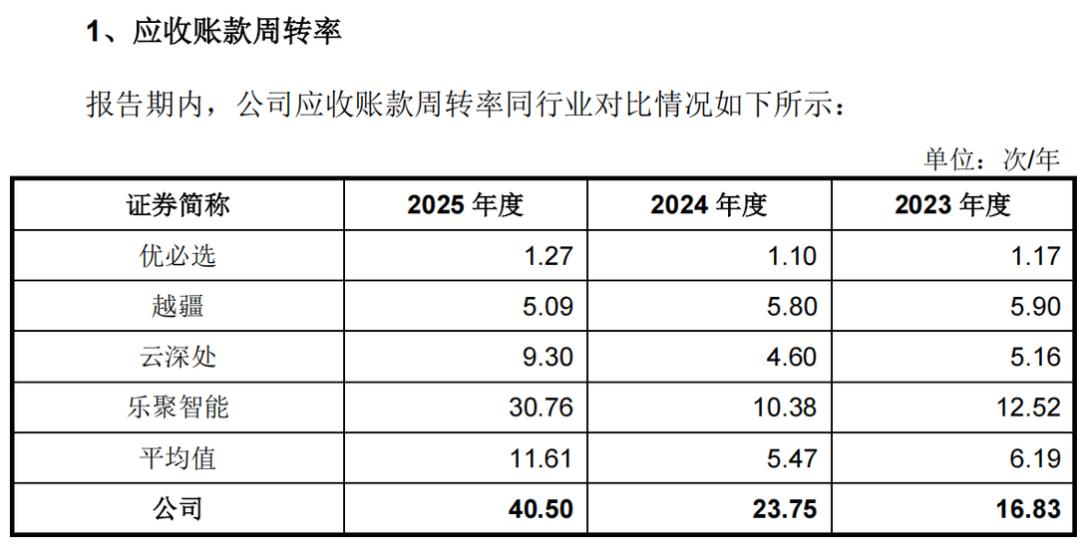
(Source: Unitree Technology prospectus)
Meanwhile, from 2023 to 2025, the company’s operating cash flow remained negative at RMB 1 billion, RMB 880 million, and RMB 780 million, respectively.
For manufacturers, robot procurement decisions depend on multiple factors assessing ROI, such as whether equipment investment can be offset by efficiency gains, whether maintenance costs are controllable, and whether long-term operation remains stable.
UBTECH’s 2025 average selling price for full-size humanoid robots was about RMB 760,000, with limited worker replacement capacity. According to public information, Walker series success rates reached 99% in single tasks like intelligent transportation and loading/unloading, with worker efficiency expected to exceed 60% by 2026. This means one robot working 12 hours roughly equals one worker’s 8-hour shift.
Industrial humanoid robots still face multiple thresholds between cost, efficiency, and stability before achieving true large-scale replacement. This is their medium-to-short-term challenge.
In the long run, UBTECH founder Zhou Jian believes industrial humanoid robot competition may shift toward standardized hardware. As technologies become homogeneous and all robots can perform general tasks like transportation and screwdriving, differentiation may narrow, with products existing more as solution packages.
In contrast, household scenarios embody UBTECH’s vision for greater commercial potential. If future household robots can continuously understand user habits, they could become intelligent assistants providing long-term companionship rather than mere command-executing tools.
Zhou gave an example: if a user mentioned liking Jay Chou during a chat, the robot might proactively remind them about Jay Chou concert tickets in the future.
Under this model, the robot’s value extends beyond hardware to data accumulated through long-term interaction, service capabilities, and potential ecological value.
He also emphasized that UBTECH won’t abandon industrial and commercial scenarios. Currently, half the company’s efforts go into industrial and commercial robots, while the other half explores household scenarios.
From this perspective, U1’s debut resembles an early positioning move in household scenarios. But whether proactive or passive, U1’s launch feels like a gamble: using an immature product in an unproven market to bet on an uncertain future.
III. Epilogue
The controversies surrounding U1 reflect not just a product debate but the inevitable growing pains as the humanoid robot industry shifts from “what can it do” to “what should it sell.”
In recent years, the industry has focused more on technical breakthroughs—whether robots can stand, walk, perform actions, or plan autonomously. But as products reach consumers, evaluation criteria change. Users ask: Is it worth buying? Can it integrate into life? What’s the experience like? At its core, users question why they need something human-like.
UBTECH’s pioneering entry holds significance. Consumer acceptance, product problem boundaries, and commercial model feasibility all need initial validation. These questions cannot be answered in labs but only emerge slowly in real-life scenarios.
However, being first doesn’t guarantee winning.
History shows many cases where “early explorers in no-man’s-land bore the mission of educating the market and validating paths, while later entrants, standing on predecessors’ experience, rapidly iterated and built long-term advantages through scaled capabilities.”
If consumers embrace such products and usage scenarios expand with technological iteration, UBTECH may seize the household robot entry point through first-mover advantage. If market education takes far longer than expected, prematurely pushing immature products to the masses could erode user patience for emerging categories.
-
![]()
Hunan’s Wealthiest Entrepreneur Eyes Comeback with Apple’s Foldable iPhone
-
![]()
Planning to Secure 1.055 Billion Yuan to Propel AR Optics Forward! Lante Optics Receives Green Light for Private Placement on the Science and Technology Innovation Board
-
![]()
MiniMax: At the Heart of the AI Maelstrom
-
![]()
Securing 600 Million Yuan in Funding: This AR Optics Company Steps into the Limelight!
-
![]()
From a 706% Surge to a $340 Billion Market Cap Plummet: Has MiniMax's Moment Passed?
-
![]()
High Demand, Low Stock Price: Can the Emotional Companion Robot Ease UBTECH’s Worries?
-
![]()
Why Does Yin Qi, Who 'Doesn't Listen to Advice,' Insist on Making AI Agent Smartphones? | Interview with Jieyue Xingchen
-
![]()
AI-Generated Code Reveals Surprise That Thrills China