Big Events of the Week in XR: Apple and Huawei Shift Focus, Giants Concentrate on AI Instead of AR; Gap Remains Between Breakthroughs in Display Technology and Commercialization; VR Ecosystem Developm
 04/08 2026
 667
667
This week, spanning from late March to early April, marks the end of the first quarter of 2026. During this period, the XR field witnessed a series of significant developments: Meta officially launched two Ray-Ban smart glasses designed for prescription lenses, Apple confirmed that its smart glasses to be released in 2027 will not feature AR capabilities, XREAL, the "first AR glasses stock," submitted its Hong Kong IPO application, and domestic manufacturer NIMO released its first AI glasses product...
Meanwhile, several companies have made progress in display technology, AI applications, and industry adoption. On the other hand, Rec Room, one of the world's most popular VR communities, announced its closure; Polyarc Games, the developer of the hit VR game "MOSS," laid off a significant portion of its staff; and Meta's AI glasses faced indefinite delays in the EU, reflecting the real challenges facing the industry.
Now, let's uncover new clues from this week's major developments in the XR field.
01 Prioritizing AI Over AR: Giants Focus on Everyday Use of AI Glasses
The clearest signal this week is that the product definition of smart glasses is aligning more closely with traditional eyewear. Meta introduced two new Ray-Ban smart glasses models, "Blayzer Optics" and "Scriber Optics," specifically designed for nearsighted users and optimized for this purpose: hinges that open 10 degrees wider, interchangeable nose pads, and adjustable temple tips for a "comfortable all-day wearing experience."
Additionally, according to the latest news, Apple confirmed that its smart glasses launching in the first half of 2027 will not feature AR capabilities and will be priced between $300 and $500. At the same time, Apple will not release a consumer-grade AR headset in 2026. Huawei is expected to hold a product launch event on April 21, unveiling several new products, including AI glasses. Based on current information, Huawei's smart glasses are positioned similarly to Ray-Ban Meta, focusing on photography as their core function.
Notably, another domestic company, NIMO, announced its first smart glasses this week. The product features a 0.03cc ultra-miniature optical engine, a 50:50 weight distribution, β-titanium alloy temples, a typical scenario battery life of 48 hours, a camera-free design for privacy, and support for up to 800-degree myopia correction—again emphasizing "everyday wear" as a key selling point.
Comment: The fact that companies are unanimously focusing on "everyday wear" as the core of their products indicates that the industry has realized that smart glasses must first be a qualified pair of glasses. Abandoning the fantasy of immediate AR integration and prioritizing wearing comfort and myopia adaptation is a pragmatic approach to unlocking the mass market.
02 Gap Remains Between Breakthroughs in Display Technology and Commercialization
This week saw several academic and industrial advancements in display technology, but significant gaps remain before large-scale commercialization can occur.
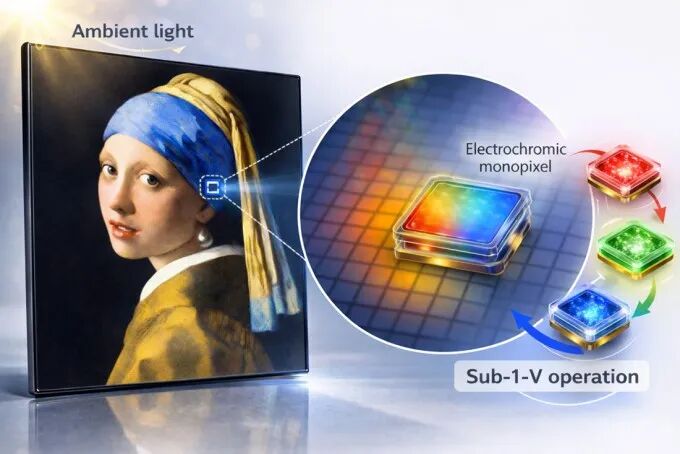
The Korea Advanced Institute of Science and Technology (KAIST), in collaboration with the Gwangju Institute of Science and Technology (GIST), developed a new display technology called "reconfigurable low-power reflective single-pixel (r-GT)." Based on the conductive polymer polyaniline, this technology can change colors at voltages below 1 volt and retain the color for some time after power-off. The research team reduced the pixel size to 1.5 microns, lowering power consumption for color generation by up to 5.8 times compared to traditional LEDs. This technology holds promise for applications in AR/VR ultra-high-resolution near-eye displays and wearable devices.
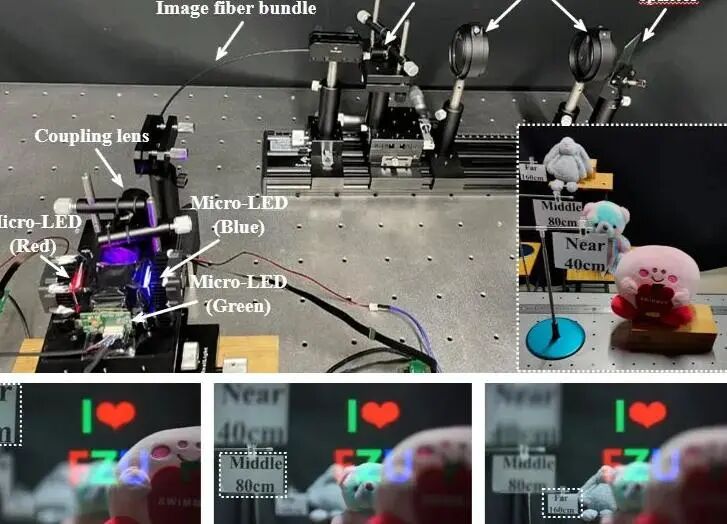
Fuzhou University in China, in collaboration with the Mindu Innovation Laboratory, also announced this week the development of a high-performance quantum dot display technology suitable for AR/VR devices, with related findings published in the journal Nature. The research team proposed a novel nanofabrication strategy that enables precise printing of luminescent materials at extremely small scales, constructing high-precision red-green-blue pixel arrays. The prepared red light device achieved an efficiency of 26.1% and a lifespan exceeding 60,000 hours. The team combined this technology with integrated circuits to develop an integrated display prototype controllable on a pixel-by-pixel basis.
However, a clear gap exists between these cutting-edge technologies and the products currently available in the market. Among the products launched or set to launch this week, the Ray-Ban Meta Optics series uses the same technical solution as the previous generation, without incorporating new display technologies. XREAL's 1S product, launched in South Korea, is equipped with its self-developed X1 chip and uses Sony's 0.68-inch Micro OLED panel, offering a 52-degree field of view and 700 nits of brightness. NIMO's smart glasses employ volumetric holographic waveguide technology paired with a 2.5um pitch Micro LED panel.
Comment: The product solutions currently introduced all belong to relatively mature display technology routes rather than disruptive achievements from laboratories.
The coexistence of "impressive laboratory results" and "underwhelming shelf products" in display technology is unlikely to change in the short term. Novel display technologies typically require three to five years of engineering development from publication to mass production, so consumers may need to wait until around 2028 to experience significant improvements in display performance.
03 AI Becomes the Core Selling Point of Smart Glasses, but Application Scenarios Remain Under Exploration
While AI has become a standard feature in smart glasses, manufacturers differ in the depth and direction of their AI applications, and killer apps have yet to emerge.
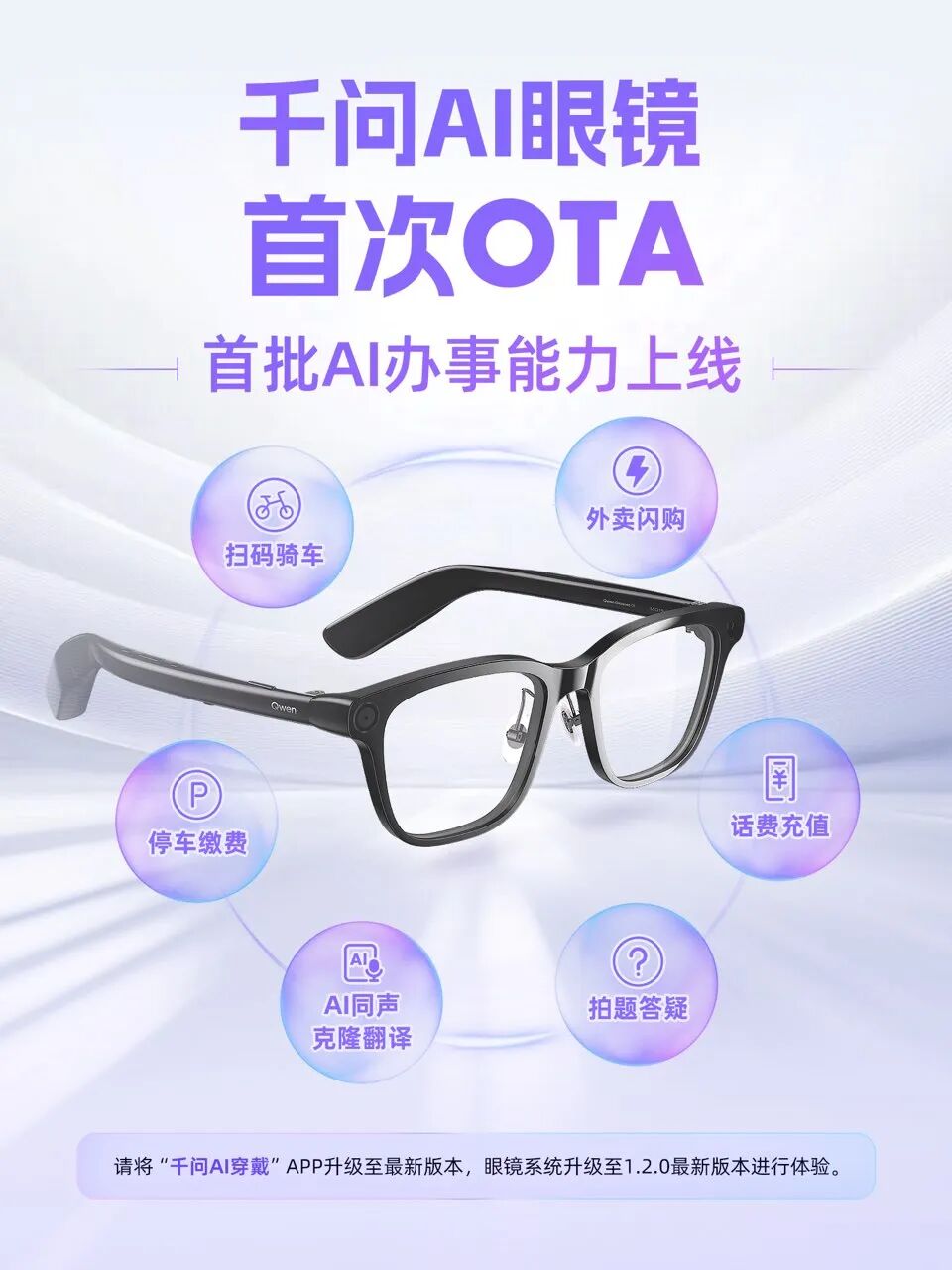
Qianwen AI glasses received their first OTA update this week, integrating with Taobao Flash Sales and Alipay to enable "AI-powered errands" such as mobile phone recharges, bike-sharing via QR codes, and parking fee payments, all operable through voice commands or "a glance."
Meta also announced that it would roll out a food logging feature for its Ray-Ban and Oakley Meta smart glasses. Users can proactively prompt the AI to log their food intake and receive personalized recommendations, with plans for automatic recognition in the future. However, Meta's glasses currently cannot monitor health data such as heart rate or step count.

NIMO's smart glasses take a different approach. The product features a camera-free design, forgoing visual recognition capabilities to focus on voice interaction and privacy protection. This design allows it to comply with privacy regulations in scenarios such as meetings, education, and private spaces. NIMO's founding team believes that, amid increasingly stringent privacy regulations, the camera-free design may become a differentiating advantage.
Comment: From this week's news, it is evident that AI applications in smart glasses are evolving along two paths. One approach is a comprehensive functionality route, relying on cameras and cloud-based large models for visual recognition and task execution, represented by Meta and Qianwen. The other approach is more conservative, reducing or eliminating cameras and focusing on voice interaction and privacy compliance, represented by NIMO.
Both approaches have their pros and cons. The former offers more functionality but raises privacy concerns and consumes more power; the latter is safer and lighter but has limited capabilities. However, the industry has not yet determined which path will win the mainstream market.
04 Chinese Manufacturers Continue to Gain Momentum
This week saw several capital market moves indicating that the competitive landscape in the XR industry is evolving.
XREAL officially submitted its IPO application to the Hong Kong Stock Exchange on April 1, planning to list on the main board in 2026. According to its prospectus, XREAL ranked first in the global AR glasses market for four consecutive years from 2022 to 2025. In 2025, the company achieved revenue of RMB 516 million, with overseas markets accounting for 71.0% of its income. Its gross margin improved from 22.1% to 35.2%.

The company has undergone multiple rounds of financing, with investors including Alibaba, Kuaishou, iQiyi, Luxshare Precision, Gentle Monster, and NIO Capital. XREAL's IPO application signifies that Chinese AR glasses companies are now capable of competing globally with giants like Meta, while its improved profitability indicates that the industry is moving away from the stage of "burning money to capture market share."
Additionally, Thunderbird Innovation announced this week its collaboration with JD Technology, launching the first full-color smart glasses shopping application, "Same Style Purchase." Based on JD Technology's shopping AI agent JoyGlance and leveraging the full-color spatial display of Thunderbird X3 Pro, the app enables a complete shopping loop from product discovery to payment. Users can search for products, compare prices, and make voiceprint payments through voice commands and visual recognition.
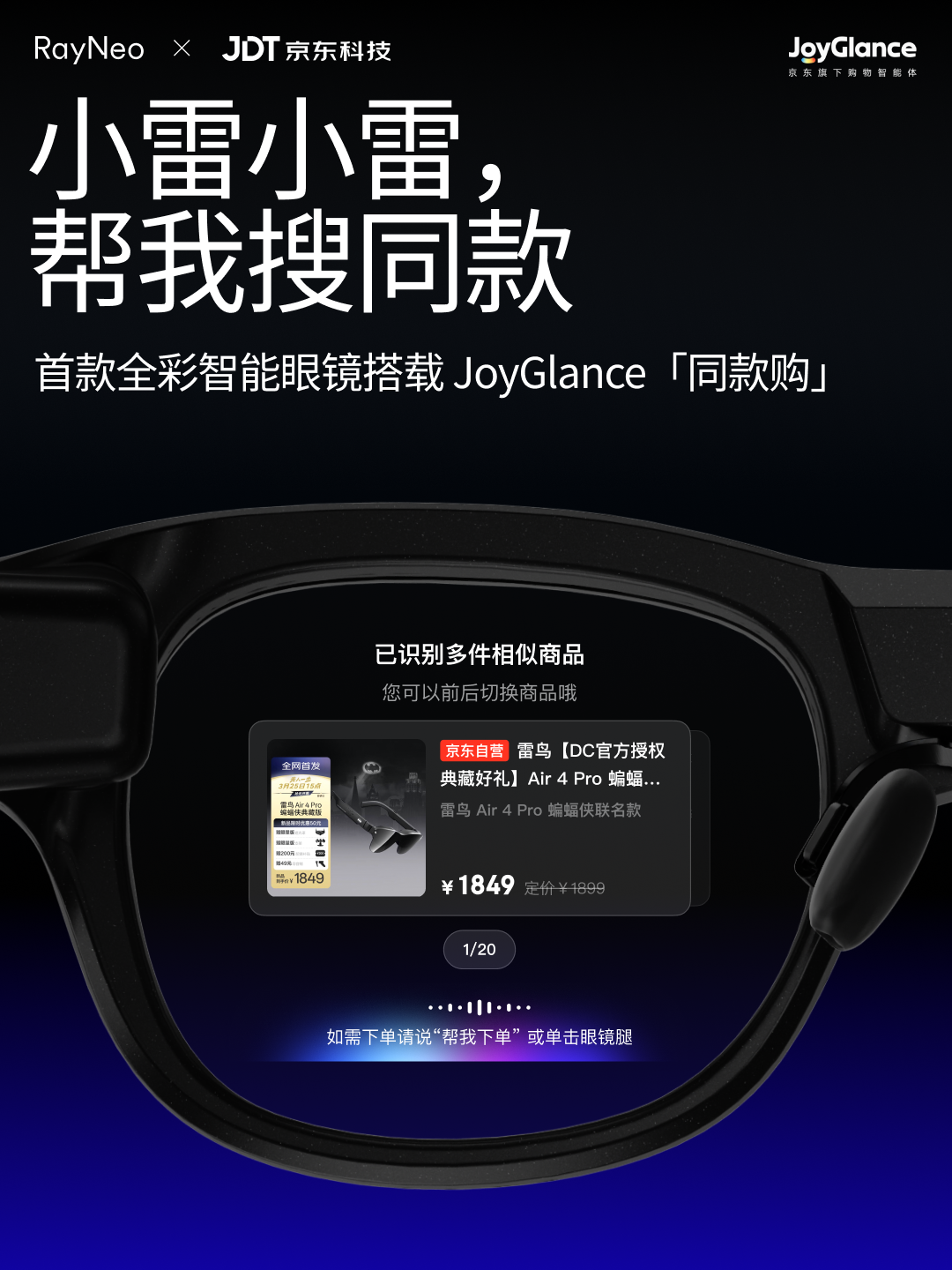
Currently, Thunderbird X3 Pro is planning to integrate over 100 smart applications covering social, office, entertainment, and travel domains.
Comment: Overall, Chinese manufacturers are narrowing the gap with overseas giants in product definition, scenario adoption, and profitability, forming differentiated competitive capabilities in some areas.
05 VR Ecosystem Faces Challenges
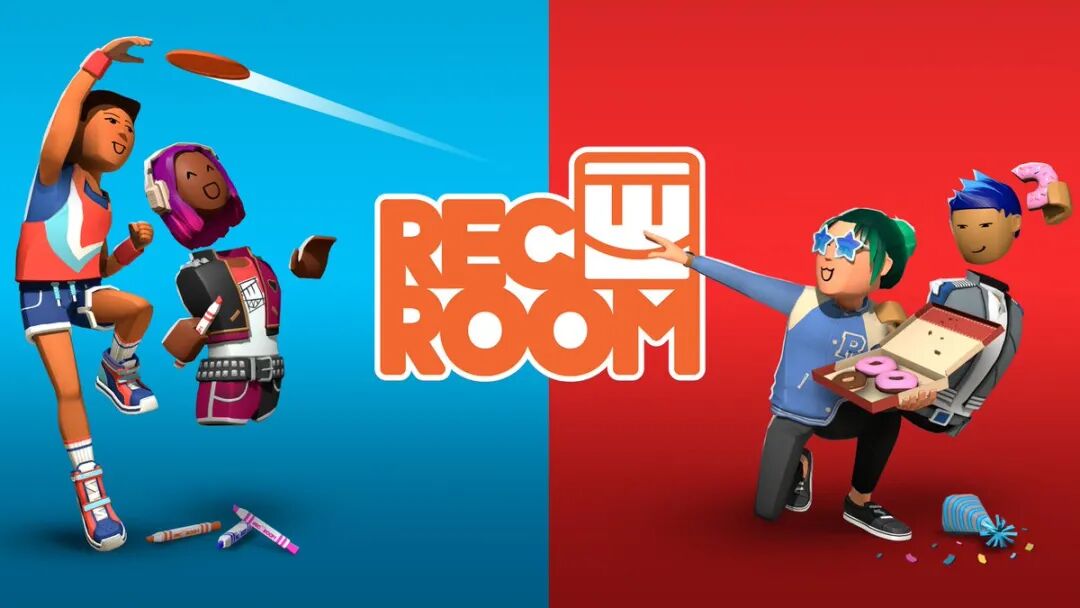
Internationally, Rec Room announced on March 31 that it would shut down services on June 1. This social gaming platform, launched in 2016 and attracting over 150 million players, was once valued at $3.5 billion. The company's CEO admitted in an official blog post that they "never truly found a way to make Rec Room sustainably profitable" and acknowledged that costs consistently exceeded revenue.
The company had already laid off nearly half of its employees in August last year but failed to turn the situation around. Rec Room's closure demonstrates that even with a massive user base, VR content platforms cannot survive without establishing a sustainable business model.
Another VR game developer, Polyarc Games, also announced significant layoffs. According to a former DevOps director's confirmation on LinkedIn, the layoffs affected two-thirds of the staff. The company's major project lost funding in December 2025, and efforts to secure a third-party publisher failed.

Polyarc Games had received widespread acclaim for its "MOSS" series, making it one of the casualties in the 2026 VR industry layoff wave.
Comment: The experiences of Rec Room and Polyarc Games illustrate that the VR content ecosystem still faces severe profitability challenges. Rec Room had 150 million users but remained unprofitable, ultimately leading to its closure; Polyarc Games, despite having critically acclaimed titles like "MOSS," was forced into massive layoffs due to project funding shortages.
The common issue for both companies is that they had users and products but failed to find a sustainable business model. VR content development involves high costs, a relatively limited user base, and low paid conversion rates—structural problems that remain unresolved. While hardware continues to advance, the content ecosystem's survival environment has not improved in tandem, posing a long-term concern for the VR industry's development.
Summary
This week's developments in the VR/AR field indicate that the XR industry is returning to rationality after early hype. Hardware is gradually maturing, but breakthroughs in content and display technology still require time. Moving forward, companies that can address real user pain points and secure stable revenue streams will have the opportunity to survive and thrive in this round of adjustment.
The above is a summary and commentary on this week's notable events in the XR industry.
VRAR Planet will continue to bring you the latest industry hotspots in a timely manner. Welcome to follow the [VRAR Planet] WeChat official account and video channel.
-
![]()
Registered Capital Slashed to 372 Million Yuan! Yutong Optical Finalizes Industrial and Commercial Change Registration
-
![]()
Zhuque-3 Successfully Lands, and 'Time Traveler' Secures Another ¥100 Million in Funding: China's Commercial Space Industry Experiences a 'Dynamic August'
-
![]()
Autohome Faces a Shrinking Window of Opportunity
-
![]()
Even a Titan Like Musk Has Faced Setbacks in Fulfilling Promises
-
![]()
AI Office: The End of the Racing Era, Context Becomes the Key to Success
-
![]()
Domestic Vehicle Chassis Revolution ②: The Steering Wheel Remains, But Mechanical Connections in the Steering System Are Decreasing
-
![]()
Exploring MiniMax Design: Can Video Editing Be as Simple as Speaking?
-
![]()
Why Can SenseTime Achieve Profitability While CloudWalk Still Faces Challenges, Despite Both Adopting Large Models?