A Counterintuitive Insight: New Products Shine in This 618 Shopping Festival
 06/17 2026
 593
593
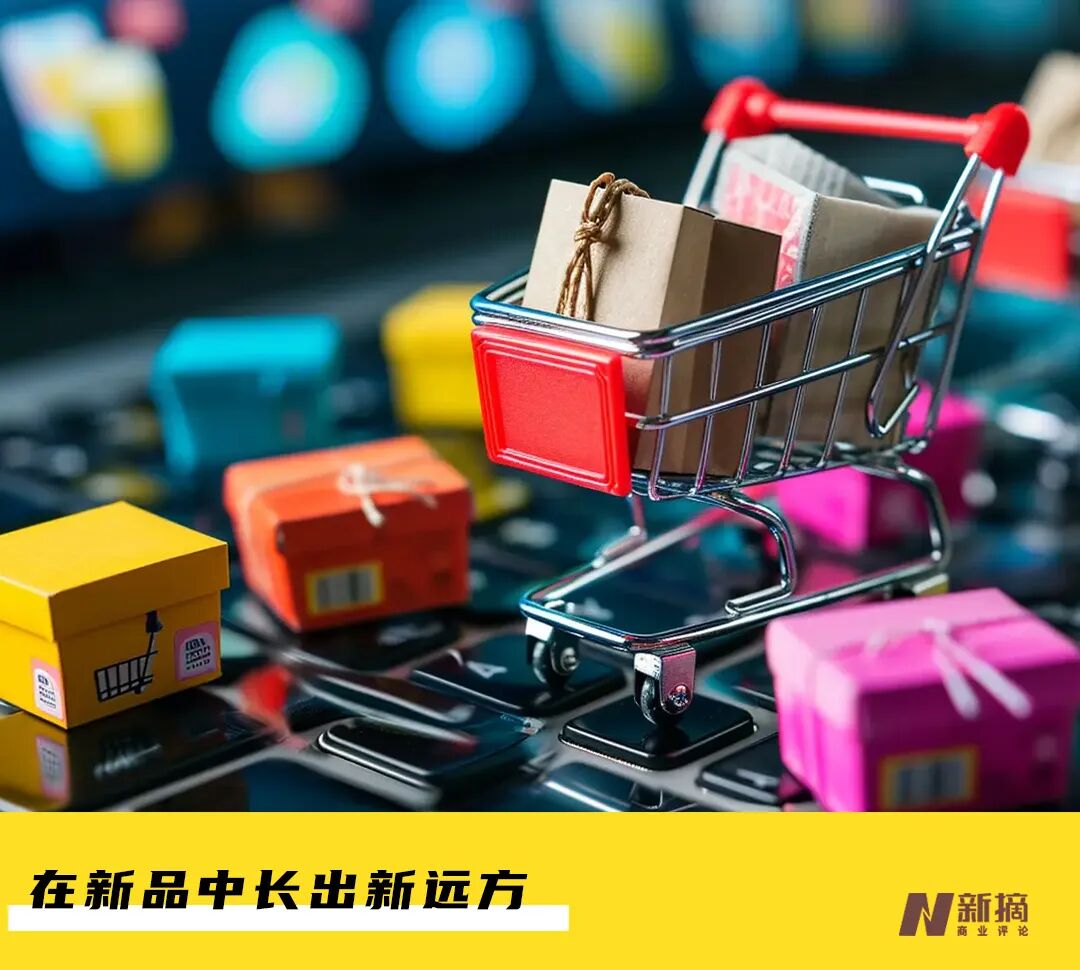
In an era of fiercely competitive and saturated markets, innovation and new product development are no longer just options—they are crucial for survival.
Author/Tomato Sauce
Produced by/Xinzhai Business Review
Over the past few years, the prevailing sentiment in the consumer market has been one of contentment with "good enough" and a preference for "cheaper is better." Consumers were perceived as conservative, favoring price comparisons over trying new products.
However, several surprising data points emerged during this year's 618 Shopping Festival.
One-third of the best-selling items on Tmall were new products. Among those with sales exceeding RMB 10 million, there were 53 categories—double the number from last year. Last year, the top 10 new products were mainly from the 3C and liquor sectors; this year, seven industries, including home appliances, health products, and trendy toys, made the list.
Prudent consumers typically shy away from new products. These items lack a proven track record and certainty, and they usually aren't the most heavily discounted options. Choosing them requires an active judgment that "this new product is worth trying over existing alternatives."
Yet, when a significant number of consumers make this judgment simultaneously, it indicates that pent-up demand in the market has finally found a suitable supply.
Conversely, brands are reinforcing this signal through their actions. When a brand bets on new products for growth, it is essentially wagering that consumers are still willing to pay for "better" rather than just "cheaper."
This appears to be an industry-wide trend: after two years of price wars, innovation is once again emerging as a pathway to growth.
1. From "Competing on Low Prices" to "Competing on Innovation"
The 618 Shopping Festival of 2026 may mark a fundamental shift in the logic of e-commerce promotions.
In recent years, e-commerce promotions have been dominated by the mantra "cheaper is king." Whoever offers the lowest price captures the most consumer attention during promotions. To achieve strong promotional performance, brands either had to invest heavily in driving traffic or sacrifice profits—there seemed to be no third option.
But this year, a different perspective is emerging.
Tmall 618 data reveals that among new products with sales exceeding RMB 1 million, the fastest-growing categories were apparel, fast-moving consumer goods (FMCG), sports and outdoors, small appliances, and trendy toys. These categories are strongly tied to lifestyle and personal expression, rather than traditional 3C and home appliance sectors, where new products are typically driven by technological iteration. Consumer demand for new products in these "soft consumption" categories has significantly increased.
Another noteworthy signal comes from the apparel industry: ICICLE was acquired by Kering Group. The fact that a Chinese original brand caught the eye of a global top-tier luxury group illustrates that products with original design capabilities and strong brand identity will become increasingly valuable in the future.
That said, traffic and price are not irrelevant—promotions must still be conducted, and basic models must still sell in volume.
However, the source of "incremental growth" is changing. In the past, the main source of growth was capturing market share from competitors.
"If I'm cheaper than you, users will switch from your side to mine."
Now, the source of growth has shifted to "creating new demand." I launch a product you've never seen before, and users buy it not because it's cheap, but because it catches their eye.
Indeed, the market's saturation competition has reached its limits. Continuing to engage in price wars with competitors yields diminishing marginal returns. New products have become the way for brands to break out of this cycle.
2. Meeting Demand: Regaining Pricing Power Through New Products
Developing new products is essentially about identifying unmet consumer needs and responding with innovative offerings.
A key question: What do brands gain by investing heavily in new products that other strategies cannot provide?
The benefits are direct: avoiding saturation competition, gaining pricing power through new products, and increasing profits.
The logic is straightforward. In mature categories, price wars among existing products have driven prices to rock bottom. If you lower prices, I lower mine too, and in the end, everyone loses—no one makes money. Only differentiated new products have pricing power, as consumers are willing to pay a premium for better offerings.
This is directly reflected in this year's data. The categories with the most concentrated RMB 1 million+ new products on Tmall 618 are precisely FMCG, apparel, and 3C—mature sectors with large market sizes and intense competition. Yet, new products still stand out.
This shows that even in seemingly saturated markets, there is still demand for better products. Whoever delivers them first captures growth.
De'Longhi is a good example. The coffee machine market in China is highly competitive. Instead of engaging in price wars, De'Longhi took a completely different approach:
Based on the insight that Chinese consumers love iced coffee, it launched the new S9 LattePro, positioning "dual hot and cold extraction" as an independent technical selling point rather than just an additional mode switch. This gave it pricing room outside the existing product price bands.
Many brands follow a similar structure: basic models maintain daily store traffic and baseline sales, with low prices and thin margins. However, the real profit engines are new releases, high-end products, and bestsellers.
These not only command higher gross margins but also attract new customers, drive repeat purchases, and increase average order value.
This year, among users who bought mosquito repellent eggs from Liushen on Tmall, over 80% were new customers who had never shopped at Liushen's store before. The value of new products in acquiring new customers is something basic models struggle to achieve.
3. The Key to New Products: Lifecycle Management
Launching a new product and aiming solely for explosive sales can often be achieved through heavy marketing spend.
However, new products driven solely by marketing bursts tend to have short lifespans. Once the marketing stops, sales collapse. Brands invest heavily to promote new products, only to see them become fleeting numbers—failing to retain loyal users or build repeat-purchase habits.
The real challenge is not "how to make a new product go viral" but "how to make it last."
This year's 618 reveals that some brands are adopting a different rhythm: they are not just pursuing short-term bursts on Tmall but are systematically planning around the entire lifecycle of new products.
The success of a new product is half determined by its starting point. Before launching its mosquito repellent eggs, Liushen worked with Tmall's New Product Innovation Center (TMIC) to validate the product concept, packaging tone, and scent direction 6–9 months ahead of launch. In other words, Liushen knew whether this direction would work before even starting production.
This is entirely different from the traditional approach of "making decisions based on gut feeling, starting production, and hoping for the best after launch."
When Winona developed its Barrier Cream, Tmall's data insights helped it precisely target post-medical-procedure skincare users. When Descente launched its Fluid Shoes, TMIC helped it identify urban road running scenarios.
These highly specific insights are precisely what determine whether a new product succeeds. Getting the direction right makes subsequent investments meaningful; getting it wrong renders even heavy marketing spend ineffective.
But after achieving a hit, the more critical question begins: How do you retain the users attracted by the new product?
The answer lies in a mechanism so natural it's often overlooked: Tmall flagship stores.
Unlike many platforms' logic of "pushing products to users," Tmall's flagship store-centric model naturally helps brands accumulate user assets. When users visit a flagship store and follow it, they become members who can be continuously engaged.
Indeed, it's not about ending with a single transaction. Brands can convert the traffic generated by new products into long-term assets through member operations, repeat-purchase incentives, and new product recommendations. Winona's Tmall flagship store has over 17 million fans, and the repurchase rate among the first batch of Barrier Cream users exceeded expectations—thanks to this ongoing operational capability.
The quality of the platform's user base further amplifies this advantage.
Among De'Longhi's buyers during 618, about 70% were 88VIP members. In On Running's Tmall flagship store, 88VIP transactions accounted for over 50%. For Descente on Tmall, high-spending L4-L5 users made up over 80% of purchases.
These groups share a common trait: they have a discerning eye for quality and brand value and are willing to pay a premium for better offerings. This means that when brands sell new products on Tmall, they are targeting consumers who are more inclined to buy "because it's good" rather than "because it's cheap." This aligns perfectly with the logic of new products seeking pricing power.
This highlights the value of search-based shopping and shelf e-commerce in new product operations. Instead of passively pushing products to users in a feed, new products have a guaranteed placement when users actively search—a two-way connection.
New product development is a sustained business. The goal is not to go viral for a week but to remain popular for years. Therefore, capabilities around the entire lifecycle of new products are indispensable.
Finally, in an era of fiercely competitive and saturated markets, I want to emphasize that innovation and new product development are no longer just options—they are crucial for survival.
Because competing on low prices tests supply chain efficiency; competing on new products tests the ability to understand people.
Supply chain efficiency has a ceiling—Chinese manufacturing has already reached peak efficiency. However, humanity's pursuit of a "better life" has no limits and will never run dry.
© Long-term data support for this account comes from Tianyancha
-
![]()
Alibaba's AI Offensive: Over Half of Investment Allocated, Time to Reap Returns
-
![]()
Alibaba’s AI Push: Over Half of Investments Made, Time to Harvest Returns
-
![]()
Chinese Enterprises Going Global 3.0: From World Factory to AI Infrastructure Builder
-
![]()
Honor RobotPhone Review: Half Movie Camera, Half Robot
-
![]()
AI-Driven Cheating Surges in Universities! Online Exams Reduced to Mere Formalities, Degree Credibility on the Line
-
Insta360’s Decade in Panoramic Imaging: Making Cameras ‘Invisible’ and Returning Creation to the Masses
-
![]()
Foreign Media Claims Apple is Concentrating Resources on AI Development: Vision Pro and Siri Teams Lay Off 200 People
-
Big News! Huaneng and Huawei Hold Talks in Shenzhen with Ren Zhengfei in Attendance; Huawei Emerging as the 'Second Brain' of China's Energy System