Flood Dividends vs. Drops in the Ocean of AI: A Deep Dive into OPPO's Ostrich-Style Survival Strategy
 07/09 2026
 334
334
OPPO has never been a company accustomed to airing its difficulties in public.
Over the past thirty years, its most crucial lesson in China's smartphone industry has not been technology or branding, but people—the loyalty of channel partners, agent (distributor shareholders), and in-store sales staff.
To master this lesson, Chen Mingyong personally designed a unique profit-sharing mechanism within the industry: core distributors hold stakes, deeply aligning their interests with the brand. When OPPO profits, everyone prospers; when OPPO struggles, everyone shares the pain.
During years of unilateral market growth, this mechanism served as a lever for expansion, a source of decisive authority, and the industry's most formidable moat in competitors' eyes.
But sometimes, a moat can become a prison.
Over the past three years, dividends flowing into this channel system have followed an almost vertical trajectory: rising from a low of RMB 3-4 per share to approximately RMB 8 in 2024, exceeding RMB 12 in 2025, and reportedly surpassing RMB 20 (pre-tax) by 2026. Cumulatively, this three-year flood has likely exceeded RMB 10 billion. As cash flowed, accumulated anxieties dissolved, morale stabilized, and channel hands tightened their grip once more.
Parallel to this financial deluge stands OPPO's long-simmering anxiety over AI technology reserves and talent accumulation—an anxiety that has manifested in various ways over recent years: sometimes as desperate recruitment drives, sometimes as tardy product launches, and often as sluggish responses trailing competitors' AI announcements.
On one side, a RMB 10 billion flood surges toward every node needing reassurance; on the other, AI investments resemble drops in the ocean, honestly marking the limits of technological exploration. The same balance sheet reveals two starkly different certainties.
This year, several other developments warrant parallel recording. A Mother's Day marketing campaign triggered massive public backlash, prompting immediate and severe punishment for Duan Yaohui, China business head: a two-level demotion, 36-month salary freeze. For a company that built its core competence on emotional marketing, this roll over (failure) at the most emotionally charged moment was telling—not for the mishap itself, but for how the "new official" desperately needing visibility was forced into the spotlight through such means.
Meanwhile, OnePlus and realme returned to the fold under "integration," like prodigal chess pieces silently resetting to their original positions on the board, neither acknowledging how far they'd wandered nor what they'd brought back.
Finer adjustments occurred within product lines. Two months ago, Zhang Zhouchuan, A-series head, prepared for retirement, with former realme vice president Wang Wei (Derek) taking over the A-series; Reno line leader Wang Wei (Leon) reportedly resigned. The A-series, Reno, and sub-brand product centers—lines closest to mid/low-end sales—are reshuffling seats simultaneously.
These aren't the same issues, yet their concurrent emergence paints a picture far from calm, though not quite collapse.

When leading OnePlus, what internally made Liu Zuohu both respected and feared was his Almost paranoid (near-obsessive) attention to product details.
Renowned for his OCD-like focus, he delayed product launches to reduce a phone's floating screen by 0.1mm, and even polished back curvatures while flying, modeling devices in his lap for constant scrutiny. Insiders describe him as "oblivious to industry gossip, obsessed only with building phones"—a maverick outside the rivers and lakes (business circles). Among grandiose corporate titles, his most cherished role remains the company's "Chief Product Officer."
In October 2025, OPPO pushed Liu Zuohu to the overseas frontline.
The intent was clear: amid global smartphone market volatility, structurally growing markets lie in emerging economies across Asia, Africa, and Southeast Asia. These regions demand leaders who can both uphold premium brand narratives and execute channel strategies—Liu Zuohu being the ideal candidate.
Another general's reassignment clarified this strategy. India's market complexity is unparalleled in the smartphone industry, testing supply chain, channel, and compliance expertise. Liu Bo's two-decade career precisely covers these capabilities. Having stepped down as China president for a "leadership development program," he returned to the frontlines ahead of schedule.
Their successive departures contrasted with Duan Yaohui's rapid domestic consolidation.
Duan holds a bachelor's in Communications—his expertise. After graduating from Huazhong University of Science and Technology's School of News and Information in 2006, he joined OPPO's product planning team, spanning feature phones to smartphones. He became Internet Business president in 2010, launched the "Gravity Plan 2.0" at the 2019 Developer Conference with RMB 1 billion in developer support—a period when OPPO ambitiously sought to build its internet ecosystem. After Liu Zuohu's return, Duan was appointed OPPO vice president and mobile product line president, later rising to senior vice president overseeing China business.
Duan's ascent has been unusually rapid within OPPO. Promoted to senior vice president in January 2024, he took charge of China in April 2025, and added marketing services to his portfolio in October. Now, China business and marketing services—the lines closest to sales, channels, and brand influence—rest with one person.
Corporate filings signal frequent changes: OPPO's legal representative shifted twice within a year, with Duan assuming the role in mid-2025 before quietly stepping down in February 2026, replaced by Li Jie.
For a company emphasizing stability, order, and internal cultivation, this pace is unusual. It suggests that while overseas markets receive top priority, OPPO's domestic power center undergoes a less-than-smooth transition.
Yet this reshuffle didn't deviate from OPPO's familiar talent strategy. Liu Zuohu, Duan Yaohui, and Liu Bo—key executives in this adjustment—are all "homegrown leaders" with over two decades at OPPO.
This is no coincidence.
As a company highly emphasizing internal cultural alignment, OPPO's "Integrity" culture organically leads its structure to deeply trust internally cultivated talent—frankly, to be exclusionary. Outsiders ascending to core positions face steeper challenges.
OPPO's recruitment system is highly inward-focused. The "Dream Seeker Program" targets only fresh graduates, with a three-tier development system; the "Dream Builder Program" for external hires strictly confines training to corporate culture, regulations, and laws.
This closed-loop system delivers extreme execution efficiency during expansion. The tacit understanding (tacit understanding) from shared growth experiences enables high consistency at low communication costs—an organizational edge hard for externally hired talent to replicate quickly, and the source of OPPO's decisive authority during growth phases.
But this approach has limits. As markets evolve faster, OPPO's reliance on internal growth, rotational postings, and gradual transitions begins to lag.
The same inertia affects OPPO's talent acquisition in the AI era. AI success doesn't rely on volume but on top-tier talent with external experience and technical intuition—whose scarcity and importance are unprecedented. Nearly every leading AI company and tech giant worldwide now offers sky-high salaries to recruit project leaders.
For a company long accustomed to internal screening, cultivation, and promotion, hiring and empowering such talent is extremely difficult. Attracting suitable candidates is just the first step; the real challenge is granting them sufficient autonomy, space, and collaboration speed within the organization.
Beyond personnel restructuring, Duan Yaohui inherited unresolved historical issues.
On April 29 this year, OPPO announced internally: OnePlus and realme formally merged to form a sub-brand division. Realme founder Li Bingzhong leads the unit, with realme global marketing president Xu Qi handling marketing and OnePlus China president Li Jie overseeing products. Three leaders now share an org chart from two previously independent systems.
This merger had reasons for its delay—and costs for that delay. OnePlus's departure from OPPO happened almost over a single meal in summer 2013, when five OPPO veterans including Zhang Xuan accepted new roles. After dining with mid-to-high-level management, they promptly resigned, and Liu Zuohu launched a brand that still thrills enthusiasts today. After years of independent operation, Liu returned as Chief Product Officer in 2020, with full OnePlus-OPPO integration in 2021. The repatriated OnePlus shifted downmarket to Ace series, transforming from "premium flagship" to mid-range performance machine, digging deeper into online value-for-money segments.
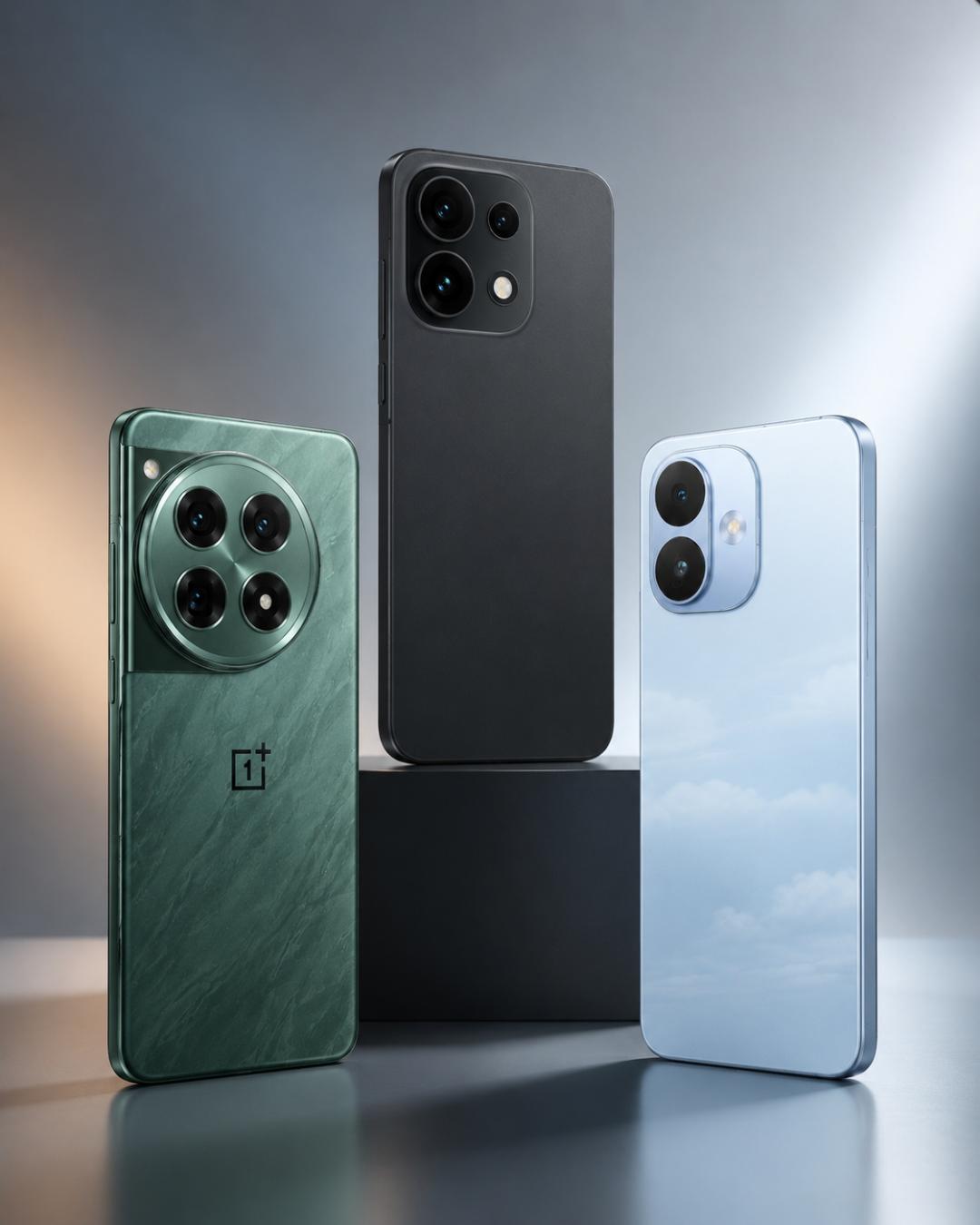
Realme followed a different path. Spinning off from OPPO in 2018, Li Bingzhong led expansions into India and Southeast Asia, achieving rapid growth. But as markets contracted, realme's portfolio increasingly overlapped with OnePlus and OPPO's main brand in pricing tiers, with all three brands consuming the same corporate resources without sufficient differentiation.
Two brands—one departed then returned, one incubated then reabsorbed—ended at the same desk. The challenges: placement, market segmentation, channel conflict avoidance, and preserving hard-won user perceptions.
This is Duan's current predicament: organizational integration remains incomplete, historical bills keep piling up, overseas generals are in position, but the domestic base still seeks equilibrium.
Stability has become his top priority.

OPPO stabilizes morale beyond culture alone.
When building the channel system, Chen Mingyong did something unmatched in China's smartphone industry: systematically incorporating core and provincial distributors into the company's equity structure. Their interests deeply aligned with the brand, stitching headquarters and channels into a single Interest Network (interest network). His explanation was simple: prioritize channel profits, then the company's. A more private version: "Money in company accounts earns you interest too—I won't take advantage."
This principle holds near-constitutional weight in OPPO's channel system.
A southwestern distributor shareholder revealed OPPO never pressures inventory but always asks, "Did everyone earn well this year?" Such trust cannot be replicated overnight with marketing budgets alone. During market booms, this mechanism drove rapid expansion: manufacturers expanded production without hesitation, and channels stocked up unconditionally.
The confidence stemmed from a consensus: Following OPPO never leads to losses.
While equity mechanisms foster loyalty, they also impose constraints: channel partners' profit expectations shift from soft trust to rigid dividend demands. When the company bets big on self-research, this balance faces inevitable strain.
OPPO's chip self-research project ZEKU Technology absorbed nearly RMB 10 billion over three years before shutting down in May 2023, with official statements citing "global economic and smartphone market uncertainties"—diplomatic wording that left room for interpretation. Foldable screen R&D represents another front: five iterations, over 3,500 patents, and global technical leadership—yet typical of long-cycle, high-cost investments hard to recoup through short-term shipment volumes.
After raising dividends, another challenge emerges: reserving sufficient funds for next-generation tech investments. Shareholders felt this shift most acutely. A source close to OPPO told New Position that during peak chip/foldable spending, per-share dividends narrowed significantly, lingering at RMB 3-4 for extended periods, accumulating considerable anxiety among shareholders.
OPPO then made staggering compensatory adjustments to dividend policies.
According to the source, per-share dividends surged to ~RMB 8 in 2024, exceeded RMB 12 pre-tax in 2025, and topped RMB 20 pre-tax by 2026, with payouts still landing each June.
Estimated from OPPO's shareholding scale, cumulative dividends over three years likely surpassed RMB 10 billion. This dramatic escalation reassured channel partners who'd accumulated anxiety during lean years. A shareholder receiving dividends described the feeling: "It instantly washed away years of stress."
This exemplifies OPPO's most familiar—and effective—organizational language: no explanations, no promises, just delivering tangible returns to channels. With cash in hand, previous doubts about long-term investments in chips and foldables temporarily submerged. Shareholders renewed their faith in headquarters' simple pledge.
Commercially, short-term interests tend to outweigh long-term strategic flexibility. Chen Mingyong's original intent with equity mechanisms was to align channel partners in sharing risks and rewards. But when "prioritizing channel profits" becomes a rigid dividend expectation through equity structures, corporate financial flexibility inevitably contracts.
Drastically raising dividends while maintaining R&D agility inherently creates resource allocation conflicts: a growth-focused company must endure short-term financial pain, while a dividend-first company must curb risks and convert profits to cash. No smooth transition exists between these states—it's a choice between fish and bear's paw.
Duan Yaohui repaired channel trust—a genuine achievement. The cost, however, was compressing budgets for market offensives and tech experimentation.
This trade-off for stability manifested in another form after he took charge.
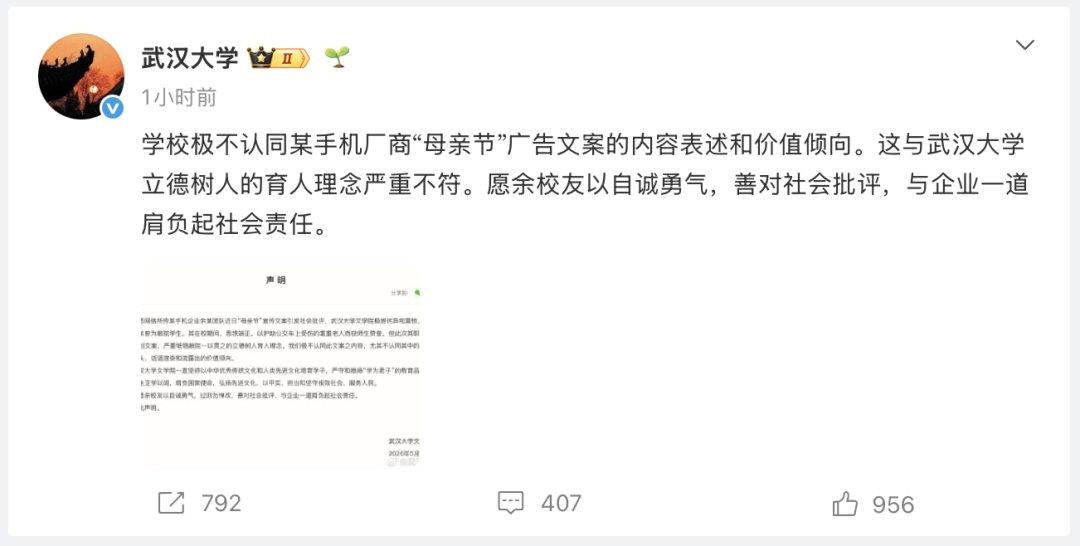
On May 8th of this year, OPPO's Mother's Day campaign triggered a massive public opinion backlash, prompting intervention from the China Advertising Association and official statements from Wuhan University's Weibo account, pushing the topic to the top of Weibo's trending list. By the third day of the controversy, OPPO issued internal accountability notices: Duan Yaohui, head of China business, was held ultimately responsible, demoted two levels in rank, capped at a C-level performance rating for the year, and subjected to a 36-month salary freeze starting that month. Wang Yi, head of his direct department, was demoted one level, while Ma Xin, head of PR, faced a 12-month salary freeze. Insiders called the penalties 'unusually severe by OPPO's historical standards.'
Some called it unfair. Given the scale of his oversight in China, a single Mother's Day campaign copy approval would hardly reach his executive level. The argument holds merit, but OPPO's accountability logic extends beyond direct fault—it serves as an organizational signal. The company remains serious about its 'fundamental principles,' serious enough to endorse them with top-tier internal discipline.
Maximum penalties align with dividend distribution logic. Dividends stabilize channel expectations with cash; accountability reaffirms brand boundaries with consequences. Essentially, it's the same language spoken to different audiences.
Yet these consistent costs are mounting. And Duan Yaohui's predicament grows clearer by the day.

In 2025, Liu Bo, then-president of OPPO China, described the company's product matrix logic in one sentence: The Reno series targets female college students, the OnePlus series targets male college students, the Find X series focuses on young professionals, and the Find N targets young managers in the workplace.
The statement was polished and granular, resembling a satisfying positioning matrix from a meticulously crafted internal PPT.
OPPO's product matrix is renowned in China's smartphone industry for its scale. The main brand's four lines—Find for flagships, Reno for mid-range fashion, K for affordability, and A for entry-level—span from 10,000-yuan flagships down to 1,000-yuan budget models, leaving virtually no price gaps. This structure functioned as an all-encompassing net during market expansion, with guardians at every price tier, models catering to every user segment, and product lines aligning with channel volume demands—logically impeccable.
The issue? This net was woven for one brand but now serves three. At a stage when the smartphone industry needs simplification, OPPO continues arranging its chessboard with additive logic.
The OnePlus Ace is priced between 1,000 and 3,000 yuan, while the OPPO K series covers 999 to 1,999 yuan, and the Reno series starts at 2,999 yuan—three lines converging end-to-end.
Consumers with similar budgets, facing three brands, three messaging systems, and three sales channels pushing equivalent models, often decide based on aesthetics, sales pitch, or simply switching to Xiaomi or Honor.
Industry insiders derisively call this 'self-cannibalization.'
Before being forcibly consolidated into sub-brand divisions by headquarters, realme's domestic market share had shrunk below 2% yet maintained independent product lines and channel teams, competing directly with OnePlus Ace and K series in the affordability segment. Each earned its own marketing budgets but failed to differentiate meaningfully.
On May 25, 2026, OPPO launched the Reno16 series starting at 3,499 yuan (2,999 yuan after subsidies), featuring 'Dreamcore Planet Aesthetics,' 200MP quad-main cameras, 3D ice-transparent suspended craftsmanship, and an AI button—designed precisely for 'female college students.' That same day, Honor unveiled the 600 series in Xiamen, emphasizing full-focal-range 4K Live imaging, starting at 2,294 yuan. Four days later, vivo's S60 series followed with a beach launch event, endorsed by Tian Xiwei, boasting a 7,200mAh ultra-thin battery, starting at 3,599 yuan.
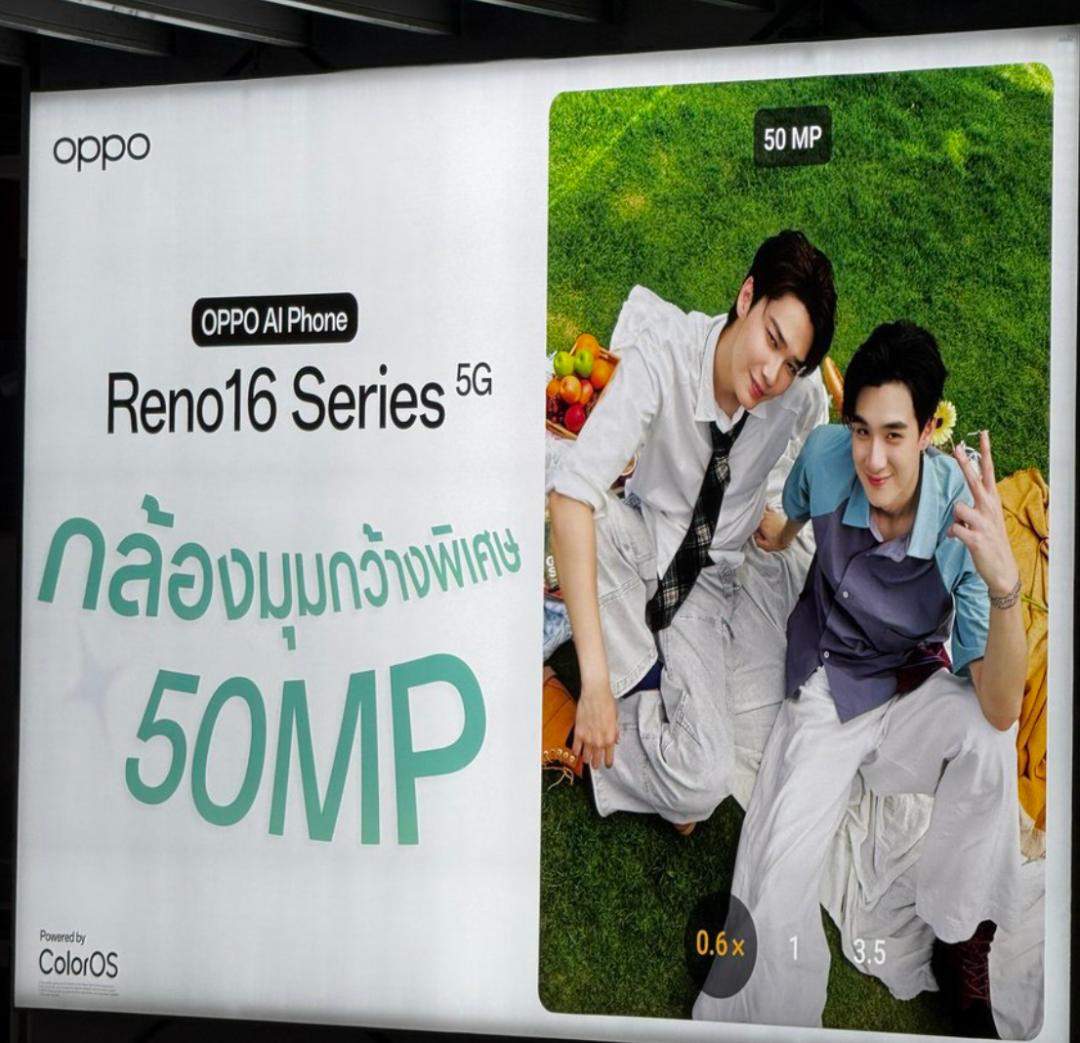
Within ten days, three mid-range imaging flagships debuted in the same price tier, targeting heavily overlapping demographics: young photographers unwilling to compromise core experiences or overspend.
Facing rising storage costs, the three companies adopted starkly different strategies: Honor downgraded chips to control costs and introduced a 'Vitality Edition' to expand coverage; vivo packed flagship specs into standard models while adding a low-cost 'Vitality Edition'; OPPO chose to raise both specs and prices, with the Reno16 series increasing by 500–800 yuan—the only one among the three to absorb costs through natural spec iterations.
OPPO's choice left it in a relatively passive position. Sandwiched between the lower-priced Honor 600 and the value-focused vivo S60, the Reno16 needed a compelling answer to 'Why is it more expensive?'
A month earlier, on April 28, the OnePlus Ace6 Supreme Edition launched with a Dimensity 9500 chip, 8,600mAh battery, 165Hz gaming display, and a post-subsidy starting price of 2,999 yuan.
2,999 yuan vs. 2,999 yuan—same company, same price tier, two product lines, two messaging systems, two sales teams. Liu Bo said Reno targets female college students, OnePlus targets males. For a student with a 2,999-yuan budget, how effectively this gender divide blocks indecision remains unquantifiable.
Moreover, a hidden risk looms, particularly evident in the Reno series.
After sixteen generations, the Reno series boasts a massive global user base and remains OPPO's most stable cash cow in mid-range offline markets. Consequently, those overseeing the line face a dilemma: radical changes alienate loyal users; minor tweaks invite 'spec-squeezing' criticism from media and consumers.
This path dependency accumulated since the product line's inception—not the fault of any single product manager, but someone must bear the consequences.
Especially with OnePlus and realme's merger, officially framed as a 'resource optimization' choice. Financially, the rationale holds. But one question remains unanswered: Who will define and defend the price boundaries between OnePlus Ace, K series, and Reno after the merger? Within the sub-brand organizational structure, Li Jie oversees the product center, managing both OnePlus and realme's product planning.
This means the ultimate boundary-setter for OnePlus Ace, realme, K series, and Reno is not Li Jie but Duan Yaohui—despite his internal demotion—and even Chen Mingyong at the highest level.
New changes are already materializing in specific product lines. Leifeng Network reported in May that Zhang Zhouchuan, OPPO's assistant vice president overseeing the A series, will retire soon, with Wang Wei (Derek), former realme vice president and now sub-brand product center deputy general manager, taking over and reporting to Yin Wenguang. Around the same time, Leon Wang, former Reno product line head, reportedly resigned, likely to be replaced by product manager Zhang Ruoxing.
OPPO's adjustments to its mid/low-end core have not ended with the OnePlus-realme merger. They now extend to main-brand staples like the A series and Reno. Budget volume, mid-range imaging, and online affordability lines are all seeking new leaders and redefining boundaries.
But in this industry, product line boundaries aren't drawn—they're fought for.
OPPO's current predicament: It holds more chess pieces than any rival, but each sits too close to the next. The result? Instead of defending more ground, resources get divided among pieces that should stand alone.

In August 2022, Shenzhen hosted OPPO's developer conference.
Executives unveiled a vision: 'Pantanal,' a smart cross-device system using smartphones as hubs to unify tablets, PCs, wearables, and home devices under one operating logic, breaking barriers between devices and systems to deliver services at the right time, in the right way, on the right screen.
Named after South America's largest wetland—biologically diverse and crisscrossed by waterways—OPPO's ambition was clear.
It was an opportune year to make this statement. Around 2022, cross-device ecosystems dominated smart device competition. Huawei gained momentum with HarmonyOS, while Apple deepened its Continuity experience. OPPO saw the same direction and made the same judgment.
Yet the Pantanal narrative gradually faded from OPPO's public discourse in subsequent years.
Some capabilities integrated into ColorOS's underlying cross-device protocols, with developer docs updating and occasional appearances at developer conference sub-forums. But it never truly came alive—at least not as Chen Mingyong once described. A longtime OPPO observer noted internal 'regret' over Pantanal—not anger, but an indescribable sense of a better story derailed at a critical juncture.
The derailment point seems clear in hindsight.
Zeku's chip self-development absorbed over 10 billion yuan, while foldable screen iterations burned another fortune—the former measurable in chip tape-outs, team size, and performance metrics; the latter in hinges, screens, weight, thickness, and patent counts. Heavy investments with visible milestones: this year's chip, next year's product, and which specs to highlight at launch.
Pantanal was different. Success hinged on developer adoption, user migration, and seamless service flow across devices. It demanded years of investment without immediate returns, requiring long-term alignment between systems, products, developer relations, and commercial distribution. A break in any link stifled ecosystem growth.
Not all smartphone companies made the same choice. During the same tech cycle, Xiaomi offered an alternative: forgoing final dividends for years to retain profits for smart EVs, operating systems, AI infrastructure, and 'human-car-home' ecosystems. Automotive represents the costliest battleground; AI the most uncertain long-term endeavor. Together, they require converting current profits into future capabilities rather than immediate returns.
This doesn't imply Xiaomi's approach is inherently superior. But when a consumer electronics company enters a new tech cycle, capital allocation must precede narrative. Those willing to distribute less can afford more attempts.
OPPO's actions in those years provided its answer.
By late 2022, ChatGPT emerged—a variable the smartphone industry had never seriously considered—rapidly transitioning from labs to products. By 2024, Samsung, Apple, and Google deeply integrated large model capabilities into flagships; Xiaomi pivoted from wait and see (wait-and-see) to launching a massive in-house large model team within two years...
Looking back, Pantanal's cross-device vision wasn't wrong—but the competitive dimension it faced shifted dramatically in three years. From cross-device synergy to AI-native experiences, from device-agnostic to model-driven, OPPO's original bet was redefined by a larger tech wave.
The human element proved even thornier.
OPPO wasn't oblivious. At its 2023 developer conference, AndesGPT debuted with ColorOS 14, featuring cloud-device synergy, cross-device services, and personalized assistants—terms still relevant then. The issue? The large model era's competitive intensity rapidly raised the bar, making 'relevant' no longer synonymous with 'advantageous.'
Vivo's Blue Matrix Plan wooed top PhDs from global universities, while Xiaomi's MiMo team recruited former DeepSeek researcher Luo Fuli. Both prioritized talent acquisition, letting organizations adapt to people—not vice versa.
Internally, OPPO's Liu Zuohu sought introductions to tech influencers like Zhang Peng (GeekPark founder), who recommended Jiang Yuchen, now OPPO ColorOS AI product research director. In October 2024, OPPO acquired Jiang's startup, Waveform AI, to accelerate AI productization.
Post-acquisition, Jiang joined ColorOS to lead 'Super Xiao Bu' initiatives. Publicly, she emphasized OPPO's AI strategy: avoiding foundational models (not 'power plant business') to focus on on-device memory and personalized agents through hardware-software integration. Her stance—'foundational models aren't for smartphone makers; they're like power plants'—isn't flawed.
The problem lies in OPPO's speed of translating strategy into products versus competitors' pace of redefining price bands.
OPPO responded. Its 2026 campus recruitment drive prioritized AI/algorithm roles, including AI researchers, multimodal algorithm engineers, and large model specialists across dozens of subfields.
But long-term solutions can't resolve immediate organizational integration conflicts. Top AI talent often carries distinct personal brands, with career mobility clashing with traditional manufacturing's steady growth paths. Cross-company moves and oscillations between giants and startups are common. For OPPO, accustomed to internal cultivation, integrating these 'outsiders' into a values-driven culture poses a tougher challenge than high salaries.
OPPO has broken organizational inertia before. Chen Xi, ColorOS design head, joined in 2018 after stints at Tencent and Meizu Flyme (Meizu's OS), and by 2019, he extensively explained design logic at ColorOS 6's launch—a critical moment as ColorOS shed its 'iOS clone' label. Chen's integration succeeded within clear professional boundaries, with design language updates offering evaluative benchmarks and soft landing space for cultural compatibility.
The integration of AI cross-disciplinary talent is far more challenging, requiring organizations to make systemic adjustments in knowledge systems, collaborative processes, performance evaluations, and even value alignment. This is precisely the most difficult thing for a highly cohesive cultural system to accomplish quickly.
So, what is now presented externally is that at the launch event of the Find X9 series (Ultra and s Pro), AI features were split into more than a dozen specific names (AI Mind Space, AI Bill Manager, AI One-Click Flash Note, etc.) scattered throughout various sections of the system experience. Meanwhile, the Hasselblad dual 200-megapixel system and the 10x optical zoom periscope telephoto lens dominated the prime time of the event.
The order of presentation itself is the answer. Imaging is the hard power that OPPO can truly confidently tout; AI is the soft skill it is still accumulating and hesitant to discuss extensively at this stage.
This is the true meaning of 'Cup-of-Water AI': It's not that OPPO doesn't value AI, but rather that there is a visible gap between the AI resources it can currently mobilize, the AI talent it can integrate, the AI products it can deliver, and the intensity of competition in this era. This gap cannot be bridged by a single year of campus recruitment, nor can it be concealed by a single launch event PPT.
In 2004, Chen Mingyong inscribed 'Integrity' into OPPO's values. Duan Yongping explained it succinctly: Repaying what you borrow is integrity; borrowing again with ease is utilitarianism. A truly integrity-driven person would never even consider the idea of 'borrowing again with ease.' Building on this, Chen Mingyong added his own interpretation: Even money kept in the company's account will earn you interest; I won't take advantage of you.
This mechanism once helped OPPO establish the most stable channel network in China's smartphone industry. Now, it has also become a cost that must be paid anew each year. The legal representative has been replaced twice within a year; dividends have surged from 3 to 4 yuan per share to an expected over 20 yuan (pre-tax), compressing the company's reinvestment flexibility; the sunk cost of over 10 billion yuan in the chip project and the long-cycle consumption of 3 billion yuan in foldable screens have jointly squeezed the financial window for responding to AI competition; the talent system centered on campus recruitment as the core heritage has lagged half a step behind competitors in the competition for AI cross-disciplinary talent.
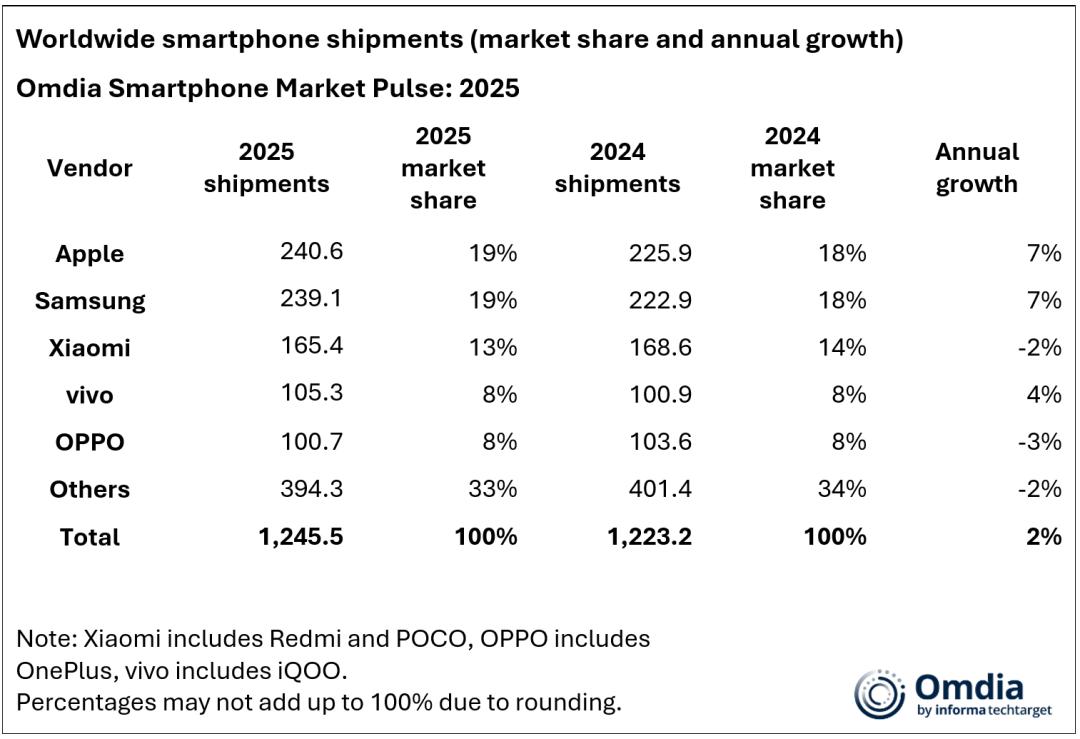
The costs of these internal contradictions are ultimately reflected in market share. Whether measured by Omdia or IDC, OPPO hovered around fifth place both domestically and internationally throughout 2025. In the first quarter of 2026, it recovered to third or fourth place domestically amid an industry shakeup triggered by rising storage prices, but its global share still declined by 9.9% year-on-year.
What Duan Yaohui has inherited today is a situation under pressure from both ends: the expectations for channel dividends have been elevated to a high level by three years of cash infusions, while the AI arms race demands continuous resource investment. Both ends are rigid, yet the room for maneuver is narrowing.
A person's ability to regain control of the situation is commendable; however, whether they can reorganize an offensive after order is restored is the true variable that will determine their long-term position within the company. In a corporate culture like OPPO's, which highly emphasizes 'integrity' and internal alignment, those who rise to the top are typically those who can be seen during critical moments. Duan Yaohui's current situation is that he has been seen, but what has been seen is his ability to maintain the status quo rather than innovate. This gap will become increasingly difficult to conceal with dividend figures in the AI competition landscape over the next two to three years.
The cards he can play are channel stability, organizational consolidation, and a batch of campus-recruited AI engineers who are on their way.
As for the future once envisioned by Pantanal, it belongs to an OPPO with sufficient time.
But unfortunately, time is precisely the most precious commodity right now.
*The featured image and illustrations in the text are sourced from the internet.
-
![]()
Model Giant Jieyue Xingchen Steps into Smartphone Arena: A Strategic Alliance with Huaqin Technology
-
![]()
Big Model Firm Dives into Phone Market: StepFun and Wingtech Forge a ‘Dynamic Duo’
-
![]()
Zhongrun Optics Makes a Bold Move with 1 Billion Yuan Investment: Is a Turning Point on the Horizon for the Precision Optics Industry?
-
![]()
Deploy CLBO Crystals and YIG Single Crystals! Erythritol Leader Invests 30 Million in Youwei Optoelectronics
-
CXMT’s July 16 Subscription: Leading Domestic Memory Manufacturer—What’s the Earning Potential per Lot?
-
![]()
Rhythm Discrepancy and Premium Value Erosion: Foreign Luxury Brands Must Re-evaluate Their China Strategy
-
![]()
Half-Year, 1 Billion Yuan Financing, 7 Billion Yuan Valuation: A New Dark Horse Emerges in the Embodied AI Sector
-
![]()
Strong Rebound for Tech Stocks in Hong Kong Stock Market: Is It Time to Bottom-Fish?