Why Google Remains 'Others' After 16 Years in the Smartphone Business
 07/14 2026
 331
331
Produced by I Xiahai Fallsea
Written by I Hu Buzhi
On January 5, 2010, Google, in partnership with HTC, unveiled the first Nexus One. The launch event took place at Google's headquarters in Mountain View, where then-CEO Eric Schmidt held up the device—revered by geeks as Android's 'favorite son'—and declared to the assembled media and developers a phrase that would be repeatedly quoted: 'We hope this phone will become a benchmark for the Android ecosystem.'
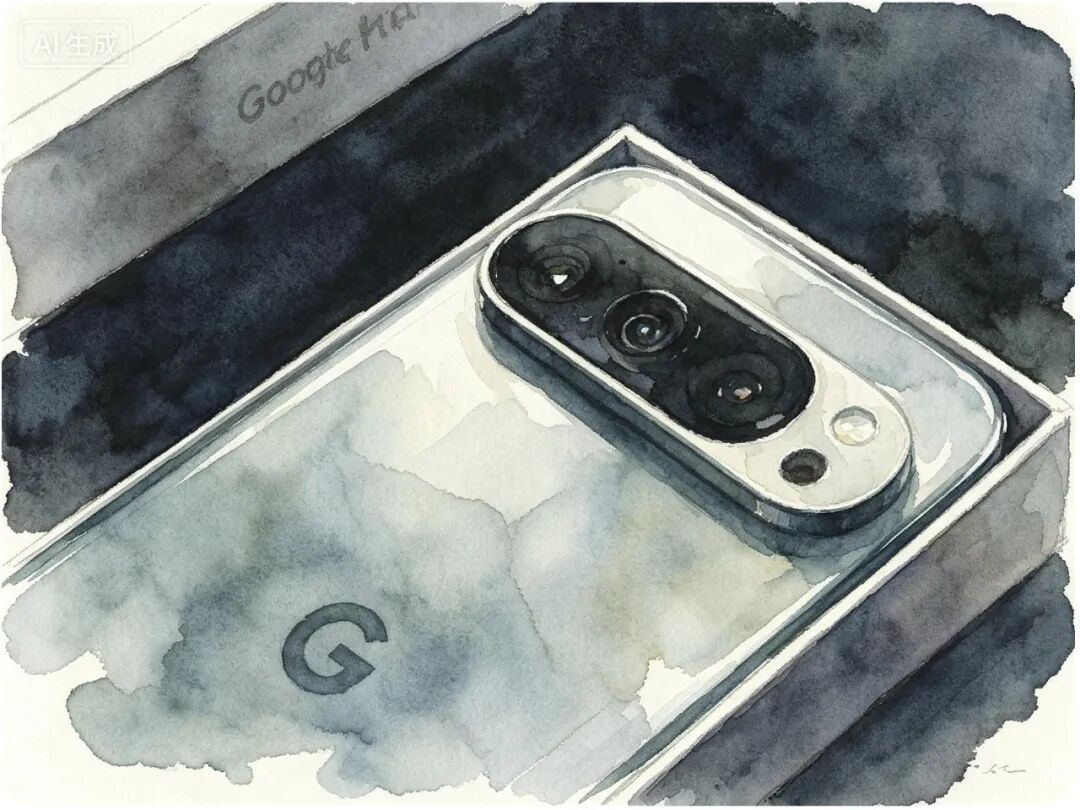
Sixteen years later, in August 2026, Google will host its annual Made by Google hardware event in New York, unveiling four new models at once: the Pixel 11, Pixel 11 Pro, Pixel 11 Pro XL, and Pixel 11 Pro Fold. Judging by the information revealed in the invitation, the biggest selling point of this generation of Pixel phones remains AI interaction and on-device large models, with the most eye-catching hardware change being a back lighting effect called Pixel Glow.
Sixteen years—a complete cycle. But if you examine Google's smartphone track record, you'll find an incredible fact.
Apple captures over 80% of the global smartphone market's profits, a share that approached 90% in 2025. Samsung remains the Android camp's dominant player with annual shipments of approximately 240 million units. Xiaomi shipped around 164 million units globally in 2025, while vivo and OPPO maintained scales of around 100 million units each. Chinese manufacturers collectively captured over 40% of the global market share.
And Google's smartphones? According to industry research estimates, Google produced approximately 9 million Pixel smartphones in 2024. This figure doesn't even match the monthly shipments of leading manufacturers. In global smartphone market share statistics, Pixel consistently accounts for less than 1%, firmly placed in the 'Others' category. Even in the U.S. domestic market, Pixel's share hovers between 3% and 5%, sometimes even selling less than Motorola, which focuses on the low-end market. In North America's foldable smartphone niche, Pixel holds about a 5% share, while Samsung dominates with 51% and Motorola with 44%.
Why has a tech giant with the world's top engineering talent, annual net profits exceeding $130 billion, and a market capitalization that once surpassed $4 trillion failed to produce a bestselling smartphone after 16 years in the business?
Outsiders often criticize Google, measuring Pixel by Apple's standards and concluding that Google can't do hardware. But this judgment overlooks a deeper business truth. From day one, Google never intended to make smartphones its profit center. Pixel's 'Others' status isn't the result of failure but a deliberately chosen safety boundary to maintain Android's larger empire.
Billboards Don't Need High Sales Volume
Google's smartphone history can be clearly divided into two eras.
From 2010 to 2015, during the Nexus era, Google's smartphone positioning was clear: developer reference designs. Nexus devices were never manufactured in-house; instead, they were entirely produced by HTC, Samsung, and LG. Their purpose wasn't to sell to ordinary consumers but to show the entire Android ecosystem's allies what the Android system should look like, how it should interact, and how to optimize performance. They served as a three-dimensional textbook, a mobile SDK showcase, rather than a product requiring mass distribution.
In 2016, the Pixel era began, marking a subtle but crucial strategic shift. Google started attempting to emulate Apple's integrated hardware-software approach. The first-generation Pixel, released in 2016, started at $649, directly competing with the iPhone. Google even poached part of HTC's hardware team to establish its in-house hardware division. In 2021, it began developing its own Tensor chips, attempting to eliminate reliance on Qualcomm at the foundational level.
On the surface, Pixel increasingly resembled a genuine smartphone company. But in reality, Google's investment in Pixel has always maintained a restrained distance. This restraint is rooted in the fundamental logic of Google's business model.
On February 4, 2026, Alphabet released its 2025 annual financial report. The data in this report would make any hardware company envious.
Full-year revenue reached $402.836 billion, surpassing the $400 billion mark for the first time, with a 15% year-over-year increase. Net profit for the year was $132.17 billion, up 32% year-over-year. Fourth-quarter revenue alone was $113.828 billion, an 18% year-over-year increase.
Breaking down the revenue structure in this report reveals that Google is essentially a sophisticated advertising and cloud services tax collection machine.
Fourth-quarter revenue from Google Search and other services was $63.073 billion, up 17% year-over-year. YouTube advertising revenue was $11.383 billion. Google's advertising network revenue was $7.828 billion. Combined, these three segments contributed $82.284 billion in revenue for the advertising business in a single quarter. For the full year, Google's advertising business generated over $320 billion in total revenue, accounting for about 80% of total revenue.
Another growth engine is Google Cloud. In the fourth quarter of 2025, cloud business revenue was $17.664 billion, a staggering 48% year-over-year increase. Full-year cloud business revenue approached $70 billion, becoming Google's second growth curve. Meanwhile, Google's 'Other' revenue segment, which includes hardware products like Pixel phones, Fitbit smartwatches, Nest smart home devices, and YouTube subscriptions, generated approximately $30 billion in annual revenue, accounting for less than 8% of total revenue. Within this $30 billion, Pixel's hardware sales revenue represents only a portion.
In contrast, Apple's iPhone product line alone generated $209.586 billion in revenue in fiscal 2025. The company's overall gross margin consistently remains above 45%, with hardware gross margins also approaching 40%. Apple earns excess profits (excess profits) from hardware sales, supplementing them with service revenues from the App Store, iCloud, etc.
Google's business logic is precisely the opposite. The Android system is free; its purpose is to ensnare over 3 billion active devices globally, providing traffic entry points for Google's search advertising, YouTube, Google Play, Maps, and cloud services.
Google is a company that collects taxes in the cloud through these services, with extremely high gross margins and virtually no inventory risks or after-sales costs. Smartphone hardware, however, is an entirely different business.
It involves complex supply chain management, component procurement, inventory turnover, channel distribution, and after-sales maintenance, earning meager profits of a few cents or dollars per unit. A smartphone's net profit margin typically remains in the single digits, and it may even incur losses when faced with inventory backlogs or component price hikes.
A former product manager who worked in Google's hardware department for three years revealed in an interview that colleagues in hardware often self-deprecatingly joke, 'We're the least profitable group in the company. The search team earns in one quarter what our entire hardware department earns in a decade.'
During annual performance reviews, the hardware department's presence is minimal because its contribution to the company's financial report is indeed negligible. If Pixel is so financially insignificant, why does Google continue making it? The answer lies in its strategic defensive value.
In the mobile internet era, the operating system is the ultimate gateway to traffic. Whoever controls the operating system controls users' search habits, app distribution, and data flow.
Google launched Android in 2007 primarily to defend against Microsoft and Apple's mobile monopolies. If the iPhone became the only smartphone platform, Google's search advertising would be at Apple's mercy.
Pixel exists to ensure that the Android ecosystem always has a pure, Google-controlled benchmark product. It must prove that Android can be as smooth, secure, and user-friendly as iOS.
It must provide an optimal hardware-software adaptation template with each new Android system release. It must serve as the first experimental field for deploying Gemini large models on-device in the AI era. As a billboard and showroom, it doesn't need to sell tens of millions of units.
Roughly 9 million annual shipments are negligible for a company with annual revenue exceeding $400 billion. But if these 9 million phones can demonstrate Android's best experience, drive Samsung, Xiaomi, OPPO, and vivo to follow Google's technological roadmap, and ensure that Google Search remains the default engine on 3 billion Android devices globally, the investment is entirely worthwhile.
Pixel doesn't need to be a profit center. Its mission is to protect the profit centers.
The Fate of Ecological Niche
If the cost-benefit logic explains why Google doesn't want to grow its smartphone business, the fate of its ecological niche explains why it can't.
The true foundation of the Android empire isn't Pixel but allies like Samsung, Xiaomi, OPPO, vivo, and Honor. In 2025, Samsung shipped approximately 240 million smartphones globally, Xiaomi around 164 million, and vivo and OPPO each maintained scales of around 100 million.
These allies contribute hundreds of millions of Android device shipments annually, serving as the largest traffic carriers for the Google Play Store, Google Search, YouTube, and Google Maps. They are also the largest indirect contributors to Google's advertising revenue. Every Samsung Galaxy phone has Google as its default search engine, every Xiaomi phone's browser homepage is Google, and every vivo phone's app store distributes Google's suite of services.
These allies are Google's true financial backers. This creates a classic dilemma of being both the referee and the player. Google is the developer and rule-maker of the Android system—the referee's role. Simultaneously, it competes in the smartphone market under the Pixel brand—the player's role. If Pixel becomes too successful and captures market share from its allies, they will feel existentially threatened. History has repeatedly proven this.
Around 2012, Samsung was Android's largest smartphone manufacturer, with a global market share nearing 30%. But the deeper Samsung relied on Google, the stronger its sense of insecurity became.
Around 2013, Samsung began aggressively promoting its self-developed Tizen operating system, deploying it on smartwatches and some low-end phones in an attempt to establish its ecological moat. Although Tizen ultimately failed due to a lack of app ecosystem, Samsung's intent to defect sent shivers down Google's spine. A more recent example is Huawei. After U.S. sanctions in 2019 prevented Huawei from using Google GMS services, Huawei was forced to launch its HarmonyOS.
By 2025, HarmonyOS had over several hundred million installations in the Chinese market, becoming the world's third-largest mobile operating system. Huawei's forced departure precisely demonstrates that Android allies will without hesitation to create their own ecosystems when they feel threatened. With these precedents in mind, Google's strategy for Pixel becomes clear: it must hold back.
This restraint manifests in multiple ways. At the channel level, Pixel has never pursued large-scale offline distribution like Samsung or Xiaomi. Pixel's sales channels primarily focus on the Google Store online mall and select carrier partnerships, never establishing a retail network as extensive as OPPO and vivo's, which reach county and township levels. In the Chinese mainland market, Pixel has never been officially released.
At the pricing level, Pixel's price range consistently maintains a certain distance from Samsung's Galaxy S series and the iPhone, neither deliberately engaging in price wars to capture the mid-to-low-end market nor launching ultra-high-end Ultra product lines like Apple to provoke its allies. At the hardware specification level, Pixel never pursues extremes.
While Samsung uses 200-megapixel cameras, Xiaomi employs 200W fast charging, and OPPO incorporates satellite communication, Pixel continues to use relatively conservative hardware configurations. The Pixel 10 series, equipped with the Tensor G5 chip on a 3nm process, consistently lags in performance benchmarks compared to the same period (contemporary) Snapdragon 8 Gen 4 and Apple A18 Pro.
This hardware restraint isn't due to technical limitations but rather deliberate ecological niche management. A product director from a domestic smartphone manufacturer made a telling remark in an interview: 'Our internal attitude toward Pixel has always been ambiguous. On one hand, we reference Pixel's software and AI innovations, like computational photography, AI erasure, and real-time translation—when Pixel does something, we follow suit. On the other hand, we're rejoice (relieved) that Pixel doesn't sell well because if Google got serious about smartphones, its AI and software accumulations would pose an even greater threat than Apple.'
But Google dares not do this because if it gets serious, its allies will get serious too. Pixel's 'Others' status is, to some extent, a safety boundary deliberately set by Google. It only aims to be a benchmark, not a dominant player. It only builds showrooms, not mass-market stores.
It only needs to be good enough for allies to follow Google's technological roadmap and for consumers to believe Android is on par with iOS. But it must never be so good that it threatens its allies or makes consumers recognize only Pixel and not Samsung.
The moment Pixel tries to become dominant is the beginning of the Android ecosystem's fragmentation. Samsung would accelerate its Exynos chip and self-developed service Layout (deployment), Xiaomi would increase investment in PengPai OS, and OPPO and vivo would deeper embrace MediaTek and self-developed chips. The Android camp would transform from a unified empire into a chaotic landscape of warlords vying for power. This is the scenario Google most wants to avoid.
Because a fragmented Android ecosystem would mean Google Search's default engine status would be shaken, Google Play's revenue-sharing model would collapse, and the entire foundation of its advertising tax collection business would erode.
So Pixel must remain 'Others.' This isn't failure; it's the price Google must pay to maintain a unified ecosystem across 3 billion Android devices.
The Curse of Genetic Makeup
If strategic choices and ecological niche management explain why Google doesn't want to grow Pixel, organizational genetic conflicts explain why Google couldn't succeed even if it tried. Google is a software company through and through.
Its cultural DNA was forged in the air-conditioned offices of Mountain View, writing code, running A/B tests, and releasing grayscale versions. The internet company's mantra is 'move fast and break things,' iterating through trial and error. Bugs in products don't matter; a simple OTA patch fixes them.
Users have become accustomed to the imperfections of software products and the experience improvements brought by continuous updates. However, the rule for hardware is zero tolerance. Once a smartphone leaves the factory, its physical form is permanently fixed.
Characteristics at the physical level, such as screen color accuracy, antenna signal strength, thermal conductivity efficiency of the cooling module, and the chemical degradation curve of the battery, cannot be fundamentally changed through software updates. Hardware must be done right the first time; it is a finished product once it leaves the factory.
Any issue in any link will result in millions of recalls and billions in brand damage. Apple’s success in hardware stems from the fact that Tim Cook started his career in supply chain management, and Apple’s internal reverence for hardware is deeply ingrained.
Apple can deploy thousands of engineers to suppliers’ factories to monitor yield rates, customize dedicated machine tools for a single screw, and redesign entire production lines to make screen bezels 0.1 millimeters narrower. Apple’s control over its supply chain has been built up over twenty years and hundreds of billions of dollars in investment. Google completely lacks this DNA. The most telling example of this DNA clash is Google’s self-developed Tensor chip.
In 2021, Google announced that it would abandon Qualcomm’s Snapdragon platform and begin using its self-developed Tensor chip, deeply customized based on Samsung’s Exynos architecture. Google’s intentions were good. By developing its own chip, Google could make specialized optimizations at the foundational architecture level for AI inference and computational photography, allowing Pixel’s software capabilities to be fully unlocked by hardware.
But reality is harsh. From the first-generation Tensor to the Tensor G3 and G4, Pixel phones have suffered from three persistent hardware issues: overheating, connectivity drops, and poor signal strength. The first-generation Tensor, using Samsung’s 5nm process, suffered from severe leakage current. The phone’s temperature soared when running large games or recording video for extended periods, forcing the system to frequently throttle performance, greatly degrading the user experience. In terms of the modem chip, the Tensor series long relied on Samsung’s Exynos modem, whose signal stability was far inferior to Qualcomm’s solution, leading to frequent disconnections in weak-signal environments like elevators and subways.
By the Pixel 10 series in 2025, the Tensor G5 finally switched to TSMC’s 3nm process, significantly improving heat and power consumption issues. However, at the modem and RF levels, Pixel still lagged behind same period (same-period) iPhones and Android flagships.
A senior engineer in the telecommunications industry pointed out in an interview that modems cannot be solved by algorithms alone; they require extensive RF tuning experience, antenna design accumulation, and joint testing with carriers. Qualcomm and MediaTek have invested twenty years in this area, and it is unrealistic for Google to catch up in three to five years.
In early 2026, the Pixel series also encountered a series of severe software incidents. A system update caused some phones to experience infinite reboots, rendering them bricked, while another update resulted in abnormal power consumption, with 52% battery drain after 8 hours of standby, along with widespread eSIM disconnections. Although these issues were resolved through subsequent OTA patches, the damage to brand reputation had already been done. A former software engineer from Google’s Pixel division revealed the root cause of the problems in an interview.
Within Google, the software team holds far more power than the hardware team. During the product definition phase, the software team often proposes demands that are difficult to achieve with existing hardware, leaving the hardware team with no choice but to adapt.
When hardware issues arise, the software team’s solution is always to push a patch first. This software-first culture is an advantage for pure software products but a disaster for integrated hardware-software products like smartphones.
Compared to Apple, the gap in Google’s bargaining power with suppliers is enormous. Apple ships over 200 million iPhones annually, making it the largest customer for core component suppliers like TSMC, Samsung Display, and Sony sensors.
A single order from Apple can determine a supplier’s annual revenue trajectory. This scale gives Apple absolute control over its supply chain, even allowing it to require suppliers to customize dedicated production equipment and inspection instruments. In contrast, Pixel ships fewer than 10 million units annually, giving it extremely limited bargaining power with suppliers. According to a mobile supply chain source, Google often cannot secure the best batches when procuring core components.
For screen panels, memory chips, and camera modules, suppliers prioritize fulfilling large orders from Apple and Samsung, allocating remaining capacity to Google. In terms of quality control standards, Google lacks Apple’s ability to have on-site engineers deeply involved in the production process. Google’s quality control relies more on supplier self-inspections and spot checks, whereas Apple maintains full-time on-site presence and full control.
This is why Pixel hardware always falls short in the details. It is not that Google does not know what good hardware is; it simply lacks the scale and bargaining power to demand suppliers produce to its standards. Silicon Valley elites are accustomed to writing code in air-conditioned rooms but are unwilling to monitor yield rates in factory workshops.
This lack of reverence for stability and quality control is a common ailment among software giants venturing into hardware. Microsoft failed with smartphones, Amazon failed with smartphones, and Meta failed with smartphones.
Google’s Pixel persists, but its hardware performance remains unable to escape this genetic curse.
The Endgame of the AI Era
The Pixel 11 series, set to be released in August 2026, represents Google’s critical bet in the AI era. From currently leaked information, hardware updates for the Pixel 11 remain incremental.
The processor upgrades to TSMC’s 2nm Tensor G6, base storage increases from 128GB to 256GB, and the design continue (carries over) the previous generation’s style. The biggest hardware change is the addition of a Pixel Glow LED light strip on the back of the Pro and Pro Fold models, which can emit different colors and rhythms of light effects in coordination with AI interactions. However, the Pixel 11’s true killer feature lies not in hardware but in AI.
Google is deeply embedding the capabilities of its Gemini large model into the foundational layers of the Android system. The Pixel 11 will be the first phone to fully feature on-device Gemini Nano 3.0, supporting completely offline real-time translation, intelligent summarization, image generation, and voice assistants.
Google’s goal is to make the Pixel 11 a phone that truly understands user intent, not just a tool that executes commands.
The logic behind this strategy is clear. Google aims to use AI’s intelligence to mask hardware shortcomings. You do not need the Pixel 11 to have the fastest charging speed, the best screen, or the strongest cooling. You only need it to offer the smartest AI experience.
When a user says, “Help me summarize the meeting I just had into an email and send it to CEO Zhang,” the Pixel 11 can automatically complete the entire workflow of speech recognition, content summarization, email composition, and sending. The impact of this experience far outweighs numerical differences in benchmark scores. More critically, Google does not need the Pixel 11 to sell in massive volumes.
What it needs is for the Pixel 11’s AI experience to be impressive enough that executives from Samsung, Xiaomi, OPPO, and vivo hold emergency meetings after the launch to discuss follow-up strategies. This is the ultimate form of the showroom strategy in the AI era. Over the past decade, Google has successfully promoted numerous technological innovations to its allies through the Pixel showroom. Computational photography, night mode, real-time translation, screen calling, and AI erasure all debuted on Pixel before being adopted by Samsung and Chinese manufacturers.
Each adoption has elevated the overall experience of the Android ecosystem and expanded the reach of Google’s AI services. In the AI era, this model becomes even more critical. Since 2025, major smartphone manufacturers have launched their own on-device large models and AI operating systems. Samsung introduced Galaxy AI, Xiaomi launched Super Xiaoyi, OPPO unveiled the Andes Large Model, and vivo released the Blue Heart Large Model.
These manufacturers are increasing their self-developed AI investments, reducing their reliance on Google’s native AI services. If Google cannot demonstrate AI experiences far superior to its allies on the Pixel, these allies will accelerate their departure from Google’s AI ecosystem to build their own moats. By then, the Android camp will no longer be a unified empire centered around Google but a collection of fragmented AI warlords.
The success of the Pixel 11 does not hinge on how many units it sells but on whether it can reestablish Google’s benchmark position in AI experience. If the Pixel 11 succeeds in AI experience, even if it remains in the “Others” category, Google wins.
Because allies will follow suit, and 3 billion Android devices will carry Google’s AI services, allowing its advertising taxation business model to continue. If the Pixel 11’s AI experience falters due to hardware shortcomings—such as on-device model stuttering, overheating and throttling during prolonged use, or battery life unable to sustain AI computation power consumption—then this showroom loses all persuasive power.
Allies will become even more determined to pursue self-developed routes, and the fragmentation of the Android camp will become irreversible. From current signs, allies’ attitudes toward Google’s showroom strategy are complex.
On one hand, they continue to actively follow the AI innovation directions demonstrated by Pixel. Samsung’s Galaxy AI underwent a major upgrade in 2025, with many functional interaction logics highly similar to the Gemini experience on Pixel. Chinese manufacturers are also rapidly iterating on-device large model deployments.
On the other hand, they are accelerating de-Googleization at the underlying system level. Samsung is aggressively promoting its Samsung Internet browser and Galaxy Store in Indian and Southeast Asian markets, attempting to reduce reliance on Chrome and Google Play.
Xiaomi’s HyperOS incorporates extensive self-developed optimizations at the system level, diverging increasingly from native Android. Huawei’s HarmonyOS has become fully independent of the Android ecosystem.
A strategic analyst from a domestic smartphone manufacturer put it bluntly in an interview: “We’ll adopt Pixel’s AI features, but we won’t surrender our soul to Google. If Google’s showroom does well, we’ll learn from it. If not, we’ll do it ourselves. In the AI era, the core competitiveness lies in data and models, which are safest when kept in-house.”
Conclusion:
Returning to the original question: Why has a tech giant with the world’s top engineers and annual net profits exceeding $130 billion remained in the “Others” category after 16 years of making smartphones?
The answer is not that Google is incompetent or cannot build hardware. The answer is that the fundamental logic of the business world does not allow a single company to occupy all ecological niches.
You cannot simultaneously be a tax-collecting overlord and a field-competing overlord (hegemon). You cannot enjoy software’s high margins while avoiding hardware’s grunt work. You cannot expect allies to fight wholeheartedly while using your own products to undercut them.
Apple succeeds in smartphones because it has been a hardware company from day one. It does not need allies, ecosystems, or balancing various interests. It designs its own chips, controls its own system, operates its own retail stores, and captures the vast majority of industry profits.
This is a highly self-consistent closed model. Google has chosen a completely different path. It has woven a global network covering 3 billion devices with its free Android system, then collects taxes on search ads and cloud services at every node of this network.
Maintaining this network requires the full cooperation of allies like Samsung, Xiaomi, OPPO, and vivo. Pixel exists solely to ensure this network does not develop holes, not to compete with allies for prey. In the AI era, this logic becomes even clearer.
The Pixel 11 does not need to stage a comeback. It only needs to quietly serve as Android Empire’s technology showcase and defensive moat. It must be good enough for allies to want to follow suit but small enough not to threaten them.
An annual shipment volume of around 9 million units, a global market share of less than 1%, and the “Others” label. What outsiders see as markers of failure are, in Google’s strategic playbook, precisely the most comfortable and secure posture. After 16 years of making smartphones, Google has finally realized one thing: Some races are not meant to be won but to be controlled.
-
It's Time to Tally the ROI for Tokens
-
![]()
WPS, with 678 Million Users, Seeks Equilibrium Between Revenue Growth and User Experience
-
![]()
Seres, Once a Profit Leader, Shifts from Gains to Losses in H1: It’s Not Entirely Huawei’s Fault | MIRROR Pro
-
![]()
Why Google Remains 'Others' After 16 Years in the Smartphone Business
-
![]()
The Theory of Distillation Threat
-
![]()
Iterative Communication in Automotive Electronics: ADI's Innovative AB, GMSL, and EB Solutions
-
![]()
Despite AITO’s Explosive Sales, Why is Seres Still Struggling Financially?
-
![]()
For Seres, Losses Aren't the Toughest Challenge