WPS, with 678 Million Users, Seeks Equilibrium Between Revenue Growth and User Experience
 07/14 2026
 526
526

Produced by | Paicaijing Original (ID: paicj314)
With a staggering 678 million monthly active devices globally and a leading position in the domestic office software market, WPS seemed poised for a seamless upgrade amidst the AI boom. However, recent controversies surrounding nested membership tiers, reduced features, and additional AI fees have thrust this prominent company into the public spotlight.
Bulk cache clearing has now been reclassified as a premium feature. Long-time users, discovering that their existing memberships exclude newly added AI functions, are increasingly questioning: How can a company that rose to prominence through a free strategy and domestic substitution shift its commercialization costs onto ordinary users precisely when it should be solidifying its user base?
Does Kingsoft WPS truly meet user expectations?
To be candid, AI transformation is an unavoidable path for the entire industry, and the growing pains are palpable. However, these pains should not be borne by users who have supported WPS through its most challenging times. The controversy over WPS membership is not about whether it can charge fees, but rather how it should do so.
"Free Basic Features Must Remain Intact"
Is AI service a standard offering or merely a paid gimmick?
Since late June, multiple WPS-related topics have sparked heated discussions on social media. User feedback primarily centers on C-drive cache occupancy, cleanup access, membership tiers, AI functions, and charges for certain individual services.
In response to recent allegations of "excessive fees and betrayal of users," Kingsoft Office issued a statement denying these claims and provided four clarifications regarding its pricing policies. According to the statement, WPS's free basic features will remain free and non-degrading; membership benefits will not be shifted upward or reduced; a few third-party services and high-cost AI office intelligent agents will be offered through independent rights and interests packages or pay-as-you-go models. WPS also stated it would take legal action against malicious rumors and deliberate defamation.
We observed that the first principle in Kingsoft Office's latest public statement is that free basic features will never be downgraded or charged for. While this sounds solid on paper, its implementation feels somewhat different to users.
First, it must be emphasized that users are the cornerstone of WPS. According to Kingsoft Office's 2025 financial report, the company achieved revenue of RMB 5.929 billion, up 15.78% year-on-year; net profit attributable to shareholders was RMB 1.836 billion, up 11.63% year-on-year.
In the first quarter of 2026, Kingsoft Office reported revenue of RMB 1.613 billion, up 23.95% year-on-year; net profit attributable to shareholders was RMB 2.195 billion, up 444.97% year-on-year. Excluding the impact of related investment gains, adjusted net profit attributable to shareholders was RMB 580 million, up 32.17% year-on-year. By business segment, WPS personal business revenue was RMB 975 million, up 13.8% year-on-year.
Clearly, personal business contributed about 60% of the company's total revenue in the first quarter, but this is built on a membership system that has continuously expanded over the past decade.

Early on, WPS offered only three membership tiers: regular, Docer (template-focused), and super memberships, with annual fees starting at a few dozen yuan. As features iterated, tiers became increasingly fragmented. At its peak, there were simultaneously regular, super, super Pro, AI, and grand memberships, with PDF processing, template materials, cloud storage, and AI capabilities split across different tiers. Users seeking a complete experience had to upgrade layer by layer, leading to the nickname "Russian nesting doll memberships."
This characterization holds merit. In 2024, WPS introduced "AI membership" and "grand membership," with annual fees reaching RMB 248 and RMB 348, respectively. Certain AI writing, AI formatting, and AI data analysis functions—heavily promoted by WPS during the AI boom—all required additional fees.
This has intensified controversy over the boundaries of AI functions, with users questioning whether every new feature warrants a separate charge. Many long-time members suddenly found that the benefits promised when they initially paid had quietly changed with product upgrades.
This raises an interesting point: in the era of large models, such features are not designed for mass affordability but often become independently billed resources. In reality, if technology advances, basic features should also upgrade rather than remain stagnant.
In response to this phenomenon, the 2024 Xinhua Daily Telegraph published a report titled "Membership, Super Membership, Super Membership Pro, AI Membership, Grand Membership... Kingsoft Office WPS Accused of 'Nesting Doll Pricing.'"
The report pointed out that multiple users had complained about Kingsoft Office WPS, alleging arbitrary changes to membership tiers and "nesting doll" pricing. Some interviewees believed these practices potentially infringed on consumers' right to know and right to choose.
By 2026, the latest adjustment simplified core memberships to just super and grand tiers, both priced over RMB 100. While this appears streamlined, individual paid features like PDF Special package (PDF special packages), image processing packages, and thesis plagiarism checks remain scattered throughout the product.

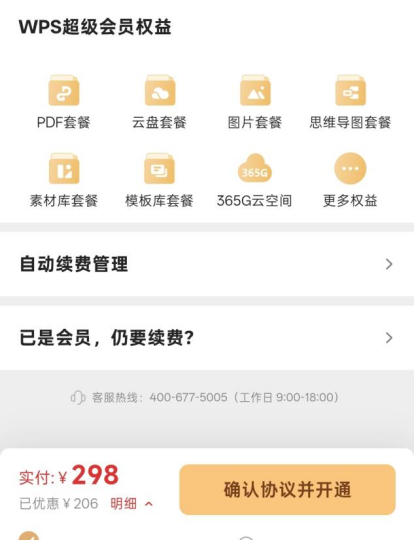
What angers users even more is that basic operational functions like bulk cache clearing have been reclassified as premium features. Free users can only manually delete cache files one by one, yet WPS cache files often occupy tens of gigabytes on system drives—effectively filling up users' hard drives before selling cleanup tools.
On the Heimao Complaints platform, as of June 2026, WPS-related complaints have surpassed 11,000, with nearly half pointing to issues like automatic renewal, mismatched benefits and promotions, and fragmented feature pricing.
Behind each complaint lies the disappointment of a specific user. Some have calculated that to access full PDF processing, ample cloud storage, an ad-free experience, and complete AI capabilities, one would need the highest-tier grand membership plus certain additional services, resulting in annual costs that are far from low.
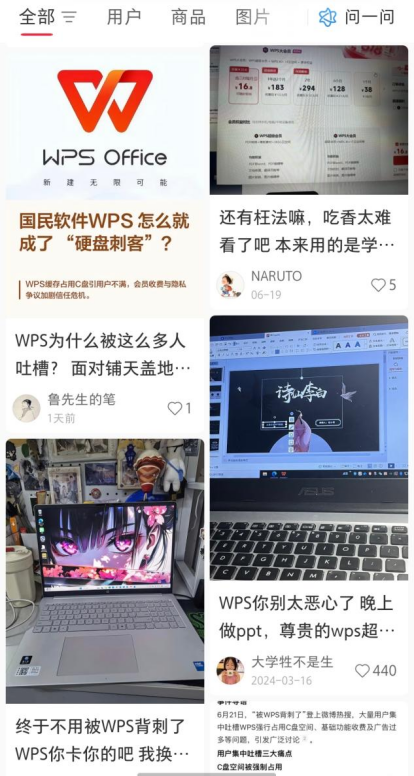
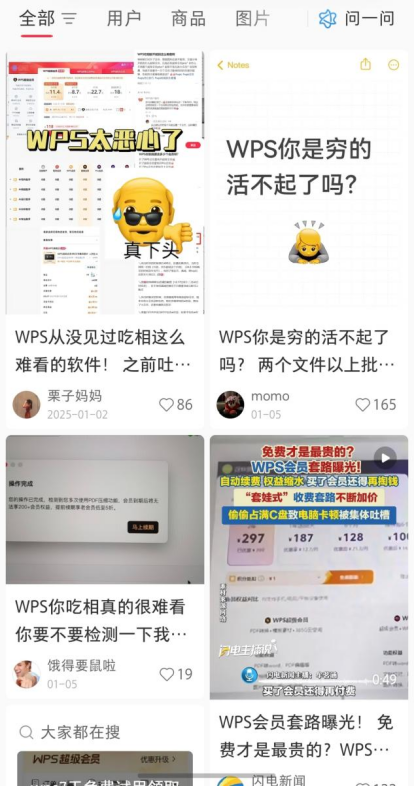
The complexity of membership systems should not test user patience. When a company dominates the domestic office market, its pricing strategies transcend mere internal business decisions.
In the Era of Large Models Embedded in Office Tools
WPS Cannot Claim a Monopoly
WPS's current market position did not come easily.
From its first release in the 20th century to resisting pressure from international giants, then seizing opportunities in mobile internet and domestic substitution to reach 678 million monthly active devices globally, this achievement results from technological iteration and user choice.
With greater scale comes greater responsibility. Dominant products naturally carry a public attribute. Users rely on WPS to open documents and process spreadsheets, with many workflows deeply tied to this tool. This dependency should not become a pretext for layered price hikes, nor should users feel passive about being "unable to work without you, so you can charge whatever you want."
Globally, AI office commercialization also proceeds cautiously. Microsoft Office is transitioning from traditional perpetual licenses to subscriptions. Users can purchase software outright or subscribe to Microsoft 365 for continuously updated office services. Unlike WPS, complaints about Microsoft 365 focus more on interface and feature design than its pricing structure. Overall, its subscription model remains relatively simple, with most core features included in unified plans. In other words, the boundaries between paid and free features are clear and non-interfering.
Microsoft also plans to merge consumer and enterprise versions of Microsoft Copilot into a unified AI assistant product. Users will no longer need to switch Copilot experiences based on subscription type. The new platform will integrate personal productivity assistants, team collaboration functions, and enterprise-grade data security controls, enabling the same AI assistant to handle personal scheduling and email drafting while performing enterprise-level data analysis, report generation, and business process automation.
In contrast, WPS appears to use AI as leverage for user upgrades. Many new features, such as image-to-formula conversion, are prioritized for higher-priced members. While this strategy may boost short-term revenue, it risks eroding brand goodwill over time. Many users choose WPS to support domestic software and are willing to pay for quality products, but they resent being tricked, fragmented, or milked layer by layer.
Given its massive user base, WPS seems to hold absolute pricing power, with certain new AI capabilities warranting additional fees. The security derived from market share can easily make companies forget how they got there.
However, WPS's issues reflect not just a company's pricing controversy but a structural dilemma facing the entire AI office industry.
The Entire Industry is Now Trapped in a Structural Conflict Between Commercialization and Affordability
Is WPS's problem solely due to its "dominant position" exacerbating issues?
No. Embedding large models into office tools does require significant computational investment. Many features rely on server clusters, and Kingsoft Office's daily call volume (invocation volume) of 200 billion tokens corresponds to enormous bandwidth and computational costs. From a business perspective, setting independent prices for high-cost services is commercially justifiable.
The real issue lies in boundaries and pacing.
Currently, the entire industry is caught in a contradiction. On one hand, AI technology is being deployed rapidly, with high user acceptance as companies race to establish positions. On the other hand, computational costs remain prohibitive, making free models unsustainable for large-scale AI usage, forcing commercialization. Nearly every AI office company faces the same calculation: computational costs won't drop soon, so offering free AI services means operating at a loss; charging too aggressively risks alienating users.
Many companies have thus chosen the same path: stripping AI features from existing membership tiers and pricing them separately while gradually moving some legacy features behind paywalls to generate incremental revenue from existing entitlements. Users perceive this as legacy features shrinking while new ones demand extra payment—a double squeeze on their wallets.
This approach seems prudent but confuses two concepts. Basic office capabilities are users' rigid needs and the product's foundation; AI value-added services are efficiency tools and optional consumption. Their pricing logics differ fundamentally. The affordability of basic features underpins the product's user scale.
Theoretically, AI service commercialization should not undermine this foundation. Narrowing originally free basic features to create paid space for AI services essentially shifts costs from new businesses onto existing users.
In the long run, equitable affordability is the trend for digital tools. Office software is not a luxury; it's infrastructure for countless daily workflows. A product covering hundreds of millions of users should balance commercialization with affordability, ensuring ordinary users can access basic functions while providing clear upgrade paths for those willing to pay for efficiency. Tiered pricing is fine; nesting doll pricing is the problem. Charging is fine; unclear boundaries are the problem.
In many users' eyes, healthy commercialization means users perceive value and willingly pay, rather than being forced to pay due to feature fragmentation.
The choices of 678 million users represent WPS's greatest asset—and its heaviest responsibility. At this AI transformation crossroads, the company faces revenue pressures while users expect a certain experience. A balance can be struck: simplify membership tiers, clarify benefit boundaries, restore basic features to free users, and reserve AI value for paying users. Let each group get what they need without interference.
-
![]()
Doubao Starts Charging: Does ByteDance Face Commercialization Pressure?
-
![]()
HK$340 Billion Wiped Out in 4 Months, Founder Takes 'No Salary' Pledge: What’s Ailing MiniMax?
-
It's Time to Tally the ROI for Tokens
-
![]()
WPS, with 678 Million Users, Seeks Equilibrium Between Revenue Growth and User Experience
-
![]()
Seres, Once a Profit Leader, Shifts from Gains to Losses in H1: It’s Not Entirely Huawei’s Fault | MIRROR Pro
-
![]()
Why Google Remains 'Others' After 16 Years in the Smartphone Business
-
![]()
The Theory of Distillation Threat
-
![]()
Iterative Communication in Automotive Electronics: ADI's Innovative AB, GMSL, and EB Solutions