Musk Throws Another Ace! SpaceX Applies to Launch 100,000 Satellites to Build a Global AI Communication Infrastructure
 07/08 2026
 621
621
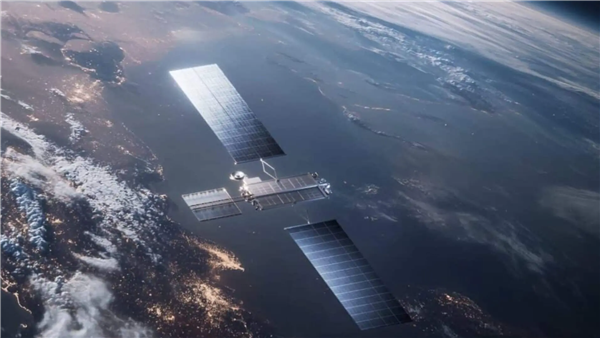
Kuaikeji, July 8 - According to documents disclosed on the official website of the U.S. Federal Communications Commission (FCC) and reports from multiple media outlets, SpaceX formally applied to the FCC this week for approval to launch and operate a third-generation (Gen3) satellite constellation composed of 100,000 satellites.
This system is described by SpaceX as 'a powerful, resilient, and ubiquitous communication infrastructure' with 'the capacity to carry most of the world's internet traffic,' targeting the global communication foundation for the AI era.
The third-generation constellation will be deployed in two thin, closely stacked orbital shells. The first group has a nominal altitude range of 323 to 327.5 kilometers, while the second group ranges from 473 to 477.5 kilometers.
SpaceX has applied for orbital inclinations ranging from 26 degrees to 96.9 degrees, with the latter approaching a sun-synchronous orbit to allow flexible orbital design adjustments based on coverage needs, polar regions, and traffic distribution across different markets.
In terms of frequency resources, SpaceX is further applying to expand into the undeveloped W-band and D-band between 92GHz and 275GHz, in addition to its already authorized Ku, Ka, V, and E bands. SpaceX explained in its application that 'providing capacity for billions of people and AI-driven devices worldwide requires a significant expansion of backhaul capabilities.'
This is not SpaceX's first large-scale satellite internet deployment. Its second-generation Starlink constellation has been authorized for approximately 12,000 satellites, with over 7,000 currently in orbit.
The 100,000-satellite scale of the third-generation constellation represents a nearly tenfold expansion compared to the second generation, signifying SpaceX's transition from a satellite internet provider 'connecting remote areas and in-flight Wi-Fi' to an underlying infrastructure carrying global internet traffic.
For SpaceX, the third-generation constellation application also provides foundational support for its AI business. The company previously acquired Anysphere, the developer of the AI programming application Cursor, for $60 billion, and its Grok large model is undergoing rapid iteration.
The space-based network of 100,000 satellites will provide low-latency data transmission channels for Grok and future AI services worldwide, forming a closed-loop ecosystem of 'space communication + ground AI.'
The FCC's approval progress will be key to determining whether this ambitious plan can be realized. Meanwhile, SpaceX's Starship launch capabilities are rapidly maturing, and if approved, its capacity to launch thousands of satellites annually will provide engineering feasibility for the deployment of the third-generation constellation.
-
Alibaba’s Earnings Soar with Triple Catalysts: Full-Stack AI Hits Maturity, Capital Efficiency Drives Sustainable Growth
-
![]()
Raking in Big Profits Overseas! Chery’s Overseas Revenue Makes Up 70% in H1, with Gross Margin Climbing to 16.1%
-
![]()
Alibaba’s New Fiscal Quarter: 45% Revenue Surge in Alibaba Cloud, Enhanced Profitability in AI Cloud, but Widening Losses in the Application Layer
-
![]()
The AI Version of 'PayPal Mafia' Has Arrived: 20 AI Startups Raise Over $4.6 Billion in Funding
-
![]()
Wang Jian's Vision: Paving a Pathway for Alibaba Through AI
-
![]()
Hyundai Motor Workers Strike Today, Fearing Job Losses to Robots
-
![]()
Embracing 'Light': O-film Unveils Its 'Illuminating the Future' Strategy
-
![]()
SenseTime’s SenseNova U1.5 Lite Goes Open Source: Ushering in a New Era of Predictable AI Image Generation