Did the US Really Film Its Moon Landing in a Studio? 57 Years On, Doubts Persist, but the Irrefutable Evidence Lies Beyond the Photos
 08/03 2026
 478
478
If the 1969 moon landing footage had indeed been staged in a studio, the forgers would have faced an insurmountable challenge. They would have needed to not only fool the global audience but also somehow transport equipment to the moon, fabricate hundreds of kilograms of rocks capable of withstanding decades of scientific scrutiny, and, most implausibly, secure the silent cooperation of Cold War adversaries.
On July 20, 2026, it will mark 57 years since the historic Apollo 11 moon landing. Even now, some continue to scrutinize the footage, questioning the 'waving flag' and the 'starless sky.' Yet, determining the authenticity of such a monumental event cannot hinge on debating a single photograph. Instead, one must assess whether independent lines of evidence converge to support the same narrative.
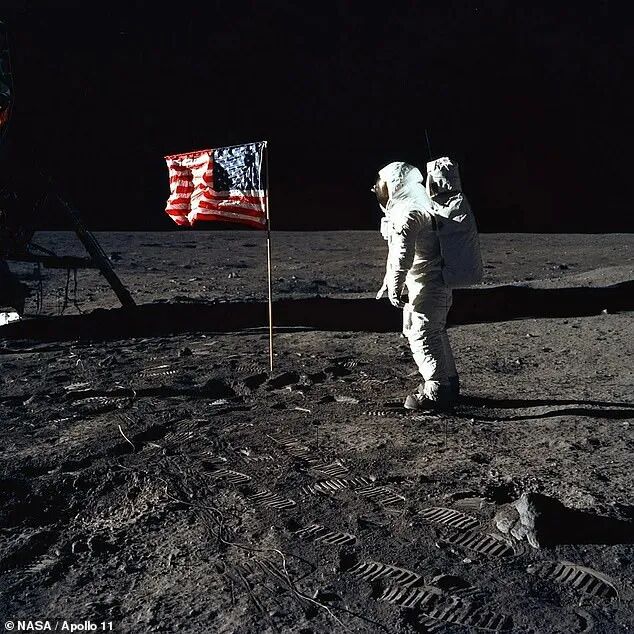
In July 1969, Armstrong and Aldrin achieved humanity's first manned lunar surface exploration in the Sea of Tranquility.
First Piece of Evidence: Lunar Surface Relics Revisited
The Lunar Reconnaissance Orbiter (LRO), which entered lunar orbit in 2009, has captured detailed images of multiple Apollo landing sites. These photographs clearly reveal the descent stages of the lunar modules, scientific instruments, and paths disturbed by astronauts' footsteps and the lunar rover. Given the moon's lack of wind and rain, these traces are expected to endure for centuries.
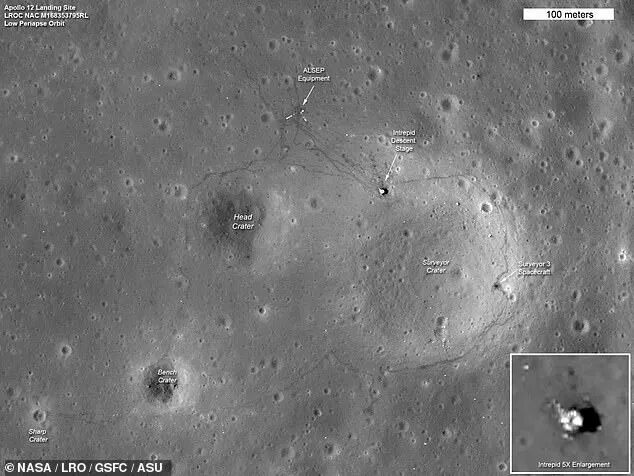
The annotated image displays the descent stage, experimental equipment, the Surveyor 3 probe, and the paths formed by the astronauts' movements.
While these orbital photos originate from US missions and might not sway the most skeptical observers on their own, their significance lies in their perfect alignment with ground photos, activity routes, and instrument coordinates from the Apollo missions. Moreover, several other pieces of evidence do not rely on these images.
Second Piece of Evidence: The Lunar 'Mirror' Still Reflects
Apollo 11 deployed an array of 100 corner reflectors on the lunar surface, with Apollo 14 and 15 leaving similar devices. Observatories worldwide have been firing short laser pulses at these designated coordinates and measuring the return time, continuously obtaining precise Earth-moon distance data. This research has revealed that the moon is moving about 3.8 centimeters farther from Earth each year.
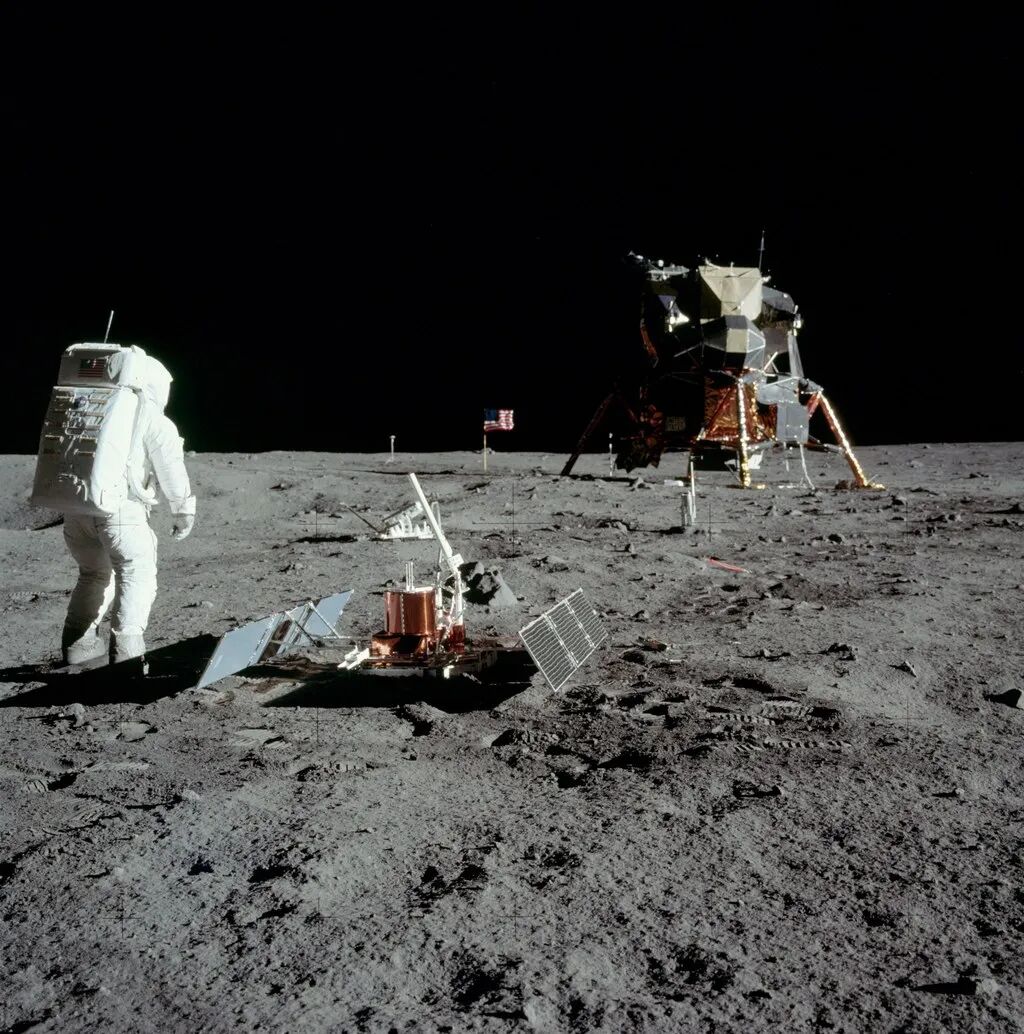
The foreground equipment includes the seismic experiment and laser ranging reflector deployed by Apollo 11.
It's important to note that Soviet unmanned lunar rovers also placed reflectors on the moon. Thus, the fact that 'laser light returns' only proves that the equipment is indeed on the lunar surface. However, when combined with deployment photos, mission records, and precise coordinates, it forms a more complete chain of evidence.
Third Piece of Evidence: 382 Kilograms of Lunar Rocks Endure Global Scrutiny
The six Apollo missions brought back a total of 2,196 samples weighing 382 kilograms, including about 21.5 kilograms from Apollo 11. These samples were distributed to different countries and institutions for research, revealing characteristics from vacuum exposure, micrometeorite impacts, and solar wind interactions. New findings continue to emerge more than half a century later.
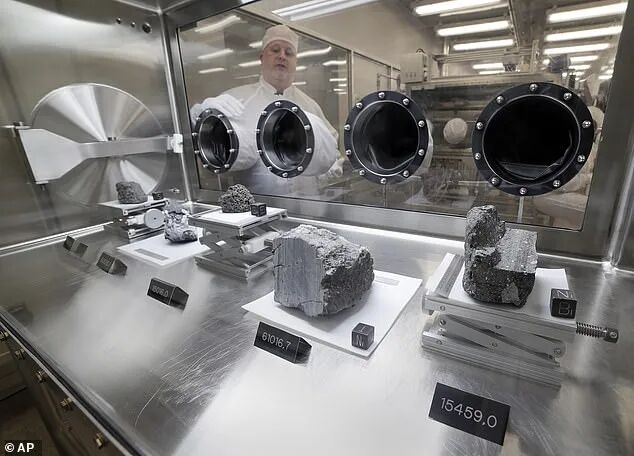
Apollo samples are stored long-term by number, with some materials only opened after analytical technology matured.
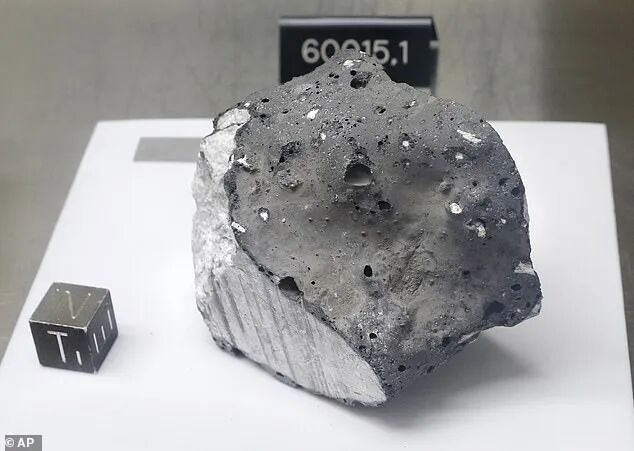
The minerals, isotopes, and exposure history of the lunar rocks can be cross-compared with lunar meteorites and subsequent unmanned sampling missions, further validating their authenticity.
Another Compelling Piece of Circumstantial Evidence: The Opponent Was Listening
The Jodrell Bank Observatory in the UK used radio equipment to track the Eagle's descent while also monitoring the Soviet Luna 15. The Soviets possessed both the technical capability and strong motivation to expose any US fraud but never produced observational evidence to support such claims. The fact that tens of thousands of personnel, global ground stations, open communications, and sample studies have all maintained a consistent story for 57 years without leaving verifiable flaws is far more difficult to fabricate than completing the mission itself.
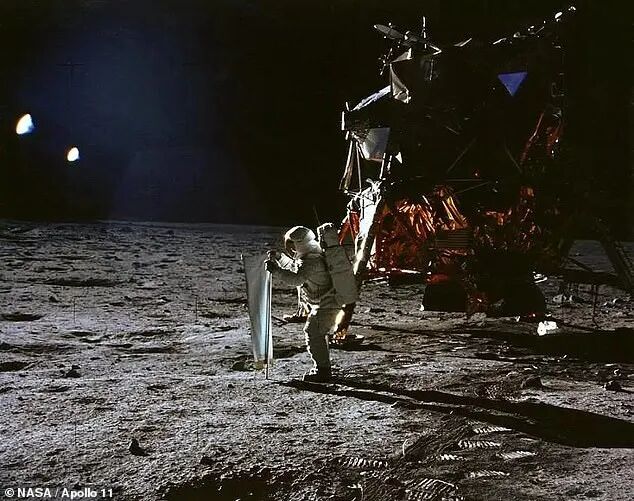
The lunar surface and white spacesuits are brightly illuminated by sunlight. When the camera uses a short exposure, the much dimmer starlight will not appear in the photos.
As for the flag, it is propped open by a crossbar, and the turning motion during planting caused the fabric to sway briefly. Without air resistance, this motion decays even more slowly. Non-parallel shadows can be attributed to perspective and uneven ground.
Thus, the answer does not lie in some 'perfect shot.' The moon landing is credible because the relics, lasers, lunar rocks, radio records, and mission archives all interlock seamlessly. To overturn this consensus would require a new model capable of simultaneously explaining all the evidence and aligning more closely with the facts. To this day, such a model has not emerged.
-
![]()
Intelligent Driving at a Crossroads: The Divergence and Convergence of Underlying Architectures
-
![]()
Amazon Steps into the Direct-to-Device (D2D) Satellite Arena! But the Industry Needs a Reality Check
-
![]()
Trinity: ByteDance Dismantles ToB 'Departmental Barriers'
-
[Insight] Continuous Benefits for Upstream and Downstream of the Industrial Chain, Growth Potential for Full-Spectrum Ellipsometer (TFE) Industry Expected to Expand
-
![]()
20 Days Post-Meizu Departure, He Reunites with His Original Team
-
![]()
MiniMax, Desperately Swimming Across the Killing Line|WAVE
-
![]()
The Era of 'Equal Rights for Fuel and Electric Vehicles' Dawns: New Energy Vehicles Bid Adieu to 'Tax-Free Days'
-
![]()
Pengcheng Debuts to Cheers, Yet Xiaomi’s Stock Tumbles 7.28%: Can Its Foray into Extended-Range Vehicles Spark a Second Growth Surge?