“2025 Is Still Ongoing, Yet 2026 Looms with Menace”
 12/08 2025
 522
522
Introduction
China's auto market is increasingly taking on the ferocious characteristics of a 'beast'.
Recently, I had the opportunity to conduct interviews with executives from several emerging automotive forces.
On one hand, I genuinely feel elated for each company as they steadily get on track. On the other hand, through the words of these leaders, I also sense the immense pressure and challenges emanating from the terminal market.
In China's auto market, one can never afford to let their guard down. Today's article endeavors to piece together fragmented information and offer several perspectives on China's auto market in the coming year.
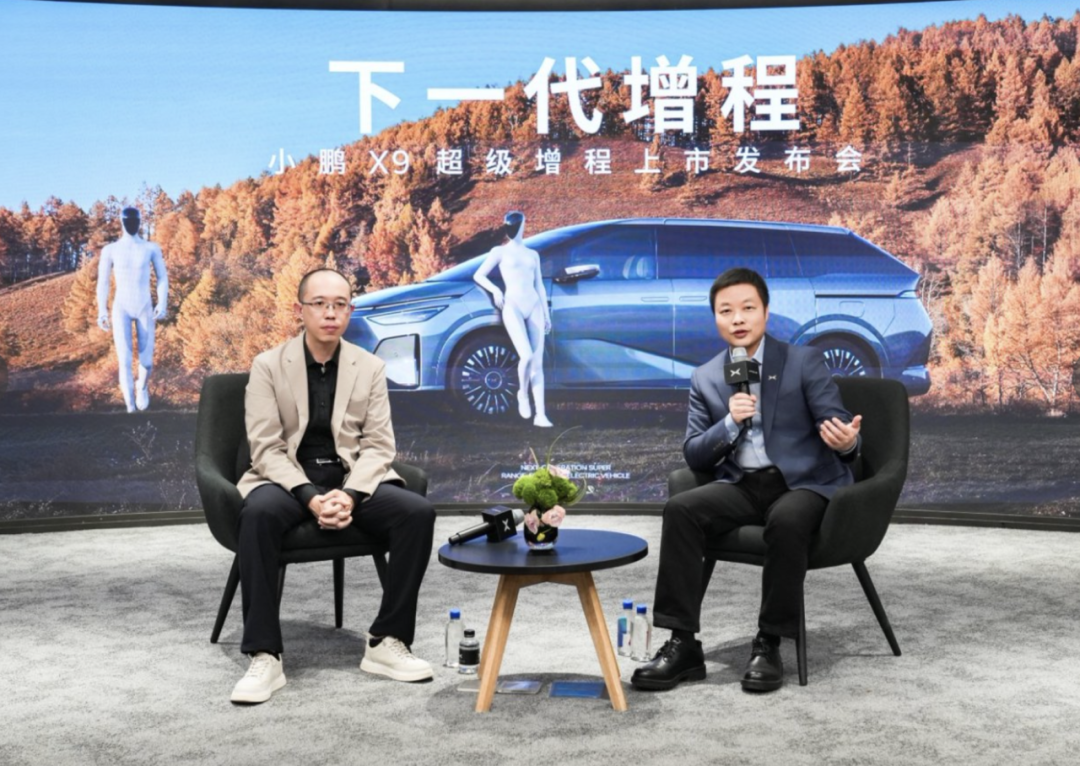
'I believe every automaker is trembling with caution, yet everyone aspires to achieve steady and long-term growth. A year ago, it was difficult to foresee the current changes, and a year from now, it will still be challenging to predict. I feel there are particularly numerous uncertainties. The only certainty is that competition will become even more brutal and bloody.'
After the launch event of the Xiaopeng X9 Extended Range Version on November 20th, when asked by the media about his views on the market landscape next year, He Xiaopeng responded with the aforementioned statement.
During a media briefing the day after the release of the third-quarter financial report, Li Bin was also posed a similar question and promptly shared his perspective: 'I concur with Mr. Xiaopeng's view. Every year, the intensity of competition in China's auto market has been escalating. Which year hasn't been marked by fierce competition? Which year hasn't been ruthless? Perhaps true stability won't be achieved until 2035.'
Combining their insights, the core message can be distilled to: 'Regardless of whether they are joint ventures or domestic automakers, all OEMs should abandon any illusions. The fierce battle next year will only intensify.'
In fact, based on current known product plans, almost every market segment will be inundated with new products. Take the large six-seater SUV segment as an example; it was already deemed to have reached 'extreme' competition with over a dozen 'newcomers' flooding in this year.
Unexpectedly, next year will witness even more intense competition as truly significant players like Li Auto, Xiaomi, NIO, and Harmony Intelligent Mobility continue to iterate and launch new models.
Against this backdrop, it is inevitable that many players will become 'cannon fodder'. Similar scenarios will repeatedly unfold across various segments of China's auto market.
'Currently, it's very challenging to achieve a decisive victory with a single move. Having a core technology lead for a year is already remarkable. Take our fully active suspension, for example; it can lead for at most a year and a half. Returning to the fundamental rules of this industry, it's a long-term marathon. Ultimately, it's about comprehensive capabilities without any weaknesses. If you can be just one or two percentage points more efficient in everything you do, you'll ultimately be three to five percentage points ahead of others. This is the difference between an exceptional company and an ordinary one. Ultimately, you have to build strong fortifications, engage in protracted battles, and make steady progress day by day.'
In less than two hundred words, Li Bin shared a profound perspective on the current overall market. The most crucial takeaway can be summarized as: 'Next year's Chinese auto market will see no swift wars, only wars of attrition. The time for truly testing multi-dimensional resource reserves has arrived.'
In a subsequent interview, Li Bin also expressed a sense of helplessness: 'Due to the early phase-out of trade-in subsidies this year, the fourth-quarter tail-end effect has vanished. Except for the all-new ES8, Firefly, and ET9, sales of our other products have been affected to varying degrees.'
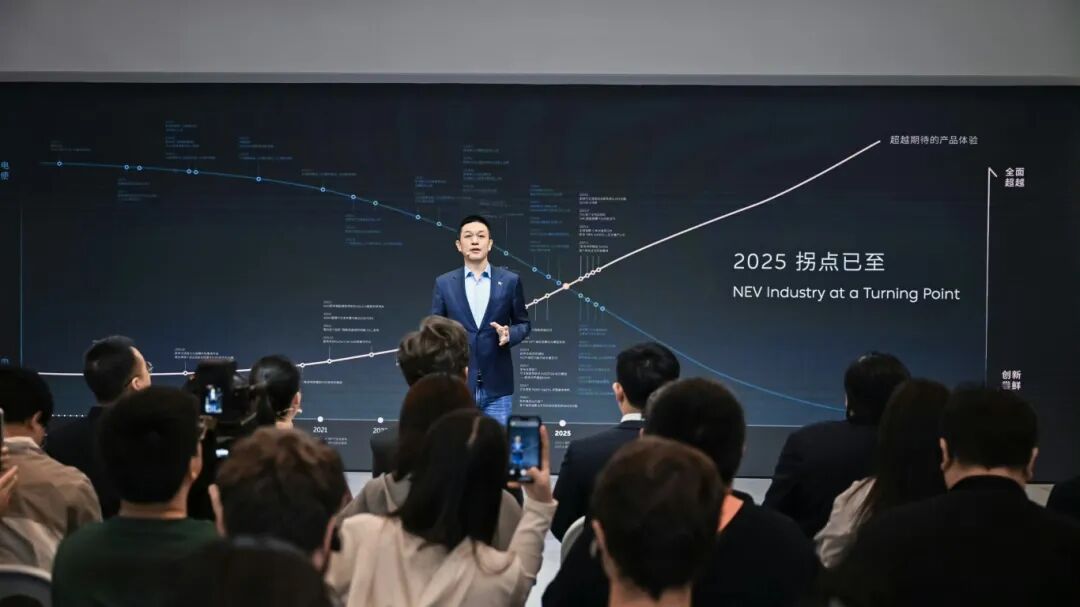
This also explains in advance why NIO's delivery volume in November saw a month-on-month decline, failing to break through the 40,000-unit mark again. Taking a broader view, in fact, from November 1st to November 23rd, national passenger car retail data also showed year-on-year and month-on-month declines.
As of now, there are no signs of improvement in the cooling market.
Although leading players like BYD, Geely, and Harmony Intelligent Mobility continue to dominate and sprint ahead based on this week's sales results, it is more evident that mid-tier and lower-tier OEMs are struggling to maintain their market shares and prevent rapid shrinkage.
Faced with this situation, one can't help but sigh with emotion again: 'The era of rapid growth in China's auto market has ended, and instead, a somewhat daunting era of existing market competition has arrived.'
Looking further into the new energy vehicle segment, with the complete phase-out of trade-in subsidies and the overall halving of purchase tax subsidies, the market cooling is likely to intensify.
If the absence of a fourth-quarter tail-end effect this year has already given everyone a chill, then the first quarter of next year will truly be a difficult winter.
On one hand, the external survival environment continues to deteriorate; on the other hand, the internal demand for survival intensifies. The irreconcilable contradictions in China's auto market are becoming increasingly prominent.
Ultimately, the likely outcome will be the continuous escalation of 'price wars' and further concentration of industry resources towards top-tier players. To borrow the words of another OEM executive, 'The true winnowing has begun.'
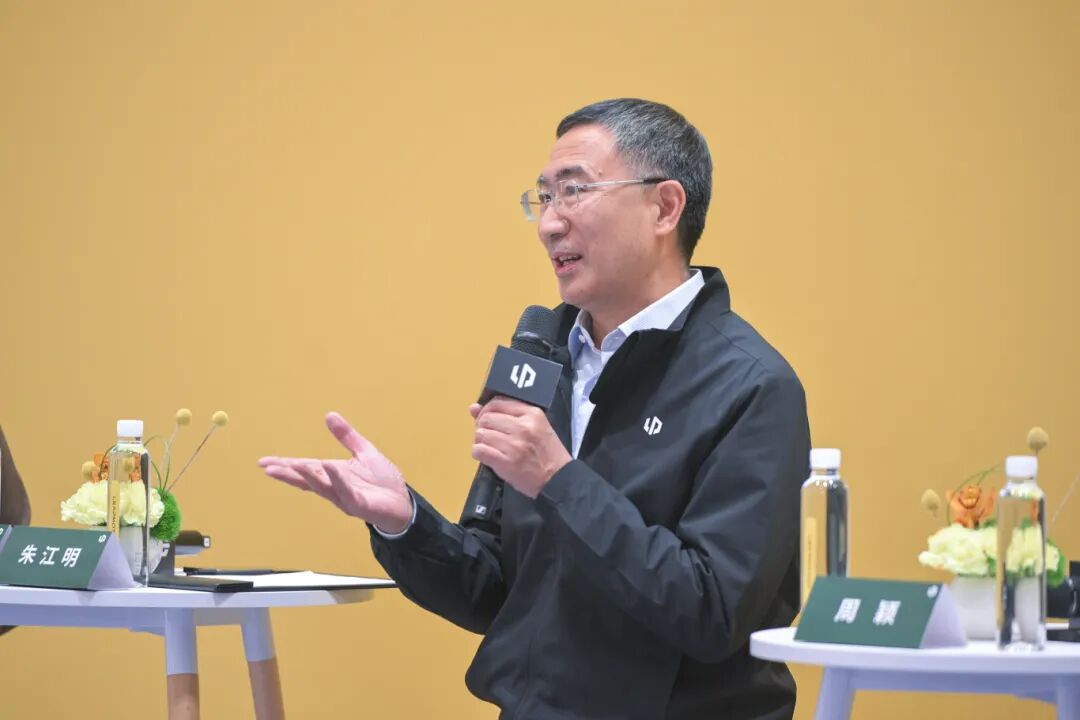
This also leads to the next topic. During an interview after the launch of the Leapmotor Lafa5, Zhu Jiangming reiterated Leapmotor's determination to strive for 1 million units in sales next year.
'Although the phase-out of subsidies has had a certain impact on terminal demand, I believe the overall volume of China's auto market will remain largely unchanged next year. The penetration rate of new energy vehicles is estimated to increase by another 5%-10% compared to this year. For us, the current models on sale need to strive for incremental growth on top of the existing 500,000-unit base, while the remaining portion will be covered by several other new models.'
As we all know, Leapmotor achieved its initial target of 500,000 units 45 days ahead of schedule this year, thanks to the outstanding contributions of several popular models in its B and C series.
Next year, this new automotive force will launch several new models under its A and D series following the Lafa5. Once fully expanded, its in-sale product matrix will reach double digits, providing it with absolute leverage to pursue higher sales targets.
Although rationally and objectively speaking, considering the 'million-unit curse' that has occurred multiple times in the past, Leapmotor's path to success will certainly not be smooth sailing. However, at this current juncture, it at least possesses the confidence and probability to reach this significant milestone.
The tactical approach adopted by this new automotive force undoubtedly reinforces another truth: 'Since China's auto market has entered an era of existing market competition next year, OEMs must maintain and expand their market shares by increasing the frequency of their new product launches, not just for sales volume but also for brand visibility.'
Of course, this does not advocate for blindly 'having more children to fight battles'.
Instead, it calls for everyone to innovate from the user's perspective with higher efficiency, precise positioning, sincere pricing, and platform advantages.
Coincidentally, during the conference call after the release of the third-quarter financial report, He Xiaopeng personally revealed that seven extended-range models would be introduced next year. According to leaks, the entire Harmony Intelligent Mobility will launch over 20 new models next year, not to mention domestic giants like BYD and Geely, which are certain to launch a saturated attack on the product side.
Almost all automakers are trying to bet on the qualitative change brought about by quantitative change.

However, Li Bin expressed a different viewpoint: 'We will only have three models next year. I don't believe in constantly launching new models. Look at this year; we sold well with just two models. It's not necessary to be so dense, and the team might not be able to handle it. Now, we should spread it out more evenly. Previously, we launched a generation of cars within a relatively short period, which might not be the best approach.'
So, which path leads to victory? Time will eventually provide the most authentic feedback.
Meanwhile, from the sales fluctuations of the Leapmotor L90 in November, I've also realized another truth: 'The leading cycle and harvesting window for a strong product won't last long, perhaps at most three months or so. Pursuers will soon catch up and use every means to erode your advantage.'
At this point, as the article nears its end, through recent interviews with executives from several new automotive forces, I've undoubtedly gained a deeper understanding of the current situation. Summarized, just like today's headline says, '2025 is still ongoing, yet 2026 looms with menace.'
China's auto market is increasingly taking on the ferocious characteristics of a 'beast'. As the year-end approaches, for OEMs, after a brief respite, they must immediately dive into a new round of fierce competition.
The reality is just that harsh.
Editor-in-Chief: Shi Jie Editor: He Zengrong
THE END
-
![]()
Model Giant Jieyue Xingchen Steps into Smartphone Arena: A Strategic Alliance with Huaqin Technology
-
![]()
Big Model Firm Dives into Phone Market: StepFun and Wingtech Forge a ‘Dynamic Duo’
-
![]()
Zhongrun Optics Makes a Bold Move with 1 Billion Yuan Investment: Is a Turning Point on the Horizon for the Precision Optics Industry?
-
![]()
Deploy CLBO Crystals and YIG Single Crystals! Erythritol Leader Invests 30 Million in Youwei Optoelectronics
-
CXMT’s July 16 Subscription: Leading Domestic Memory Manufacturer—What’s the Earning Potential per Lot?
-
![]()
Rhythm Discrepancy and Premium Value Erosion: Foreign Luxury Brands Must Re-evaluate Their China Strategy
-
![]()
Half-Year, 1 Billion Yuan Financing, 7 Billion Yuan Valuation: A New Dark Horse Emerges in the Embodied AI Sector
-
![]()
Strong Rebound for Tech Stocks in Hong Kong Stock Market: Is It Time to Bottom-Fish?