Xiaoju Charging Rebrands to Didi Charging, Intensifying the “Charging Station” Competition
 12/08 2025
 664
664
Introduction | Lead
Recently, Xiaoju Charging has undergone an official rebranding to “Didi Charging.” It is not only declaring market dominance with the bold claim “7 out of 10 electric vehicle owners use Didi Charging” but also making a formidable entry, boasting a network density that spans 270 cities and encompasses 62,000 charging stations nationwide. With an impressive 97% station availability rate and innovative services like “compensation for interrupted charging,” Didi is poised to redefine the industry. As Didi solidifies its energy service positioning through brand integration, does this signal a shift in the charging industry’s competitive core—from merely having charging stations available to a platform-based operations era focused on “using quality stations and smart electricity”?
This article is produced by | Heyan Yueche Studio
Written by | Cai Yan
Edited by | He Zi
Full text: 1,797 characters
Reading time: 3 minutes
As charging stations become a common sight on streets, the industry’s competitive landscape has quietly transformed. The transition from Xiaoju to Didi represents far more than a mere name change; it signifies Didi’s strategic preparation to launch a comprehensive offensive in the latter half of the charging service competition, catering to an increasingly mature and discerning market.
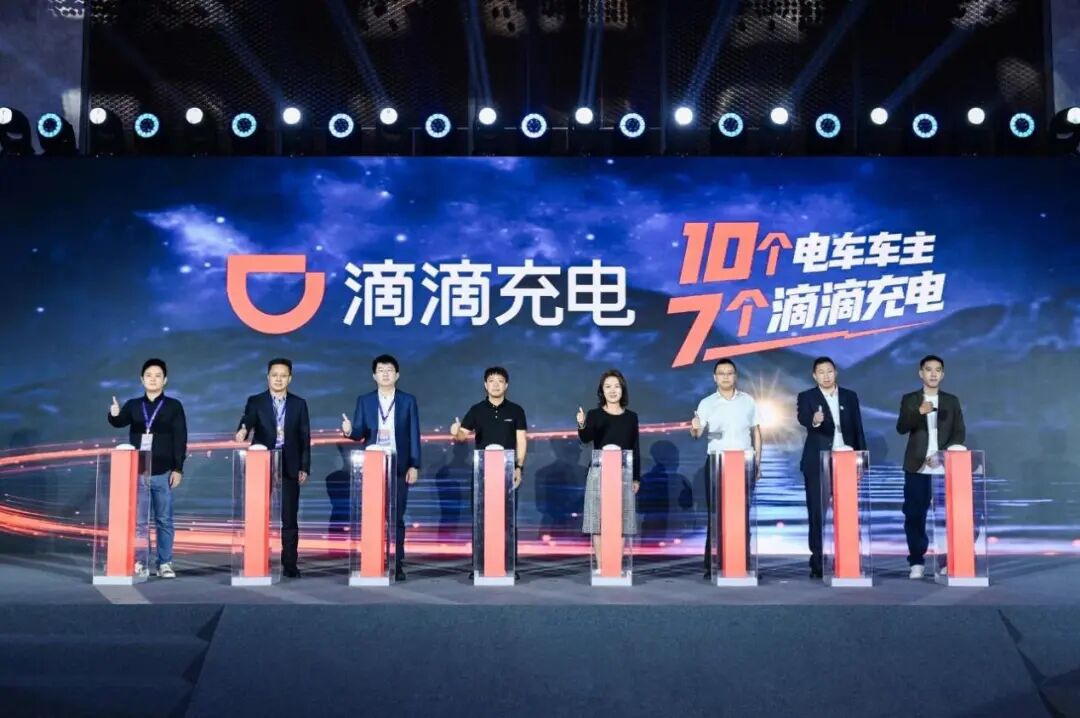
△ Xiaoju Charging Upgrades to “Didi Charging”
“Xiaoju” Steps Out from Behind Didi’s Shadow
Xiaoju Charging was established in 2018 with a mission to “charge for a better and sustainable world.” As a digital and intelligent charging operator under Didi, its initial strategic focus was to provide convenient, safe, and efficient charging services for new energy ride-hailing vehicles on the Didi platform through a nationwide charging network. Over its seven-year journey, Xiaoju Charging’s development can be clearly segmented into two phases.
In its early days, the company primarily catered to ride-hailing drivers within the Didi ecosystem—a user base with exceptionally high demands for charging efficiency, affordability, and convenience. Their frequent usage and immediate feedback provided Xiaoju Charging with invaluable data to refine its operational systems and service standards.
As it entered the expansion phase, Xiaoju Charging began to broaden its horizons, targeting the wider market of private car owners. By integrating third-party charging stations through a platform model, it constructed a nationwide charging network. By the time of its brand upgrade, Xiaoju Charging’s services had extended to over 270 cities and more than 62,000 charging stations across China. Data reveals that from January to July 2025, its charging volume share consistently ranked among the top three in the industry, and it was the only enterprise in the top tier to sustain positive growth in market share.
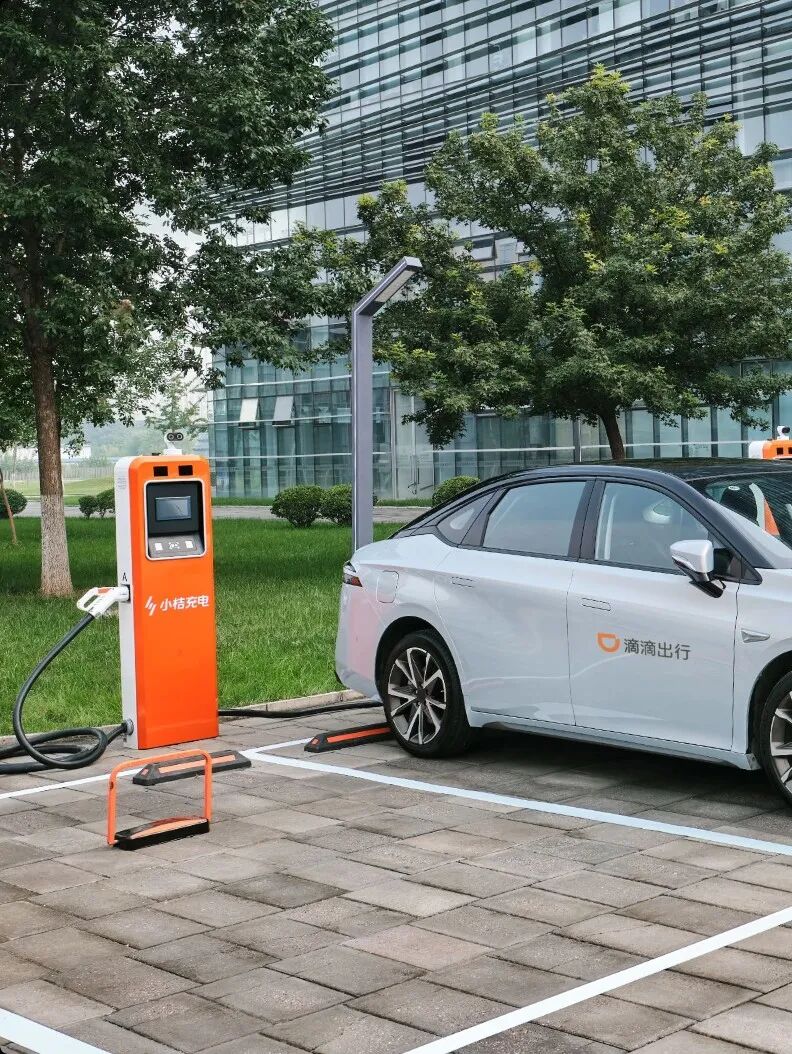
△ Xiaoju Charging’s Charging Volume Share Remains in Top Three
The rebranding from “Xiaoju Charging” to “Didi Charging” is not a simple logo change but a profound redefinition of Didi Charging’s positioning and strategic trajectory. For many new energy vehicle owners, “Didi” is already a ubiquitous app and a symbol of trust in the mobility sector. When they need to charge, opting for “Didi Charging” becomes a natural choice driven by familiarity and trust in the platform. This seamless transition of user mindset from “mobility” to “charging” represents a competitive edge that other pure charging operators struggle to replicate.
The upgraded Didi Charging introduces a four-dimensional experience enhancement framework: “easy to find, easy to charge, fast, and safe.” For each dimension, Didi Charging has made specific, quantifiable commitments:
- Easy to find: Promises “a charging station within 3 kilometers.”
- Easy to charge: Guarantees a charging station availability rate exceeding 97% and pioneers an industry-first “compensation for interrupted charging” service to address the pain point of “interrupted charging.”
- Fast: Reduces the average start-up time to around 10 seconds through the “rapid start” function and increases charging speed by an average of 8% with the “accelerated charging” service.
In recent years, the charging industry has resembled a “land grab,” with companies vying for scale and coverage. However, today, when charging stations are no longer a scarce commodity, the industry’s competitive focus has shifted from “station density” to the matching efficiency between “stations and people.” Thus, “Didi Charging” is poised to spearhead a new era of market competition.
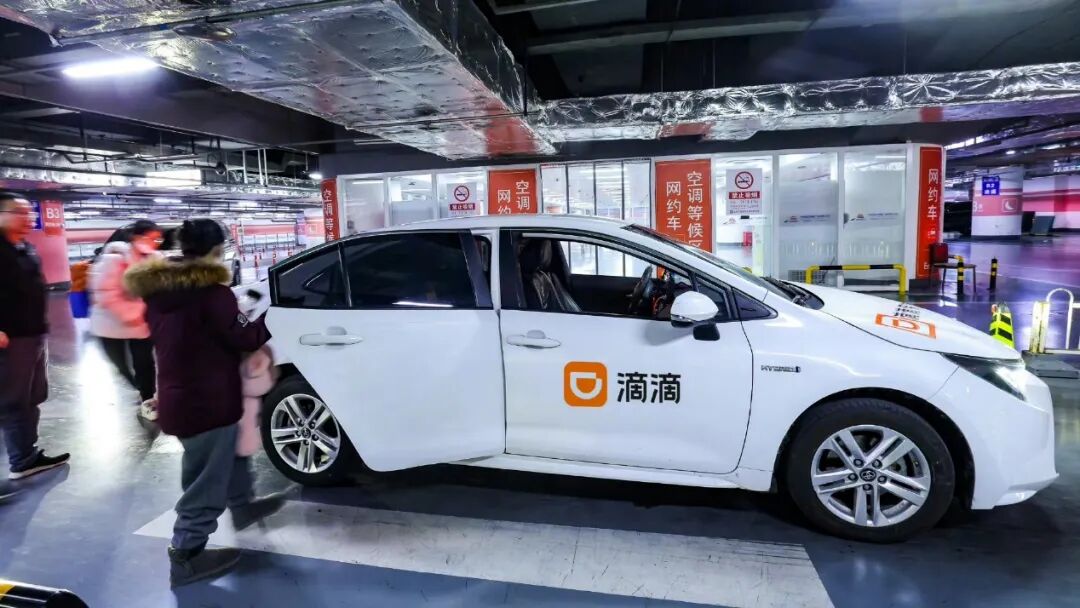
△ “Didi” Dominates the Mobility Sector
Why the Upgrade?
What drives Didi Charging’s eagerness to rebrand? The development of China’s electric vehicle charging infrastructure has reached a pivotal juncture where quantity and quality are equally paramount. By the end of September 2025, the total number of electric vehicle charging facilities in China had soared to 18.063 million, marking a year-on-year increase of 54.5%. From a structural perspective, public and private charging facilities collectively form this expansive charging network.
Notably, the total rated power of public charging facilities nationwide has reached approximately 200 million kilowatts, a 59.2% surge from the beginning of the year, with an average power of about 44.4 kilowatts, a 26.9% increase from the start of the year. Charging service capacity and efficiency have witnessed significant enhancements. During this year’s National Day holiday, new energy vehicles on China’s highways recorded a total of 5.169 million charging sessions, with a charging volume of 123 million kilowatt-hours. The daily average charging volume surged by 45.7% compared to the previous year’s National Day holiday.
Currently, the charging market is transitioning from rapid expansion to high-quality development. On one hand, the number of new energy vehicles continues to soar at a growth rate exceeding 50%, while the construction of new public charging stations has slowed down, with a vehicle-to-station incremental ratio reaching 1:3. On the other hand, the user base is becoming increasingly diverse, with plug-in hybrid models accounting for 30%, bringing a broader spectrum of users into the public charging system. The industry’s polarization is becoming more pronounced, with leading operators continuously expanding their market share through stable service quality and network effects. Didi Charging’s rebranding is a “pre-war preparation” for future competition, aiming to tackle the “three-pronged competition” of user experience, operational efficiency, and ecological synergy.

△ Didi Charging’s Upgrade is a Strategic Move for Future Competition
Commentary
Currently, the charging industry is dominated by two primary models: one is the asset-heavy model, which partners with governments and state-owned enterprises to secure high-frequency scenarios and generate revenue through charging service fees; the other is the platform model, exemplified by Didi Charging, which integrates scattered third-party charging stations through operations and services to earn commissions and traffic value.
As the industry enters its next phase, asset-heavy players are beginning to “lighten up” by focusing on online operations, while platform players are “heavying up” by investing funds to assist merchants in upgrading hardware and jointly constructing ultra-fast charging networks. Looking ahead, the charging market is expected to converge towards an intelligent, networked, and platform-based energy service system. Perhaps Didi Charging will be at the forefront of this transformation.
(This article is original to Heyan Yueche and may not be reproduced without authorization.)
-
![]()
Model Giant Jieyue Xingchen Steps into Smartphone Arena: A Strategic Alliance with Huaqin Technology
-
![]()
Big Model Firm Dives into Phone Market: StepFun and Wingtech Forge a ‘Dynamic Duo’
-
![]()
Zhongrun Optics Makes a Bold Move with 1 Billion Yuan Investment: Is a Turning Point on the Horizon for the Precision Optics Industry?
-
![]()
Deploy CLBO Crystals and YIG Single Crystals! Erythritol Leader Invests 30 Million in Youwei Optoelectronics
-
CXMT’s July 16 Subscription: Leading Domestic Memory Manufacturer—What’s the Earning Potential per Lot?
-
![]()
Rhythm Discrepancy and Premium Value Erosion: Foreign Luxury Brands Must Re-evaluate Their China Strategy
-
![]()
Half-Year, 1 Billion Yuan Financing, 7 Billion Yuan Valuation: A New Dark Horse Emerges in the Embodied AI Sector
-
![]()
Strong Rebound for Tech Stocks in Hong Kong Stock Market: Is It Time to Bottom-Fish?