【Weekly Auto Talk】Great News! Taxation Awaits Car Marketing Bluffs!
 12/15 2025
 659
659
Introduction
The time is nearly upon us.
The days of using tactics like "big-font bluffing, small-font evasion" are finally numbered, along with the frenzied price wars and cutthroat competition that have plagued the industry. This time, it's truly the end.
On Friday, around 9 PM on December 12th, the State Administration for Market Regulation unveiled two crucial documents simultaneously through its official website and authoritative media outlets like People's Daily Online and CCTV.com: the "Enforcement Guidelines for Advertising Citations (Draft for Comment)" and the "Compliance Guidelines for Pricing Behavior in the Automotive Industry (Draft for Comment)." Both are now open for public comment.
The former aims to tackle chaotic advertising practices, such as "big-font attention-grabbing, small-font disclaimer" and the misuse of terms like "number one" in niche markets. It mandates that all cited content must be truthful, accurate, and prominently displayed to prevent false advertising from misleading consumers. The latter seeks to curb "cutthroat" price wars in the automotive sector by banning sales below cost, promoting transparent pricing, and respecting dealers' pricing rights. This shift aims to redirect competition from "price wars" back to "technology and service."
Let's delve into the "Enforcement Guidelines for Advertising Citations" first.
The new regulations explicitly demand that all restrictive conditions be clearly legible, banning tactics like "font shrinking" and "color fading." In the future, using eye-catching phrases like "King of Backlighting," "King of Pure Electric," or "Global Bestseller" on posters, while attempting to evade responsibility with tiny, barely visible disclaimers such as "only a product design goal" or "content for reference only," will no longer fly.

Figure | Actually, the new regulations don't significantly expand upon the existing "Advertising Law." Why don't marketing departments take a closer look at relevant industry norms instead of pushing the boundaries?
This is also a significant blow to marketing departments that thrive on playing "word game champions." In the future, attempting to pass off as advertising champions while claiming "for reference only" when challenged will likely result in fines larger than the text on your posters.
Moreover, titles like "industry leader" cannot be arbitrarily bestowed!
The new regulations directly prohibit such claims in overly niche segments. For example, declaring oneself the "bestseller in the 100,000 RMB range for extended-range new energy SUVs in Week X of Month XX, 20XX" through deep segmentation will now face penalties.
Undoubtedly, manufacturing false superiority through tactics like "I'm the king in this niche segment" will become increasingly difficult in the future.
Compared to the restrictions on deceptive marketing tactics, the "Compliance Guidelines for Pricing Behavior in the Automotive Industry" directly address the current malady plaguing automakers: price wars. It's not that price reductions are forbidden, but rather that price wars should no longer involve "killing the enemy at a cost of 800 to oneself" or relying on sheer size to outlast competitors—a morally bankrupt tactic that drags everyone down.

Figure | Under duress, everyone engages in cutthroat competition, effectively meaning no one is truly competing. Why can't people grasp such a simple truth?
In response to the "bloodbath" price wars in the automotive industry, the new regulations explicitly demand an immediate halt: except for clearing inventory, no sales below cost aimed at eliminating competitors are allowed. This is a direct bucket of cold water poured on "price wars," reminding industry leaders that competition is fine, but stop using "self-destructive moves" that drag the entire industry into a downward spiral. It's time for automakers to shift their focus from "how to outlast competitors" back to "how to build better cars!"
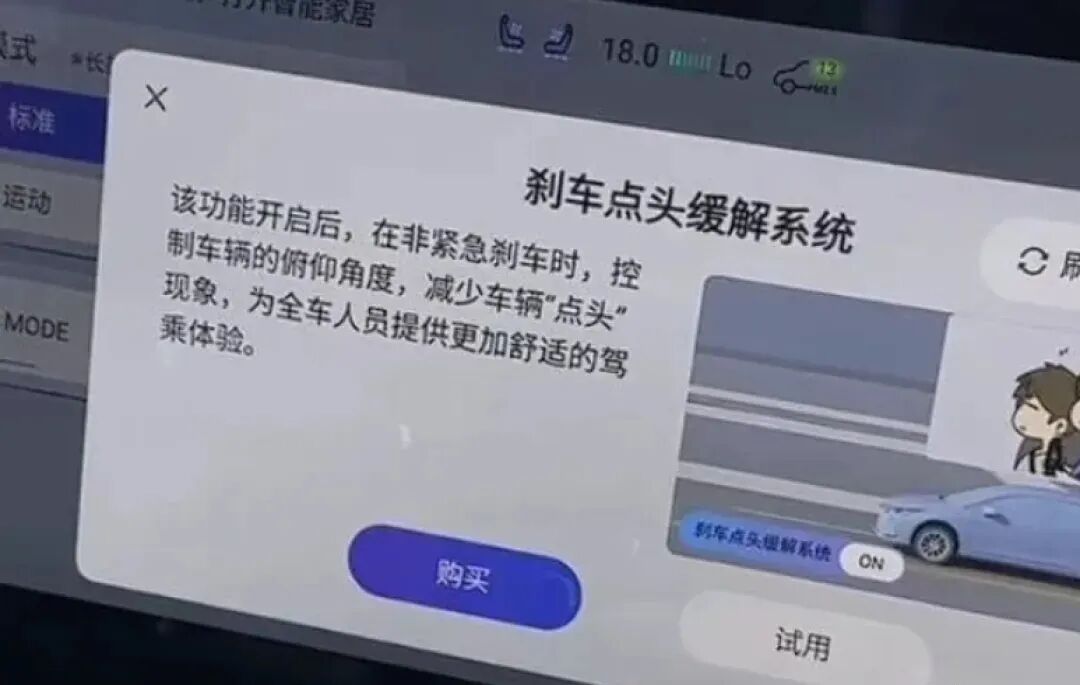
Even the increasingly popular "pay-to-unlock" features should be approached with caution by companies.
For "pay-to-unlock" features (e.g., functions pre-installed in vehicles but requiring additional payment to use), the new regulations mandate clear prior disclosure to consumers: How long is the free trial period? What are the subsequent charges? What are the differences between various configurations?
This prevents automakers from treating cars as "DLC (Downloadable Content) maniacs," where buying a vehicle becomes a lottery, and subsequent features require continuous spending. Consumers have the right to know before purchasing which features are "full versions" and which are "trial versions."
Overall, the release of these two "Guidelines" signifies that official regulatory authorities have reached their limit with the low-level cutthroat competition of "price wars" and "bluffing" in the current automotive industry. Especially as 2025 draws to a close and with an expected decline in overall sales next year, the urgent task is to shift the entire industry away from vain pursuits and onto a virtuous track of "technology," "service," and even "real value."
In short, it all boils down to one sentence: Be genuine, and stop the nonsense!
The editor firmly believes that this is undoubtedly a major boon for consumers! After all, most people buying a product aren't interested in deep research or meticulous analysis. In the future, viewing advertisements might not require a magnifying glass, and comparing prices might not involve worrying about becoming "chumps" who buy today only to be betrayed tomorrow. Of course, the new regulations aren't necessarily bad for automakers either, as they force everyone to engage in genuine competition based on product strength and service experience rather than constantly scheming over marketing rhetoric and price traps.
Especially for a few "marketing-savvy" companies that maximize short-term gains through various tactics, directly closing off their crooked paths serves both industry fairness and ensures that the industry doesn't undergo a reverse elimination where bad drives out good.
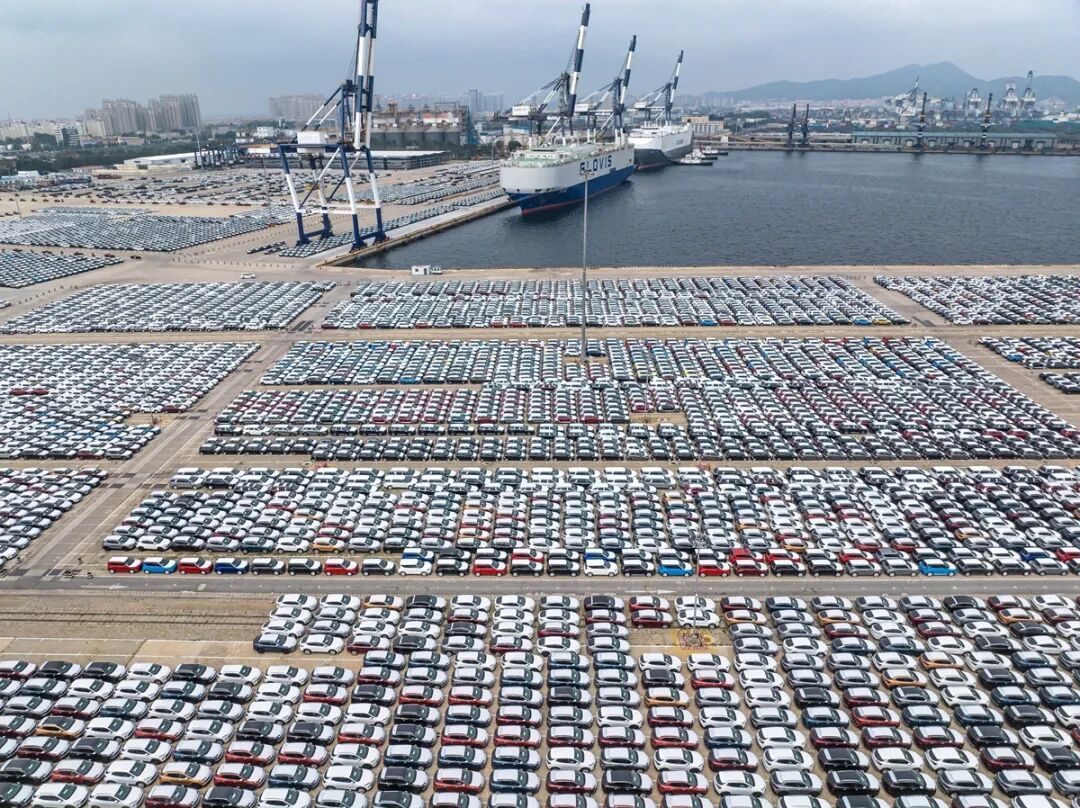
Figure | Domestic bullying and deception are not true abilities; go out and compete on the global stage!
So, how are companies responding now that official patience has worn thin and regulatory measures are being tightened? Within two hours of the release of the two new drafts for comment, late Friday night, BYD, XPeng, and BAIC expressed their support. More companies are expected to issue similar statements over the weekend.
However, the Chinese auto market is vast, with 30 million new vehicles sold annually and dozens of active automakers. How could there not be a few "oddballs"?
For instance, the legal department of a certain company (you know who) recently seems to be "going all out," launching heavy-handed crackdowns on those imitating their CEO's style in livestream sales of sweet potatoes and grains. Considering the brand's consistent style and the deep alignment with the new regulations, the timing of these actions is suspiciously coincidental, leading many to wonder if this is an attempt to counteract the official regulatory measures...
Oh, and one last thing! The author must clarify that as a passionate fan of martial arts novels, this pen name pays tribute to Xiang Yutian from Huang Yi's works. Please refrain from excessive wordplay or pun-based associations.
Well, that wraps up another week of auto news, big and small. Stay tuned for more auto anecdotes in "Weekly Auto Talk." See you next week!
Editor-in-Chief: Du Yuxin Editor: Wang Yue
THE END
-
![]()
Model Giant Jieyue Xingchen Steps into Smartphone Arena: A Strategic Alliance with Huaqin Technology
-
![]()
Big Model Firm Dives into Phone Market: StepFun and Wingtech Forge a ‘Dynamic Duo’
-
![]()
Zhongrun Optics Makes a Bold Move with 1 Billion Yuan Investment: Is a Turning Point on the Horizon for the Precision Optics Industry?
-
![]()
Deploy CLBO Crystals and YIG Single Crystals! Erythritol Leader Invests 30 Million in Youwei Optoelectronics
-
CXMT’s July 16 Subscription: Leading Domestic Memory Manufacturer—What’s the Earning Potential per Lot?
-
![]()
Rhythm Discrepancy and Premium Value Erosion: Foreign Luxury Brands Must Re-evaluate Their China Strategy
-
![]()
Half-Year, 1 Billion Yuan Financing, 7 Billion Yuan Valuation: A New Dark Horse Emerges in the Embodied AI Sector
-
![]()
Strong Rebound for Tech Stocks in Hong Kong Stock Market: Is It Time to Bottom-Fish?