Autopilot “Stumbles” and Is Suspended? Don’t Let Fear Obscure the Bigger Picture! Waymo’s 150 Million Km of Data Reveals: It’s 79% Safer Than Human Drivers
 12/15 2025
 614
614
Introduction
Folks, have you grasped the gravity of the situation? The autonomous driving sector is abuzz with controversy once again!
A driverless vehicle was embroiled in a traffic mishap under an exceedingly rare and extreme scenario, instantly propelling it into the social spotlight. Debates regarding the safety of autonomous driving are now in full swing.
Some have begun to cast doubt on the dependability of autonomous driving, with a few even advocating for a “pause” in its progression.
However, it’s imperative that we maintain our composure. Let’s not succumb to panic merely because autonomous driving encounters a few setbacks. Autonomous driving represents the future trajectory of transportation, encompassing not just technological advancements but also a global contest for industrial and regulatory supremacy!
Today, Driverless Car Insights (WeChat Public Account: Driverless Car Insights) will delve deeply into why autonomous driving should not be halted due to a single incident.
(For further reading, click: “Beyond Case-Specific Anxiety: Viewing Autonomous Driving Safety Through the Lens of Statistical Data Science! Addressing the Natural Caution and ‘Fear of the Unknown’ Toward New Technologies.”)
I. Extreme Scenarios: The Ultimate Litmus Test for Autonomous Driving
The scenario in which the accident transpired was incredibly intricate and demanding, akin to a “super difficulty” challenge in the traffic realm.
Experts assert that it was a compound extreme scenario, merging a classic “ghost peek” with a slippery road surface. A “ghost peek” should be a familiar term—it refers to a situation where a pedestrian or non-motorized vehicle suddenly emerges from a blind spot, a notorious “big trouble” that even human drivers struggle to navigate, often resulting in collisions.
In this particular accident, the pedestrian slipped first, further compressing the already extremely short reaction time window for the driver and creating an extreme scenario that nearly surpassed the current technological processing capabilities.
It’s akin to asking a sprinter to immediately dodge a flying projectile after suddenly being tripped—the difficulty level is astronomically high!
Hence, this incident was essentially a confluence of a “rare extreme scenario” and the “laws of physics” wreaking havoc, rather than a complete failure of autonomous driving technology.
In fact, the brand’s autonomous vehicles have performed admirably in local testing since their deployment.
Numerous citizens have observed that these cars yield to pedestrians at crosswalks and strictly adhere to traffic regulations, outperforming many traditional vehicles.
This demonstrates that autonomous driving technology is capable of handling driving tasks in normal scenarios—it merely requires continuous learning and refinement when confronted with such extreme and rare situations.
II. Growing Pains: The Inevitable “Trials and Tribulations” of New Technology
The public’s attitude toward autonomous driving versus human drivers is markedly “double standards.”
When human drivers make minor errors, everyone might just brush it off, acknowledging that humans are prone to mistakes.
However, if autonomous driving experiences a single accident, the backlash is overwhelming.
This is, in fact, a necessary phase for new technologies as they integrate into society, much like how a new student in class faces stricter expectations.
Examining the global development of autonomous driving technology, it’s been a tumultuous journey with no shortage of accidents.
In March 2018, an Uber autonomous vehicle was involved in a fatal accident in Arizona, marking the first known instance of a self-driving car causing a death on public roads.
Investigations revealed that while the vehicle’s sensors had detected a pedestrian crossing the road, the safety operator was distracted by a phone video and failed to take over the system in time to initiate emergency avoidance, leading to the tragedy.
Google’s Waymo autonomous car also recently made headlines after striking and killing a celebrity cat named KitKat in San Francisco, sparking controversy. The car was stopped to pick up passengers when the cat lingered in front of it for about 7 seconds. As the car started to move away, the cat suddenly darted under it and was run over by the rear wheel, later succumbing to its injuries.
(For further reading, click: “Waymo’s ‘AI Hallucination’ Goes Horribly Wrong: Running Over a Cat and Entering a Police Chase—Is the Root Cause Human Negligence?”)

After Tesla launched its Robotaxi trial operations in June this year, several collisions and scrapes ensued.
Nevertheless, these incidents have not halted technological progress.
The latest data released by Google Waymo indicates that as of June 30, 2025, its fully driverless mileage has reached 154.4 million kilometers, with 34 airbag deployment incidents during that period.
Compared to human drivers in the same regions of the U.S., this represents a significant reduction of 125 accidents and a 79% lower accident rate.
On average, Waymo’s autonomous system experiences an airbag deployment incident every 4.54 million kilometers, while human drivers face such incidents every 970,000 kilometers.
This indicates that in certain scenarios, autonomous driving is already safer than human driving.
Autonomous driving is not merely a “lab curiosity”—its technological refinement hinges on real-world data from actual roads.
One of the core values of demonstration operations is collecting data on various complex road conditions and unexpected situations in real-world environments. This data is invaluable for optimizing algorithms and filling technological blind spots.
Autonomous driving companies must minimize the cost of trial and error, allowing technology to evolve through this process.
III. Global Competition: China Cannot Afford to Lose This “Tech War”
Setting aside individual accidents, autonomous driving is no longer just a technological contest—it has evolved into a fierce battle among nations for technological, industrial, and regulatory supremacy.
As one of the core players in global autonomous driving, China cannot afford to slow down innovation due to short-term controversies.
Autonomous driving is the key carrier for artificial intelligence to manifest in the physical world. Its deep understanding and interaction capabilities with the physical world are considered one of the critical paths toward Artificial General Intelligence (AGI).
Think of it like constructing a building—autonomous driving is the most crucial foundation. Only with a solid base can you build higher.
(For further reading, click: “The ‘Dream Makers’ of Autonomous Driving: A ‘Tech Salon’ Discussion on Navigating the Future When Machines Take the Wheel.”)
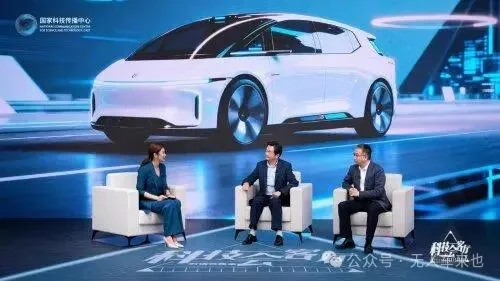
At the same time, autonomous driving serves as a system-level integration platform for complex technologies, acting like a powerful engine driving upgrades across upstream and downstream industrial chains.
From AI algorithms and automotive-grade chips to high-precision sensors and connected communications, its influence is pervasive.
Moreover, its technological spillover effects are already evident. The accumulated experience in vehicle-road-cloud coordination can also support new fields like the low-altitude economy, promoting the Collaborative Evolution of unmanned systems across all spaces.
It’s akin to throwing a stone into a lake—the ripples spread across the entire surface.
Countries worldwide recognize the immense potential of autonomous driving and have introduced policies to support its development, clearing the way for commercialization.
As two leading contenders, China and the U.S. are engaged in fierce competition that transcends commercial interests—it’s about defining the rules for how the physical world will operate in the future.
The U.S. has been particularly proactive, with 41 states and Washington D.C. enacting legislation for autonomous driving.
Despite recent accidents, Google Waymo has expanded rapidly thanks to the U.S.’s open policy environment, deploying over 2,500 driverless cars and scaling operations into five major urban centers: Los Angeles, San Francisco, Phoenix, Austin, and Atlanta.
Recently, Waymo’s autonomous paid services are set to enter 11 more cities, including Detroit, Miami, and Houston, while conducting tests in 11 others like New York, Boston, and Baltimore to pave the way for further expansion.
Tesla is also making aggressive strides. After launching trial operations in Austin in June this year, it quickly expanded its operational area. Currently, Tesla’s Robotaxi has accumulated over 400,000 kilometers in Austin and 1.6 million kilometers in the Bay Area, with plans to cover 8–10 metropolitan areas in Nevada, Florida, and Arizona by the end of this year.
Faced with the rapid expansion of international competitors, developing autonomous driving in China is no longer a choice—it’s a “must-answer question” for securing the high ground in national tech development.
Accelerating technological iteration through large-scale applications and seizing strategic initiative in future industrial development has become an industry consensus.
IV. Historical Lessons: Give Autonomous Driving Room to Grow
Looking back at history, every major technological innovation has been accompanied by pain and skepticism.
When cars first emerged, people thought they were noisy and unsafe, preferring horses instead.
When elevators were introduced, people feared they might suddenly plummet and avoided riding them.
But now, cars are indispensable in our lives, and elevators are standard in high-rise buildings.
Autonomous driving technology is on a similar path—it’s like a toddler learning to walk.
While it may stumble now, with enough understanding and room to grow, it will eventually run fast and steady.
China’s innovative journey in autonomous driving deserves more patience and support.
In conclusion, Driverless Car Insights (WeChat Public Account: Driverless Car Insights) believes:
Give autonomous driving time to grow. Don’t let occasional extreme incidents block our path toward a safer future.
After all, we’re not fighting against a machine that occasionally makes mistakes—we’re combating the human flaws that cause 90% of accidents.
What do you think, dear readers? #DriverlessCarInsights #AutonomousDriving #SelfDrivingCars #DriverlessVehicles
-
![]()
Model Giant Jieyue Xingchen Steps into Smartphone Arena: A Strategic Alliance with Huaqin Technology
-
![]()
Big Model Firm Dives into Phone Market: StepFun and Wingtech Forge a ‘Dynamic Duo’
-
![]()
Zhongrun Optics Makes a Bold Move with 1 Billion Yuan Investment: Is a Turning Point on the Horizon for the Precision Optics Industry?
-
![]()
Deploy CLBO Crystals and YIG Single Crystals! Erythritol Leader Invests 30 Million in Youwei Optoelectronics
-
CXMT’s July 16 Subscription: Leading Domestic Memory Manufacturer—What’s the Earning Potential per Lot?
-
![]()
Rhythm Discrepancy and Premium Value Erosion: Foreign Luxury Brands Must Re-evaluate Their China Strategy
-
![]()
Half-Year, 1 Billion Yuan Financing, 7 Billion Yuan Valuation: A New Dark Horse Emerges in the Embodied AI Sector
-
![]()
Strong Rebound for Tech Stocks in Hong Kong Stock Market: Is It Time to Bottom-Fish?