A Decisive Strike: Initial Victories in Tackling Online Chaos in the Automotive Sector, Yet the Journey Ahead is Long
 12/19 2025
 699
699
In a concerted effort to combat online chaos plaguing the automotive industry, six key government bodies—the Ministry of Industry and Information Technology, the Central Social Work Department, the Cyberspace Administration of China, the National Development and Reform Commission, the Ministry of Public Security, and the State Administration for Market Regulation—jointly rolled out the "Notice on Initiating a Special Campaign to Rectify Online Disorders in the Automotive Industry" this September. This nationwide, three-month-long campaign zeroes in on three major issues: illegal profit-seeking, exaggerated and false advertising, and malicious defamation and attacks. The targets of this rectification drive encompass online influencers, internet "water armies" (organized groups of fake online users), black-mouthed commentators (those spreading negative and often false information), automotive reviewers, MCN (Multi-Channel Network) agencies, online platforms, as well as some automotive OEMs (Original Equipment Manufacturers) and dealers. The scope of issues addressed virtually covers all online disorders currently prevalent in the automotive industry. 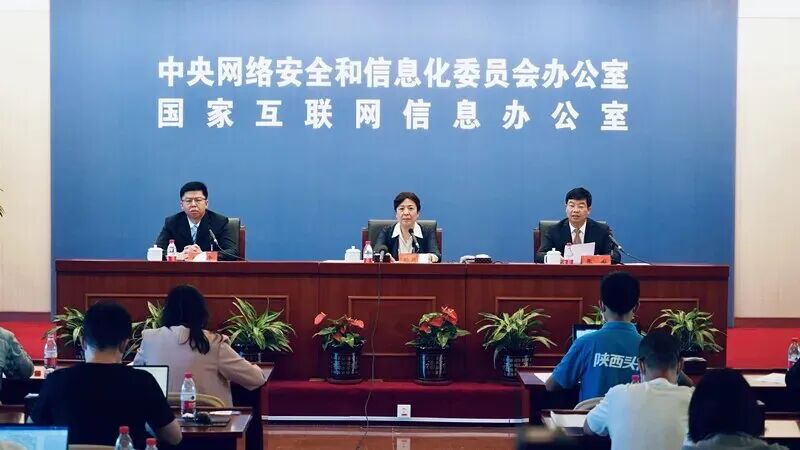
With the rapid advancement of internet technology, the automotive industry has witnessed accelerated networking and intelligence processes. However, this progress has also given rise to a plethora of online disorders, including false advertising, malicious competition, and the rampant presence of internet "water armies," all of which have severely disrupted the market order and infringed upon consumer rights.
Since the inception of the rectification campaign, relevant departments have responded promptly and collaborated closely, implementing a series of effective measures.
The industrial and information technology sector has intensified online monitoring of automotive manufacturers and their products; the public security sector has cracked down on cybercrimes related to the automotive industry; traffic management authorities have focused on addressing safety hazards in ride-hailing platforms; market regulation authorities have stepped up efforts to combat false advertising; and the cyberspace administration has removed a significant number of illegal and non-compliant websites and self-media accounts, including some with tens of millions of followers.
After months of dedicated efforts, the special rectification campaign has yielded certain results.
According to relevant statistics, thousands of automotive-related websites and applications nationwide have undergone inspection, and numerous platforms and self-media accounts with serious issues have been shut down. Tens of thousands of pieces of illegal and harmful information have been purged. Hundreds of cases have been filed for investigation, including several major ones. Through this rectification, the overall atmosphere in the industry has witnessed a marked improvement. 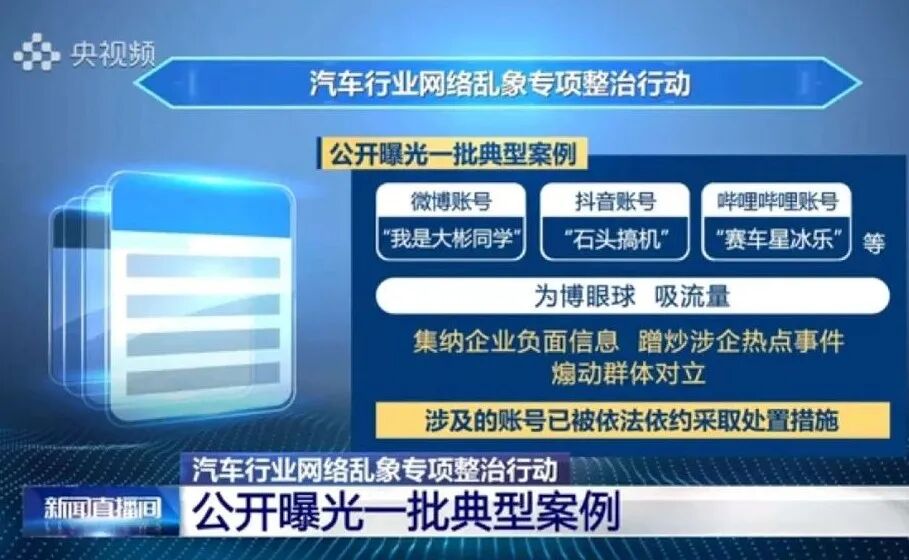
However, it must be clearly acknowledged that eradicating online disorders in the automotive industry is not a task that can be accomplished overnight; it requires sustained and persistent efforts.
On November 28th of this year, the Political Bureau of the CPC Central Committee conducted a collective study on strengthening cyberspace ecological governance. President Xi Jinping, who presided over the study, emphasized that cyberspace ecological governance is a pivotal task for building a cyberspace power, relating to national development and security as well as the vital interests of the people. He stressed the need to establish a long-term mechanism for cyberspace ecological governance, focusing on enhancing its foresight, precision, systemicity, and coordination to continuously foster a clean and upright cyberspace. President Xi pointed out that online disorders pollute social morals and infringe upon the people's interests, calling for a resolute and unwavering stance to sever interest chains and industrial chains and eradicate the breeding grounds and conditions for such disorders.
It is widely acknowledged that the automotive industry is one of the sectors most severely affected by online disorders, serving as a major hotspot for such issues. To fundamentally address online disorders in the automotive industry, a mere three-month special rectification campaign is far from sufficient. Establishing a long-term mechanism and relying on comprehensive governance through laws and regulations are essential. 
In response to the price wars in the automotive industry, on December 12th, the State Administration for Market Regulation released the "Compliance Guidelines for Pricing Behavior in the Automotive Industry (Draft for Comment)" to solicit public opinions. The aim is to unify regulatory rules, clarify legal boundaries, and guide automotive production and sales enterprises to operate in compliance with laws and regulations. Relying on laws and regulations to prevent and rectify internal competition in the automotive industry.
The persistent existence of online disorders in the automotive industry is closely linked to regulatory gaps and legal loopholes. Currently, laws and regulations governing online information dissemination are incomplete, with unclear definitions and penalties for online false advertising and malicious defamation in the automotive sector. To rectify online disorders in the automotive industry, it is necessary to follow the example of the State Administration for Market Regulation in curbing price wars by refining relevant laws and regulations and unifying regulatory rules to ensure all automotive participants operate in compliance with the law. 
Additionally, it should be noted that while relevant departments have taken action against some non-compliant self-media accounts, they have yet to fully address online platforms and MCN agencies, which play a pivotal role in online disorders.
In conclusion, through this special rectification campaign, the online environment of the automotive industry has seen some improvement, achieving initial success. However, this is merely the first step on a long journey. Only by persistently advancing the modernization of the governance system can we ultimately achieve a transformation from "symptomatic treatment" to "root cause resolution," laying a solid foundation for the healthy development of the automotive industry. (End)
-
![]()
Model Giant Jieyue Xingchen Steps into Smartphone Arena: A Strategic Alliance with Huaqin Technology
-
![]()
Big Model Firm Dives into Phone Market: StepFun and Wingtech Forge a ‘Dynamic Duo’
-
![]()
Zhongrun Optics Makes a Bold Move with 1 Billion Yuan Investment: Is a Turning Point on the Horizon for the Precision Optics Industry?
-
![]()
Deploy CLBO Crystals and YIG Single Crystals! Erythritol Leader Invests 30 Million in Youwei Optoelectronics
-
CXMT’s July 16 Subscription: Leading Domestic Memory Manufacturer—What’s the Earning Potential per Lot?
-
![]()
Rhythm Discrepancy and Premium Value Erosion: Foreign Luxury Brands Must Re-evaluate Their China Strategy
-
![]()
Half-Year, 1 Billion Yuan Financing, 7 Billion Yuan Valuation: A New Dark Horse Emerges in the Embodied AI Sector
-
![]()
Strong Rebound for Tech Stocks in Hong Kong Stock Market: Is It Time to Bottom-Fish?