Massive Departmental Overhaul: Li Auto Initiates Organizational Reforms
 12/22 2025
 537
537
Author | Guanchejun
Li Auto is once again undergoing significant changes!
21 Auto·Yijian Auto has gathered information from multiple independent sources, revealing that Li Auto has recently carried out organizational restructuring and mergers within its supply chain-related departments. The first-tier 'Component Cluster' department, which previously fell under the Smart Vehicle Group, has now been merged into the 'Manufacturing' department. This unified management will be overseen by Li Bin, the Vice President of Li Auto. Li Bin, in turn, reports to President Ma Donghui. Meanwhile, Luo Ping, the former head of the Component Department, has departed from the company.
This adjustment has implications for nearly a thousand employees.
The rationale behind this merger can be traced back to Li Auto's reevaluation of its production capacity planning. "Initially, we had planned for a production capacity of 2 million units. However, with the current reduction in capacity, it makes sense to merge departments with overlapping functions," explained an internal supply chain source at Li Auto.
This move also signifies Li Auto's transition from a phase of rapid expansion to a stage focused on refined operations.
From Guanchejun's recollection, this marks at least the sixth organizational restructuring that Li Auto has implemented in 2025. The previous five restructuring efforts were as follows:
In March, a reform was initiated in the sales system's 'Theater System.' The 26 retail regions were consolidated into five 'Major Theaters'—East, West, South, North, and Central—with decentralized operational authority. The heads of these theaters report directly to Zou Liangjun, the Senior Vice President of Sales and Service.
In June, the 'Smart Vehicle Group' was established. This involved merging the original 'Research & Development and Supply Group' and 'Sales and Service Group' into a single entity, integrating the entire chain of research, production, supply, sales, and service. President Ma Donghui, who reports to CEO Li Xiang, was entrusted with the unified responsibility for this integrated group. In the same month, the Systems and Computing Group, managed by CTO Xie Yan, was split into two new first-tier departments: 'Computing Resources' and 'Enterprise Intelligence'.
In August, the 'Five Major Theaters' were abolished, and sales operations were centralized at the headquarters. The five theaters were dissolved, and 23 regions came under the direct management of the headquarters. The sales division was integrated into a 'Sales Department' (headed by Han Xi), with the addition of two new first-tier departments: 'Sales Operations' and 'Marketing'. This restructuring aimed to shorten the decision-making chain.
In September, the Autonomous Driving Department underwent a transformation, being 'split from 3 to 11.' The original three second-tier departments were further subdivided into 11 flattened second-tier departments.
In November, human resources were centralized under the direct management of the CEO. The original 'Organization Department' and 'Human Resources Department' were merged into a single 'Human Resources Department,' which was placed under the 'Product and Strategy Group.' Simultaneously, it was announced that the PBC performance model, which had been introduced from Huawei, would be abandoned in favor of reverting to the OKR model.
As a result, Li Auto has completed a comprehensive restructuring across the entire chain, from research and development, supply chain, and manufacturing to sales and human resources. The core characteristics of this restructuring can be summarized as follows: integration of research, production, sales, and service (through the Smart Vehicle Group), deep integration of the supply chain and manufacturing, a shift in the sales system from 'theater decentralization' to 'headquarters centralization,' and a high concentration of human resources and strategic decision-making at the CEO level. 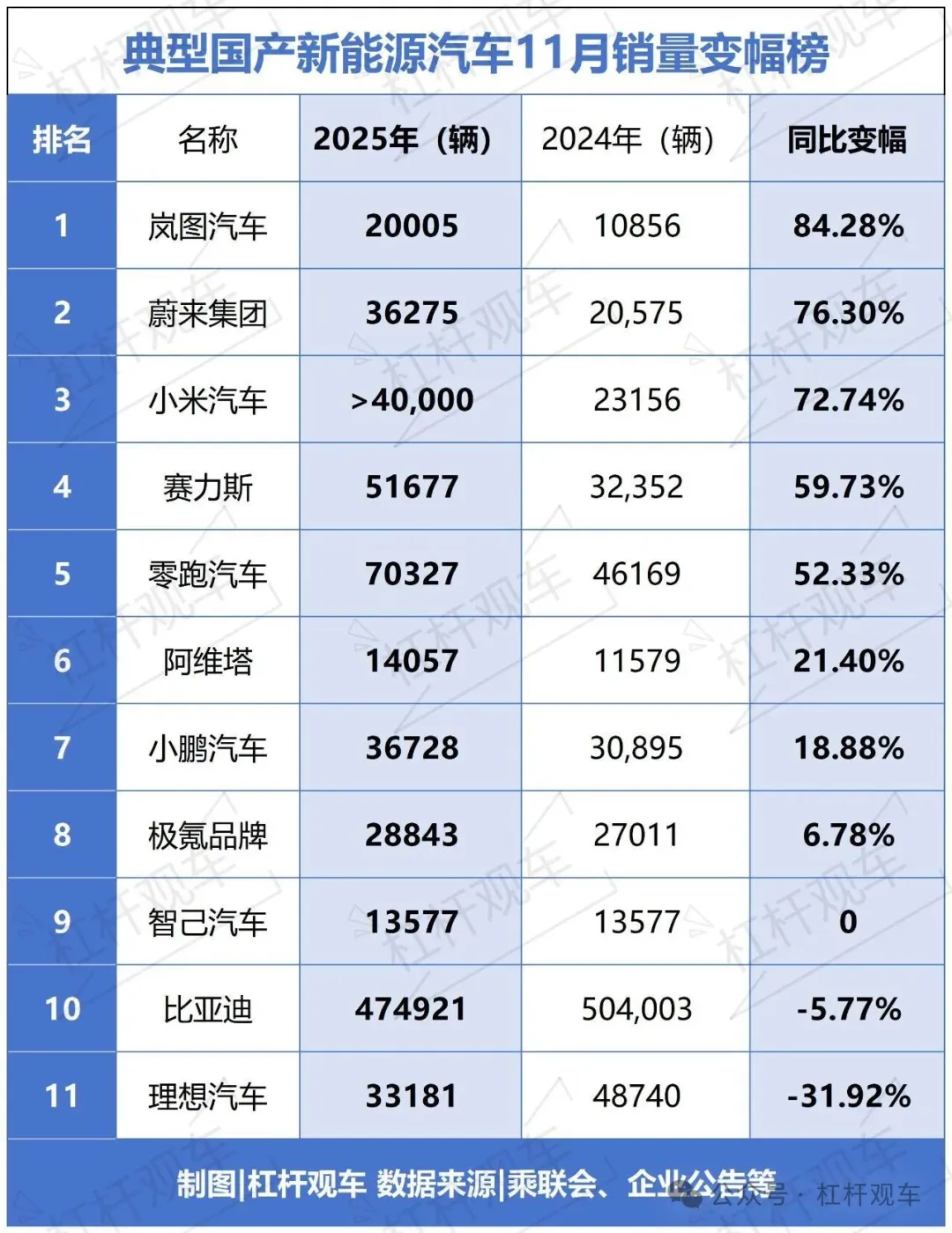
The driving force behind these organizational restructuring efforts lies in the market challenges that Li Auto is currently facing. Previously, Guanchejun had calculated that Li Auto's total sales in the first 11 months had declined by over 30% year-on-year, making it the brand with the steepest decline among new energy vehicle manufacturers. Moreover, the company even reported a net loss in the third quarter, putting an end to its streak of consecutive profits.
One of the most direct and core objectives of integrating the component procurement department directly into the manufacturing department is to strengthen cost control.
As the driving force and key figure behind Li Auto, Li Xiang has repeatedly emphasized internally the importance of guarding against bureaucracy and maintaining the agility and efficiency of a startup.
This organizational adjustment also bears a strong imprint of Li Xiang's personal management philosophy.
Having said that, as the industry transitions from the 'land grab' phase of an incremental market to the 'positional warfare' phase of a stock market, extensive organizational structures become unsustainable.
Refined management, efficient cross-departmental collaboration, and extreme cost control have become essential lessons for all players in the industry.
The charts presented in this article, unless cited with specific sources, are derived from publicly disclosed information from various channels. This is hereby stated and acknowledged with gratitude. The views expressed in the article are for reference only and do not constitute investment advice.
-
![]()
Model Giant Jieyue Xingchen Steps into Smartphone Arena: A Strategic Alliance with Huaqin Technology
-
![]()
Big Model Firm Dives into Phone Market: StepFun and Wingtech Forge a ‘Dynamic Duo’
-
![]()
Zhongrun Optics Makes a Bold Move with 1 Billion Yuan Investment: Is a Turning Point on the Horizon for the Precision Optics Industry?
-
![]()
Deploy CLBO Crystals and YIG Single Crystals! Erythritol Leader Invests 30 Million in Youwei Optoelectronics
-
CXMT’s July 16 Subscription: Leading Domestic Memory Manufacturer—What’s the Earning Potential per Lot?
-
![]()
Rhythm Discrepancy and Premium Value Erosion: Foreign Luxury Brands Must Re-evaluate Their China Strategy
-
![]()
Half-Year, 1 Billion Yuan Financing, 7 Billion Yuan Valuation: A New Dark Horse Emerges in the Embodied AI Sector
-
![]()
Strong Rebound for Tech Stocks in Hong Kong Stock Market: Is It Time to Bottom-Fish?