Tesla's Latest FSD V14.2: Feature Updates and Areas for Improvement
 12/22 2025
 592
592
Tesla's FSD V14.2, rolled out as part of the Christmas 2025 update, brings about substantial enhancements in features and performance. This is largely attributed to its deep integration with Grok AI, which propels the vehicle's intelligent interaction capabilities to unprecedented levels. 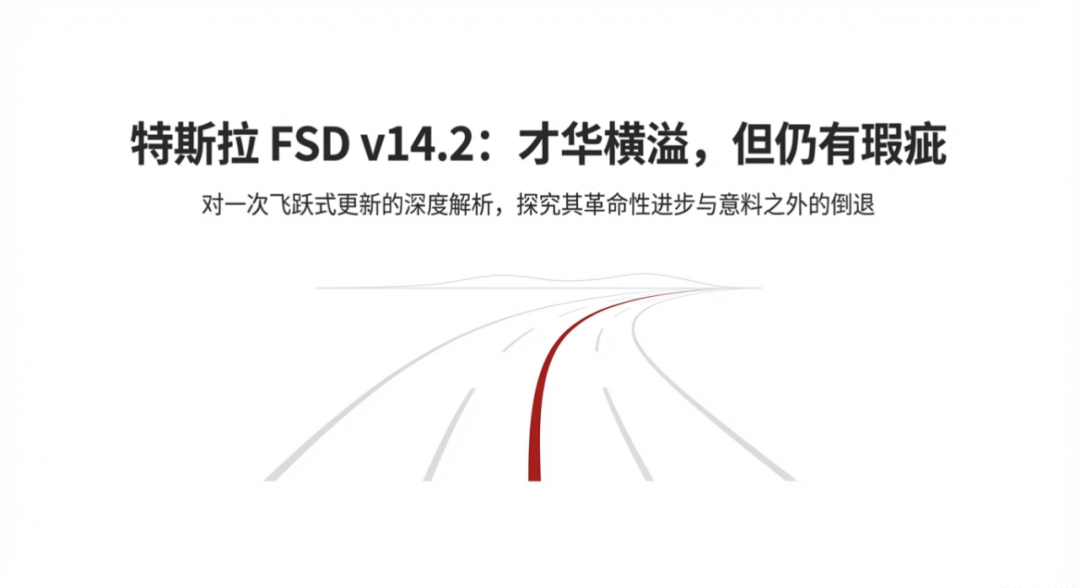
Based on test - drive videos shared by numerous bloggers across Europe and the US, here is a comprehensive overview of FSD V14.2's new features, performance benefits, and areas that need improvement. 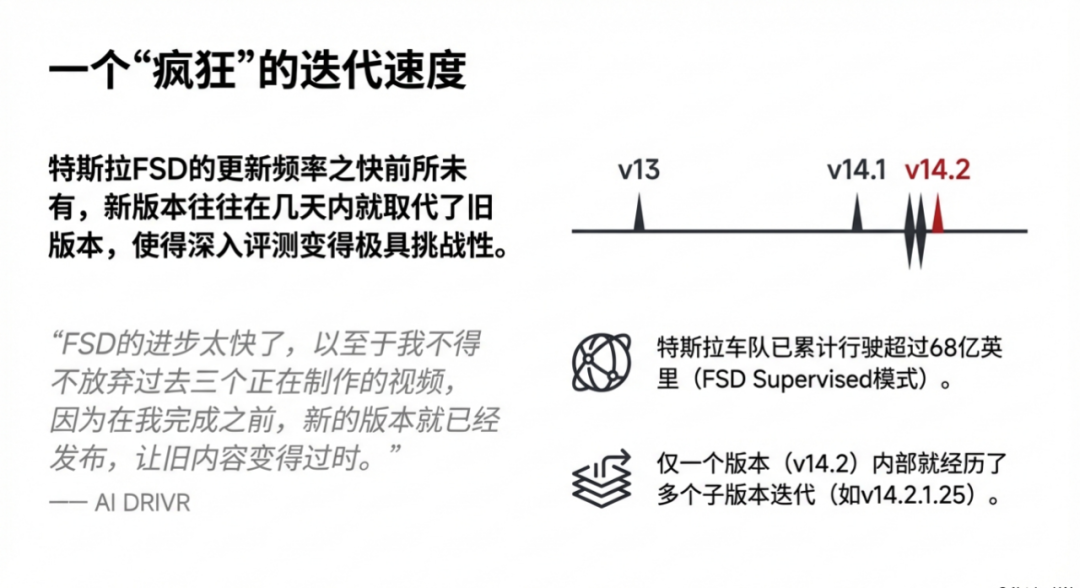
Deep Grok AI Integration: Revolutionizing Navigation and Voice Control
One of the most remarkable changes in FSD V14.2 is the incorporation of Grok AI for navigation tasks.
Multi - Point Navigation Management: Users can now interact with Grok using natural language. They can request Grok to add multiple stops, locate Starbucks or McDonald's at specific destinations, and even re - order stops. For instance, if Grok mistakenly sets a new destination as the first stop, users can simply say, "Set [location] as the first stop," and Grok will accurately comply. 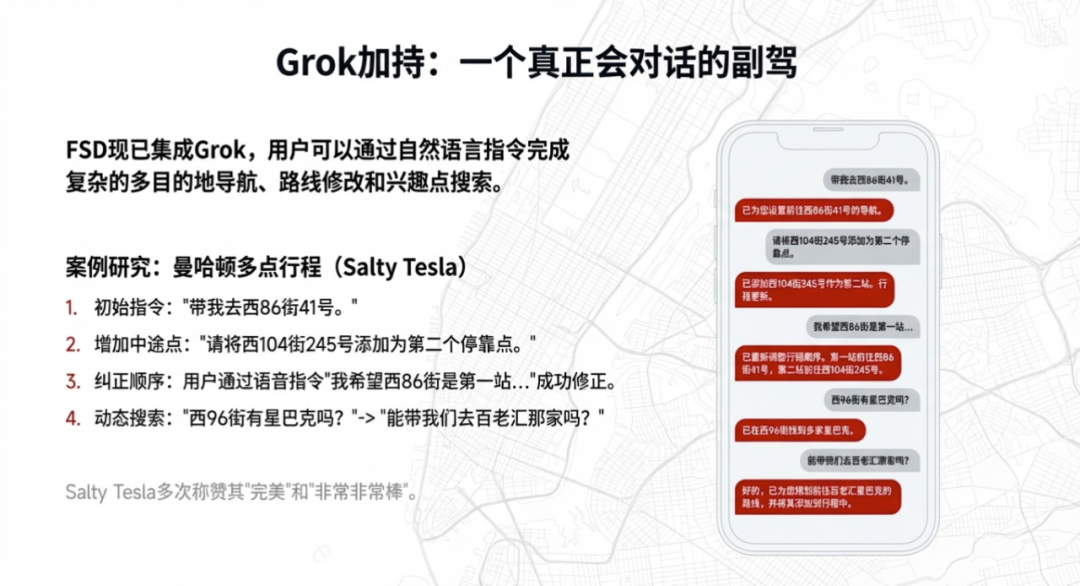
Complex Routing Understanding: Grok has the ability to comprehend more intricate instructions. It can reroute based on specific highway exits or well - known landmarks.
Updated Information Provision: Grok can provide detailed explanations of the holiday update contents, including non - driving features such as "light shows" and "SpaceX docking games."
Future Potential: Although the current integration is mainly focused on navigation, there is an expectation that Grok will be able to control more hardware functions in the future, including wipers, glove boxes, mirror adjustments, and making phone calls.
Core New Features in FSD V14.2 Upgrade
Emergency Automatic Pull - Over: In the past, if the driver monitoring system (such as cameras) detected that the driver was unresponsive for an extended period, the vehicle would only slow down within the lane. However, with FSD V14.2, the vehicle now automatically seeks a safe roadside area to pull over, comes to a complete stop, and activates the hazard lights. This feature is of utmost importance for medical emergencies and the safety of future autonomous taxis (Robotaxis). 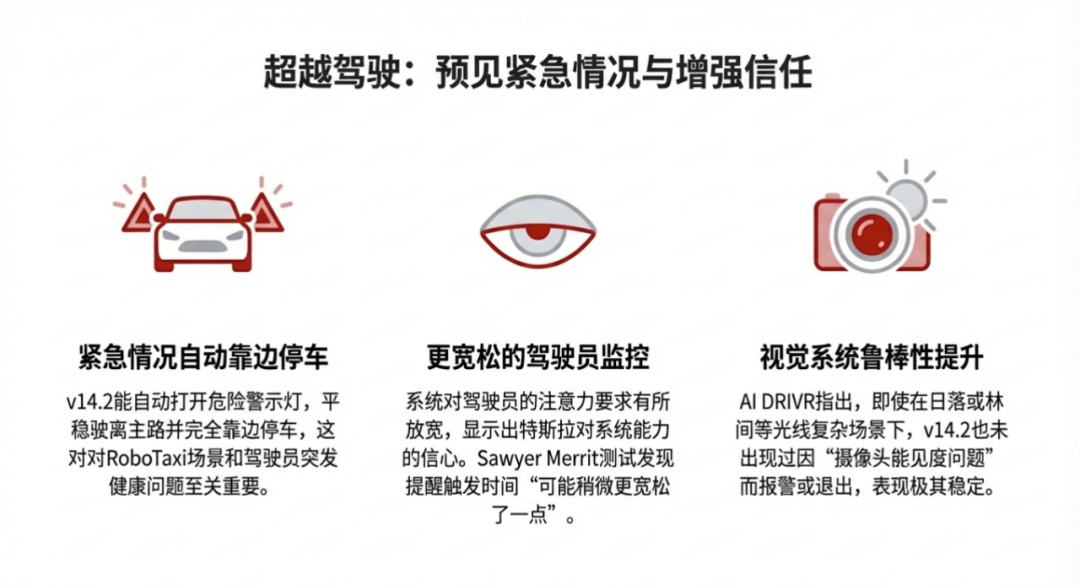
New Autonomous Driving Statistics Menu: The system has added an "Autonomous Driving Statistics" page. This page clearly displays the cumulative FSD miles, total miles driven, and the percentage of FSD usage.
Pre - Selected Driving Preferences: Users can now set their parking preferences (e.g., roadside or parking lot) and speed modes before starting their drive.
Speed Mode Optimization: The new version offers five speed modes: Sloth, Chill, Standard, Hurry, and Mad Max. In the "Standard" mode, the system now limits the maximum speed to within 5 mph of the speed limit, addressing the issue of excessive speeding that was present in previous versions.
Performance: Approaching Human - Like Driving
Elimination of 'Brake Stabbing': Version 14.2 has significantly resolved the micro - braking and abrupt stopping issues that users faced in previous versions. As a result, the driving experience is now extremely smooth, often described as "silky" and "human - like." 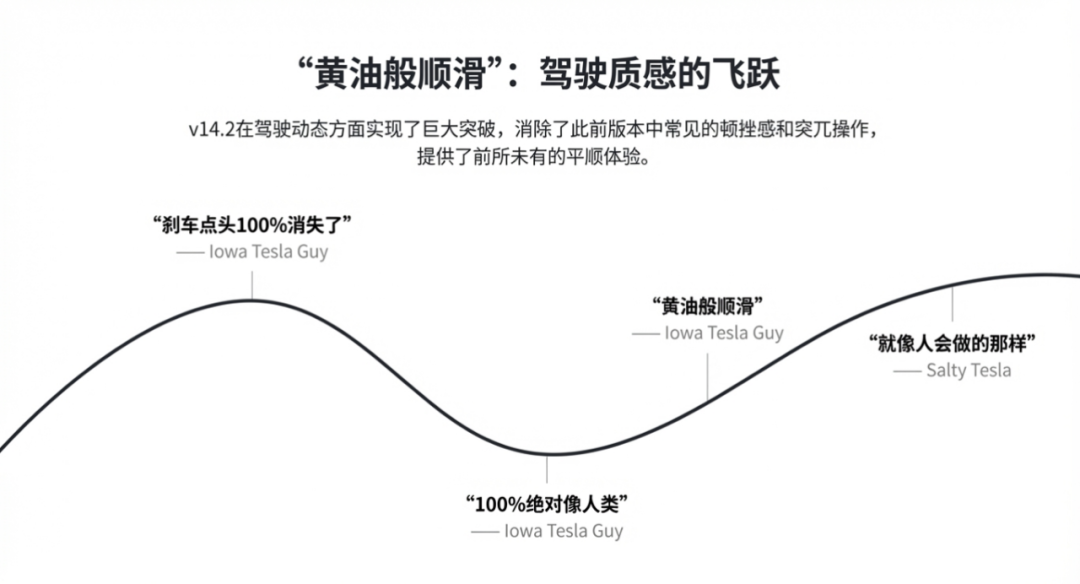
Pedestrian and Obstacle Handling: The system's predictive ability for pedestrians has seen a significant improvement. It can now identify pedestrians earlier and navigate around double - parked cars more smoothly, without making unnecessary stops, which was a problem in older versions.
Neural Network Vision Upgrade: The higher - resolution visual feature extraction enhances the system's ability to recognize and process emergency vehicles, roadblocks, and human gestures.
Faster Reverse Speeds: Exiting garages or parking spots is now noticeably quicker and more decisive compared to previous versions.
Relaxed Driver Monitoring: The driver monitoring system seems to be less sensitive. Drivers can now look at screens or phones for longer periods without receiving immediate alerts.
Areas Requiring Optimization or Regression Issues
Despite the significant progress made, version 14.2 still has some "regressions" or challenges that need to be addressed:
Degraded Parking Logic: Some tests have revealed that during automatic parking, version 14.2 may park at an angle or choose incorrect areas, such as striped no - parking zones or specific reserved spots. 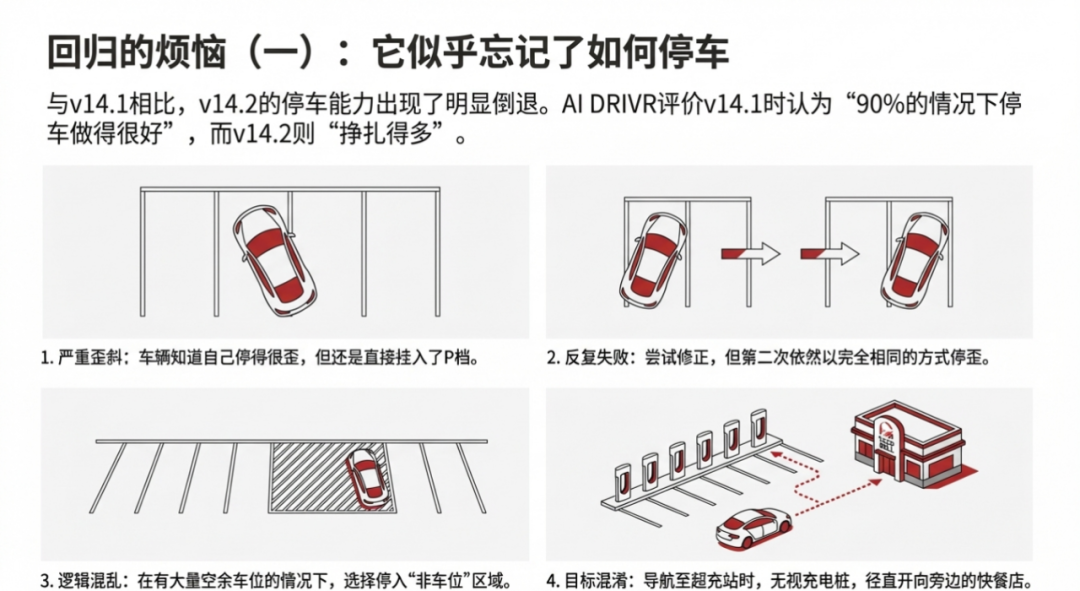
Navigation Routing Logic Errors: Occasionally, the vehicle may deviate unnecessarily from the planned route or choose detours when it could have continued straight. 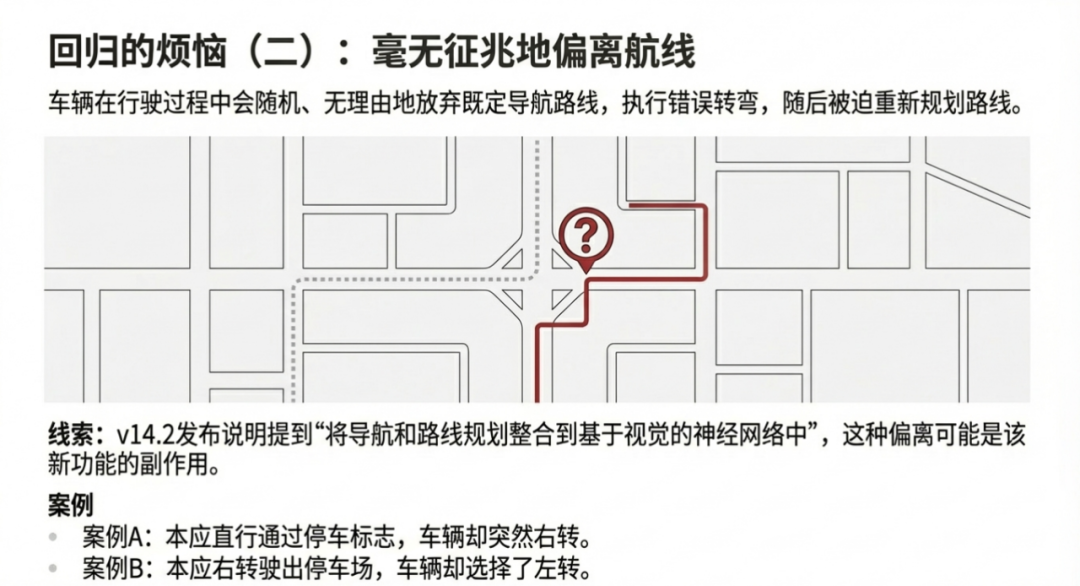
Excessive Passiveness: At certain intersections, the vehicle may yield excessively to pedestrians and cyclists, which can lead to honking from the vehicles following behind. 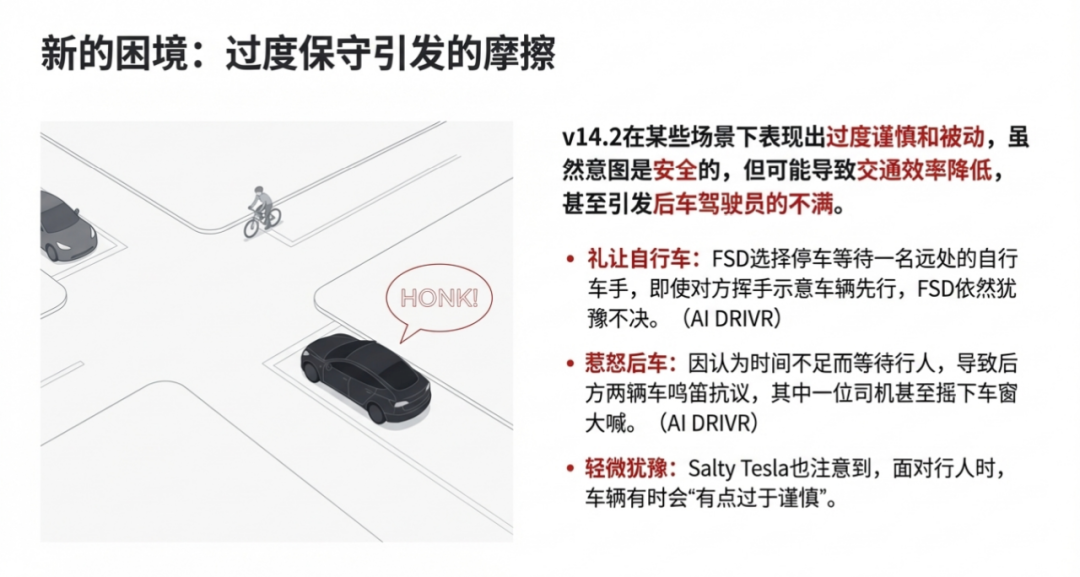
In conclusion, FSD V14.2 marks a significant stage in the evolution of Tesla's autonomous driving system, transitioning from a "mechanical executor" to a "smart student." It has acquired "ears" through Grok to understand complex human intentions and has smoothed out the "rough edges" in driving with more mature algorithms. However, there is still room for improvement in handling complex urban navigation logic and achieving precise parking. 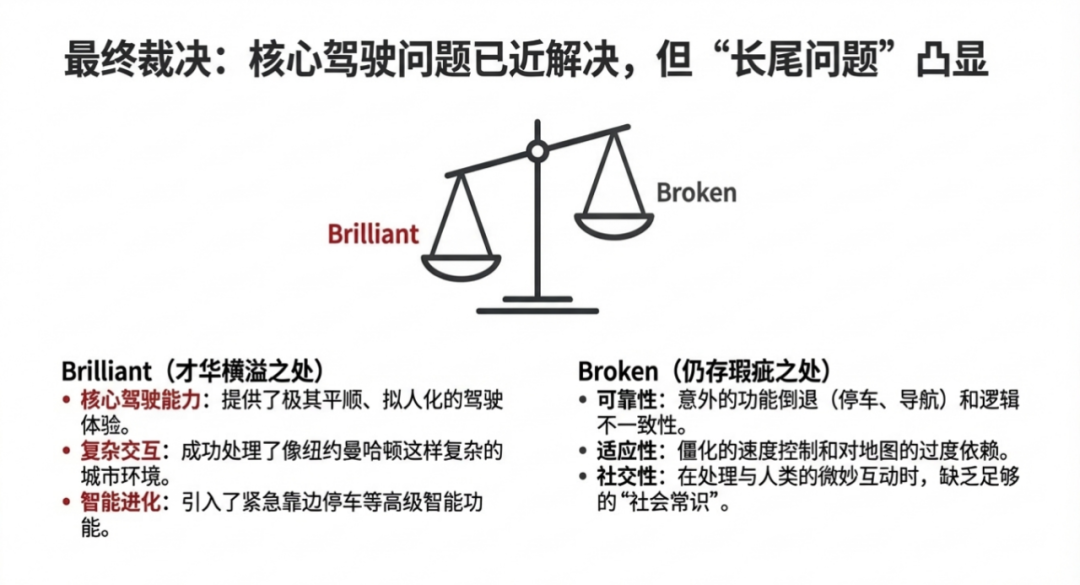
References and Images
*Unauthorized reproduction or excerpting is strictly prohibited.
-
![]()
Model Giant Jieyue Xingchen Steps into Smartphone Arena: A Strategic Alliance with Huaqin Technology
-
![]()
Big Model Firm Dives into Phone Market: StepFun and Wingtech Forge a ‘Dynamic Duo’
-
![]()
Zhongrun Optics Makes a Bold Move with 1 Billion Yuan Investment: Is a Turning Point on the Horizon for the Precision Optics Industry?
-
![]()
Deploy CLBO Crystals and YIG Single Crystals! Erythritol Leader Invests 30 Million in Youwei Optoelectronics
-
CXMT’s July 16 Subscription: Leading Domestic Memory Manufacturer—What’s the Earning Potential per Lot?
-
![]()
Rhythm Discrepancy and Premium Value Erosion: Foreign Luxury Brands Must Re-evaluate Their China Strategy
-
![]()
Half-Year, 1 Billion Yuan Financing, 7 Billion Yuan Valuation: A New Dark Horse Emerges in the Embodied AI Sector
-
![]()
Strong Rebound for Tech Stocks in Hong Kong Stock Market: Is It Time to Bottom-Fish?