The First Year of Autonomous Driving in 2026 | From Technological Breakthrough to Commercial Deep Dive, a Comprehensive Race for the Future
 02/09 2026
 522
522

Source: Zhiche Technology
As Waymo completes $16 billion in financing, setting a new industry record, as Pony.ai and WeRide's Robotaxi fleets successively enter the 'era of thousands of vehicles,' and as the Ministry of Industry and Information Technology issues the first batch of access permits for Level 3 autonomous driving vehicle models, the autonomous driving industry in 2026 finally bids farewell to the 'armchair theory' demonstration stage and enters a 'real combat' period of large-scale commercial deep dive.
This technological revolution, which began in laboratories, is now irresistibly crashing into reality, stirring up the industrial landscape, reshaping the travel ecosystem, and initiating a comprehensive race concerning technology, commerce, regulations, and society amidst a mix of opportunities and growing pains.

Robotaxi Large-Scale Deployment: The Era of Thousands of Vehicles Arrives
In 2026, autonomous taxis (Robotaxis) undoubtedly become the most dazzling protagonist in the industry, with 'scale in the thousands' becoming the core benchmark for measuring corporate competitiveness and marking the industry's official crossing of the key threshold from 'technological verification' to 'large-scale operation.' It is widely believed in the industry that a fleet of 1,000 operational vehicles is the inflection point for Robotaxis to achieve self-sufficiency, and this inflection point was successively reached by leading companies from the end of 2025 to the beginning of 2026—Pony.ai's Robotaxi fleet surpassed 1,159 vehicles, and WeRide's global fleet reached 1,023 vehicles, both exceeding their phased goals.
The significance of scale goes far beyond numbers, bringing about a qualitative change in service experience and hope for cost control. In Shenzhen, the response speed for users hailing a Robotaxi has been compressed to within 5 seconds, with vehicle spacing and waiting times comparable to those of mature ride-hailing platforms. What was once a 'chance encounter with technological experience' is now transforming into a 'reliable travel choice.' The path to profitability is also gradually becoming clear: by achieving growth through scale and shifting to an asset-light model cooperation, Apollo Go has basically crossed the profitability threshold in places like Wuhan and Beijing's Yizhuang; WeRide's Robotaxi in Abu Dhabi averages 15-20 orders per day, approaching 60% of the daily average orders of local traditional taxis, with internal estimates suggesting profitability at a scale of 200 vehicles; Pony.ai, through optimization of its asset-light model, has achieved 'positive bicycle profitability' in Guangzhou, proving the commercial feasibility of the Robotaxi business.
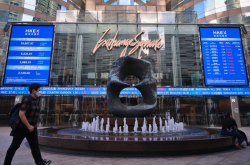
Competition on the global track is equally fierce. Google-backed Waymo has completed $16 billion in financing, planning to cover 15 U.S. cities with Robotaxi services by the end of 2026, with its market share in California's ride-hailing market exceeding 3%; Tesla CEO Elon Musk even predicts that its Robotaxi service will become 'very popular' in the U.S. within the year. Domestic players, relying on the advantages of 'vehicle-road-cloud' integration, support from local supply chains, and super APP ecosystems, are accelerating their pursuit. Pony.ai and WeRide have even achieved listing on the Hong Kong Stock Exchange, further supplementing their capital reserves and advancing towards a global layout.
However, behind the scale-up lies the 'growing pains.' A proposal by Fang Ou, a member of the Guangzhou Municipal Political Consultative Conference, shows that over 80% of ride-hailing drivers are concerned about being replaced by technology. This anxiety is not unfounded—WeRide's operational data in Abu Dhabi shows that its Robotaxi's daily average orders are close to half of those of local traditional taxi drivers working 10-14 hours a day. Once the scale further expands, the impact on traditional transportation capacity will become increasingly apparent. On one hand, there is the efficiency improvement in travel brought about by technological iteration; on the other hand, there is the reshaping of the employment ecosystem for millions of ride-hailing drivers. Chinese urban managers are now facing the balance of 'harnessing the technological steed.'

Level 3 Mass Production Breaks the Ice: Commercialization Still Faces Challenges
If Robotaxis are the 'vanguard' of autonomous driving commercialization, then the mass production breakthrough of Level 3 autonomous driving marks the extension of autonomous driving from commercial scenarios to personal consumption scenarios, also sparking intense debates within the industry about the technological evolution path.
At the end of December 2025, the Ministry of Industry and Information Technology officially announced the first batch of access permits for Level 3 vehicle models, with Chang'an Deepal SL03 and BAIC Arcfox Alpha S being the first to be approved, igniting a 'license craze' among automakers. Xiaomi, XPeng, GAC, and others followed suit, with Level 3 quickly becoming a core topic of the 2026 intelligence competition.
Industry disagreements center on the core issue of 'whether it is necessary to go through the Level 3 stage.' Some argue that Level 3 is a necessary step on the path from Level 2, where 'the driver is fully responsible,' to full autonomous driving, where 'the vehicle is primarily responsible.' Automakers such as Chang'an, BAIC, and VOYAH are advancing along the path of 'regulations first, scenario limitation,' planning to achieve large-scale commercial use of highway Level 3 in 2026. Li Wenguang, president of the Intelligent Driving Product Line at HiVision, predicts that highway Level 3 and urban Level 4 pilots will advance simultaneously in 2026.
Others Speak frankly (bluntly state) that Level 3 is 'just a transition,' with Tesla and XPeng Motors choosing to leap directly from Level 2 to Level 4. Tesla blurs traditional grade divisions with a pure vision solution, validating its technological path through Robotaxi deployment; He Xiaopeng even stated that the next generation of full autonomous driving in the U.S. and China will skip Level 3 in 2026, with the XPeng Ultra version using a single model to achieve both autonomous driving and Robotaxi functions.
Behind the difficulty in forming industry consensus lies the practical dilemma of Level 3 commercialization. Professor Zhu Xichan from Tongji University points out that the current Level 3 certification standards have surpassed the classical definition, requiring vehicles to have the minimum risk operation capabilities of Level 4, leaving automakers in an awkward (awkward) position of 'technology approaching Level 4, operation limited to Level 3'; the BAIC Arcfox Alpha S Level 3 version is only limited to use on highways and urban expressways in a single lane, and initially targeted at the B-end, with limited appeal to ordinary consumers. In addition, Xu Jian, Chief Ecosystem Officer at Horizon Robotics, believes that 'the premise of true Level 4 realization is the large-scale deployment and data accumulation of Level 2++ (especially urban NOA).' Level 3 may more likely be a natural form after the fusion of Level 2++ and Level 4, rather than an independent level. From January to November 2025, domestic passenger car sales equipped with urban NOA reached 3.129 million units, providing data support for this path.

Scenario Expansion and Model Iteration: Autonomous Driving Bids Farewell to the 'Single Track'
In 2026, the development of autonomous driving will no longer be limited to Robotaxis and passenger car Level 3 but will accelerate its extension towards multi-scenario, multi-model, and cross-industry integration, forming a 'multi-point blooming' pattern.
Guided by policies, the Beijing Advanced Autonomous Driving Demonstration Zone had accumulated over 7PB of multi-source data by mid-2025, covering over 1,000 autonomous vehicles and more than 1,600 intersections, continuously enriching the 'data granary'; the Guangzhou-Shenzhen region opened over 13,600 kilometers of vehicle-road-cloud integrated test roads; Shanghai clarified (made clear) that it would achieve large-scale mass production of Level 3 by 2027. Various regions continue to broaden application scenarios: unmanned police patrol vehicles in Hangzhou and Yulin have been deployed on the front lines, and unmanned delivery equipment in Guangzhou is undergoing road testing, with efficiency expected to increase by over 40%. JD.com's logistics unmanned vehicles are gradually expanding coverage in Nanning, and Joydrive Technology's heavy truck highway NOA project in cooperation with XCMG and Shaanxi Auto is planned for mass production in the first half of 2026.
Business models have also entered a period of diversified exploration, forming a pattern where three major factions compete on the same field. The technology operation faction (Waymo, Pony.ai, WeRide) relies on full-stack self-developed technology to achieve profitability through Robotaxi services and technology licensing, with Pony.ai expecting to achieve overall break-even around 2030; the automaker ecosystem faction (Tesla, XPeng, Cao Cao Mobility) binds vehicle manufacturing, with Cao Cao Mobility proposing to deploy 100,000 customized Robotaxis by 2030 to digest production capacity through travel scenarios; the travel platform faction (Didi, Uber) relies on existing networks to integrate resources and provide autonomous driving travel services.
Cross-industry integration has become a new growth point. As the first year of the '15th Five-Year Plan' in 2026, the integration of automobiles with robots and low-altitude economies continues to deepen: XPeng develops humanoid robots to automotive standards, promoting the expansion of human-vehicle interaction scenarios; GAC and XPeng deploy flying cars, suitable for low-altitude tourism and emergency rescue scenarios, with Zhuhai constructing an air-ground integrated intelligent network system to achieve data interconnection between automobiles and low-altitude aircraft. Meanwhile, breakthroughs in power battery technology and the improvement of charging facilities support autonomous driving, with Hongqi's all-solid-state battery prototype vehicle rolling off the assembly line, and hydrogen fuel cells gradually moving from demonstration to large-scale application. By 2026, more than 10,000 charging guns will be added nationwide in highway service areas.

Opportunities and Risks Coexist: The 'Race and Balance' of 2026
Undeniably, 2026 is a critical year for the commercialization of autonomous driving. Frost & Sullivan predicts that by 2030, the global Robotaxi market size will reach $66.6 billion, with China accounting for more than half, presenting the industry with unprecedented development opportunities. However, a research report by China Merchants Securities also cautions about risks: Level 4 autonomous driving is still in its early stages, with business models, pricing standards, and regulatory frameworks yet to be finalized. Although losses at companies like Pony.ai and WeRide have narrowed, they still rely on external financing and government subsidies. If the capital market environment weakens, it will affect expansion rhythms.
In addition, reshaping the employment ecosystem, improve (perfecting) the regulatory framework, and upgrading safety guarantees remain challenges that the industry must address. How to balance technological progress with driver employment, how to clarify liability in autonomous driving accidents, and how to ensure safety amidst large-scale expansion test the wisdom and responsibility of every participant.
Standing at the crossroads of 2026, the green light for autonomous driving is on, and this race is not about 'speed' but 'stability.' Whether it's the large-scale deep dive of Robotaxis, the path dispute between Level 3 and Level 4, the continuous expansion of scenarios, or the constant iteration of business models, the ultimate goal of all participants is the same—to achieve extremely high safety levels at a sustainable cost, making autonomous driving truly serve human travel.
In 2026, this comprehensive race concerning the future has begun. We can both witness the surprises of technological breakthroughs and feel the growing pains of commercial exploration. However, one thing is certain: autonomous driving is taking firm steps from laboratories towards a broader real world, reshaping every possibility of future travel.
- End -
Disclaimer:
All works marked 'Source: XXX (non-Zhiche Technology)' in this official account are reprinted from other media, with the purpose of transmitting and sharing more information. It does not represent this platform's endorsement of its views or responsibility for its authenticity. Copyright belongs to the original author. If there is any infringement, please contact us for deletion.
-
![]()
Model Giant Jieyue Xingchen Steps into Smartphone Arena: A Strategic Alliance with Huaqin Technology
-
![]()
Big Model Firm Dives into Phone Market: StepFun and Wingtech Forge a ‘Dynamic Duo’
-
![]()
Zhongrun Optics Makes a Bold Move with 1 Billion Yuan Investment: Is a Turning Point on the Horizon for the Precision Optics Industry?
-
![]()
Deploy CLBO Crystals and YIG Single Crystals! Erythritol Leader Invests 30 Million in Youwei Optoelectronics
-
CXMT’s July 16 Subscription: Leading Domestic Memory Manufacturer—What’s the Earning Potential per Lot?
-
![]()
Rhythm Discrepancy and Premium Value Erosion: Foreign Luxury Brands Must Re-evaluate Their China Strategy
-
![]()
Half-Year, 1 Billion Yuan Financing, 7 Billion Yuan Valuation: A New Dark Horse Emerges in the Embodied AI Sector
-
![]()
Strong Rebound for Tech Stocks in Hong Kong Stock Market: Is It Time to Bottom-Fish?