Racing to List on HKEX: Momenta, QCraft, and DeepRoute Compete for the IPO Window
 04/08 2026
 647
647
By Wang Huiying
Edited by Ziye
In October 2025, during the World Intelligent Connected Vehicles Conference, Momenta founder Cao Xudong asserted, 'The competition for automotive assisted driving will conclude by 2026, with only three domestic players emerging victorious in the end.'
Not long after, Momenta entered the final round.
On March 25, Momenta was reported to have submitted its listing application to the Hong Kong Stock Exchange. A week later, on April 2, according to 36Kr Automotive, QCraft and DeepRoute had also confidentially submitted their listing materials to the Hong Kong Stock Exchange. All three leading intelligent driving solution providers aim to list within 2026.
This synchronized IPO sprint, while appearing to be a race to seize the HKEX listing window, is fundamentally a battle for survival.
Over the past two years, there have been significant shifts in capital attitudes and market supply and demand within the intelligent driving sector. On one hand, the attitude in the primary market has become increasingly cautious, with physical AI emerging as a new focal point. On the other hand, intelligent driving is gradually becoming a standard feature in vehicles, and the trend toward equitable access to intelligent driving technologies is becoming clearer.
The clearer the market landscape becomes, the more anxious players are to go public. In addition to fierce domestic competition, the impending entry of Tesla's FSD into China has further disrupted the already turbulent waters. Under the triple pressure, many believe that the second half of this year is highly likely to be the last window for intelligent driving companies to list on the HKEX.
The industry's elimination round has reached its final stage, and successfully accessing the capital market and securing an IPO ticket will directly determine whether these three companies can remain in the final game. Of course, the core logic of this listing race has already shifted. Going public is not the finish line but the beginning of more multidimensional tests.
1. Three Intelligent Driving Companies Vying for the 'Last IPO Ticket'
The collective decision by these three companies to sprint for listing at this juncture is no coincidence.
Under favorable circumstances, the entire cycle for an HKEX IPO, from confidential submission to final listing, is approximately 6-9 months. This means that Momenta, QCraft, and DeepRoute are likely to concentrate (concentratedly) list on the HKEX in the second half of 2026, sparking a new wave of listings in China's intelligent driving sector.
The underlying urgency of this IPO race stems from irreversible trends both within and outside the industry, which are collectively narrowing the window for independent intelligent driving companies to capitalize.
The primary challenge comes from external competition. With the countdown to Tesla's FSD (Fully Self-Driving) system, which requires driver supervision, entering China, the competitive landscape of the industry is set for a reshuffle. Since the beginning of the year, Tesla has accelerated its preparations for FSD's full-scale entry into China. In January, Tesla CEO Elon Musk revealed at the World Economic Forum in Davos, Switzerland, that Tesla's FSD system is expected to receive approval in China as early as February.
Although no official launch date has been announced, there is a broad consensus within the industry that FSD will likely achieve full commercialization in the Chinese market by 2026. For domestic intelligent driving solution providers, this represents a dimensionality-reducing competitive blow. Once Tesla's globally validated intelligent driving solution is adapted for the local market, domestic automakers' choices of intelligent driving suppliers will undergo structural changes, and independent intelligent driving companies will face reevaluation in terms of market space and valuation logic.
The second challenge comes from the capital market. According to IT Juzi, the intelligent driving industry has secured 22.848 billion yuan in investment since 2025, accounting for 30% of the total investment in 2024.
While the industry has seen a partial recovery, capital has not returned to its former frenzy but has become more discerning. Capital allocation is now clearly differentiated. In 2025, intelligent driving financing has primarily focused on directions with clear implementation paths, such as L2 mass production and L4 specific scenarios, while early-stage, scenario-less, pure technology projects remain unattractive to investors.

Not only that, but some traditional VC/PE firms have exited the scene, with industrial capital and automakers becoming the main new entrants. In other words, capital is willing to invest in intelligent driving but not blindly.
The narrowing of financing channels in the primary market means that the lifeline of cash flow is tightening for intelligent driving companies that have yet to achieve profitability. The development of intelligent driving large models is a typical example of a high-investment, long-cycle business. Without sustained capital infusion, technological iteration and mass production delivery will become unsustainable.
Under the pressing need for funds, going public means opening up financing channels in the secondary market, providing a definitive path for intelligent driving companies to replenish cash flow and sustain R&D investment.
Of course, going public does not equate to success. The simultaneous listing of Pony.ai and WeRide on the HKEX on the same day in November 2025, with both stocks falling below their issue prices on the first trading day, is still fresh in memory. The capital market has sent a clear signal: the secondary market is no longer enthusiastic about pure technology narratives and Robotaxi visions.
This also means that Momenta, QCraft, and DeepRoute face not only time pressure but also a valuation dilemma. Currently, Momenta's valuation is expected to exceed 100 billion yuan, QCraft's falls within the range of 1.5 to 2 billion US dollars, and DeepRoute has not publicly disclosed its valuation.
There is a consensus that in the era of large models, relying solely on selling intelligent driving solutions has a visible valuation ceiling. As AI breaks down the boundaries between virtual and physical worlds, the industry's competitive dimensions are also rising. The ultimate goal of intelligent driving is not the technology itself but to serve as an entry point for AI into the general physical world.
By late March, the large-scale implementation of physical AI has become a more core trend. Li Auto introduced MindVLA-o1, XPENG positioned itself as a 'physical world AI company,' NIO incorporated reinforcement learning into its World Model 2.0, and Zeekr is set to launch the WAM world behavior model with self-reflection and evolutionary capabilities...
According to forecasts in relevant reports by Frost & Sullivan, China's physical AI simulation and data platforms are entering a period of significant value release, with the addressable market space expected to exceed 180 billion yuan by 2030.
For players in the autonomous driving sector, hitching a ride on the physical AI trend is expected to boost their valuations.
On March 16, SAIC Volkswagen's new flagship SUV, the ID. ERA 9X, equipped with Momenta's R7 reinforcement learning world model, made its debut, marking a crucial step for Momenta in scaling up its implementation of physical AI.
On March 23, after completing a new round of Series D financing, QCraft CEO Yu Qian stated that the company would significantly shift its strategic focus toward L4 autonomous driving and general physical AI. Behind this move, QCraft's arsenal—1 million intelligent vehicles equipped with its assisted driving system, as well as its VLA model and world model—provides the foundation for physical AI training.
DeepRoute defines its VLA base model as an AI base model for the physical world, attempting to break away from the traditional approach of separating perception, planning, and control. Instead, it integrates scene understanding, driving decisions, and safety assessments into a single model architecture, enabling the system to first form an understanding of the physical world and then think and execute uniformly.
In reality, all three companies are attempting to tackle the same proposition: How can I be worth more?
This also determines that the essence of this IPO race is not merely a fundraising exercise but using the listing to prove their value while securing a place in the next round of industry survival. As for how spectacularly they can thrive, that depends on their own strengths.
2. Same Stage, Different Paths: What Are the Three Companies Competing On?
After the initial frenzy, the intelligent driving industry is shedding its halo and entering a new development stage that is more pragmatic, rational, and fraught with complex challenges.
If we place the development trajectories of Momenta, QCraft, and DeepRoute on the same timeline, we will see a highly dramatic picture: within the same market window, they have chosen different technical paths, customer strategies, and commercialization paces.
2016 marked the first year of commercialization for China's intelligent driving sector and the starting point of this decade-long race.
That year, Cao Xudong, a former researcher at Microsoft Research Asia, founded Momenta in Beijing. From day one, Momenta broke away from the then-prevalent industry pursuit of pure L4 technology development and instead chose to accumulate data and experience for scalable L4 implementation through mass production of L2-level businesses.
In 2019, the domestic intelligent driving sector witnessed its first wave of Robotaxi entrepreneurship, with capital flooding into the L4 autonomous driving space. It was also in this year that DeepRoute and QCraft were established.
By this point, the three companies had completed their sector lineup and arrived at a industry fork in the road.
From 2020 to 2022, China's intelligent driving sector experienced a capital frenzy. While the entire industry was burning money on the vision of Robotaxi, the three companies solidified their core strategies and diverged in their approaches.
Momenta officially released its 'One Flywheel, Two Legs' strategy, centered on a closed loop of algorithm iteration driven by mass-produced vehicle data (the flywheel), while simultaneously advancing two business paths: mass-produced intelligent driving (Mpilot) and fully autonomous driving (MSD). This approach allowed data and algorithms to mutually reinforce and evolve, laying the most crucial foundation for Momenta's subsequent global layout and scalable mass production.
Notably, this mass production-first strategy initially made Momenta unappealing to capital. While L4-level intelligent driving developers like Pony.ai and WeRide secured consecutive rounds of financing, Momenta's funding progress was slow.
The turning point came in 2021 when Momenta experienced a dual explosion in commercialization and capitalization.
At that time, the entire autonomous driving sector entered a downturn, and capital began to abandon the 'one-step to autonomy' narrative, shifting toward the 'mass production first, data feedback' path with commercialization results. The industry's logic began to change.
Tesla's market value soaring more than sevenfold in 2020 served as a good example. Tesla resolved its mass production delivery issues and shifted its focus to autonomous driving. In China, Momenta was the most steadfast adherent of this path, initially betting on mass production data and a data-driven flywheel model.
Industry changes opened the window for Momenta. In 2021, Momenta secured a front-end mass production order from SAIC Motor's IM brand, officially initiating its scalable mass production process. Within a year, it completed a cumulative 1 billion US dollars in financing, setting a record for domestic intelligent driving sector financing at the time and becoming the sector's highest-valued unicorn.
That same year, Momenta officially established its algorithm-only route, not bundling hardware or competing with automakers for intelligent driving dominance, clearing the way for subsequent partnerships with global mainstream automakers and global expansion.
Meanwhile, QCraft shifted its strategic focus to the L2++ front-end mass production sector, proposing a 'Dual-Engine Strategy' to advance both Robobus and mass-produced assisted driving in parallel.
QCraft emphasized a core strategy of achieving equitable access to intelligent driving through efficiency, focusing on scalable implementation of high-level intelligent driving functions with lower hardware costs and faster adaptation cycles, laying the foundation for it to become the first Chinese intelligent driving company to surpass 1 million NOA-equipped vehicles.
Compared to Momenta and QCraft's bet on mass production, DeepRoute chose to prioritize technology. While the entire industry was mired in high-definition map dependency, DeepRoute preemptively anticipated the industry's technological transformation direction, leveraging its end-to-end technological advantage to launch China's first urban NOA solution independent of high-definition maps, transitioning to a mapless approach.
As the previous wave of industry capital fervor subsided, the intelligent driving sector completely bid farewell to narrative inflation and entered the practical stage of scalable urban NOA mass production, with players' competition shifting from laboratories to the battlefield of automakers' front-end designations and mass production delivery.
By the end of 2025, Momenta had secured designations for over 160 vehicle models, with cumulative shipments exceeding 500,000 units and a domestic urban NOA third-party market share exceeding 60%. It had also completed business deployments in more than ten countries, achieving scalable global expansion.
As mass production scales expanded and intelligent driving technologies continued to upgrade, the trend toward equitable access to intelligent driving in the industry became increasingly evident. 2025 was even dubbed the 'First Year of Universal Intelligent Driving.'
BYD took the lead by incorporating highway NOA into its Seagull model, priced at just 70,000 yuan, sparking the first wave of intelligent driving popularization. Subsequently, automaker groups like Geely, Chery, Changan, and GAC quickly followed suit, making highway NOA a near-standard feature across their lineups.
Structural market changes drove the sink (sinking) of intelligent driving technologies, which played to QCraft's strengths. In December 2025, QCraft officially announced that its urban NOA solution based on the single Journey 6M chip was set for mass production implementation, bringing urban NOA functionality to 80,000-yuan-class models. On January 23, 2026, QCraft announced that the number of vehicles equipped with its assisted driving system had successfully surpassed 1 million units.
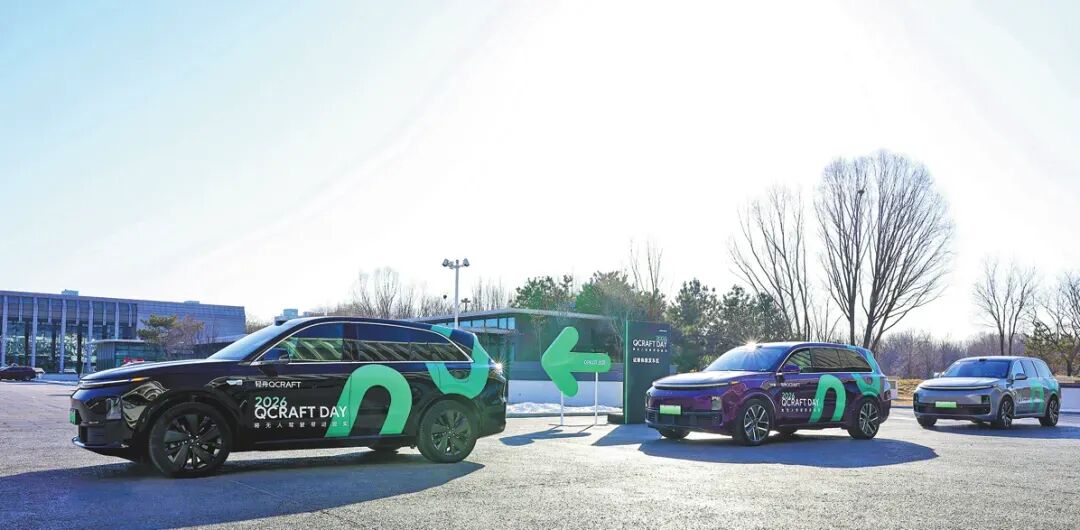
Source: QCraft's WeChat official account
Leveraging its first-mover advantage in mapless and end-to-end technologies, DeepRoute secured in-depth cooperation with core customers like Great Wall Motors and Leapmotor in 2024. In August of the same year, it released the VLA model, ushering intelligent driving into the large model era. This technological breakthrough enabled DeepRoute to grow rapidly in the third-party urban NOA market, achieving a market share of nearly 40% in October 2025 and becoming the second-largest supplier after Momenta in the fourth quarter of 2025.
According to 36Kr Automotive, DeepRoute had already submitted its listing materials by the end of 2025, two months earlier than Momenta.
3. Conclusion
After nearly a decade of competing on the same stage, the three companies, while simultaneously rushing for HKEX IPOs, have followed vastly different growth paths, each possessing core strengths but also facing distinct commercialization challenges.
How can Momenta convert its scalable implementation advantages into sustained revenue growth and steadily improving gross margins? How can QCraft translate its million-unit scale advantage into higher per-vehicle profitability? How can DeepRoute transform its technological advantages into consistent and stable revenue growth?
These questions will not be overlooked by the capital market simply because of compelling technological narratives.
Ultimately, an IPO merely secures an entry ticket for the industry's final competitive showdown. The ultimate deciding factor lies not in who rings the bell first but in who can most rapidly translate technological advantages into commercial figures that withstand secondary market scrutiny.
-
![]()
The Allure of 'Acquisition Spree': Li Shufu's Left Turn, Xu Jiayin's Right
-
![]()
Strategic Transformation Yields Results: Phoenix Optics Reports 10.9% YoY Rise in Core Net Profit for H1 2026
-
![]()
Three Key Growth Trajectories Synergize! Crystal-Optech Reports 3.478 Billion Yuan in Revenue for H1 2026
-
![]()
Semi-Annual Report Sparks XPENG Motors Buzz
-
![]()
1.6 Billion Big Order Secured! SeeYA Technology's Revenue Soars by 287.87% in the First Half of the Year
-
![]()
Baidu's Profits Plunge by 68%: Unraveling the Mystery Behind the Numbers
-
![]()
Baidu’s Profits Tumble by 68%! Where Has All the Money Gone?
-
![]()
Hynix’s Taobao Store Shuts Down Abruptly: What Should Customers Do About Warranty Services for Memory Modules?