The Retreat of European and American Brands Accelerates Chinese Automakers' Seizure of the Ultra-Luxury Market
 05/22 2026
 640
640
"Who is Leading the Transformation?"
Author | Gong Chenyuan Editor | Li Guozheng Produced by | Bangning Studio (gbngzs)
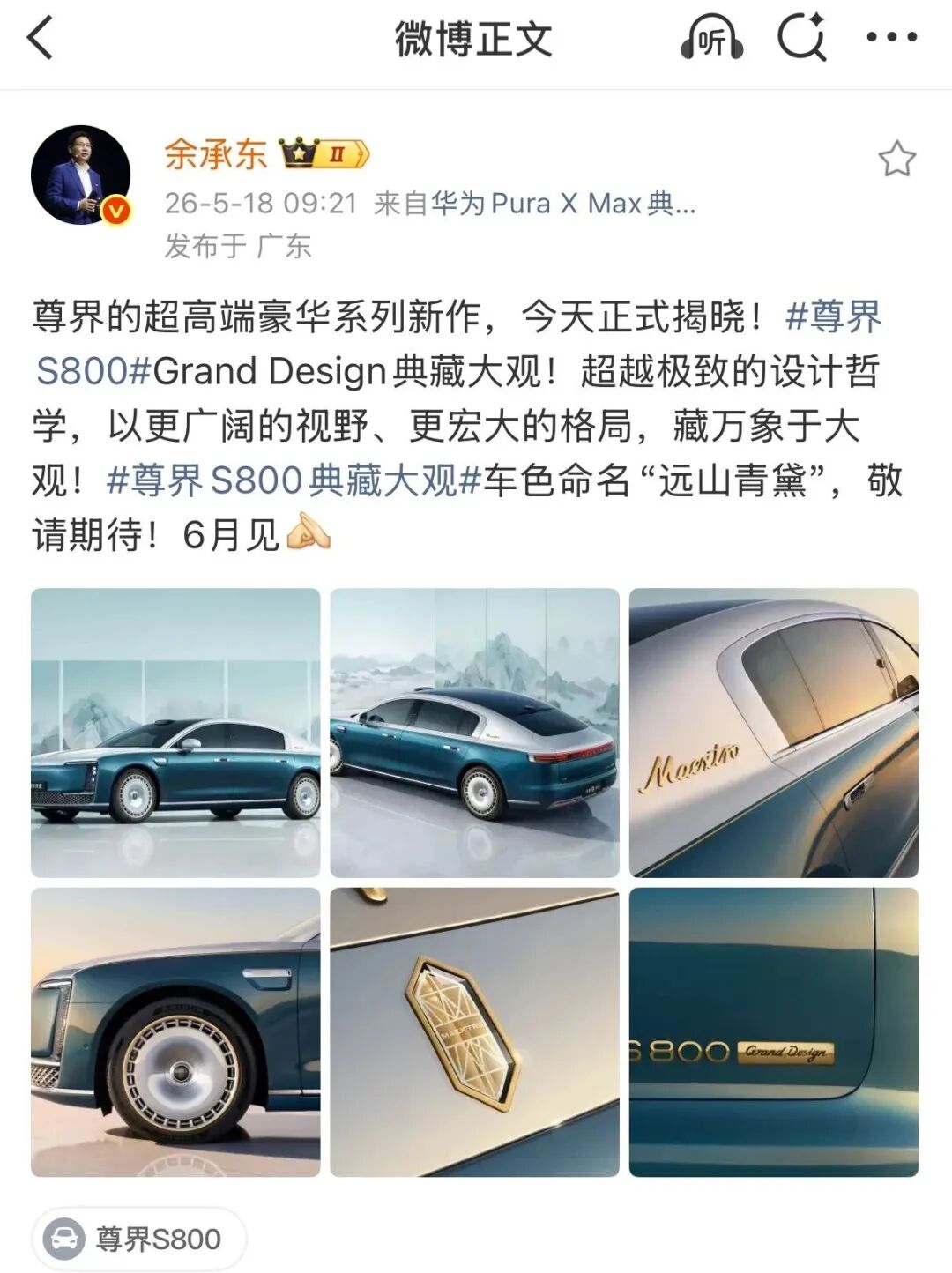
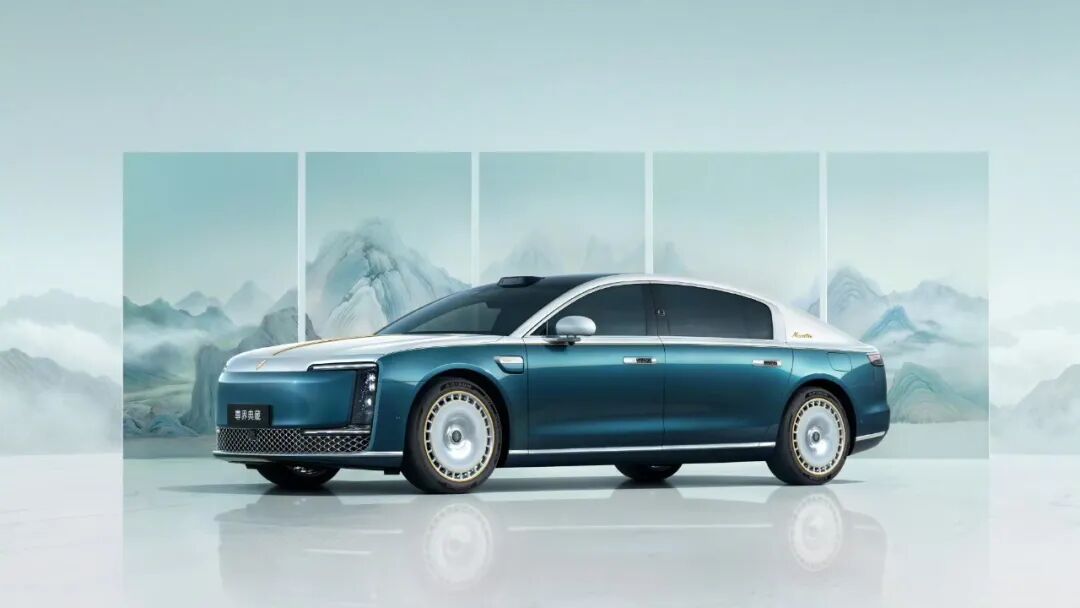
Featuring a golden exclusive emblem, golden rims, and golden body lines... On May 18, Yu Chengdong announced on social media the real-car appearance of Zunjie's new ultra-high-end luxury car series—the Zunjie S800 Grand Design Collection Grand View (translated as 'Collection Grand View').
Previously, this Huawei Executive Director, Director of the Product Investment Review Committee, and Chairman of Terminal BG stated that this new model is expected to be priced between 1.5 million and 2 million yuan, belonging to the high-end custom category.
The car is set to be launched in June. The extensive use of gilded designs throughout the vehicle has sparked heated discussions among netizens, with comments such as "genuine gold trim, too luxurious."
Market performance confirms Zunjie's popularity. Harmony Intelligent Mobility announced in mid-May that the Zunjie S800 had 1,142 insurance registrations in April, with cumulative deliveries exceeding 17,000 units as of April 30, maintaining its top position in the ultra-luxury sedan segment above 700,000 yuan for eight consecutive months.
Zunjie's strong upward trajectory is not an isolated case. Multiple Chinese automakers are entering and seizing the ultra-luxury market.
In stark contrast, some overseas brands, particularly from Europe and America, are contracting their operations, divesting assets, and streamlining channels.
In late April, Porsche announced the transfer of equity related to Bugatti. In early May, Bentley officially announced a strategic contraction of its pure electric vehicle projects, while Porsche China plans to significantly streamline its channel network by the end of 2026. In mid-May, Maserati sought collaboration with Chinese automakers in an attempt to leverage electrification for survival.
Amidst the advance and retreat of Eastern and Western automakers, the century-old ultra-luxury automotive market landscape is undergoing dramatic changes.
▍01 Clustered Ascent and Collective Contraction
Chinese automakers' foray into the ultra-luxury car market is shifting from isolated attempts to multiple breakthroughs—brands like Zunjie, Avita, Nio, and BYD are intensively focusing on the multi-million-yuan ultra-luxury sector.
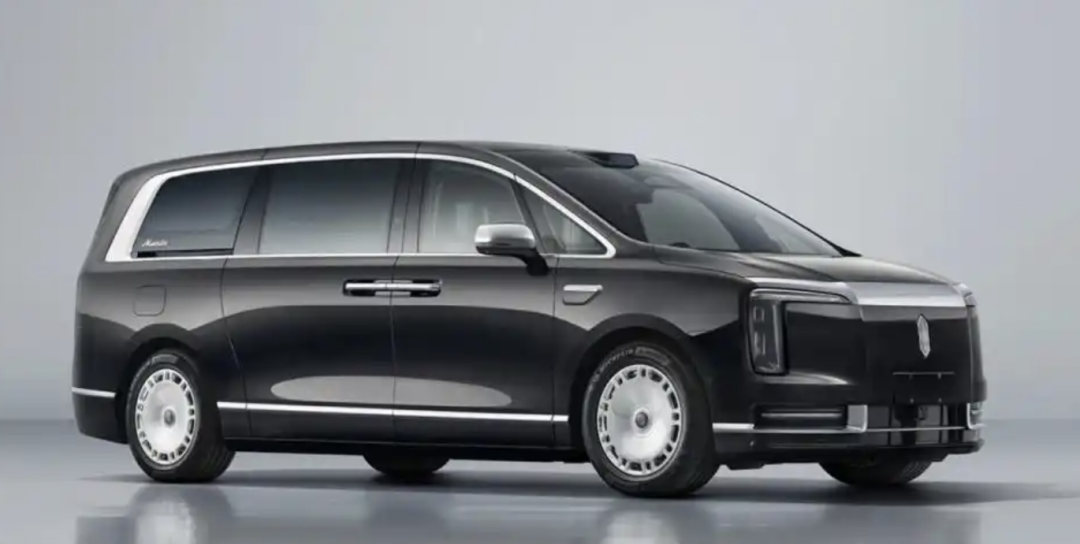
In addition to the Zunjie S800 Grand Design, brands under Harmony Intelligent Mobility will soon launch multiple ultra-luxury models. According to the 407th batch of the "Road Motor Vehicle Production Enterprises and Products Announcement" released by the Ministry of Industry and Information Technology on May 10, Zunjie's first MPV model, the Zunjie V800, and the AITO M9 Ultimate Extended Edition are also set to hit the market.
Among them, the Zunjie V800 boasts a length of 5,495 millimeters and a wheelbase of 3,430 millimeters, making it not only larger than Harmony Intelligent Mobility's first MPV, the Zhijie V9, but also significantly exceeding currently available imported luxury MPVs such as the Toyota Alphard and Lexus LM. The Zunjie V800 comes standard with Huawei's Qiankun ADS 5 intelligent driving system and an 896-line LiDAR, offering a far superior intelligent experience compared to imported luxury MPVs, with a significant generational gap.
On the track of Chinese brands attacking the ultra-luxury market, Zunjie is not alone; brands like Avita, Nio, BYD, and Great Wall are also making significant efforts.
At the Beijing Auto Show in late April, Avita announced the launch of a large six-seater flagship SUV in 2026. Some bloggers claimed that the internal codename for this model is G618, built on the SDA central ring network architecture, featuring a 2+2+2 layout and a pure electric range of 650 kilometers.
On April 29, Li Yunfei, General Manager of BYD Group's Brand and Public Relations Department, stated on social media that the Yangwang U9 Xtreme, priced at over 20 million yuan per unit, became the most expensive model sold at the Beijing Auto Show, gaining recognition from the global top-tier circle. This is a pure electric supercar, initially set to be released in September 2025, with a limited global production of 30 units.
What defines an ultra-luxury car? Some public sources state that it refers to models at the pinnacle of the automotive pyramid in terms of price (excluding value-added tax), configuration, performance, craftsmanship, and brand value, such as passenger vehicles priced at 900,000 yuan or above (excluding VAT), and light and medium commercial buses, like those exceeding 5.5 meters in length and 3.3 meters in wheelbase.
However, there are differing voices within the industry on this concept.
"I don't agree that vehicles priced above 1 million yuan are considered ultra-luxury cars," Qin Lihong, co-founder and president of Nio, stated in an interview with Bangning Studio on May 16. "Imported cars sold in China for over 1 million yuan have various taxes and fees totaling over 50%, which essentially inflate the price. Now, with Chinese automakers developing and manufacturing locally, avoiding high taxes, costs are significantly reduced, and prices have come down."
Nio's new ET9, set to launch at the end of May, focuses on the high-end executive market, with a price point below 1 million yuan, competing with traditional D-segment vehicles through its intelligent chassis and fully self-developed technologies.
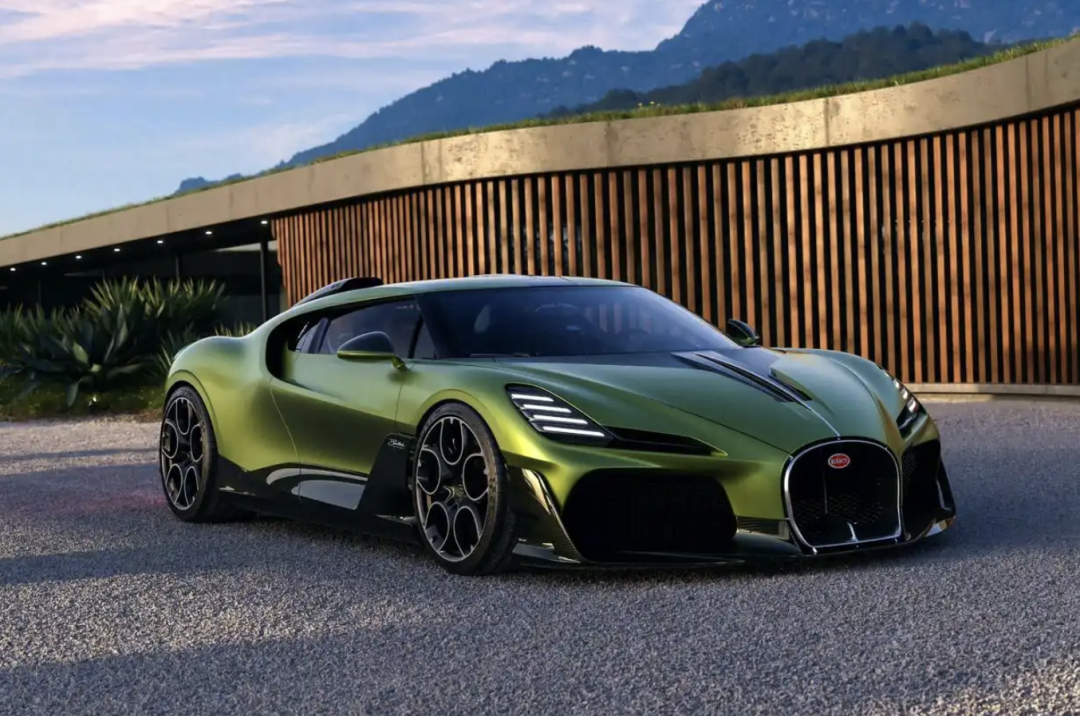
In contrast to the aggressive advances of Chinese automakers, overseas ultra-luxury brands are collectively experiencing a contraction. One of the landmark events is Porsche's divestment of Bugatti.
On April 26, Porsche announced the sale of its 45% stake in the Bugatti-Rimac joint venture and its 20.6% stake in the Rimac Group to the international consortium HOF Capital. The overall valuation of Bugatti Rimac is approximately 1 billion euros, with the transaction expected to be completed by the end of 2026.
From a performance perspective, Bugatti, as a top-tier supercar, has an annual production capacity of less than 100 units, with significant R&D investment but chronic losses. Against the backdrop of Porsche's 92.7% profit plunge in 2025, Bugatti has become a burdensome asset.
Additionally, Porsche plans to reduce its sales outlets in China from 120 by the end of 2025 to 80 by the end of 2026. Alexander Pollich, President of Porsche China, stated that a more streamlined and profitable dealer network can better provide customers with Porsche's standard high-end experience.
Other ultra-luxury brands are also contracting their strategies. Bentley executives publicly announced in early May that they would suspend (translated as 'suspend') pure electric vehicle R&D and focus on hybrid models. Maserati, due to sluggish sales, has been repeatedly rumored to be "up for sale."
Public data shows that in 2025, most ultra-luxury brands experienced a sales decline of over 20% in China, with diminishing returns.
Through the contraction moves of overseas brands, one can glimpse their dilemma: fuel technology barriers are being broken by electrification; large-displacement models face carbon neutrality pressures; electrification transformation requires massive investment with long return cycles; Chinese automakers' intelligent experiences are comprehensively surpassing foreign brands, leading to a continuous decline in foreign brand premiums.
▍02 Restructuring of Consumption Logic
The reversal of Chinese and foreign dynamics in the ultra-luxury car market fundamentally stems from the restructuring of consumption logic and value systems—brand worship in the fuel car era is crumbling, and technological value in the era of electric intelligence has become the new benchmark.
"I've only had the car for three months and driven over 2,000 kilometers. I woke up to find the official price dropped by 220,000 yuan. The Black Horse Golden Shield is truly black," complained an ultra-luxury car owner online recently.
Another ultra-luxury car owner stated online that mainstream ultra-luxury cars used to make people feel powerful and unapproachable, but now they are no longer out of reach, with many classic models experiencing significant price drops, giving him the opportunity to purchase. These cars have transformed from toys for the super-rich or status symbols into products that ordinary people can acquire after a few years of effort.
These voices reflect the disruptive changes in the logic of the ultra-luxury car market. Once symbols of status, luxury items are now returning to their essence as transportation tools. The collapse of the price system, iteration of consumer groups, and restructuring of value logic are collectively reshaping this market.
The underlying reason is that Chinese automakers are redefining luxury.
Some argue that the core of traditional ultra-luxury cars lies in mechanical scarcity—large-displacement engines, precision transmissions, and century-old brand heritage. These scarcities determined their high premiums. In the era of electric intelligence, however, the core of luxury has shifted to technological experiences, such as intelligent driving and intelligent cockpits, which are areas where Chinese automakers excel.
"Many imported cars that sold for 1.5 million yuan used to sell for only 50,000 euros in Europe. The price difference was all taxes and brand premiums. Now, with Chinese automakers manufacturing locally, without high tariffs, and with higher intelligent configurations, prices are naturally more reasonable," Qin Lihong believes. Companies like BYD, Huawei, and Nio are all doing the right thing. Although the ultra-luxury market is not large in volume, it is one of the dominant niche markets with defining power in the industry.
The consumer base is also iterating. Wang Sheng, General Manager of J.D. Power China's Automotive Product Power Solutions Division, stated that traditional ultra-luxury buyers were primarily middle-aged and elderly consumers who valued brand heritage. Now, new buyers are mostly tech-savvy elites and young entrepreneurs who place greater emphasis on intelligence, tech-savviness, and cost-effectiveness.
The user profile of Zunjie S800's pre-orders shows that owners are mainly high-net-worth individuals, with males accounting for 80% and ages concentrated between 40-50 years old. Among them, 50% are additional purchases, and 30% are trade-ins. Most pre-order owners are already ultra-luxury car owners, having previously owned brands like Rolls-Royce, Maybach, and Porsche.
Under value restructuring, the market presents a polarized landscape where overseas fuel-based ultra-luxury brands continue to shrink, while "electric ultra-luxury" becomes a new growth point, with Chinese automakers taking the lead in this track (translated as 'sector').
Fang Yinliang, a Global Managing Partner at McKinsey, publicly stated that currently, the new energy vehicle market above 600,000 yuan is a blue ocean, presenting an excellent window of opportunity. Chinese automakers, leveraging their advantages in intelligence and cost, are rapidly filling the void. Products launched by Zunjie, Nio, and Avita will comprehensively surpass overseas ultra-luxury cars in the intelligent domain, given their significant price advantages.
Overseas brands are not without opportunities, but they must humble themselves. In mid-May, news emerged that Huawei Harmony Intelligent Mobility, JAC Motors, Stellantis Group, and its Maserati brand had initiated cooperation on new vehicles, with a model similar to Harmony Intelligent Mobility's five brands and Chery's revival of the Land Rover Freelander.
In the short term, overseas brands can still enjoy brand premiums, but in the long run, technology and experience will be the core competitiveness.
For Chinese automakers, seizing the ultra-luxury car market not only allows them to sell more expensive cars but also helps their brands reach the pinnacle. Multi-million-yuan models serve as brand flags, driving premium pricing for mid-to-low-end models and enhancing brand value.
As Fu Yuwu, Honorary Chairman of the Chinese Society of Automotive Engineers, stated, "Chinese automakers' foray into the ultra-luxury segment reflects industrial confidence and is a necessary path from becoming big to becoming strong."
Challenges remain, such as the small market size of ultra-luxury cars, insufficient brand heritage for Chinese brands, and the need to improve consumer recognition. However, it is undeniable that Chinese automakers have already taken center stage in the ultra-luxury car market.
In this market, the retreat of overseas brands and the advance of Chinese automakers are not coincidental but inevitable outcomes of industrial transformation. This competition is not about sentiment but about strength. The era of ultra-luxury cars belonging to Chinese brands is arriving.

-
![]()
Strategic Transformation Yields Results: Phoenix Optics Reports 10.9% YoY Rise in Core Net Profit for H1 2026
-
![]()
Three Key Growth Trajectories Synergize! Crystal-Optech Reports 3.478 Billion Yuan in Revenue for H1 2026
-
![]()
Semi-Annual Report Sparks XPENG Motors Buzz
-
![]()
1.6 Billion Big Order Secured! SeeYA Technology's Revenue Soars by 287.87% in the First Half of the Year
-
![]()
Baidu's Profits Plunge by 68%: Unraveling the Mystery Behind the Numbers
-
![]()
Baidu’s Profits Tumble by 68%! Where Has All the Money Gone?
-
![]()
Hynix’s Taobao Store Shuts Down Abruptly: What Should Customers Do About Warranty Services for Memory Modules?
-
![]()
A Computing Power Titan Unveils a Revolutionary Product: Performance-to-Power Ratio Skyrockets by 450 Times!