JD Builds 100,000-Card Cluster, ByteDance 'Borrows' $29.6 Billion: AI Computing Power Enters a High-Stakes Gambling Phase
 09/14 2026
 432
432
Banks are eager to lend to ByteDance, and JD aims to build a 100,000-card cluster. In this computing power gamble, no one is leaving the table.
Editor | Meng Wen
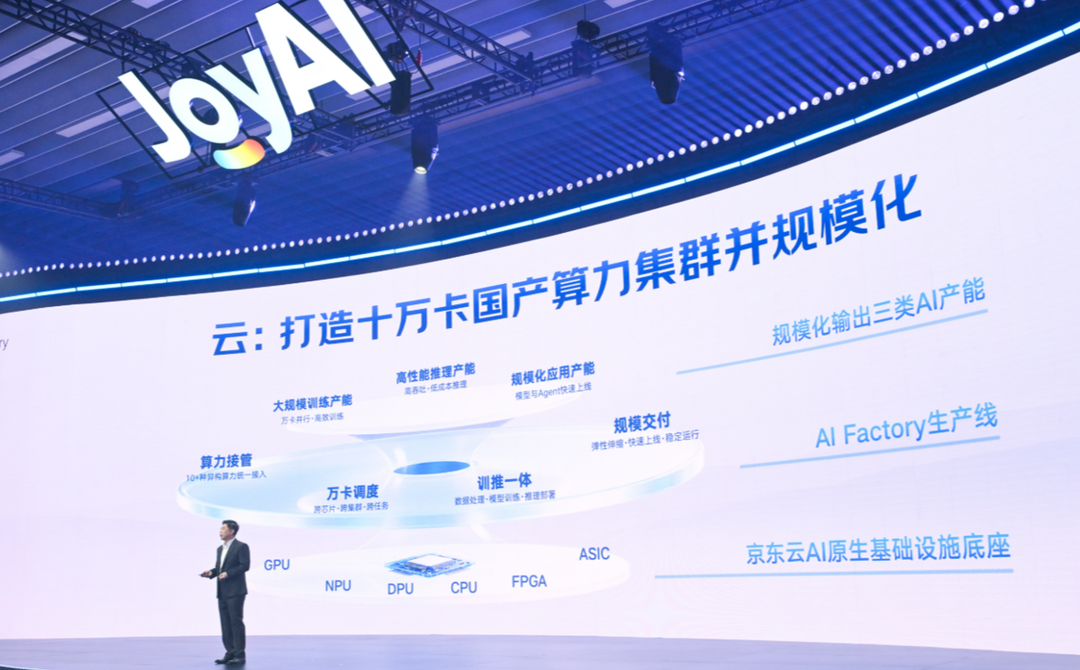
At the recently concluded JDD Conference, Cao Peng, Chairman of the JD Group Technology Committee and President of JD Cloud, announced that JD Cloud has built a domestic 10,000-card cluster in collaboration with partners such as Moore Threads, with plans to construct a 100,000-card cluster next, targeting large model training, inference, and embodied intelligence.
Supporting him was Zhang Jianzhong, founder of Moore Threads and former Global Vice President and General Manager of China at NVIDIA. His judgment is that 'the Scaling Law remains effective, and a 100,000-card cluster is the trend.'
Around the same time, ByteDance was also advancing a $29.6 billion syndicated loan, with the interest rate pushed to the lowest tier for similar borrowings by Chinese tech companies. Alibaba and Tencent's capital expenditures are also doubling year-over-year. Across the ocean, this AI investment war continues to escalate. According to The Information, Anthropic has signed $517 billion in computing power contracts over the past 11 months, equivalent to eight times its annual revenue. The most interesting case is OpenAI.
From 'Stargate' to a series of astronomically priced agreements with Oracle, NVIDIA, and AMD, OpenAI has nearly single-handedly pushed global computing power investment to new heights, making it the most aggressive player in this computing power arms race. Yet recently, CEO Sam Altman, in a podcast, unusually urged the industry to be cautious. The most risk-talking person signed the biggest deal; the most aggressive expander is now advising others to stay calm. From Zhongguancun to Silicon Valley, everyone sees the risks, but no one dares to stop first.
JD Builds 100,000 Cards, ByteDance 'Borrows' $29.6 Billion: The AI Arms Race Enters a Billing Cycle
Recently, Chinese tech giants have increasingly talked about 'spending.' ByteDance is advancing a $29.6 billion syndicated loan, Alibaba and Tencent's capital expenditures are doubling year-over-year, and JD announced at the JDD Conference that it has built a domestic 10,000-card cluster with partners like Moore Threads, with plans for a 100,000-card cluster next. A Moody's report in September mentioned that the total capital expenditures of China's leading tech companies from 2026 to 2027 are expected to rise from $65 billion in 2025 to $140 billion to $165 billion.
This is quite different from previous years. Back then, when big companies talked about AI, they focused more on model size, application user count, and when they could find a consistently profitable business. This year, more money is being spent on invisible aspects of the business: GPUs, data centers, electricity, and computing resources booked years in advance. Each company's spending reflects its situation. JD ties this investment to its business. In the first half of this year, JD's R&D investment grew 53.2% year-over-year, accelerating for three consecutive quarters; it also plans to purchase 3 million robots, 1 million autonomous vehicles, and 100,000 drones in the next five years, aiming to build the 'world's largest physical world operations center.'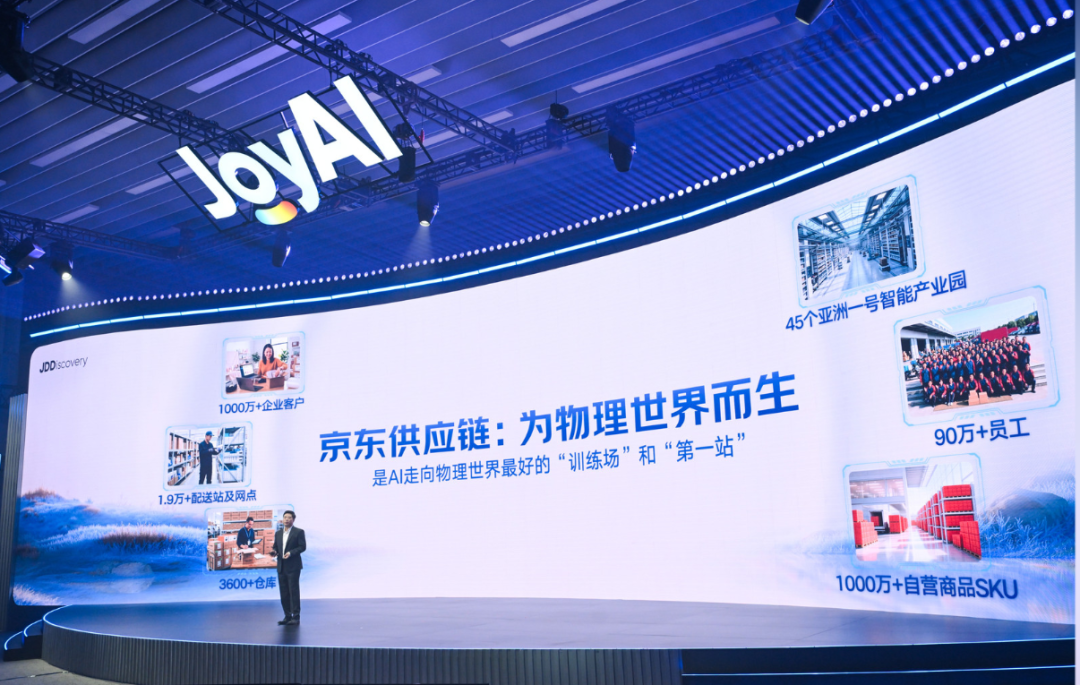
In other words, JD needs computing power that can enter warehouses, distribution centers, supply chains, and robots, not just more GPUs. That's why when JD Cloud announced the 100,000-card cluster, it emphasized large model training, inference, and embodied intelligence together. As Cao Peng put it, 'JD's AI wasn't born in papers; it was honed order by order on production lines, in warehouses, distribution centers, and throughout the supply chain.' He also drew an analogy: some companies approach AI by 'developing technology first, then finding applications—like making shoes before measuring feet'; JD approaches AI by 'growing technology from scenarios—measuring feet before making shoes.'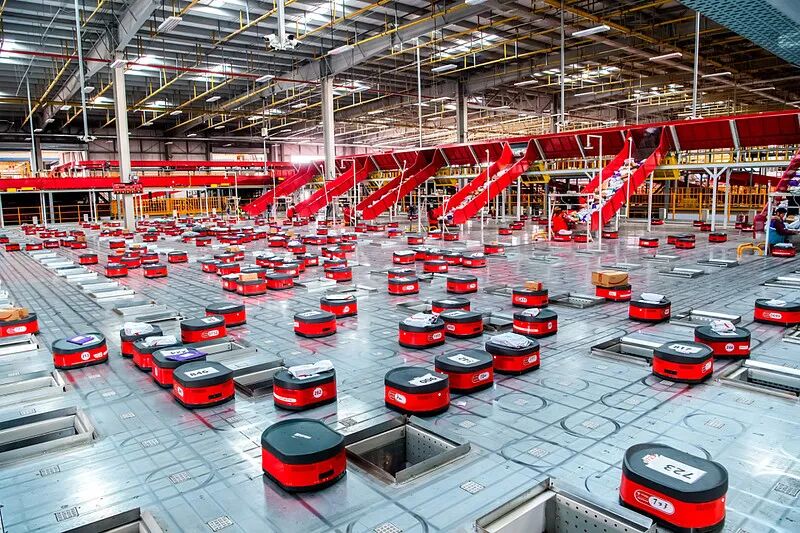
Alibaba's calculations were grand from the start. In February last year, Alibaba CEO Wu Yongming announced plans to invest over 380 billion yuan ($53 billion) over three years in cloud and AI hardware infrastructure, exceeding Alibaba's total investment over the past decade. At last year's Cloud Town Conference, he reiterated this plan and stated that further investments would follow.
Compared to Alibaba's massive spending, Tencent is more cautious. Last year, its capital expenditures reached 79.2 billion yuan ($11 billion), a record high but still only about 10% of revenue. Moreover, Tencent Cloud achieved Large scale profitability (scaled profitability) that year, showing some return on investment.
Baidu is 'burning money while seeking payoffs': it remains committed to investing in Wenxin (its AI model) and aims to grow its intelligent cloud business with AI. Last year, Baidu's core AI new business revenue reached 40 billion yuan ($5.6 billion), up 48% year-over-year. In the first quarter of this year, AI business revenue accounted for over half for the first time, and capital expenditures also rose significantly. Another focus is its self-developed Kunlun core: using self-developed chips to supplement high-end AI computing power supply, reduce inference and training costs, and integrate model capabilities into intelligent cloud, search, document libraries, and autonomous driving scenarios like Luobo Kuaipao.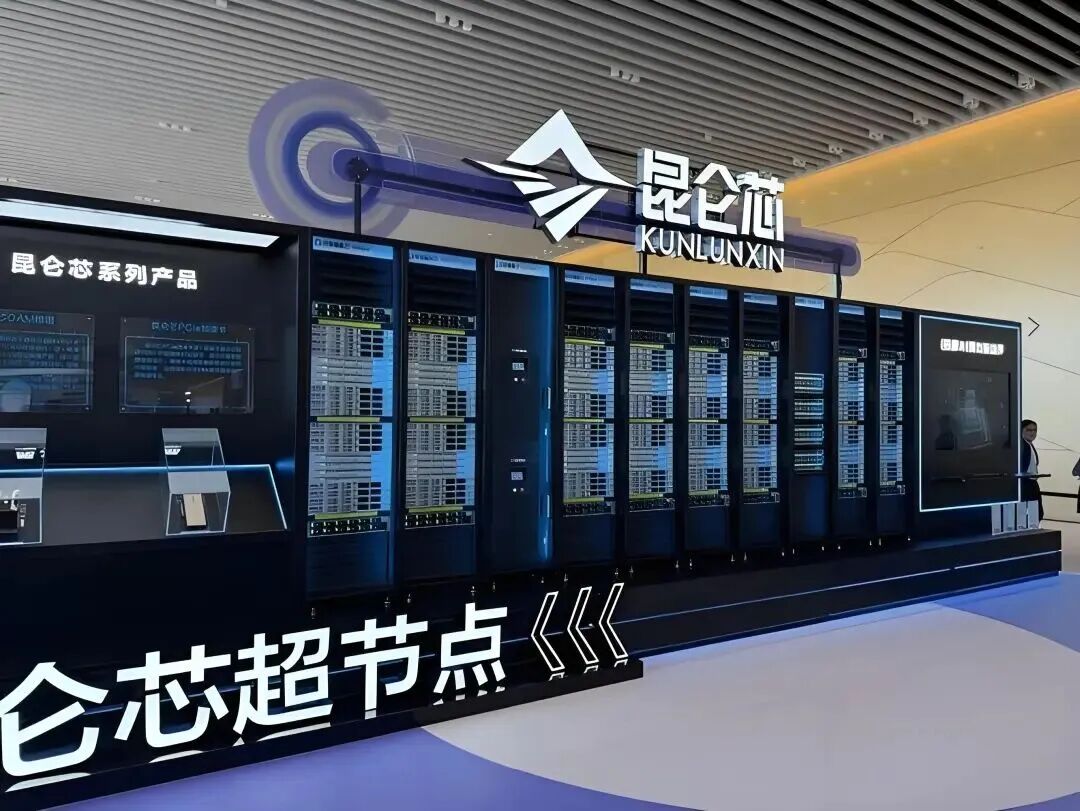
ByteDance keeps changing and expanding its bets on AI computing power. Its 2025 capital expenditures are about 150 billion yuan ($21 billion), with 90 billion yuan explicitly allocated to AI computing power. This year's plan has escalated from 160 billion yuan discussed late last year to over 200 billion yuan. According to Caixin, ByteDance will invest nearly 160 billion yuan in AI this year, with over half going to AI chip procurement.
It's clear that AI investments by big companies have shifted from 'whether to buy' to 'how much to buy, when to buy, and whether these investments can eventually pay off.' Across the ocean, this AI spending war has reached absurd levels. According to The Information, Anthropic has signed computing power contracts totaling $517 billion over the past 11 months. Since October 2025, it has secured at least 14.8 gigawatts of computing capacity on top of its original 1-2 gigawatts and plans to build its own data centers.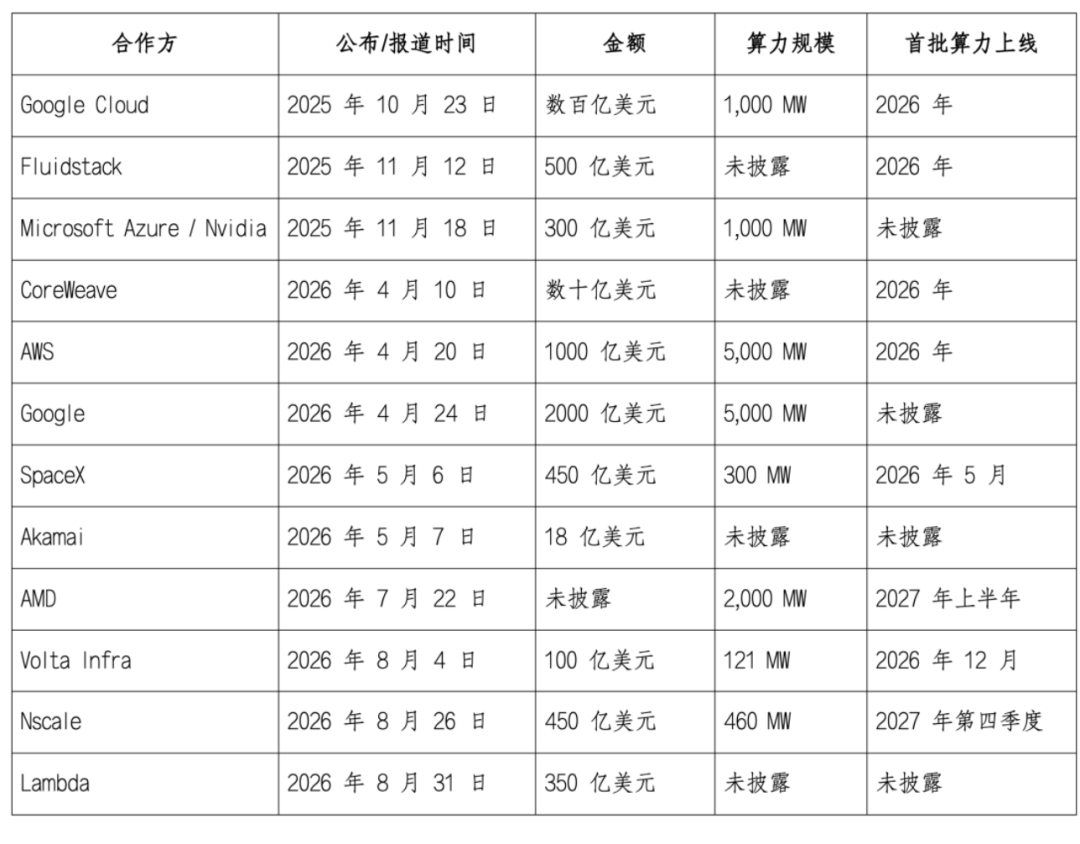
Image Source: Yun Toutiao
What does 14.8 gigawatts mean? At about 750,000 U.S. households per gigawatt, this equals the electricity consumption of over 10 million households. Anthropic's current annualized revenue is about $65 billion, meaning its computing power contracts are nearly eight times its annual revenue. Moreover, much of this computing power won't be available immediately.
For example, Nscale's six-year, $45 billion contract corresponds to 460 megawatts, but this capacity won't come online until late 2027. According to The Information, many of these contracts use a take-or-pay model, meaning: even if the computing power isn't used, the money must still be paid.
Late last year, Anthropic's plan for investors was to lease about $180 billion in servers by 2029; less than a year later, that figure has nearly tripled. Anthropic has reasons to gamble—its business is growing rapidly: annualized revenue was about $1 billion in early 2025, surging to $65 billion by late July this year. Enterprise clients spending over $1 million annually grew from over 500 to over 1,000 in two months. Computing power was even in short supply at times, requiring throttling.
Multiple media outlets reported today that Anthropic has selected Nasdaq for its IPO, with roadshows potentially starting as soon as October, targeting a valuation of about $2 trillion; if achieved, this would surpass SpaceX and aim for the 'largest IPO in history.' The question is whether today's growth can cover tomorrow's contracts. Anthropic expects revenue to reach $190 billion to $200 billion by 2028. Even if this goal is met, average annual computing power contract spending exceeding $50 billion remains a heavy burden.
Moreover, computing power differs from ordinary factories—its value changes faster. Today's most advanced GPUs may be replaced by newer chips in a few years; models requiring so much computing power today may accomplish the same work with less power in a few years due to algorithmic efficiency gains. Computing power must be bought, but how far into the future should one pay to stay safe?
Alibaba and Tencent Calculate ROI; Anthropic Buys Certainty
In both China and the U.S., big companies keep asking how much AI is worth investing in. The answer depends not only on technical judgments but also on a company's cash flow, business scale, and how long it can tolerate investments without seeing returns. This is where Chinese and U.S. AI capital expenditures diverge. Moody's report mentions that the six largest U.S. cloud providers are expected to spend over $785 billion in capital expenditures in 2026 alone, potentially reaching $1 trillion in 2027. Interestingly, U.S. companies invest about six times more than Chinese companies, yet their total data center capacity is less than twice China's.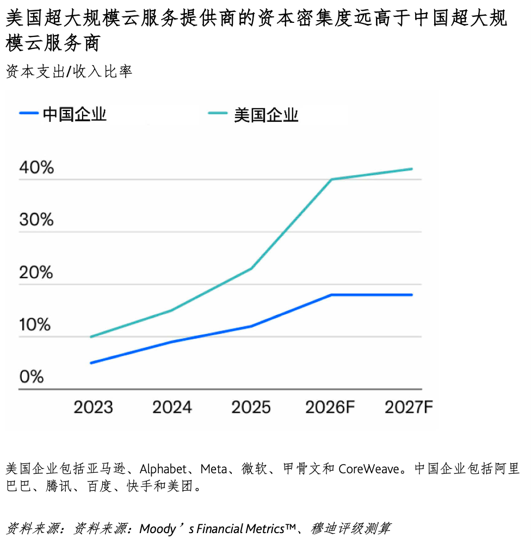
Where does the difference go? A large portion is U.S. companies paying in advance for future computing power supply. U.S. hyperscale cloud providers' data center lease commitments have reached $1.2 trillion, with about $820 billion corresponding to data centers not yet under construction. This means U.S. big companies' capital expenditures aren't translating into today's revenue but into capacity for the next few years or even longer.
There's a practical reason behind this: AI infrastructure has long construction cycles. Land, electricity, data centers, servers, and chips all require advance planning; meanwhile, demand for cutting-edge models is growing rapidly. If companies wait until they truly lack computing power to buy, they may already be too late.
Thus, U.S. companies are willing to pay higher prices for 'certainty of obtaining computing power.' This explains why Anthropic signed such massive long-term contracts—it's betting on sustained future model demand, locking in resources early to secure expansion space. Chinese big companies face different conditions.
Moody's report notes that China's leading tech companies generally have smaller revenue and profit bases than their U.S. counterparts, with limited financial flexibility. Additionally, export restrictions on high-end chips constrain computing power supply. Chinese companies' AI investments cannot simply replicate U.S. strategies.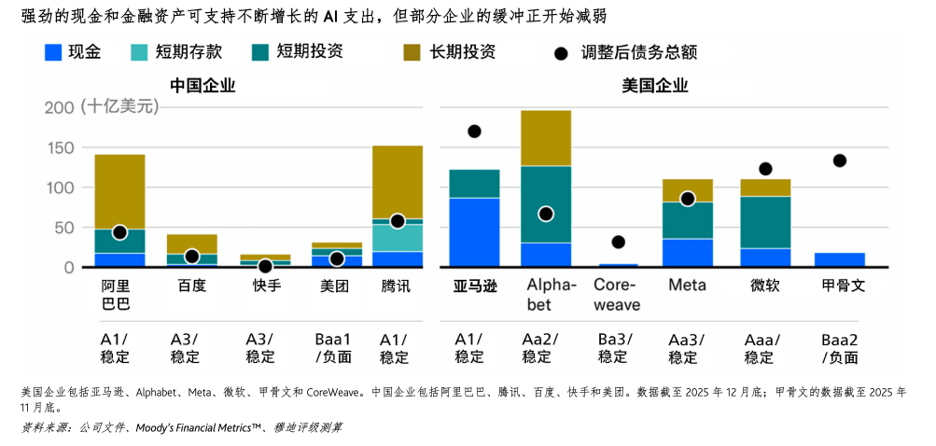
This doesn't mean Chinese companies will reduce investments. On the contrary, Moody's expects free cash flow to turn negative for many leading companies in China and the U.S. in 2026 and 2027. Both sides are burning money, just differently. U.S. companies can leverage capital markets, cloud services, and long-term leases to lock in infrastructure needs years in advance. Chinese companies calculate more carefully, requiring each new investment to align with specific businesses.
ByteDance's recent $29.6 billion syndicated loan exemplifies this. The interest rate is at the lowest tier for similar borrowings by Chinese tech companies, indicating that in banks' eyes, ByteDance's expansion remains a good bet. This loan differs fundamentally from Anthropic's contracts: it's on-balance-sheet, backed by the company's business cash flow and credit.
JD follows the same logic. Beyond 10,000- and 100,000-card clusters, its massive investments in robots, autonomous vehicles, and drones ensure computing power can be applied to warehousing, distribution, and supply chains. AI infrastructure isn't an independent investment floating above the business but something that continuously finds specific production links to absorb.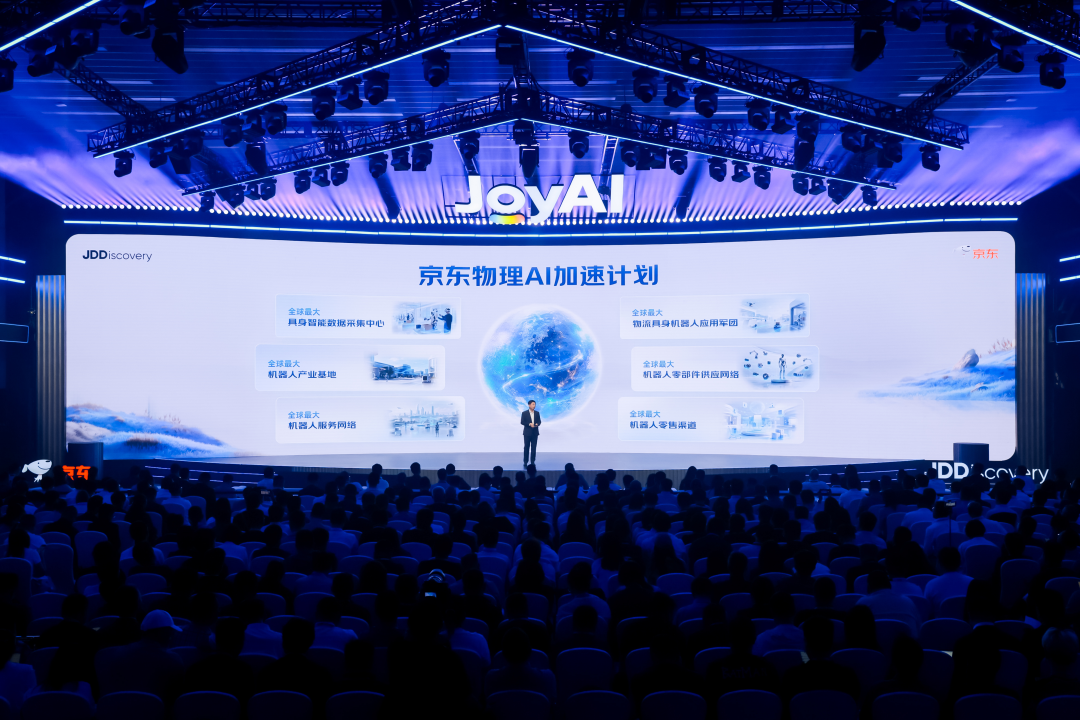
The same applies to Alibaba, Tencent, Baidu, and other domestic big companies. Their businesses are vast enough for AI to integrate into e-commerce, cloud computing, advertising, content, social media, and office productivity. The more they invest, the more they need to find sufficient businesses to absorb costs. In short, the upper limit of AI investment is ultimately determined by how much the business can support. Neither approach is simply superior.
If AI demand continues to surge, the production capacity secured in advance by U.S. companies will become a scarce asset; if demand falls short of expectations, those long-term contracts and massive data center investments will turn into hard-to-offload costs. Chinese companies, on the other hand, face the risk of either being too cautious in their investments and missing the window for computing power expansion, or investing too quickly and taking on even greater risks to their already strained cash flows. In the same high-stakes bet on computing power, one side is prepaying for the future while the other is meticulously calculating returns for the present.
As the gamble progresses, the test is no longer about who has deeper pockets, but who can "hold out longer."
Enflame, Moore Threads, and other members of the "Four Little Dragons of Domestic GPUs" gather, as shovel sellers join the betting table
It is widely known that the safest business during a gold rush is selling shovels. In this current AI gold rush, major companies are crazy (fengkuang, crazy here means "frantically") buying computing power, which has also brought a wave of business opportunities for domestic GPUs. This is a seller's market with abundant demand. Data from the China Academy of Information and Communications Technology shows that in the first quarter of this year, domestic AI computing power demand surged by 417% year-on-year, while supply growth was only 128%. High-end chips are in short supply, making "access to production capacity" the key to winning customers. Combined with export restrictions, domestic chips have shifted from being a "backup option" to a "must-have."
On September 11, Enflame Technology went public on the STAR Market, opening 188% higher and closing with a market capitalization of approximately 170 billion yuan. Just before its listing, its valuation in the final round of old share transfers was only 18.2 billion yuan. With this, the "Four Little Dragons of Domestic GPUs" have completed their gathering in the capital markets. Moore Threads and Moore Threads shares went public on the STAR Market in December last year, closing 425% and 693% higher on their debuts, respectively; Biren Technology listed on the Hong Kong Stock Exchange in January this year, with oversubscription exceeding 2,300 times and raising over HK$5.5 billion.
Coupled with Cambricon, which has been listed for some time and has a market capitalization of over 650 billion yuan, Chinese AI chip companies are experiencing a rare wave of collective revaluation in the capital markets. Shipments are also catching up. According to Caixin statistics, among AI chips shipped in the Chinese market this year, NVIDIA accounted for 55% with 2.2 million units; Huawei ranked first among Chinese vendors with 812,000 units, followed by Alibaba's T-Head with 265,000 units and Cambricon with 116,000 units. Enflame Technology's prospectus disclosed that its shipment volume in 2026 was 66,000 units, with a market share of approximately 1.7%.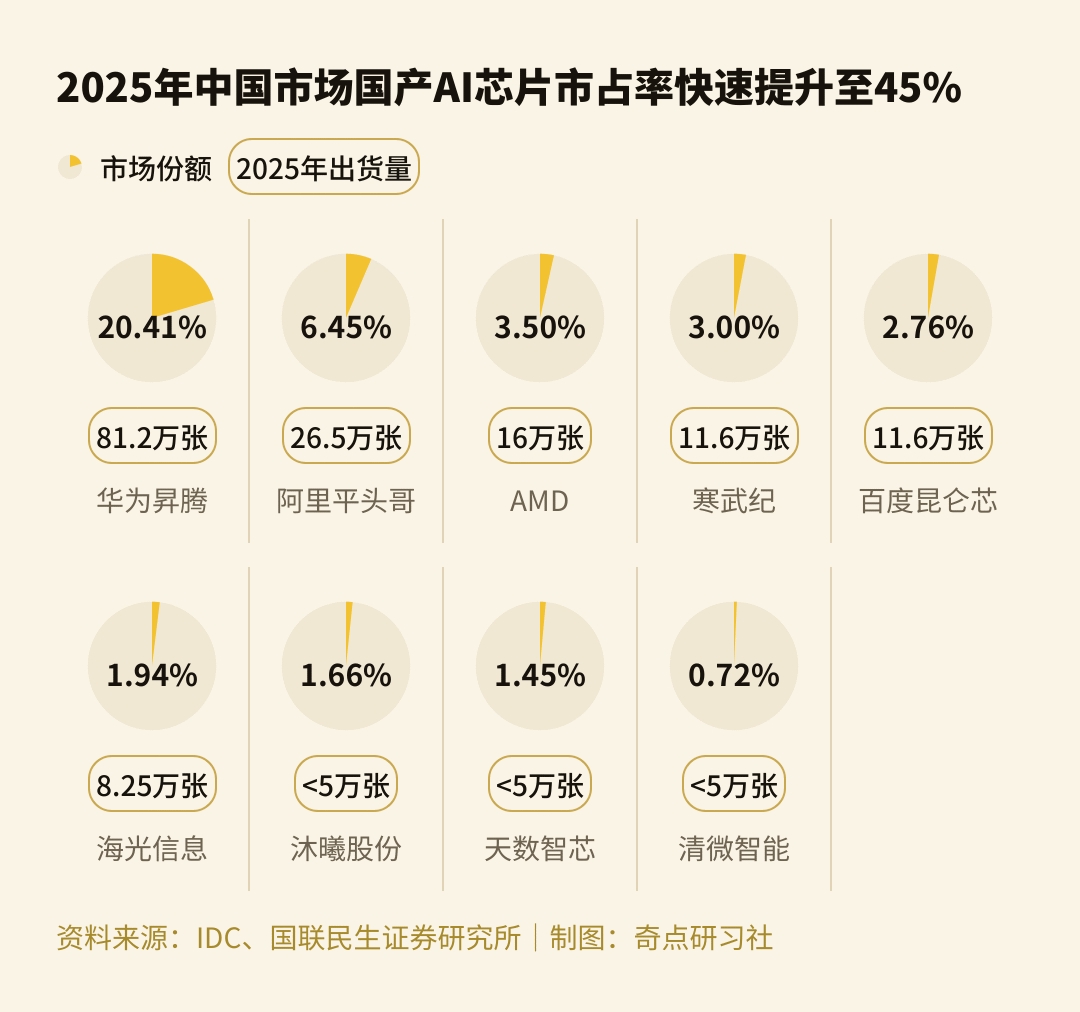
Among these players, the most heavyweight is unlisted Huawei. After being sanctioned, Huawei's single-chip computing power is weaker than NVIDIA's and consumes more power. Its solution is "super nodes + clusters": using all-optical interconnects to link thousands or even tens of thousands of Ascend cards together for computing like a single computer.
In September last year, Huawei unveiled its AI chip roadmap for the next three years, featuring the Ascend 950, 960, and 970 in sequence. In the fourth quarter of this year, the Atlas 950 super node equipped with 8,192 Ascend 950DT chips will be commercially deployed. According to Huawei's own calculations, its total computing power will be 6.7 times that of NVIDIA's same period (tongqi, same period here means "contemporary") NVL144 rack and can be further interconnected into a supercluster of 500,000 cards.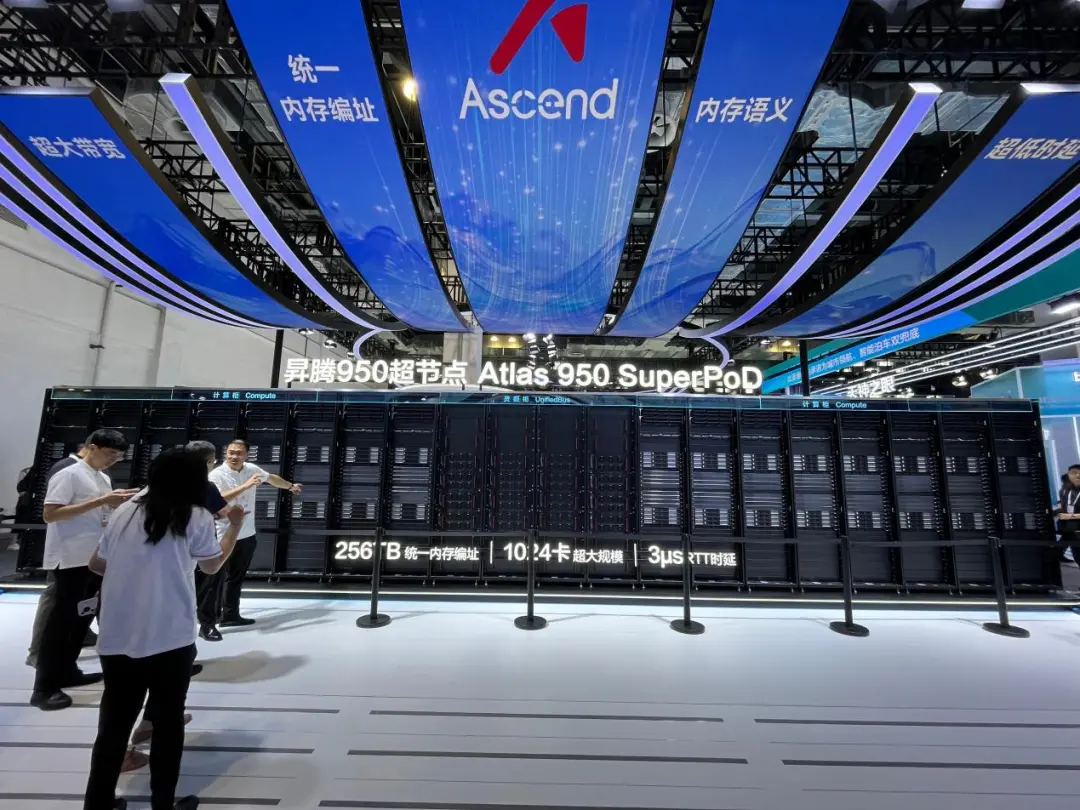
Currently, over 300 sets of the 384-card CloudMatrix super nodes have been deployed. As Huawei's rotating chairman Xu Zhijun put it, "Innovation is sometimes forced out." Unable to catch up with single-card performance, Huawei compensates with system-level solutions. At WAIC in July this year, super nodes became standard for Chinese chip vendors: Moore Threads showcased the 256-card MTT C256, Biren unveiled a 1,024-card optical interconnect solution, and Sugon even displayed a 100,000-card supercluster.
China's computing power business is shifting from "selling a single card" to "selling an entire system." Globally, shovel sellers taking center stage is not new, but Silicon Valley is even more aggressive. NVIDIA is simultaneously Anthropic's chip supplier, a major investor in Nscale, and holds stakes in companies like Anthropic and Lambda.
Last September, it announced plans to invest up to $100 billion in OpenAI, which would use the funds to deploy 10 gigawatts of NVIDIA chip-based computing power. Money goes out, and orders come back—Silicon Valley calls this a "circular transaction." History has seen almost the same script before.
Around 2000, Lucent and Nortel lent money to customers so they could afford their equipment. The equipment was sold, revenues were booked, and stock prices rose. The outcome, as we all know, was not pretty. When suppliers start worrying about their customers' wallets, they are no longer just selling equipment—they are betting their own fortunes. Today, a similar trend is emerging in the AI computing power supply chain.
Nscale is a case in point. This data center company, founded in 2024, signed a letter of intent with Microsoft in March this year for up to 1.35 gigawatts at its West Virginia campus. By summer, Microsoft quietly withdrew, and Anthropic took over at a cost of $45 billion over six years. Nscale's next move was the key: it used this contract to pitch IPO investors with a story of "$103 billion in contract revenue," despite having actual quarterly revenues of only about $100 million.
According to sources familiar with the matter, even internally, these figures were acknowledged as "indicative." But this did not stop Goldman Sachs from leading the charge to take Nscale public as soon as September: it aims to raise $3 billion with a target valuation of $50 billion. Nscale is not alone. This wave of suddenly emerging "new clouds" are essentially operators of computing power assets: they buy GPUs, build data centers, and lease computing power to model companies. Their upstream costs are real, but downstream demand hinges on the future revenues of model companies.
Altman's warning in September was directed at this group: "A bunch of new clouds are popping up, claiming to build massive amounts of computing power next year without corresponding revenue or buyers." Risks are thus passed along the supply chain, with each transfer becoming a "growth story" for one party. The only ones collecting rent without betting are those further upstream—power and land—which is why, in the end, everyone As if by prior agreement (buyueertong, As if by prior agreement here means " As if by prior agreement ") switched to talking in gigawatts: when amounts become meaningless, physical constraints become the only hard currency. While domestic shovel sellers are not as wild as Silicon Valley's circular transactions, they have also been pushed onto the capital's betting table by the computing power boom, with valuations far outpacing performance.
Among the "Five Little Tigers of AI Chips," only Cambricon is profitable so far. Moore Threads, which built a 10,000-card cluster for JD.com, saw its market capitalization fall from a high of 440 billion yuan in its early days of listing to less than 170 billion yuan. On September 7, when its initial locked-up shares were released, the stock hit the daily limit, and in December, nearly 40% of its total shares will be unlocked. Enflame has accumulated losses of nearly 4.5 billion yuan since 2023, with a price-to-sales ratio of 171 times on its listing day; Tencent is its largest institutional shareholder and customer, having invested over 5 billion yuan and subscribing to 248 million yuan in strategic placements during this IPO.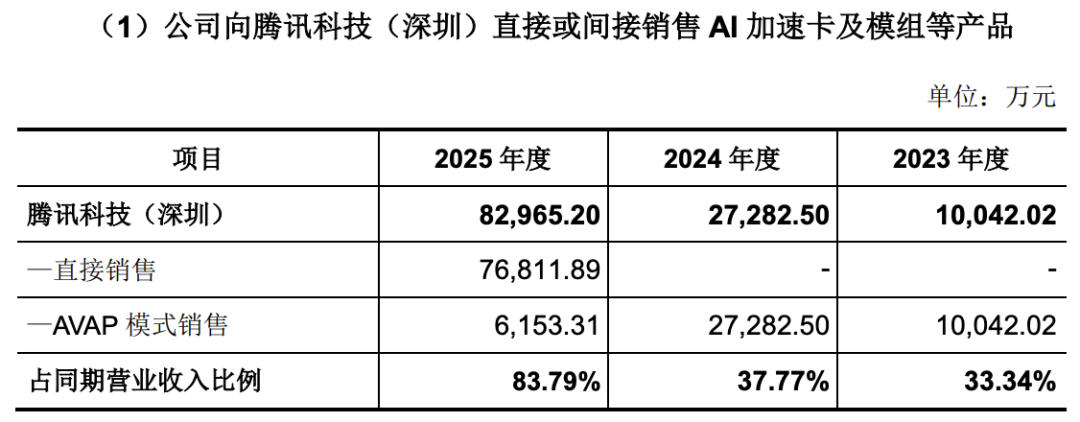
This "shareholder + customer" binding could be considered a "Chinese version of the internal cycle," but unlike Silicon Valley, the orders are backed by real business demand. Ultimately, what domestic shovel sellers are betting on is that "China's computing power must be self-reliant." This gamble is both easy and difficult. It is easy because capital expenditures by major companies continue to grow, and NVIDIA's high-end chips face supply constraints, leaving clear room for domestic alternatives.
The difficulty lies in the fact that orders must ultimately translate into profits, and market capitalization must ultimately solidify into genuine industrial capabilities for this gamble to truly pay off. After all, in a gold rush, the premise of "selling shovels is a sure bet" is that gold actually exists and that miners will always need new shovels. Now that many are rushing to sell shovels, the question is just how big the gold mine really is.
-
![]()
Rescuing Neta Auto: Even Taiyi Zhenren Steps In, and Associated Company’s Value Soars by 2.5 Billion Yuan
-
Why Does 'Taiyi Shenglian' Step In to Save Neta?
-
![]()
Registered Capital Sees Slight Reduction to 110.7291 Million Yuan! Yongxin Optics Finalizes Industrial and Commercial Registration Amendments
-
![]()
Renaming Marks the Start: Conant Optics’ Smart Glasses Business Gets a Full-Throttle Boost
-
Amazon’s Shift to Passkey Compels Home Furnishing Brands to Overhaul Backend Access Controls
-
![]()
Doubao Mobile Phones: Opting for the Path of Maximum Public Discourse
-
![]()
OpenAI Hits Pause on the AI Race: The Hype Around Large Models Cools Down, and Enterprise AI Enters the Era of Results-Based Adoption
-
![]()
Li Feifei's Atlas Opens the Door to a New World for Embodied AI