The Story Behind One Grasp: Understanding 'Measurement' in Intelligence and How Token Economics Aggregates 'Computing Power, Models, and Corpora'
 10/22 2026
 448
On a quality inspection line, a humanoid robot retrieves a tablet from a material bin and places it into a testing cabinet. After completing the inspection, it sorts the finished product. Grasping and placing into the cabinet, multi-item quality inspection, and finished product sorting are all performed seamlessly by the robot working alongside human operators on the same line.
A seemingly simple grasp connects perception, judgment, and execution. In the embodied model publicly released by Zhiyuan in September 2026, a single frame can be encoded into 24 visual tokens. Related experiments also demonstrate the model's low-latency capability in generating continuous actions. However, to calculate the cost of a grasp, one cannot simply count visual tokens; it is necessary to consider factors such as inference time, chip power consumption, execution success rate, and equipment investment.
This leads us to the two hard costs of the intelligent economy: one end is the token usage for model information processing, and the other is the actual cost of hardware and systems in completing tasks. Tokens are becoming an important measurement interface connecting model services, inference computing power, and data supply, but they are not yet the sole metric for measuring the value of all intelligent operations.
Electricity is measured in 'kilowatt-hours,' and model services are billed in 'tokens.' Token economics is accelerating its penetration into a broader range of application scenarios. On September 11, Wang Weiwei, Deputy Director-General of the Information Technology Development Department of the Ministry of Industry and Information Technology, disclosed at a press conference that as of June 2026, China's average daily token invocation volume had surpassed 500 trillion. As intelligence moves into production settings, how does this metric organize computing power, models, and corpora, and how does it further translate into real productivity?
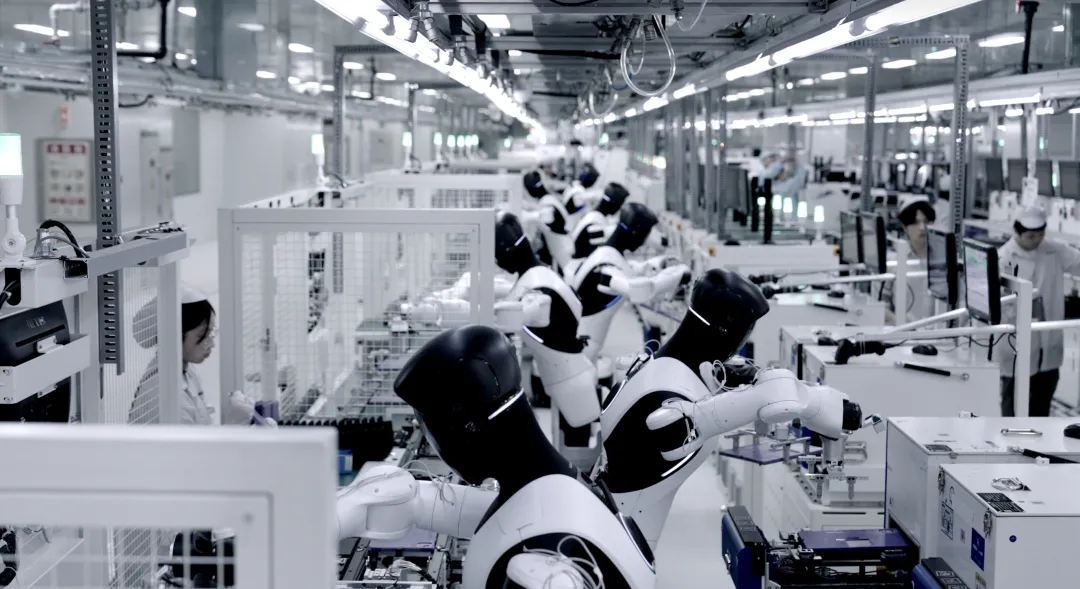
Figure 1: The Genie G2 Humanoid Robot Operating in the Quality Inspection Section of a 3C Production Line
I. Intelligence Now Has a 'Unit of Measurement'
Tokens are the discrete units used by models to encode and process information such as text. In large model API services, input and output are typically counted and billed in tokens; images, sounds, and actions can also adopt their own tokenization or other representation methods, but tokens from different models are not inherently equivalent. Tang Jie, a professor at Tsinghua University and founder of Zhipu AI, pointed out that tokens possess characteristics of being 'measurable, priceable, and tradable,' comparable to 'barrels' in the oil era and 'kilowatt-hours' in the electricity era.
Measurement first changes purchasing methods. For example, Shanghai Mobile introduced 'Computing Power Beans,' allowing users to purchase and use model services in relatively intuitive credit amounts, with usage also recordable in communication service bills. For enterprises, token-based pricing means model usage costs can be broken down across different departments and tasks, aiding refined budget management.
The pricing system is also becoming more detailed. Since August, DeepSeek has explored peak and off-peak pricing, and on September 10, it adjusted the prices of its Flash series models: the input price for cache hits during off-peak hours is 0.02 yuan per million tokens, doubling during peak hours. Here, 0.02 yuan represents the input price under specific model, time, and cache conditions, not a unified price for all tokens.
International tech companies are also beginning to use tokens to observe demand and efficiency. Google stated in its Q2 2026 earnings disclosure that the Gemini model processes approximately 22 billion API tokens per minute. NVIDIA's data center business revenue for the same period was $89 billion, with its executive emphasizing that AI computing power is forming sustainable commercial revenue; the company also disclosed technical progress in reducing the generation cost per token on its new platform. Invocation volume, revenue, and per-token costs, while different metrics, collectively reflect that inference services are moving toward large-scale operation.
However, the token measurement scale still needs calibration. Different models vary in tokenization methods, caching strategies, modality types, output quality, and billing criteria, making it inappropriate to simply use 'price per million tokens' to horizontally judge cost-effectiveness. The development and exploration of token measurement standards aim to address issues such as cross-model usage comparison and platform billing transparency.
Thus, the first layer of meaning in token economics becomes clear: it makes intelligent services easier to measure and price; however, what ultimately determines procurement and deployment is still the total cost under equivalent quality and the actual effects created for users.
II. Computing Power: From 'Brute Force Stacking' to 'Productive Tokens'
For the computing power industry, the question is shifting from 'how much computing power has been built' to 'how much effective inference can be stably delivered.' Pudong is gathering chip, computing power platform, and application enterprises, with industrial scale and computing power supply mutually supporting each other. However, whether computing power can translate into revenue still requires validation through model adaptation, system scheduling, and application delivery.
On September 11, Enflame Technology, based in Shanghai, listed on the STAR Market with an opening market capitalization exceeding 170 billion yuan. Industry reports on the listing day pointed out that the market's evaluation of computing power is gradually shifting from hardware configuration to token generation efficiency and delivery quality. This change does not mean that computing cards, servers, and clouds are no longer important; rather, customers are more concerned with how many real requests chips and clusters can handle given budget and service quality constraints.
Zhao Lidong, Chairman of Enflame Technology, highlighted the ongoing 'chip-model collaboration.' This deep upstream-downstream cooperation model promotes the simultaneous adaptation of domestic computing power, chip development, and model development, forming an ecosystem of software and hardware 'mutual advancement.' He recalled that in the early stages of cooperation, when customer models were upgraded, filling in operators and functions often took one to two months; now, some adaptations have been shortened to two to three days, with individual scenarios requiring only a few hours.
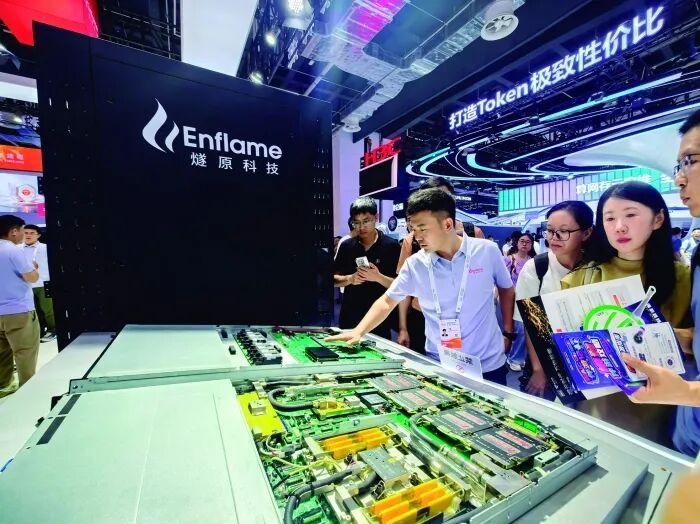
Figure 2: Enflame Technology's Booth During the 2026 World Artificial Intelligence Conference
The change from one to two months to two to three days is not just about accelerated R&D processes: the less idle waiting after model iteration, the more opportunity computing power has to promptly convert into deliverable inference services.
Chip architectures are also exploring new efficiency frontiers. At the July 18 Pudong AI Industry Integration Innovation Promotion Event, DF1000 near-memory computing chips from Eastern Computing Core, a Zhangjiang enterprise, were showcased as a regional AI landmark achievement. Near-memory computing aims to reduce the time and energy consumption costs of data movement, but actual benefits still need verification based on workload and deployment conditions.
Computing power systems continue to tap potential at the scheduling layer. According to Inference, its cross-cluster heterogeneous inference architecture reduced first-token latency by 51.5% and per-token cost by 37.5% under specific test conditions. These figures reflect optimization effects in test scenarios and should not be directly extrapolated as universal benefits for all businesses.
Thus, 'productive tokens' are closer to the underlying business logic of the inference era than 'brute force stacking.' Throughput, first-token latency, continuous output speed, availability, energy consumption, model quality, and the comprehensive cost of each task must all be considered together for computing power efficiency to have commercial significance.
III. Models and Edge Devices: Attributing a Grasp to the Robot
Models are the core link connecting computing power and applications, with chip-model collaboration creating a '1+1>2' amplification effect. Given a fixed amount of computing power, the number of usable tokens produced depends on the model structure; whether these tokens can translate into actions depends on perception, planning, and control systems. Returning to the initial grasp, the logic becomes clearer: more compact visual encoding may reduce the information volume needed for subsequent inference, thereby creating space for real-time control. However, fewer tokens do not necessarily mean faster actions; it also depends on model architecture, hardware operation, and control loops. Embodied intelligent agents are seen as potential large-scale token users precisely because they need to continuously perceive their environment, constantly predict, and respond.
Edge computing further alters this equation, with cloud-edge-device collaboration and computing-network coordination providing technical potential for millisecond-level responses. Robots cannot wait for cloud responses with every action. On September 15, an open-source edge inference engine was released, compressing end-to-end inference latency for an embodied model from 278 milliseconds to under 26 milliseconds in public testing. For dynamic operations, inference latency and network dependency often directly impact usability more than simple per-token unit prices.
VeriSilicon, headquartered in Zhangjiang, focuses on front-end data processing. Dai Wei, Chief Strategy Officer and Executive Vice President of VeriSilicon, proposed that front-end perception and back-end computing power should effectively cooperate, reducing the computational burden on the 'brain' side by preprocessing information on the 'cerebellum' side. His approach is to rationally layer computing tasks rather than blindly increasing back-end computing power.
From visual encoding to edge inference to cerebellum-brain division of labor, the core proposition of models and edge devices is to allocate limited computing power resources to the aspects that truly impact task success. Only with systemic improvements in energy consumption, latency, and success rates can token efficiency translate into on-site production efficiency.
IV. Corpora and Rules: Making Every Piece of Data Count
Computing power handles operations, models handle computations, while corpora determine the experiences from which models learn. In embodied intelligence, multimodal corpora extend far beyond text to include videos, sensor records, action trajectories, task labels, failure feedback, and various other data types. Data supply continues to expand. Pudong hosts over 500 public datasets; according to relevant departments, as of August 2026, more than 126,000 high-quality datasets have been established nationwide.
However, 'a large sea of data' does not equal 'selected problems,' 'strong learning ability,' or directly lead to 'good results.' From datasets to high-quality datasets, from effective training volume to performance in specific scenarios, each step requires systematic optimization and iteration. Whether data is usable, authorizable, and can cover real scenarios is often more important than sheer scale.
Rule systems follow suit. On August 27, 2026, the national standardization guidance technical document 'Artificial Intelligence - Embodied Intelligence Data Quality Specifications - Part 1: Real Data' (GB/Z 218.1—2026) was released. The National Data Administration also stated that it would timely promote the construction of embodied intelligence data standards.

Figure 3: Zhangjiang AI Island
Moving from element supply to industrial services, the key lies in organizational capabilities. Pudong is mobilizing nearly 1,800 AI enterprises, over 150 embodied intelligence enterprises, and resources for pilot testing and mass production to form supply chain and innovation service capabilities that developers can call upon and connect with. For developers, what truly matters is not scattered resource lists but accessible computing power services, adaptable models, compliant data, and verifiable application scenarios.
From October 23 to 25, the 2026 Global Developers Pioneer Conference and International Embodied Intelligence Skills Competition will be held at the Zhangjiang Science Hall. Participating teams will face practical tasks such as grasping, assembly, inspection, and delivery. Zhong Junhao, Secretary-General of the Shanghai Artificial Intelligence Industry Association, stated, 'We are not looking at what robots can perform but whether they can do the job well and efficiently in real workstations.' This statement clarifies the ultimate purpose of measurement: quantifying input is to better test output.
A successful grasp is the result of algorithm optimization, abundant computing power, and corpus reorganization; however, the ability to consistently 'grasp stably, grasp quickly, and grasp worthily' is what truly matters for industrialization. Token economics makes intelligent investments more measurable, while real-world scenarios are responsible for answering the final question: how much value have these investments truly created?
-
![]()
Post-85s AI Meteorology Entrepreneur from Changzhou, Jiangsu: Secures Multi-Million Funding
-
![]()
Why Is Light Able to Pass Through Holes Smaller Than Its Wavelength?—Exploring the Extraordinary Optical Transmission of Metasurface Infrared Filters
-
![]()
Film and Television Hurricane Delivers a Rigorous Review of the iPhone Duo! Withstands 10,000 Folds, Yet Falls Short in Software
-
![]()
Is the XPENG MONA L05’s Pre-sale Price 40,000 Yuan Steeper Than Its Rivals’?
-
![]()
Historic Windfall in Layoffs: BMW's Up to €650,000 Compensation Sparks Employee Exodus, Overwhelms System
-
![]()
Has Geely’s Debut Boxy SUV Shaken Up Off-Road Pricing?
-
![]()
GM China Reports $210 Million Net Profit in Q3: Two Consecutive Years of Profitability, Though CEO Warns of Tougher Market Conditions
-
![]()
BMW Layoffs: Employees Compete to Leave!