Has Geely’s Debut Boxy SUV Shaken Up Off-Road Pricing?
 10/22 2026
 556
Lead | Introduction
When a boxy SUV—featuring three-motor all-wheel drive, advanced intelligent driving systems, and emergency floating escape capabilities—launches with a starting price below RMB 170,000, how long can traditional off-road market pricing strategies withstand this disruption?
Published by | Article Source
Heyan Yueche Studio
Written by | Author
Cai Yan
Edited by | Editor
He Zi
1,847 characters | Full-text length
1847 characters
3-minute read | Estimated reading time
3 minutes
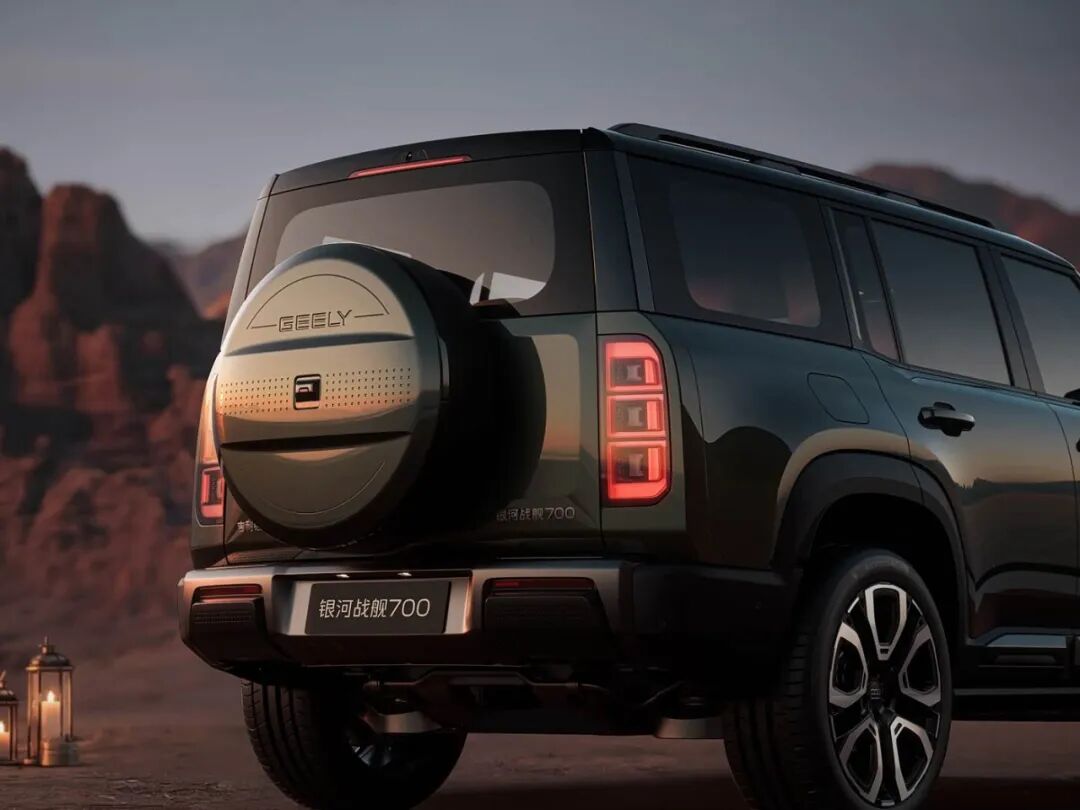
On October 10, Geely Galaxy officially unveiled its first new energy off-road SUV, the Galaxy Warship 700, with six variants priced between RMB 169,800 and RMB 359,800 under a limited-time offer. All models come standard with 47.14 kWh CATL batteries and support peak 6C rapid charging, delivering a CLTC-certified combined range of up to 1,770 km. The 2.0T three-motor all-wheel-drive variant accelerates from 0-100 km/h in just 3.95 seconds and boasts a maximum wading depth of 800 mm. Premium and Land Ark variants further include emergency floating escape systems and satellite communication capabilities. Within 60 minutes of pre-sale launch, 43,900 preliminary orders were recorded, with firm orders surpassing 10,000 in the first 12 minutes.

△ The Galaxy Warship 700 disrupts off-road SUV pricing
Galaxy Warship 700 Reshapes Off-Road SUV Pricing
In the first half of 2026, new energy vehicles (NEVs) accounted for nearly 50% of off-road SUV sales, with six of the top ten best-selling models in June being NEVs. However, the competitive landscape is rapidly evolving: Fangchengbao delivered 41,213 units in July through its Titan 7 and Leopard 5 models, marking a 190% year-on-year surge, while maintaining an average transaction price of RMB 223,000—placing significant pressure on Tank in the RMB 200,000 boxy SUV segment. Although Tank’s new Tank 300 sold 10,512 units in August, its plug-in hybrid variants (Tank 300L Hi4-T and Hi4-Z) are priced at RMB 249,800 and RMB 259,800, respectively. The market clearly signals demand for new energy off-road SUVs priced below RMB 200,000—a gap the Galaxy Warship 700 aims to fill.
△ New energy penetration in off-road SUVs nears 50%
The Galaxy Warship 700 adopts a “lower price, higher specs” strategy. Its 1.5T three-motor all-wheel-drive Yufeng variant, priced at RMB 199,800 under the limited-time offer, directly challenges the Fangchengbao Leopard 5 (starting at RMB 239,800) and Tank 300 Hi4-T (RMB 249,800), offering a RMB 40,000–50,000 price advantage. Critically, its electric range starts at 280 km for the three-motor variant, compared to 125 km for the Leopard 5 and ~190 km for the Titan 7. This enables urban commuters to use the Warship 700 as a near-pure EV, reducing reliance on frequent charging compared to competitors.
Off-road performance remains uncompromised: premium models feature a rear mechanical differential lock, dual-chamber closed air suspension, CCD continuously variable dampers, and an 800 mm wading depth. The Land Ark variant adds emergency floating escape and satellite communication—features previously exclusive to RMB 400,000 models like the Leopard 8.
For intelligent driving, the Dingfeng and Land Ark variants integrate the Qianli Haohan H7 system with 192-line LiDAR and Thor-U chips, delivering 700 TOPS of computing power for end-to-end navigation assistance. Priced below RMB 200,000, the Warship 700 uniquely combines three-motor all-wheel drive, 280 km electric range, air suspension, and mechanical differential locks—a rare offering in the 2026 off-road SUV market.

△ Galaxy Warship 700 competes with Fangchengbao Leopard 5 and Tank 300 Hi4-T
What Does Geely’s Boxy SUV Lack?
The Galaxy Warship 700 doesn’t lack specifications—it lacks “off-road DNA.”
Pricing and specs alone don’t define off-road SUV competition. The Tank 300 has cultivated a five-year reputation and modification ecosystem within off-road communities. Fangchengbao leverages BYD’s DMO platform and Yunqian system for technical credibility, while Beijing Off-Road benefits from six decades of military off-road heritage. Geely’s off-road brand equity is nearly nonexistent—a challenge that cannot be resolved by a single product launch or spec sheet. Off-road buyers prioritize reliability under extreme conditions, service network density, and rescue guarantees—capabilities requiring time and real-world validation, not just paper specs.
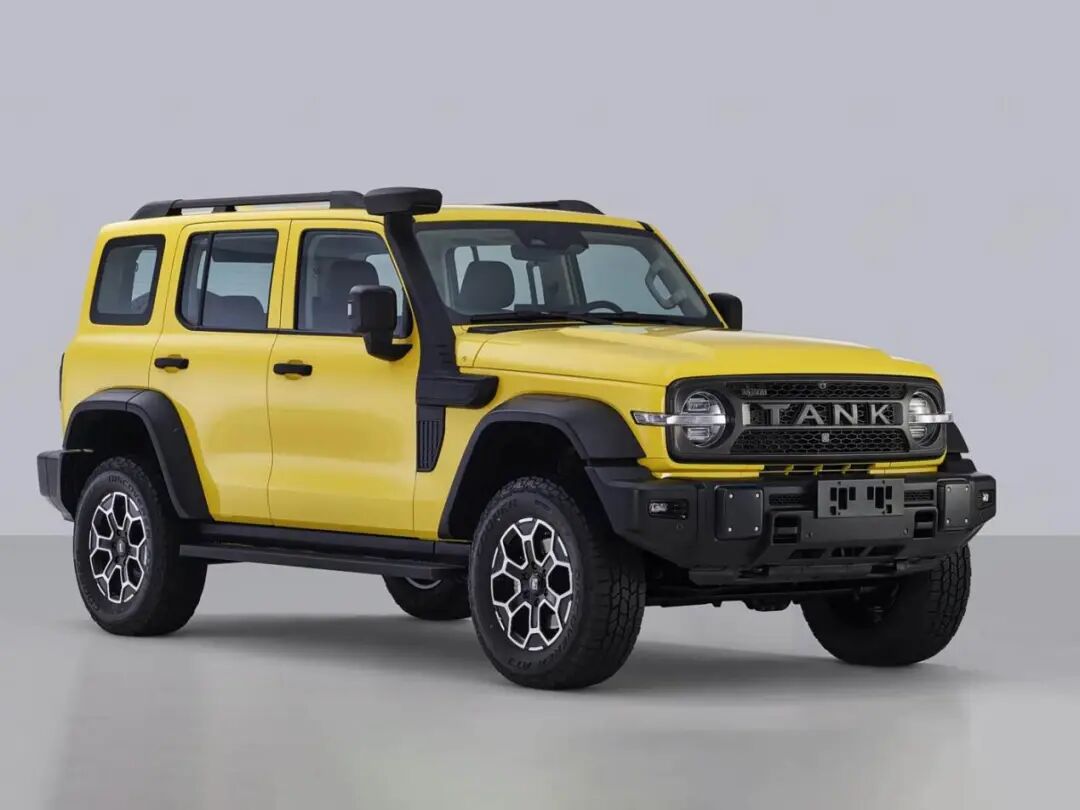
△ Tank 300 built an off-road reputation and modification ecosystem
While the Warship 700’s 10,000+ firm orders in 12 minutes are impressive, conversion rates to actual deliveries remain uncertain. A deeper question is whether Geely’s channel network can meet off-road users’ service demands. Geely Galaxy’s current urban showrooms lack the extreme-environment rescue responsiveness, off-road-specific maintenance capabilities, and modification part supply chains honed by Tank and Fangchengbao over years.
Orders are just the start; delivery and after-sales are the real tests. The Warship 700 has an underestimated strength: it may not steal core users from Tank or Fangchengbao but could expand the boxy SUV market to urban families. Its 305 km electric range and 1,770 km combined range make it an EV for daily commutes while offering off-road capability for weekends. Only extreme scenarios demand its full off-road prowess. In the first half of 2026, boxy SUV sales in China reached 447,600 units, with urban light off-road models accounting for over 70%—projected to exceed 1.5 million units annually. The Warship 700 aims to dominate this niche.

△ Galaxy Warship 700 expands the boxy SUV market to urban families
Commentary
The Galaxy Warship 700 signals that new energy scale is eroding technical premiums in off-road SUVs. The real challenge lies beyond specs—off-road trust is built by “conquering the same mountains,” not “reviewing the same parameter sheets.” Geely can build a capable boxy SUV, but gaining off-road acceptance requires more than 12-minute order surges—it demands endurance to prove itself as a year-long dark horse.
(Original content from Heyan Yueche. Unauthorized reproduction prohibited.)
-
![]()
Post-85s AI Meteorology Entrepreneur from Changzhou, Jiangsu: Secures Multi-Million Funding
-
![]()
Why Is Light Able to Pass Through Holes Smaller Than Its Wavelength?—Exploring the Extraordinary Optical Transmission of Metasurface Infrared Filters
-
![]()
Film and Television Hurricane Delivers a Rigorous Review of the iPhone Duo! Withstands 10,000 Folds, Yet Falls Short in Software
-
![]()
Is the XPENG MONA L05’s Pre-sale Price 40,000 Yuan Steeper Than Its Rivals’?
-
![]()
Historic Windfall in Layoffs: BMW's Up to €650,000 Compensation Sparks Employee Exodus, Overwhelms System
-
![]()
Has Geely’s Debut Boxy SUV Shaken Up Off-Road Pricing?
-
![]()
GM China Reports $210 Million Net Profit in Q3: Two Consecutive Years of Profitability, Though CEO Warns of Tougher Market Conditions
-
![]()
BMW Layoffs: Employees Compete to Leave!