Exclusive: The Two Turning Points That Sealed Xiaodu's Fate
 10/30 2026
 511
Written by | Wu Xianzhi
Edited by | Wang Pan
On October 28, Baidu's Intelligent Cloud Business Group (ACG) completed a round of organizational restructuring.
Businesses under ACG's Intelligent Application Business Unit were reassigned to the Infrastructure Business Unit, the Agent Business Unit, and the Service Delivery and Quality Engineering Center, each according to its own business attributes. Among them, the Service Delivery and Quality Engineering Center was renamed the Industry Application and Technology Service Center, with its head remaining in place.
This adjustment follows the ACG organizational restructuring at the end of August. In that earlier round, the former Platform Product Business Unit was officially renamed the Agent Business Unit, and the Qianfan Large Model Platform—previously under the Platform Product Business Unit—was moved to the IaaS segment, overseen by Baidu Group Vice President Hou Zhenyu. The former Data Platform Department was renamed the Data Intelligence Department and transferred in full to the Application Product Business Unit, overseen by Baidu Vice President Ruan Yu.
In this round, the most notable change is the rotation of Ruan Yu, of the Product Business Unit, to serve as organizational head of Xiaodu Technology. The shift in title to "organizational head" signals that, after the restructuring, Xiaodu may no longer operate as an independent company but instead be absorbed into ACG as a second-level department.
A person familiar with the matter told Photon Planet that after this year's Boao Forum, Xiaodu Technology CEO Li Ying had already begun reporting to ACG head Shen Dou. Li Ying can still be found on Ruliu, but according to this person, internal conversations can no longer be initiated with her—"something that had never happened before." Before the official announcement that Xiaodu's reporting line had been transferred to ACG, Ruan Yu brought several dozen people into Xiaodu's organizational structure.
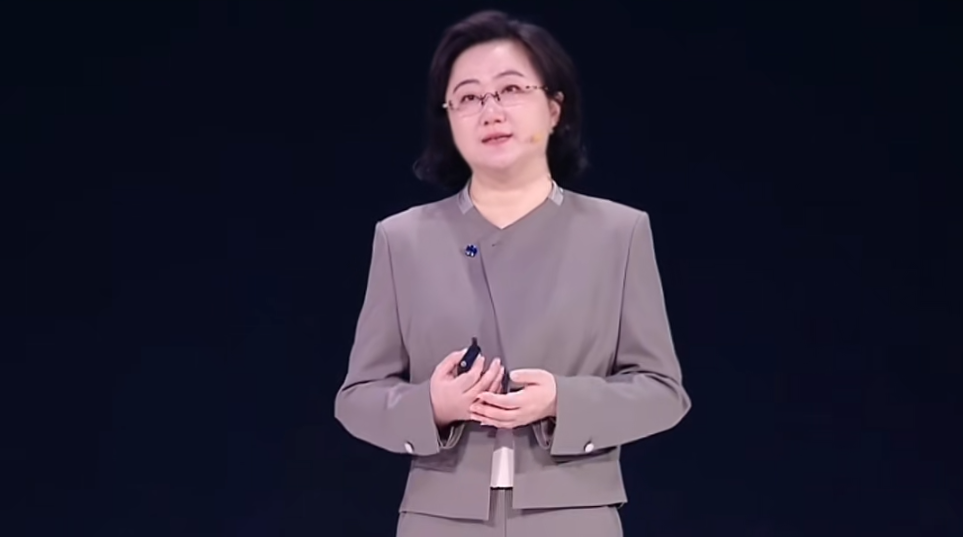
Xiaodu Technology was spun off from Baidu's Smart Living Group (SLG). After completing an independent financing agreement in September 2020, it began operating independently as Xiaodu Technology, and rumors once circulated that it would seek an IPO after the spin-off. Xiaodu Technology's last funding round was the B+ round in 2023, at a valuation of 35.5 billion yuan.
The outside world generally assumed that, after the spin-off, Xiaodu would pursue a listing on the STAR Market. But an institutional investor who participated in Xiaodu's financing told Photon Planet that while shareholders did express IPO expectations, the company had not completed the preparation for filing.
From its founding in 2015 to becoming SLG, to independent external financing, and now returning to a second-level department under ACG, Xiaodu Technology's decade-long history of ups and downs more or less mirrors the development of Baidu's AI.
Xiaodu Returns to the Starting Point
Xiaodu's technology and core team originally came from Duer/DuerOS, a conversational AI assistant incubated within Baidu's search system. In March 2018, it was upgraded to an independent business group, and two years later it was split off as an independent Baidu subsidiary for external financing.
After this round of adjustment, Xiaodu has been placed under ACG—returning to its starting point.
Counting from the incubation of Duer in 2014, Xiaodu has gone through 12 years of building architecture, incubating products, and extending into hardware. Two moments during this period proved decisive: productization in 2017 and Jing Kun's departure in 2023.
In January 2017, Baidu unveiled the predecessor of Xiaodu, the conversational AI operating system DuerOS, at CES. A month later, Baidu fully acquired interactive hardware startup Raven Technology for $90 million, officially entering the hardware track. In the second half of the year, Baidu entered the white-hot stage of the "hundred speaker war" and launched its first-generation smart speaker.
After the domestic smart speaker market entered a price war, many players withdrew one after another, ultimately leaving only three top players: Baidu, Xiaomi, and Alibaba. By the first quarter of 2021, Xiaodu smart speakers simultaneously topped both global and domestic smart speaker rankings in IDC/Canalys lists. At this point, this track became one of the few Baidu businesses that had gone through real fierce competition and then secured the industry's top position.
Xiaodu's ability to win this great victory was the result of multiple factors working together. Strategically, Jing Kun from the very beginning firmly positioned smart speakers as the home AI entry point rather than viewing them as a hardware contest. Going all-in on conversational AI was highly consistent with Baidu's main line of search + feed + AI. After several rounds of rapid iteration of DuerOS, Xiaodu was not only able to provide the best interaction experience but also completed a major comeback at an extremely cost-effective price.
In terms of product form exploration, Xiaodu's start was not smooth. After the raven H launched in 2017 encountered obstacles when entering from the high-end, the route was quickly corrected to focus on the mass market. It pioneered screen-equipped speakers and simultaneously made them the main direction. This differentiation allowed Xiaodu to stand out from homogeneous competition and firmly hold the domestic No. 1 position; it gradually expanded into education hardware, companion devices, and fitness mirrors as second growth curves.
After 2021, with the No. 1 market share, Xiaodu began expanding categories and scenarios, seeking a development period with a higher valuation externally, which attracted the attention of Baidu's core team.
From 2022 to 2026, Li Yanhong's OKRs regarding Xiaodu were all placed within the intelligent cloud (O2) system. From this perspective, it was only natural for Xiaodu to be assigned to ACG. A Baidu insider told Photon Planet that internally there are three completely different interpretations of Xiaodu being placed under ACG.
One view is that it is meant to encourage Xiaodu, because Kunlun Chip, also under ACG, is currently in IPO, and merging in can provide ready-made experience. Another view is that Xiaodu and ACG have synergies in industry implementation; for example, Xiaodu smart speakers have mature deployment in the hotel industry. In addition, there is a view that Xiaodu's merger into ACG is a form of contraction.
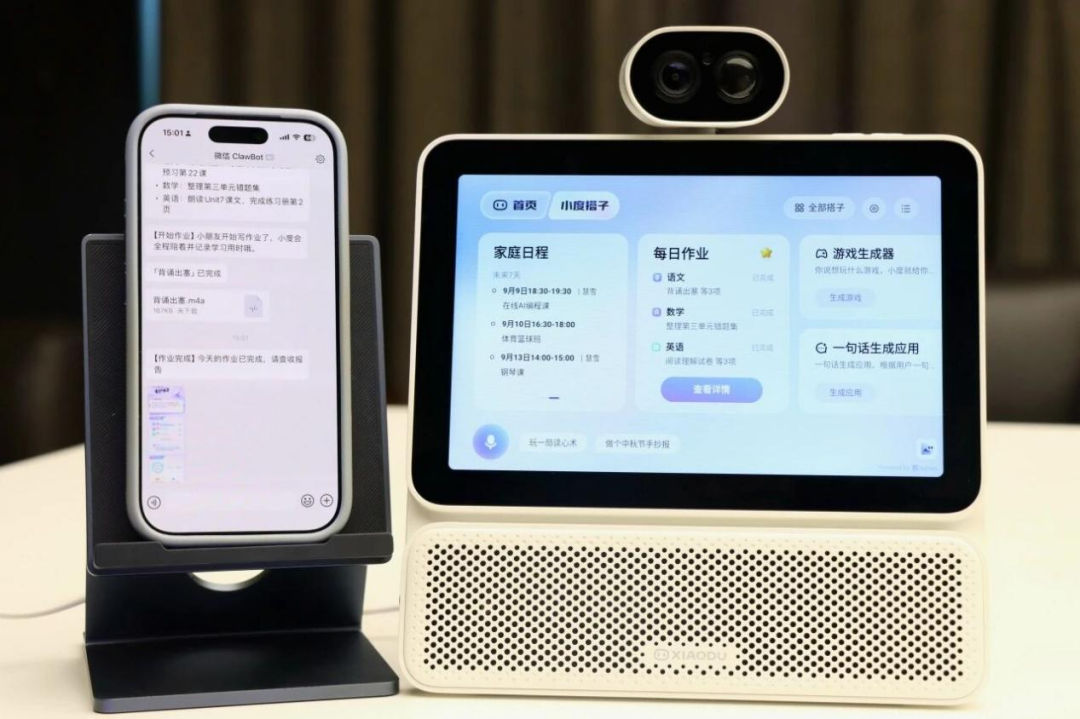
On September 8, at Xiaodu's new product launch event and Baidu AI Day Xiaodu special session, traces of direct business linkage between Xiaodu and ACG could already be seen. ACG's Baidu Dazi appeared at extremely high frequency in the event content, and the official language already included the statement that "Baidu Dazi is fully integrated into Xiaodu hardware."
Li Yanhong's attitude toward Xiaodu has also changed at least twice in recent years. One change was in 2024, when it was set as an aggressive KR with more flexible requirements, presumably because after Jing Kun's departure, Li Ying needed time to adapt and adjust. The other change was in 2023, when Li Yanhong's KR shifted from reducing losses to focusing on profit, a shift closely related to his increasingly profit-oriented focus on AI.
To this day, Xiaodu has still not escaped losses, which means Li Yanhong's OKRs regarding Xiaodu have never been completed in recent years.
Jing Kun and Li Ying: Two Different Xiaodus
In Xiaodu's development history, Jing Kun was the definer and absolute "father of Xiaodu." Xiaodu under Jing Kun and under Li Ying were two very different species.
A Baidu insider believes that Jing Kun was a CEO of the troop-leading, battle-fighting type, the brain of the entire Xiaodu, with his own independent product thinking. "When it came to products, Jing Kun was both forceful and had his own ideas. He would say, 'I want you to go help me conquer territory,' and directly issue clear instructions to product heads." From screen-equipped speakers to the later popular companion devices and fitness mirrors, almost all came from Jing Kun's hands.
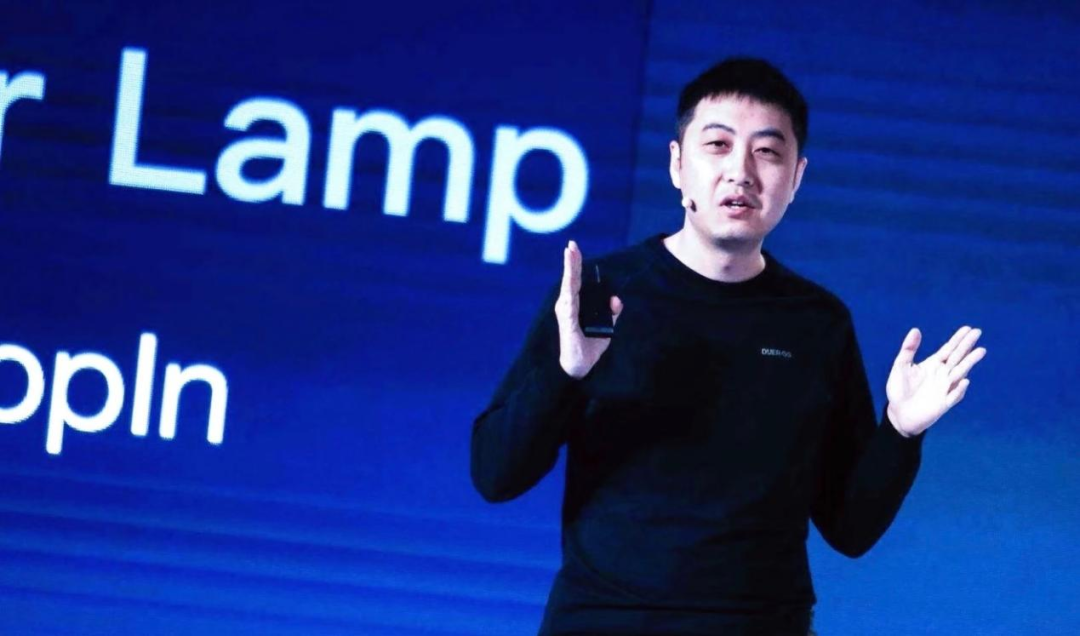
Li Ying, by contrast, was a campus recruit at Baidu. After graduating in 2004, she joined Baidu's search system for R&D and was a technical backbone who grew up under CTO Wang Haifeng's AI technology platform system. From her resume alone, one can see reporting relationships across several businesses including Baidu AI middle platform, NLP/knowledge graph, Baidu Maps, and Ruliu.
From the details of their decision-making and management, one can see their different governance styles, which directly influenced Xiaodu's development trajectory.
During Jing Kun's time at Xiaodu, at nodes such as the World Conference or Xiaodu product launches, he would personally attend to everything. If a product feature was to be demonstrated, he would require the product manager to ensure there was no room for error, putting enormous pressure on product managers and R&D engineers, while the PR and strategy team actually faced less pressure.
It is worth mentioning that even if the layout was extremely poor and typos appeared frequently, Jing Kun still insisted on making PPTs himself. A product manager who worked with Jing Kun said, "In Jing Kun's view, these issues were not important; as long as his ideas could be expressed, that was enough." This product-manager-style approach was not only Jing Kun's; Xiaodu's early core team was the same. They would argue fiercely over a product concept and feature, and after the argument, push it forward together.
Photon Planet learned that Jing Kun was also a person of extremely clear rewards and punishments.
From 2019 to 2025, when Cui Shanshan was in charge of HR, she wanted to adjust the M level and planned to optimize away then-Xiaodu IoT head Shen Jian. Jing Kun believed Shen Jian had done an excellent job in IoT and hotel business and fought hard to protect him. Public information shows that during Shen Jian's tenure, Xiaodu's covered hotel rooms increased significantly from 550,000 to the level of 2.6 million, becoming No. 1 in the hotel industry by scale.
Clear rewards and punishments may also have contributed to Jing Kun's departure to some extent. There are rumors that Jing Kun left because he hoped Xiaodu would bring in more external investment, "wanting to cash out options for the brothers who had followed him for so many years," and that he resigned in anger after disagreeing with the group's reluctance to dilute equity excessively.
Compared with Jing Kun's clear-cut loves and hates, Li Ying's personality is much gentler. Her career resume is entirely concentrated in software development, lacking accumulated experience in hardware development, and suddenly taking over Xiaodu required time to become familiar with the business. Therefore, in meetings, she often did not put forward many specific views of her own.
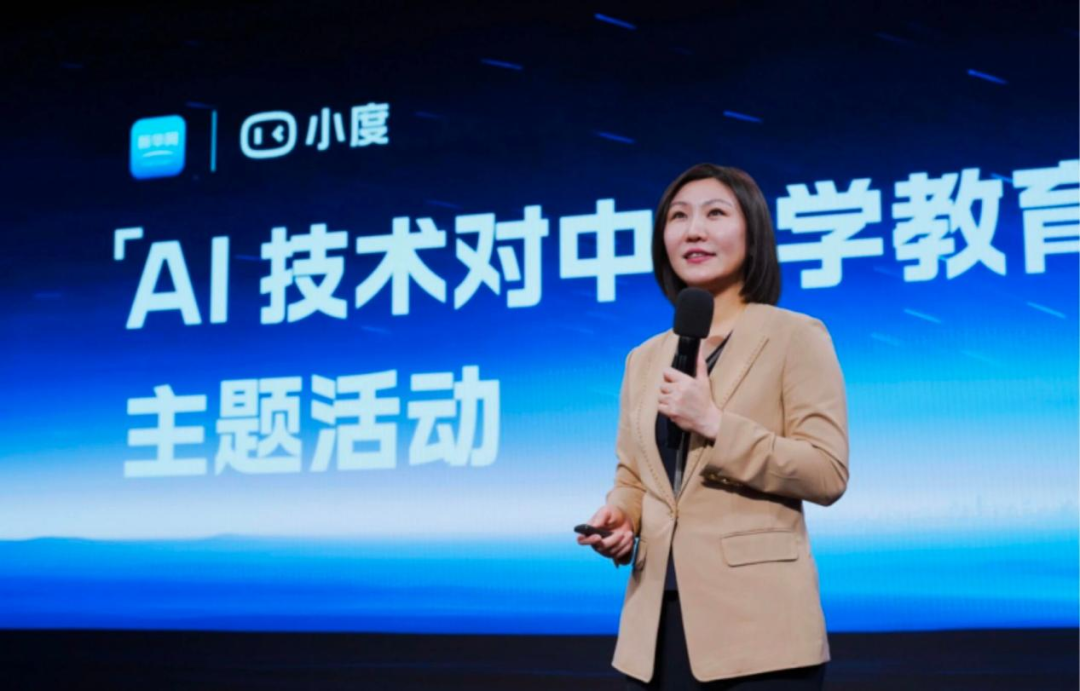
An insider told Photon Planet, "Li Ying hopes that product managers on education, entertainment, and other product lines have their own independent ideas. Once they think things through and the logic is closed, she usually approves the proposal."
Some early Xiaodu insiders believe that Li Ying, having been immersed in Baidu's system for many years, considers the group's thinking in everything she does. Her strength is being able to absorb information from multiple parties and weigh the pros and cons of all sides; her weakness is a lack of sustained decisiveness. At product requirement review meetings, the following scenario often occurred: when Li Ying asked about the original intent behind making a product, the product managers below either had unclear thinking or muddled through, but in the end most projects still passed.
In terms of decisiveness, she also differed from Jing Kun. Xiaodu was the earliest domestic manufacturer to enter AI glasses, but when it truly moved toward the commercialization and mass production stage, Xiaodu instead appeared as a latecomer.
Putting Xiaodu into ACG Is Not a Bad Thing
Regardless of whether Li Ying leaves, Baidu's executive changes this year have been extremely intensive.
Since the beginning of this year, Baidu has had three core executives at or above the vice president level depart, including former Baidu Search General Manager and Baidu APP R&D Center head Zhao Shiqi; Baidu Group Technology Committee Chairman, IDG Chief Scientist, and Apollo Chief Architect/Chief Designer Chen Jingkai; and Baidu Research Institute Deputy Director Wu Tian. If Li Ying leaves, she will be the fourth vice president to depart within the year.
Correspondingly, no new vice presidents have been promoted during the year. Instead, while following Baidu's old tradition of making good use of "people in the pool," there have been cases of outside hires. After Sun Tianxiang joined Baidu in July, Wu Tian stepped down as head of the Basic Model Unit (BMU).
At the beginning of the year, in Robin's organizational OKRs, the item about enhancing organizational vitality had multiple interpretations. One was introducing external new people; the other was adjusting the level of importance assigned to businesses, allowing people to move up and down to activate internal vitality.
In fact, among the vice-president-level personnel adjustments during the year, Xiaodu was the only case of a lateral successor. Li Ying's successor is ACG's Baidu Vice President Ruan Yu, indicating that although the reporting relationship dropped from Robin to Shen Dou, the business remains at the vice president level.
By contrast, Zhao Shiqi's successor He Jingzhou and Chen Jingkai's successor Li Yuxin are not vice presidents, indicating that those two personnel adjustments were not only about the individuals but also lowered the level of importance assigned to the corresponding businesses. After all, for Baidu today, the narrative focus of AI is not in MEG and IDG, but in ACG under Shen Dou.
From the standpoint of organizational restructuring, integrating Xiaodu into ACG is not necessarily a bad move—at the very least, ACG represents Baidu's future. From a business perspective, however, Xiaodu is in urgent need of improving its product competitiveness. Even after Jing Kun's departure, Baidu has yet to find a suitable replacement.

-
![]()
Phone Sales Hit a Ten-Year Low While Prices Keep Climbing—What's Going On?
-
![]()
Revenue of 94.14 Billion Yuan, Market Value of Only 89 Billion—Is Foxconn Industrial Internet Undervalued?
-
![]()
Microsoft Taps NVIDIA to Take On Apple Head-On: Redmond's High-End AI PC Gamble
-
![]()
DHS Leak Exposes 41,000 Employees: Undercover Agents and Grok Permission Groups Among the Casualties
-
![]()
Apple Actually Went Ahead and Made a Touchscreen MacBook, Exactly 16 Years After Steve Jobs Said It Wouldn't Work
-
![]()
Exclusive: The Two Turning Points That Sealed Xiaodu's Fate
-
![]()
Zhongji Innolight's Net Profit Triples: The Cash Flow Test Behind the AI Frenzy | Q3 Report
-
![]()
The $5 Billion Rumor and the $20 Million Floor Price: Character.AI's Death Ledger