Fines Incoming: Universities Can't Curb AI Cheating, So Regulators Step In
 11/12 2026
 407
AI cheating is costing universities dearly.
Recently, the Office for Students (OfS), England's higher education regulator, released its latest survey report and new regulatory rules, making it clear that universities failing to stop students from cheating with AI will face fines—and in serious cases, have their government funding suspended.
The report highlights glaring loopholes in UK university assessments: many courses' assignments and essays are not invigilated, and students can use AI chatbots to produce passable—or even fairly good—answers in just minutes.
This trend prevents students from truly engaging in learning and mastering knowledge, while also devaluing degrees and damaging the reputation of higher education as a whole.
The regulator explicitly requires in the new rules that all universities must ensure the authenticity and validity of assessments, and prioritize the promotion of safer no-AI assessment models.
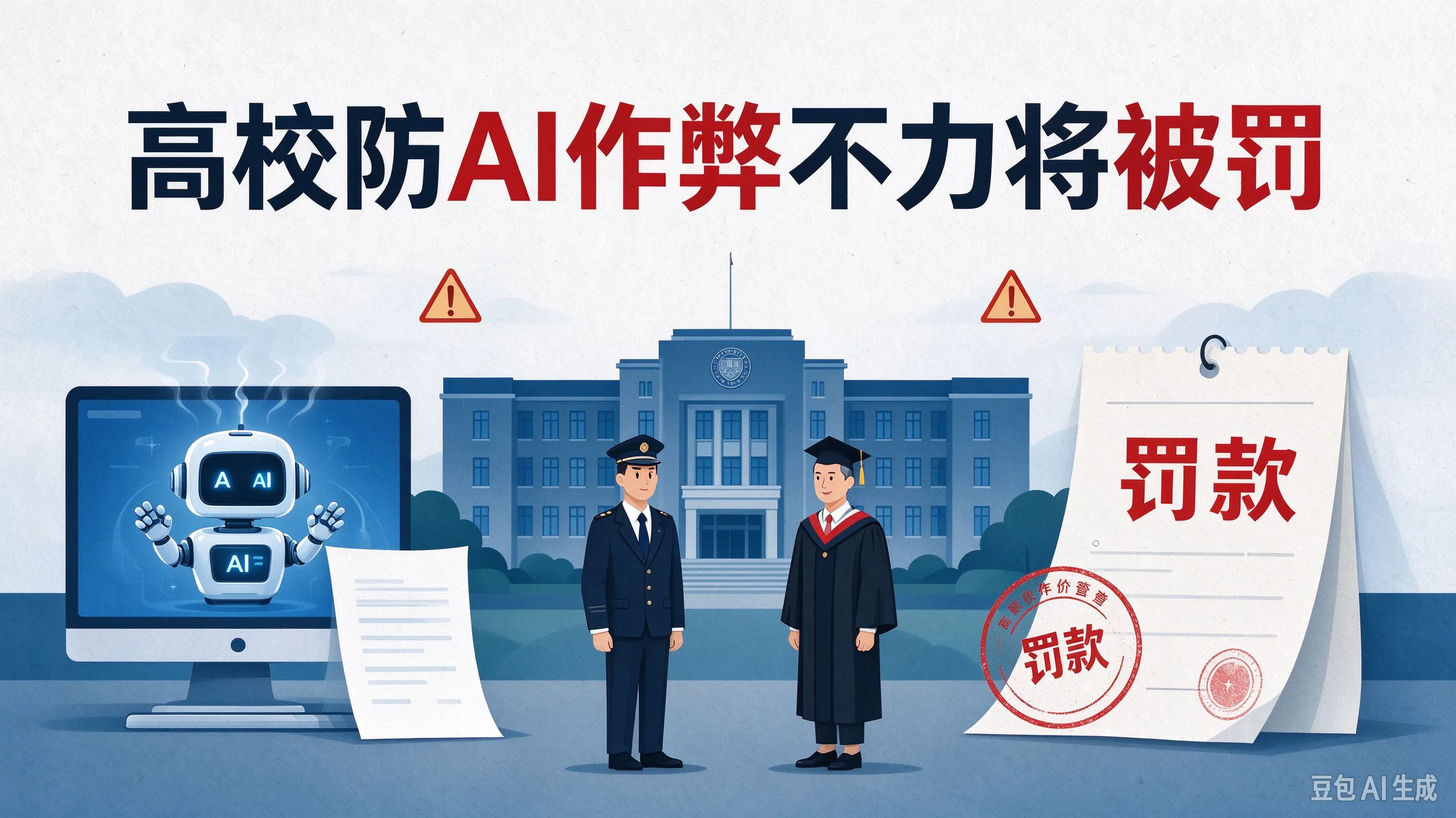
Image source: Doubao AI generated
These include traditional closed-book exams, live presentations, practical assessments, and so on. Assessments completed in such controlled environments can fundamentally reduce the room for students to secretly use AI to do the work for them.
The regulator has not imposed a one-size-fits-all ban on AI use in assessments, but has set requirements: if a course allows students to use AI, the university must design the assessment properly to ensure that even when students draw on AI, they must still demonstrate their own real abilities—AI cannot do all the work while students merely copy and paste.
The most deterrent part of the new rules is the accompanying penalties. The regulator will subsequently review universities' assessment management, and universities that fail to meet requirements or do not adequately control AI cheating will be fined.
Institutions with serious problems will also have their eligibility for special funding suspended. UK universities generally rely heavily on public funding, so this penalty carries very strong binding force.
Josh Fleming, the agency's Director of Strategy and Delivery, said that AI is rapidly reshaping higher education. Used well, it is a major development opportunity that can help students grow and create social value, and there are already many excellent cases of AI teaching in the sector.
But at the same time, AI also brings long-term systemic risks to the existing education system, weakening students' actual learning outcomes and undermining the credibility of assessment and evaluation. He stressed that the entire sector must step up efforts to address these risks, and the core measure is to widely implement no-AI assessment formats.
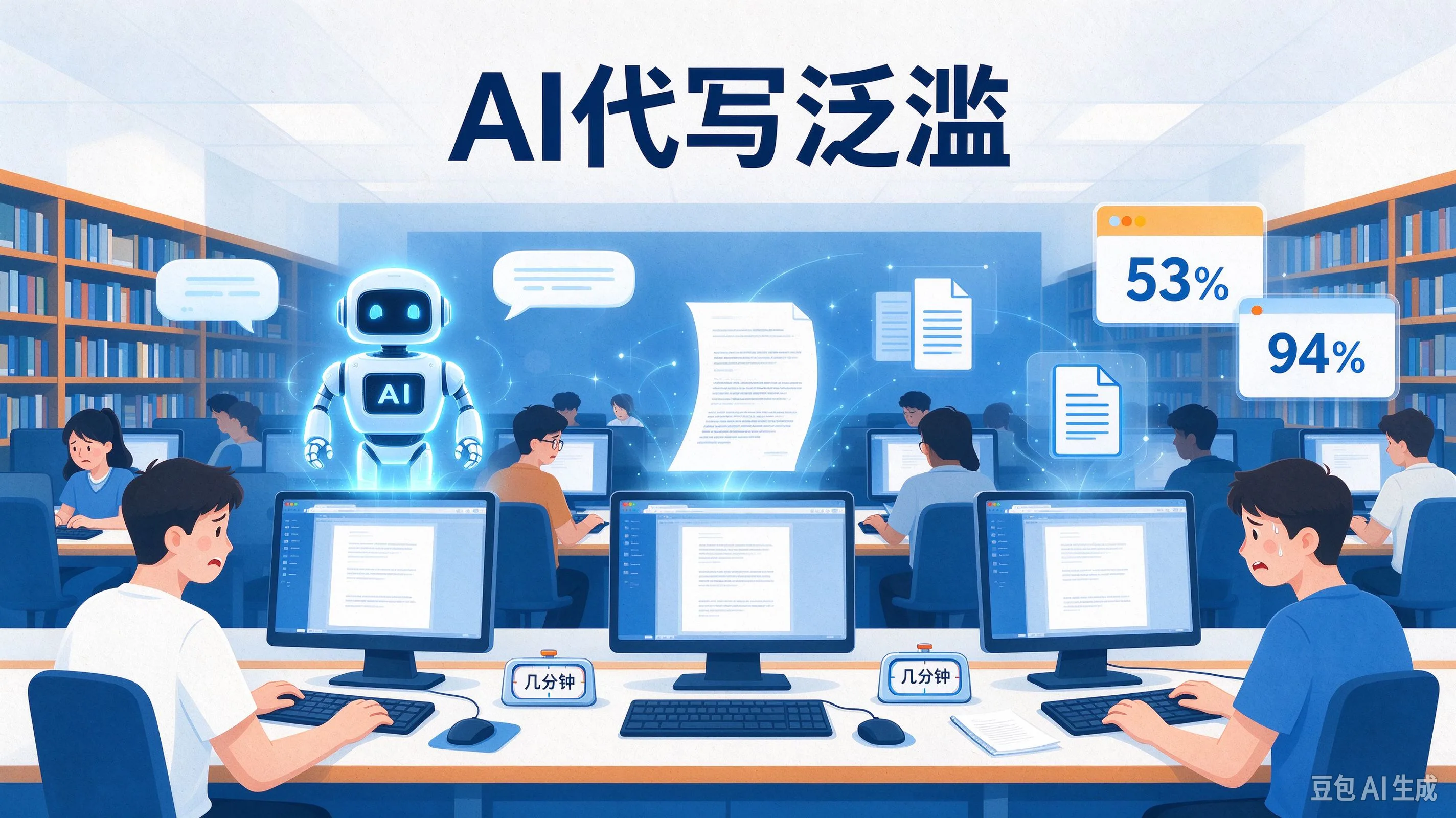
Image source: Doubao AI generated
Since ChatGPT was officially launched in 2022, generative AI tools have spread rapidly across UK university campuses, and students using AI to complete assessed work has become commonplace.
Survey data from the research institute shows that at the end of 2023, only 53% of students admitted to having used generative AI in assessed work; just two years later, by the end of 2025, that proportion had soared to 94%, covering almost the vast majority of students.
But the high penetration of AI is not the most difficult problem; the real difficulty is the inherent loophole in university assessment models.
The report says that many UK university assessments are assignments completed independently after class, with no invigilation or supervision. When students secretly use AI to write for them, universities simply cannot detect it accurately.
As a result, assessment is completely distorted: scores no longer measure whether students have real ability, but whether they can find a good AI tool and know how to use it. Not only does the value of degrees keep declining, but the reputation of higher education as a whole is also affected.
The report surveyed more than 300 teachers and students at 127 UK universities, confirming the prevalence and unfairness of AI cheating. Many students can finish assignments in minutes with AI, and the scores they ultimately receive are no different from those of students who spend a great deal of effort completing the work independently.
An anonymous student said in the survey that a classmate privately admitted that an entire essay was written with ChatGPT. Not only was it not discovered by the university, but it also received a good grade. After getting away with cheating the first time, they will certainly keep using it for the next assignment.
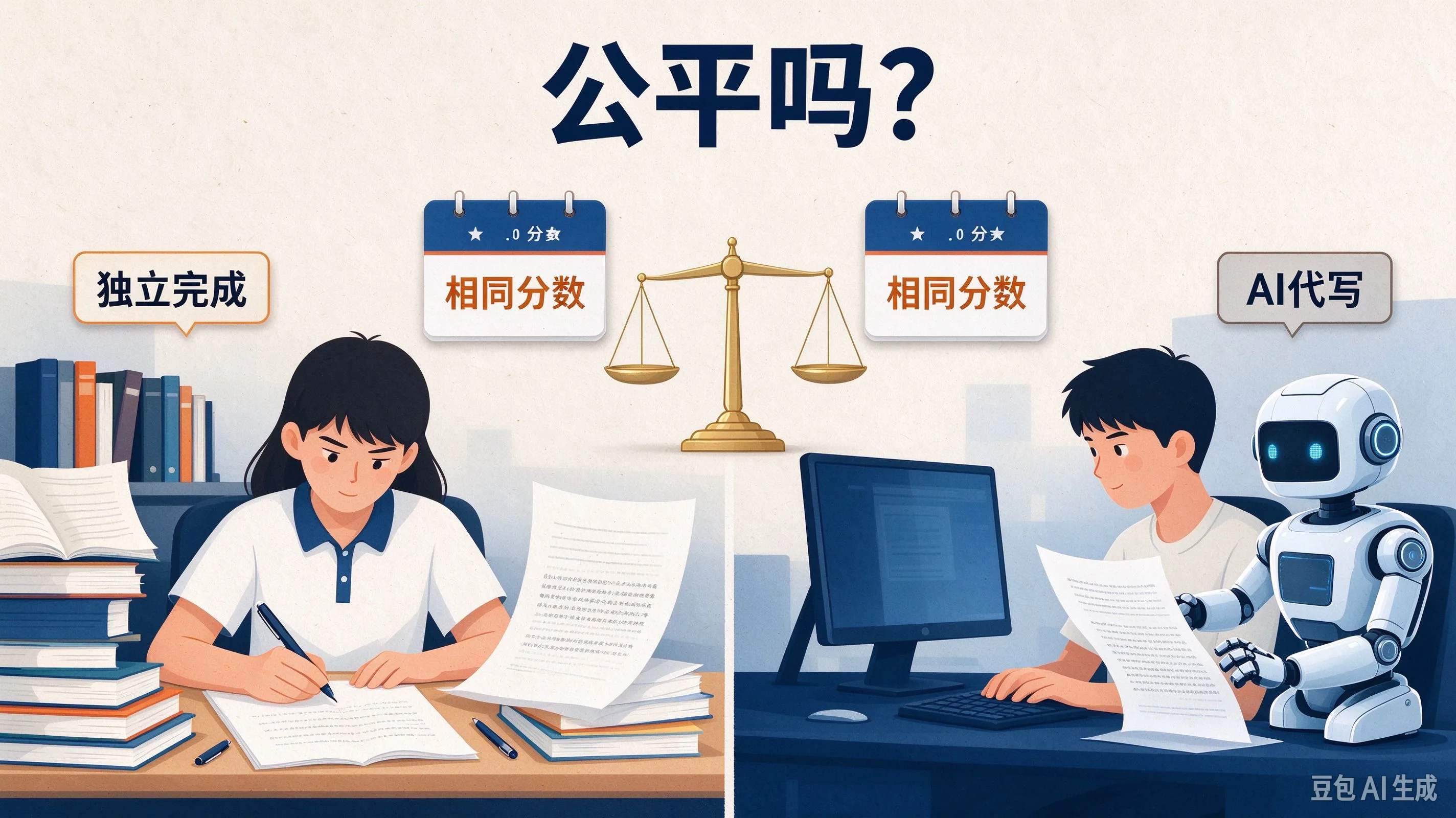
Image source: Doubao AI generated
Other students feel powerless: an essay they wrote word by word after researching materials and organizing their logic ultimately received exactly the same score as someone who relied entirely on AI—which is truly disheartening.
As for using AI detection tools to investigate cheating, the report directly gives a negative conclusion: current AI content detection tools on the market cannot reliably and consistently identify AI-generated content, and false positives and missed detections occur frequently. Detection alone simply cannot plug the cheating loophole.
Therefore, the report recommends promoting root-and-branch reform of university assessment systems, building more rigorous and scientific evaluation mechanisms, and shifting from passive detection to proactive prevention.
The UK Department for Education stated that all universities must take AI cheating seriously, while regulators must strictly implement existing regulatory standards, accelerate the improvement of the regulatory framework, and make rules on AI use clearer, stricter, and more lasting, effectively safeguarding the quality baseline of higher education.
This article was compiled by Leitech from The Guardian
Original link: Universities face fines if they fail to prevent students from cheating with AI
Source: Leitech
Images in this article are from: 123RF licensed image library Source: Leitech
-
![]()
What Is Astigmatism, Really? Why Tangential and Sagittal Foci "Go Their Separate Ways"
-
![]()
Gree Electric's Performance Weighed Down by Soaring Copper Prices: Will Dong Mingzhu Unveil a "Big Move" by Year-End?
-
![]()
AI R&D Doubles in Speed as Anthropic Redacts Most of a 100-Page Report
-
![]()
Crown New Materials to Inject RMB 228 Million into Zhejiang Optical Film Project
-
![]()
Gaize Technology Officially Announces Takeover of Entire Japanese Optical Powerhouse Plant: Can It Translate Into Production Capacity?
-
![]()
Baidu Begins Building Factories
-
Hong Kong Listed Company Huaxia Culture Technology Enters AI Sector with Mid-Term Profit Alert Exceeding HKD 900 Million
-
![]()
NXP Earnings: Net Income Hits $884 Million as Automotive Chip Growth Lags at 13%