Tencent Sues PowerChina Huadong: 73 Court Hearings in a Single Year—Why Is the 45.4 Billion Yuan General Contracting Champion Sitting in the Defendant's Seat?
 11/19 2026
 574
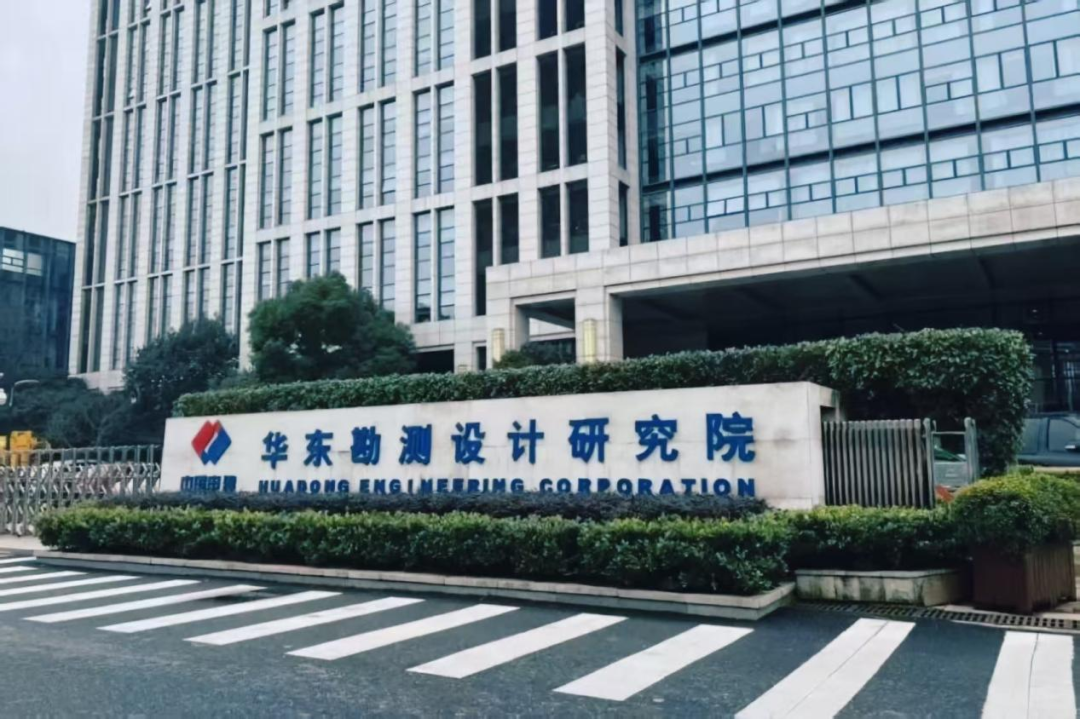
Huadong Institute tops the general contracting scale rankings, yet finds itself trapped in a dual bind of collecting receivables and meeting payments.
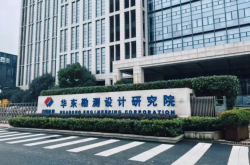
Foresee Energy has learned that on November 17, the Yuhang District People's Court of Hangzhou held a hearing on a contract dispute case, (2026) Zhe 0110 Min Chu No. 20796. The plaintiff is Tencent Cloud Computing (Beijing) Co., Ltd.; the defendant is PowerChina Huadong Engineering Corporation Limited. Neither the amount in dispute nor the content of the contract has been disclosed.
This marks the 73rd court hearing announcement involving this design institute over the past year—an average of one every five days. Previously, in Jindong District, Jinhua, a landscaping subcontractor claimed that of 6.28 million yuan in project payments owed, it had received only 2.22 million yuan, and filed suit against both Zhejiang No. 1 Hydropower Construction Group and Huadong Institute.
Subcontractors, material suppliers, cloud vendors—the list of plaintiffs keeps growing, all pointing to the same underlying shift: as the design institute moved from drawing blueprints to signing general contracting contracts, it also moved from being the party that collects design fees to being the first party in the chain that creditors come after for payment.
The national general contracting champion, with 45.492 billion yuan in contracting revenue, reported 59.686 billion yuan in total revenue but net profit of only 1.169 billion yuan. The new receivables governance policy, effective September 2026, is opening this ledger item by item.

The champion's ledger has no line for litigation response costs
Founded in 1954, Huadong Institute is affiliated with PowerChina. In 2025, it posted operating revenue of 59.686 billion yuan, net profit of 1.169 billion yuan, and an asset-liability ratio of 79.08%, with a net profit margin below 2%. The gap between revenue and profit is the slope of the general contracting business.
In the latest ranking by the China Exploration and Design Association, Huadong Institute placed first among 178 enterprises with 45.492 billion yuan in engineering general contracting revenue, following 44.472 billion yuan and 44.245 billion yuan in the two previous editions—first place for three consecutive years. The list answers only one question: who signed more contracts.
The industry itself is turning. According to the 2025 National Engineering Survey and Design Statistical Bulletin released by the Ministry of Housing and Urban-Rural Development in September 2026, engineering general contracting revenue stood at 4.36817 trillion yuan, down 5.4% year on year, and newly signed contract value fell 9.5%; engineering design revenue was 508.08 billion yuan, also down 5.4% year on year.
A year ago, general contracting was still the only growing segment in the industry, with a growth rate of 1.9%; now both general contracting and design are in decline. The industry's sole growth engine is beginning to stall.
EPC bundles design, procurement, and construction into a single package. The 2019 Measures for the Administration of Engineering General Contracting, issued by the Ministry of Housing and Urban-Rural Development and the National Development and Reform Commission, stipulate that the contracting unit bears full responsibility for quality, safety, schedule, and cost, and must also have the financial and risk-bearing capacity to match. The document also encourages design units to apply for construction qualifications.
Above stands the owner; below stretches a long chain of subcontractors, material suppliers, and construction teams. If any link in the middle gets stuck, the downstream does not go looking for the owner—it looks for the name stamped on the contract.
The revenue ranking counts only who signed contracts, not who is being pursued for money. Among the 73 announcements, there were 22 construction project contract disputes, 15 construction contract disputes, and 6 sales contract disputes. Listed in order, the names trace the length of a general contracting chain from tower cranes to nursery stock.
Announcements are counted by hearing session, and the same case may be scheduled multiple times; the figure of 73 should not be read as 73 lost lawsuits. Under the same counting method, the East China Architectural Design & Research Institute has 35 announcements, and China Power Engineering Consulting Group East China Electric Power Design Institute has 19. Though all share the name "Huadong Institute," the difference is two- to nearly fourfold.
Scaling up and collecting money are two different skills; in the past, the industry tested only the former.

After the shield is stripped away
General contractors used to hold a card called "back-to-back": I pay you after the owner pays me. Upstream payment terms were long, downstream parties were dragged along, and the cash gap was bridged by timing differences. It looked like a voluntarily signed clause, but in substance it pushed the owner's payment risk onto the party with the least bargaining power.
Judicial Interpretation (2024) No. 11, approved and effective August 27, 2024, limited the scope of this card: where a large enterprise and a small or medium-sized enterprise agree that payment is conditional on receipt of a third party's payment, the clause is invalid.
The revised Regulations on Ensuring Payments to Small and Medium-sized Enterprises, effective June 1, 2025, added further requirements: large enterprises must pay within 60 days from the date of delivery, and any other agreed term must also be reasonable; payment may not be tied to the proportion of a third party's payment progress.
The words "wait for the owner" have been struck from contract clauses.
Two months ago, the State Council General Office's Notice on Strengthening the Governance of the Difficulty in Receiving Payments for Small and Medium-sized Enterprises tightened things further: industry settlement rules must clearly state the starting point of the payment term, acceptance standards, and maximum payment period; leading enterprises are encouraged to commit to 60-day cash payment; SASAC requires central enterprises to achieve "dynamic zero" of defaulted arrears, make all payments to small and medium-sized enterprises in cash, and strictly prohibit bills with maturities of more than 6 months.
The central enterprise system to which Huadong Institute belongs is now being required to take the lead. Upstream receivables remain slow to collect, while downstream payments are legally compressed. The gap can only be borne by the company itself—or turned into a line of case causes in a court announcement.
In legal terms, this is privity of contract: whoever stamps the subcontract pays. The owner's bankruptcy is the general contractor's own business risk.
When Economic Observer analyzed the construction industry's "triangular debt" in 2023, Zhang Xinyu, an analyst at China Chengxin International, offered a judgment: pursue "new signings with revenue, revenue with profit, and profit with cash flow." Three years later, that sentence has turned from advice into a payment timetable.
In the past, the comparison was who could advance funds and who could delay; now it is who can pay out cash within 60 days. Advancing funds used to be the ticket to winning projects; behind that ticket there is now a maturity date.

On the plaintiff list,
another type of company has appeared
Tencent Cloud's lawsuit is not the same kind of case as the earlier project payment disputes. It has had 18 court hearing announcements in the past year, with only 2 contract disputes. Suing over money is not its usual move. With a cloud vendor now seated among the plaintiffs, the design institute's counterparties have expanded from construction sites to server rooms.
Huadong Institute buys cloud services and also builds its own platforms. In October 2023, it won the bid for the Shenzhen Futian District smart water operations and maintenance project at 5.0892 million yuan; the Futian smart pipe network platform previously built by Huadong Institute's Shenzhen team used BIM plus GIS (viewing building models overlaid on maps) to connect 488 IoT sensing devices.
By the first half of 2026, PowerChina's digital business had newly signed contracts worth 15.985 billion yuan, down 23.9% year on year; the new track is tightening as well.
Tencent Cloud has found others on the same track. On August 27, 2026, it signed an agreement with United Water; on October 29, it released the "Water Brain," using an agent platform as the decision-making hub and an enterprise knowledge base holding 115,000 files. At the launch event, it explicitly stated that the results would be consolidated into standardized products for the national water industry.
Those selling cloud services are starting to sell water utility capabilities, and those doing water conservancy are starting to sell software. The boundaries between clients, contractors, and peers have thus blurred.
These contracts are no longer about progress payments. How cloud resources are settled, whether a model counts as passing acceptance, how service level agreements (that is, whether the system works well and who is responsible when it goes down) are calculated, and who owns the data after termination—each item can generate a separate complaint. The rule for project payments is pay for work done; the rule for digitalization requires first proving what the work achieved.
The capital market has already repriced this model. In the 2026 interim report of CCCC Design, survey and design revenue was 2.815 billion yuan with a gross margin of 26.23%; engineering general contracting and project management was about 780 million yuan with a gross margin of 10.8%; accounts receivable were 11.538 billion yuan, up 6.58% from the beginning of the year. The Design Institute's net profit attributable to shareholders was -29.7489 million yuan, turning from profit to loss in the first half.
At the group level, PowerChina's net profit attributable to shareholders in the first half of 2026 was 3.821 billion yuan, down 29.6% year on year, and net cash flow from operating activities was -46.021 billion yuan.
The outcome of the November 17 hearing has not been disclosed; for now, what can be read is still a scheduling table. The ranking is published once a year, and court hearing announcements are added every week. The two tables record the same business by different measures: one records contract value, the other records who failed to pay on time.
Only by placing these sets of numbers side by side does the crack become clear. The only segment still expanding a few years ago is now turning downward, gross margins and cash flow are tightening at the same time, and the general contracting business is shifting from a scale story back to an arithmetic problem. Scale stays on the ranking, while profit and cash retreat to another table.
The law has set the payment timer to 60 days, and the capital market has repriced general contracting. Sitting in the general contracting chair depends on qualifications; sitting steadily depends on payment terms. The ranking records who signed more, and the scheduling table records who pays slowly. In the end, it is the same thing: contract value determines ranking, and cash flow determines the defendant's seat.
-
![]()
Why Did LG Sell 2 Million Clothes Care Machines in 15 Years? Where Do Chinese Brands Fall Short?
-
![]()
Lenovo Outpaces Apple in Both Shipments and Revenue: Lenovo's PCs and Tablets Gain Ground Through AI—What Lies Ahead?
-
![]()
At the APEC Meeting in Shenzhen, Wang Chuanfu, Lei Jun, Zeng Yuqun, and Li Yanhong Discuss the Future of Automotive Mobility
-
![]()
Tencent Sues PowerChina Huadong: 73 Court Hearings in a Single Year—Why Is the 45.4 Billion Yuan General Contracting Champion Sitting in the Defendant's Seat?
-
Gathering in Shenzhen: What Chinese Solutions Do Entrepreneurs Bring to the APEC Business Summit?
-
![]()
Chicago School District Takes on Google: Bundled AI Is Worse Than No AI at All
-
The Data Annotation Business Behind AI Music
-
![]()
Qwen, Tencent Hunyuan, and Kimi Tie for First Place in the Latest Chinese Large Model Rankings