At the APEC Meeting in Shenzhen, Wang Chuanfu, Lei Jun, Zeng Yuqun, and Li Yanhong Discuss the Future of Automotive Mobility
 11/19 2026
 421
Chinese automobiles are not just selling well—they now have a voice.
As the world's attention converges on Qianhai, Shenzhen, China's automotive industry is also striving to seize the power to define the next decade.
On November 17, 2026, the APEC CEO Summit opened in Shenzhen. The automotive industry leaders in attendance included BYD's Wang Chuanfu, Xiaomi's Lei Jun, CATL's Zeng Yuqun, and Baidu's Li Yanhong.
Four people, four speeches—going global, battery swapping, robots, and autonomous driving. The topics were all different, yet they all pointed to the same question: what should the automotive industry look like in the next decade?
In the eyes of Dianchetong (ID: dianchetong233), over the past few decades, China's automotive industry has been answering questions set by others—following the route laid out by the Western automotive industry and striving to make its answers closer to the standard answer. But as electrification and intelligentization accelerate their transformation, and as AI and embodied intelligence begin to collide with this century-old industry, this time, on our own home turf, it is finally China's automotive industry's turn to set the questions itself.
Four Leaders, Four Speeches—Not One of Them Was Simply Talking About Cars
It is worth noting that the companies led by these four automotive industry leaders play different roles within China's automotive industry as a whole.
First is BYD, a leading automaker in China's new energy industry, representing to a certain extent the mainstream development direction of China's automotive industry; then Xiaomi, a company that crossed over from consumer electronics into the automotive industry, through which one can see the trend of integrating automobiles with AI and embodied intelligence; CATL is a top supplier of power batteries for new energy vehicles, and its thinking on the battery industry can also influence the development of power battery technology; as for Baidu, although it no longer participates in car manufacturing, its Apollo Go also represents, to a certain extent, the development trends of L4 autonomous driving and the Robotaxi business.
So let us look at the speeches of these four leaders one by one.
The core viewpoint of Wang Chuanfu's speech was very clear: advocate sustainable development rather than zero-sum games. He said during his speech: "Only sustainable development can lead to long-term development. A situation where I win and you lose cannot last long."
In his speech, Wang Chuanfu focused on responding to public controversy about going global—some outside voices claimed that BYD selling new energy vehicles to other countries was taking jobs away from local people. Wang Chuanfu stated that what BYD brings to other countries is new energy vehicles, filling local gaps.
He also gave several examples of cooperation with other countries: BYD purchases copper and lithium in Chile while also selling electric buses to the country; it has also built new energy vehicle factories in Thailand and Indonesia, providing about 6,000 jobs in the two places, more than 95% of which are held by local people.
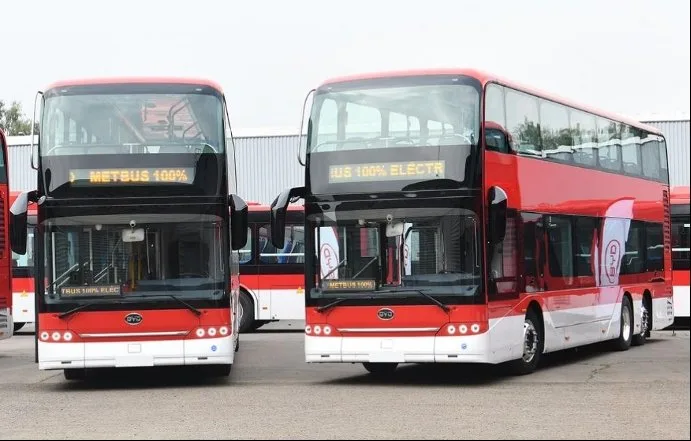
(Image source: BYD)
Wang Chuanfu's speech is actually also a microcosm of the Chinese automotive industry going global: at this stage, Chinese automobiles sold overseas are not following the old path of product-dumping expansion that Western countries took more than a century ago, but rather a new route of equal trade and common development with other countries.
Wang Chuanfu's speech reflected the sense of responsibility of this leading Chinese new energy enterprise and also showed the world a new posture of China's automotive industry going global.
Lei Jun's speech focused on AI, especially emphasizing the outlook for physical AI. He said: "AI is a brand-new era. In particular, as AI moves into the physical world and becomes deeply integrated with terminals and various application scenarios, it will unleash huge opportunities."
As the head of both a consumer electronics company and an automobile company, Lei Jun also has relatively deep observations on AI phones and AI cars. He said during his speech that no revolutionary, benchmark products have appeared in the past four years, but he believes great products will surely be born in the coming years.
As for embodied intelligence, Lei Jun also made a judgment: this is certainly a huge industrial opportunity, and its future imagination will surpass the automotive industry. At the same time, he also disclosed Xiaomi's latest progress in this field. At present, Xiaomi's embodied intelligent robots have entered its own factory for an "internship," capable of working continuously for 8 hours, during which they can recharge autonomously twice, performing very well.
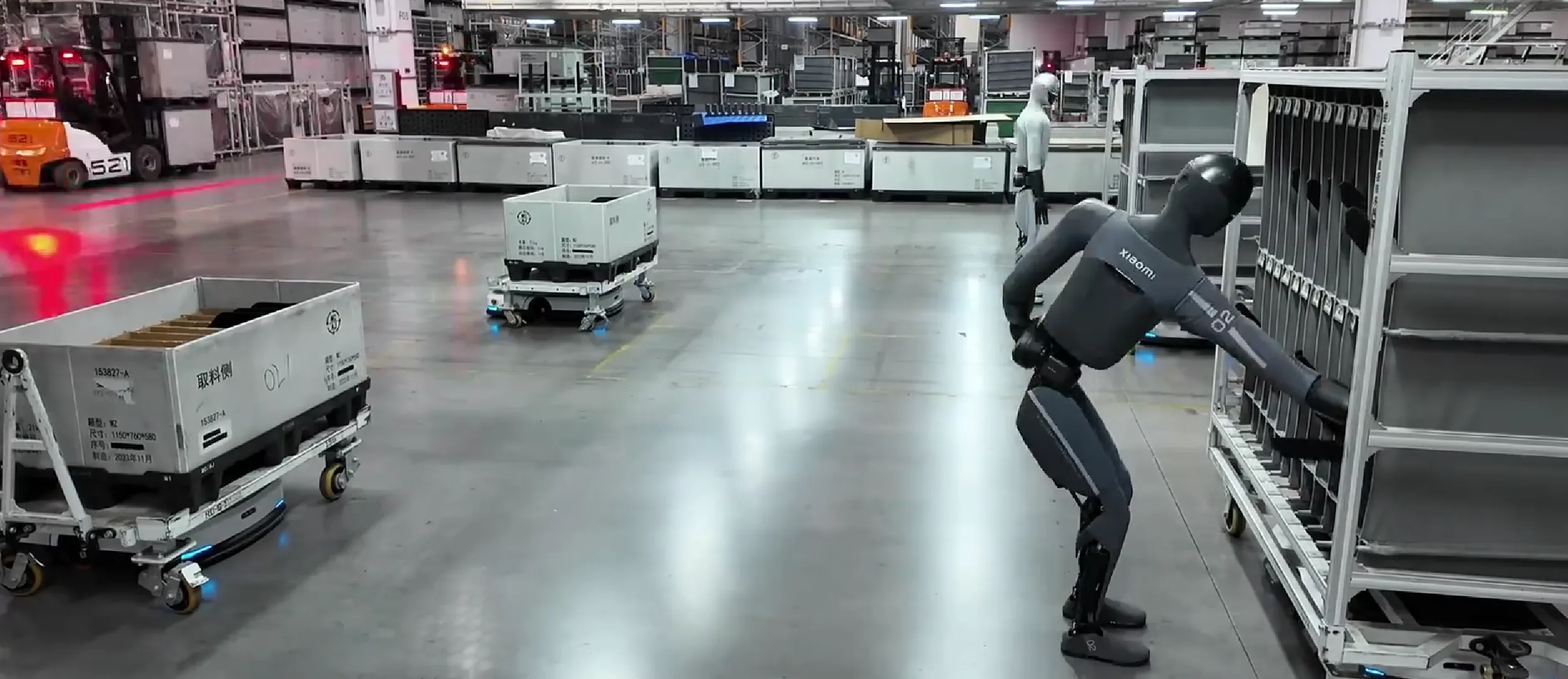
(Image source: Xiaomi Technology)
From Lei Jun's speech, it can be seen that he pays more attention to the combination of AI and the physical world. The speech did not devote much space to automobiles, but if Xiaomi had not entered the automotive field in recent years, the company's understanding of physical AI would presumably not be as profound as it is now.
CATL's Zeng Yuqun mentioned the development of battery technology and the corresponding infrastructure support in his speech.
He stated that CATL's research and development revolves around two questions: first, how to make batteries have higher energy density while being safer; second, how to extend the boundaries of electrification from land to the ocean and the sky.
Specifically, CATL is working to increase battery energy density to at least 350 Wh/kg, thereby providing power for electric aviation and supporting the power demand of electric vertical takeoff and landing aircraft.
As for infrastructure, he said that battery swapping is an innovation that allows an electric vehicle to complete a battery swap within 99 seconds and is fully ready for promotion and application.
Baidu's Li Yanhong mainly talked about AI. The part involving the automotive industry was using autonomous driving as an example at the AI application layer.
He said: "The safety of autonomous driving technology is about 10 times higher than that of human drivers." In his view, this is one of the applications that best demonstrates the value of AI technology. He also announced the latest overseas progress of Apollo Go: expanding its operating range in Dubai, conducting tests with companies such as Uber in London, and he called out on the spot: "I hope more countries and economies will open their roads so that this technology can truly be enjoyed by more people."
Taken separately, what the four leaders talked about was their own businesses; but taken together, the core of their speeches was not their own "small patch of land," but rather an outlook on the international market and the future of the industry. This also reflects that China's automotive industry is moving step by step from being a "backdrop" to the center of the global stage, showing the world a new development blueprint.
Going Global, AI, and Batteries Going Into the Sky—Competing for the Power to Define the Next Decade
From the speeches of the four leaders at this APEC CEO Summit, Dianchetong (ID: dianchetong233) also glimpsed a new trend in the future development of the automotive industry, namely "seizing" the power to define the next decade.
For example, the going-global topic Wang Chuanfu discussed is also an important direction for the current development of mainstream domestic automakers. In the era of fuel vehicles, China had always "exchanged market for technology": allowing foreign brands to form joint ventures in China, absorbing advanced technology from overseas brands, and developing its own automotive industry. In other words, in the previous round of globalization, we played the role of absorbing inward and actively learning.
Now, we are capable of exporting products, technology, and even the automotive industry system outward in the new round of global competition, driving the development of the automotive industry in other countries and regions. In addition to BYD, traditional independent brands such as Geely and Chery, as well as new forces such as XPeng and Leapmotor, are also actively laying out overseas and seeking a new round of development.
Affected by geopolitics and some overseas consumers' stereotypes about made-in-China products, Chinese new energy vehicles do not have an easy path going global. But Dianchetong believes that as automakers' product strength continues to improve and the going-global process deepens, China's automotive influence worldwide will steadily increase over the next decade.
Then there are the physical AI and autonomous driving discussed by Lei Jun and Li Yanhong. Looking globally, whether at the level of AI technology research or specifically in autonomous driving and physical AI, only China and the United States are truly competitive. In addition, China and the United States are also the leading countries in the new energy vehicle industry. Therefore, the country that first lands physical AI in automobiles and deeply integrates automobiles with embodied intelligence will only emerge from between China and the United States. That is to say, how to further promote the implementation of these technologies in the coming years is a question that every smart electric vehicle company and AI company must answer.
As for Zeng Yuqun's discussion of applying power batteries to the field of aircraft, the all-electric aircraft that COMAC successfully completed its maiden flight with not long ago was powered by batteries supplied by CATL. China's technical accumulation and competitiveness in the fields of civil aviation and general aviation aircraft are relatively weak. If the successful experience of the new energy vehicle industry can be replicated in the civil aviation industry, it may even bring changes to the entire aviation industry.
In other words, at this stage we have seen new hope for the industry's development, and also the possibility of China leading the industry's development. But this possibility will not appear out of thin air; it must be "seized" step by step by us. This "seizing" is not internal strife among enterprises, but rather collaborative development through which we jointly achieve technological transcendence and leadership.
Chinese Automobiles, Seen by the World on Their Home Turf
Looking back at the going-global journey of Chinese automobiles in recent years, this APEC is a rare opportunity to show the world the development achievements of China's automotive industry on our own home turf.
In the past, we were used to displaying brand images at auto shows such as the Paris Motor Show and Munich Motor Show, as well as at IFA and CES, and proving technical strength by setting lap records at the Nürburgring and chasing top speeds in the Middle East. At this APEC, China's automotive industry finally had an opportunity to show its strength to the world on its own soil, set the agenda ourselves, and export it outward.
In addition to the several speeches at this APEC CEO Summit, the Hongqi state guest fleet shuttling through the venue, the Denza vehicles providing support cars for dignitaries and media from various countries, and even the electric buses, taxis, and autonomous vehicles running on the streets of Shenzhen are all quietly showing the world the development of China's automotive industry and its exploration of the future.
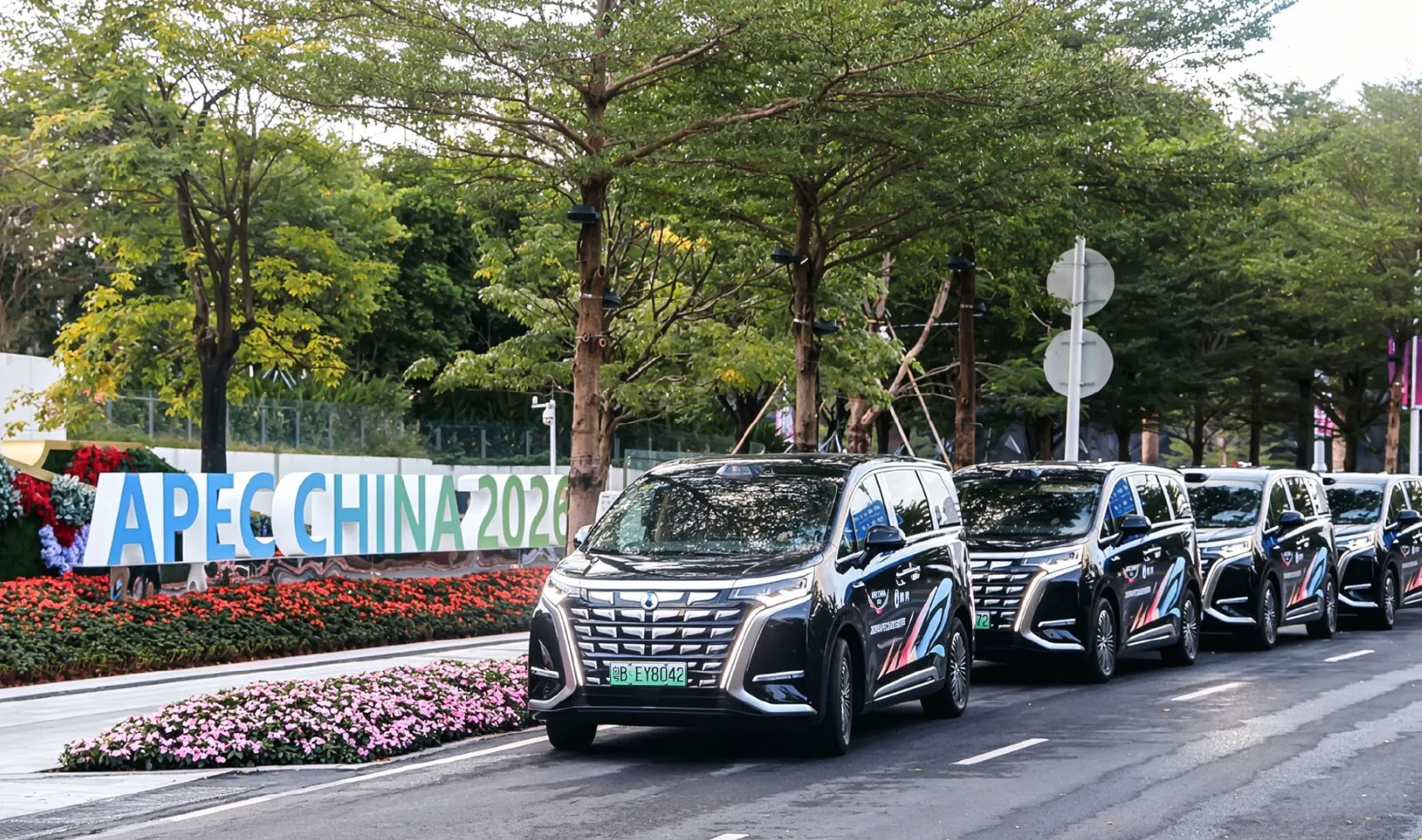
(Image source: Denza)
Dianchetong believes that this APEC is only a beginning. As our exploration in electrification and intelligentization deepens and automobiles continue to integrate with AI technology, Chinese automobiles will continue to be seen and noticed by the world, and may even lead the development of the entire industry.
Of course, the future is bright, but the road is tortuous. At this stage, China's automotive industry also faces a series of challenges, such as declining market demand, intensifying involution among automakers, and the problem of "rushed cars." This requires enterprises and the industry to respond actively, resolve the problems one by one, and avoid the situation of "good news staying at home while bad news spreads far and wide."
But no matter what, the tomorrow belonging to Chinese automobiles is ahead. The next decade of the automotive industry depends on us.
Source: Leikeji
The images in this article are from: 123RF licensed image library Source: Leikeji
-
![]()
Why Did LG Sell 2 Million Clothes Care Machines in 15 Years? Where Do Chinese Brands Fall Short?
-
![]()
Lenovo Outpaces Apple in Both Shipments and Revenue: Lenovo's PCs and Tablets Gain Ground Through AI—What Lies Ahead?
-
![]()
At the APEC Meeting in Shenzhen, Wang Chuanfu, Lei Jun, Zeng Yuqun, and Li Yanhong Discuss the Future of Automotive Mobility
-
![]()
Tencent Sues PowerChina Huadong: 73 Court Hearings in a Single Year—Why Is the 45.4 Billion Yuan General Contracting Champion Sitting in the Defendant's Seat?
-
Gathering in Shenzhen: What Chinese Solutions Do Entrepreneurs Bring to the APEC Business Summit?
-
![]()
Chicago School District Takes on Google: Bundled AI Is Worse Than No AI at All
-
The Data Annotation Business Behind AI Music
-
![]()
Qwen, Tencent Hunyuan, and Kimi Tie for First Place in the Latest Chinese Large Model Rankings