Breaking: U.S. Moves to Block Global Computing Power, Bars China from Overseas GPU Rentals
 11/19 2026
 389
Washington's intentions are hardly benign. In a flurry of moves, they pushed Jensen Huang out of his leadership role at NVIDIA—but for the global AI industry, this is only the opening act.
A report exposes the "hardware fingerprint"
On November 12, an overseas research institute, Unemployment Labs, released a rather intriguing compute forensics report. They went through the cutting-edge open-source models released in China after April 2026 one by one, traced them back along the weights, and in six large models found traces unique to NVIDIA's Blackwell chips—what the industry calls hardware fingerprints.

Blackwell is NVIDIA's current top-tier card, a full generation more powerful than the H200 that can legally be purchased, and it has always been on the U.S. export blacklist.
The fingerprint is nothing mysterious. GPUs with different architectures use different thread layouts and random initialization methods, which leave their own marks in the weights when running models—much like the hidden codes printers leave on paper. Ordinary users cannot perceive it at all when calling a model, but it is enough to trace back which card the model was trained on.
Coincidentally, the day after the report was released, the U.S. Department of Commerce announced control measures naming seven countries: Singapore, Malaysia, Thailand, Indonesia, Brazil, Norway, and South Africa. From now on, these places must obtain U.S. licenses before importing Blackwell and newer-generation high-end cards, and must report who will ultimately use the cards and what models will be trained, and accept long-term U.S. monitoring afterward.
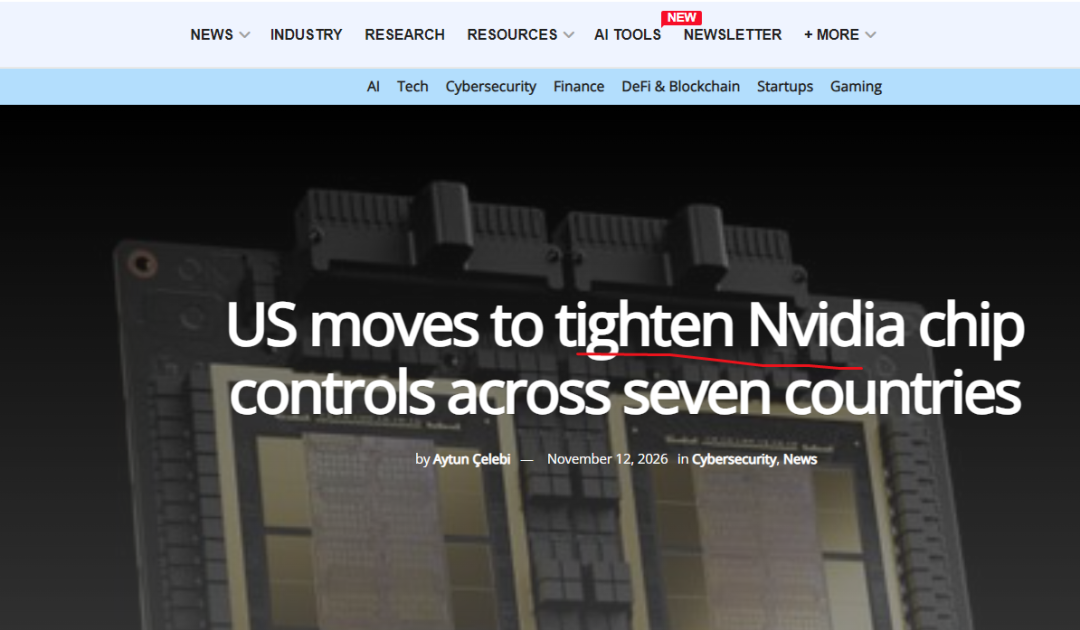
The goal is almost written on their faces: to cut off the path for domestic AI companies to remotely rent overseas NVIDIA compute.
And this set of actions is not only aimed at new orders. According to rules that have already leaked, data centers currently providing above-threshold compute to Chinese customers must also apply for licenses during the transition period; if they fail to obtain them, they will not be able to get new goods in the future, and in serious cases they may be placed under control. The chips are not confiscated, but the right to future supply becomes a reins, forcing cloud vendors to clean up their customers themselves.
The semi-public route through Singapore is no longer viable
Some people wonder: Singapore is such a small place, so why has it long been NVIDIA's second-largest market in the world? In the second quarter of fiscal 2026, 22% of NVIDIA's sales came from Singapore.
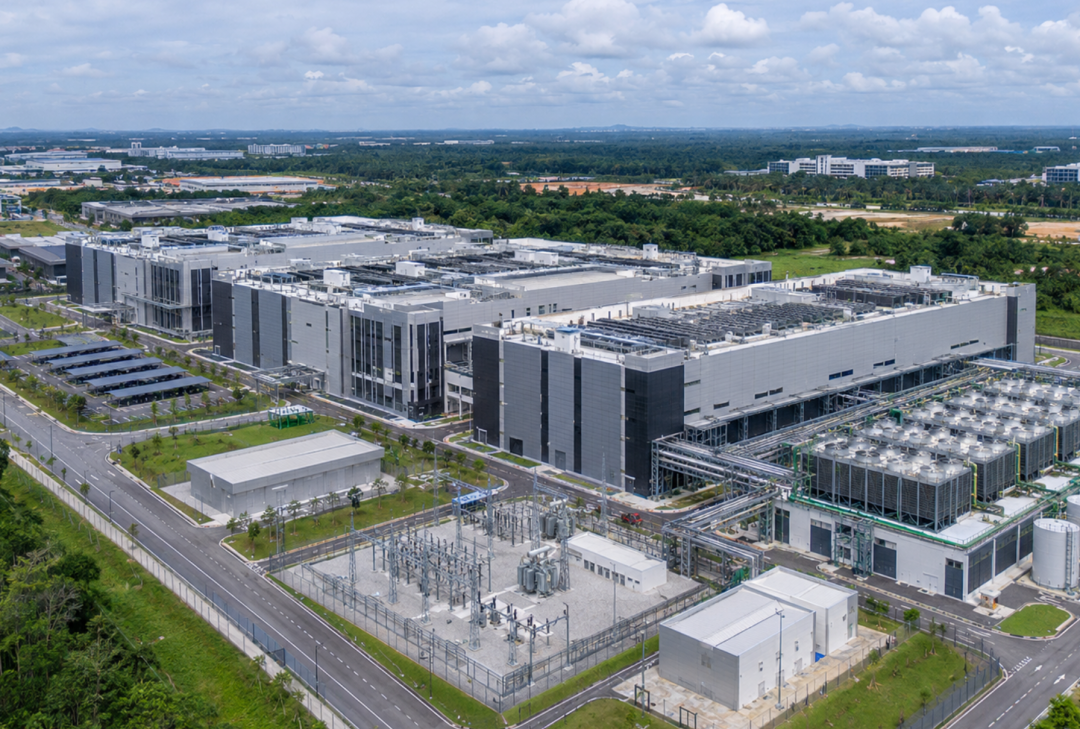
Everyone in the industry knows. The chips did not enter China, and there is nothing wrong with the paper transactions, but remote compute rental has long been an open secret. The cards do not need to be shipped back; once the network cable is connected, you can remotely connect to overseas clusters and train large models just the same.
This 22% has long attracted the attention of the U.S. Congress. Some lawmakers asked point-blank at hearings: Singapore buys far more cards than its own usage—where did the excess go? The answer hardly needs guessing.
A lawyer who has long worked on export control business put it quite pointedly: this is not "chip control," it is "compute control." In the past they controlled goods; now they control whether you can use them.
During Trump's term, this channel maintained a subtle tacit understanding—each side taking what it needed without saying it aloud.
Within the U.S. government, there have actually always been two contending factions. One focuses on national security and believes that high-end compute will push China's AI forward and must be blocked; the other calculates the market and ecosystem and believes that a one-size-fits-all cut will only force China to stubbornly pursue domestic chips, and over time the global influence of the CUDA system will shrink instead.
Jensen Huang has always been the standard-bearer of the latter and had Trump's tacit approval. But after the midterm elections, once the Democrats took both the Senate and the House, this lenient approach immediately lost its backing.
Do not think only the Democrats want to block it. In January this year, the Republican-led House passed the "Remote Access Security Act" by 369 votes to 22, targeting precisely the loophole of remote card rentals. The accompanying "Chip Security Act" also wants to install location verification in high-end chips to prevent chips from circulating around and flowing into China again.
Compute has long been regarded by the U.S. as a strategic trump card; blocking it is a bipartisan consensus, and the disagreement is only about when to act and how hard to strike. Jensen Huang advocates continuing to sell, which happens to put him on the opposite side of the consensus. Once the buffer layer at the White House was removed, the hardliners took direct control.
What the two factions are actually arguing about is the same thing: how to keep the U.S. technology system sitting in the main seat at the table. The hardliners bet that "blocking will slow it down," while the pragmatists bet that "only by staying at the table can there be influence." But once the political wind shifts, no matter how loud the pragmatists are, they cannot drown out votes.
Huawei openPangu has paved another path—fully domestic throughout
The industry now popularizes "training abroad, inference at home": training the base model overseas and doing inference domestically. If this channel is truly locked down, can frontier large models still be trained?
Yes. Interestingly, even this report that caught the Blackwell fingerprint admits that some domestic models were clean and showed no traces—and DeepSeek-V4.1-Flash and Huawei's openPangu-2.0 are both on the list.
Everyone is familiar with DeepSeek, but many people find Huawei openPangu unfamiliar. It is not a general chat model for chatting with you; its core is based on Huawei Ascend chips and Ascend operators, controlled by HarmonyOS above, and at the same time opened to developers for building agents.
Public information states clearly: openPangu-2.1 was released on November 15, 2026, and the technical report explicitly notes that the entire training and inference process runs on Ascend domestic compute clusters. At present, Huawei Ascend AI chips already account for more than 59.6% of the domestic market.
In China's AI accelerator market in the first half of 2026, Huawei Ascend shipped 572,000 units. In the same period, among the 11 Chinese local semiconductor manufacturers tracked by IDC, the five leading manufacturers—Huawei, T-Head, Cambricon, Kunlunxin, and Hygon—shipped about 962,000 units in total. By this calculation, Huawei Ascend accounted for nearly 60% of domestic AI chip shipments, leading the domestic camp by a wide margin.
The cards are not NVIDIA's, but the capability has not fallen behind. In its strongest agent programming track, it trails the mainstream overseas models of the same period by only one version—roughly 4 to 6 months.
openPangu, which has recognized "domestic models, domestic chips" since its project launch in 2021, is also one of the few trillion-parameter large models today with fully domestic compute from training to inference. That is why the U.S. detection found no traces on it.
Some will say, it is just one model, right? But by open-sourcing the weights and releasing the full technical report, it is equivalent to handing over the manual for how the path was walked, so latecomers can follow it again.
Where is the difficulty? After ChatGPT exploded at the end of 2022, China set off an arms race in 2023, with the whole industry scrambling for NVIDIA cards. But very few models were trained purely domestically. The hurdle is not chip performance, but the ecosystem.
AI engineers around the world write CUDA code every day, and massive open-source tools, operators, and troubleshooting tutorials are all adapted to NVIDIA by default. Switching to domestic cards means many underlying problems have to be opened up from scratch, and when you hit pitfalls there are no answers online yet. Paper compute does not equal effective compute; at the same nominal compute, good and poor adaptation can differ by more than double in actual efficiency. Migrating CUDA to a domestic framework is about as difficult as asking an iOS engineer to write an Android app from zero.
The openPangu team climbed up all the way from thousand-card clusters, gnawing through hard bones one by one: operator adaptation, ten-thousand-card communication, and how to self-heal when a cluster crashes. The latest openPangu-2.1 goes further, proving that the domestic route can also produce commercially competitive products, and the team has also open-sourced the weights and released the technical report.
From "usable" to "good to use," crossing this step is far more important than boosting a few more benchmark scores. Because it means domestic compute is no longer just an emergency solution, but a foundation that can be continuously iterated and can take commercial orders.
This hardware fingerprint detection is tantamount to a public baseline exam, and this purely domestic route has successfully handed in its paper.
What is blocked is NVIDIA's route; what is forced out is the domestic ecosystem
In the long run, even if this entire blockade is fully implemented, all it blocks is "people taking NVIDIA's route." Using domestic compute from beginning to end bypasses controls at the underlying logic.
The more people use it, the more money is poured into chip research and development, and the faster the ecosystem matures.
The market has already moved first. Middlemen and small players who make a living from overseas transshipment compute face sharply rising risks, and business contraction is unavoidable; on the flip side, orders and policy support for domestic compute, domestic chips, and supporting servers keep increasing, and SMIC's domestic revenue share has already surged to 90.8%.
Of course, shortcomings are also obvious: HBM, advanced packaging, and wafer capacity cannot be filled in the short term, and the capacity and yield of domestic 7nm are the real deciding factors for this round.
NVIDIA's compute has supported this wave of AI, but it is not irreplaceable.
The comparison standard in the industry is also changing. In the past two years, what was compared was who grabbed more cards; from now on, what will be compared is who can squeeze more efficiency out of domestic compute, and unit token cost will become a new dimension of competition.
There was no road in the world originally; but when many people walk it, a road naturally appears. The same logic applies to domestic models and domestic chips. The more fellow travelers there are, the richer the toolchain, community, and implementation cases become, and there will be more and more large models on purely domestic foundations.
Jensen Huang has repeatedly warned before: completely cutting off China's path to NVIDIA compute will only force China to build its own chips and set up an independent ecosystem, and will not really slow down China's AI.
Now it seems that what he worried about most is turning into reality bit by bit.
Disclaimer: This article is only a corporate financial commentary and does not constitute any investment advice. The enterprise data and regulatory events mentioned in the article all come from public information and are for reference only; the specific situation shall be subject to official releases. Images are from the internet; if there is any copyright issue, please contact us for deletion.
-
![]()
AI Hasn't Produced Fully Automated Ransomware—but It Has Lowered the Barrier to a Single Person
-
![]()
Pony.ai's Q3 Net Loss Doubles, but the Loss Isn't the Real Problem
-
![]()
Tencent Refuses to Settle for Mediocrity
-
![]()
Rumors of Shangjie Leaving HIMA Resurface—Is "Going Solo" Really Necessary for Shangjie? | Mingjing Pro
-
Foxconn Said to Win OpenAI Phone Assembly Order, Mass Production Could Start as Early as First Half of 2027
-
![]()
Three Gates for AI Automated Testing: Verifying Code Correctness
-
![]()
XPeng's Q3 2026: Service-Fee Tide Recedes as Cars and Overseas Sales Take Over
-
![]()
Waymo Suspended from California Highways: Why Halt Operations Without Any Casualties, and Where Is Tesla's Cybercab?