Must Adapt to iPhone Duo! Apple’s Mandate Puts Pressure on Small and Medium-Sized Developers
 10/09 2026
 562
562
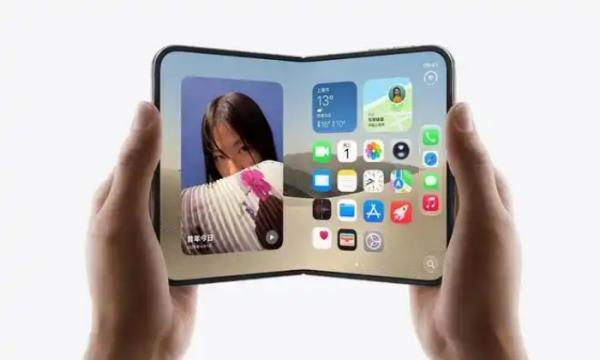
On October 5, Apple unveiled new regulations on its developer portal: beginning in April 2027, all new apps submitted to the App Store, as well as updates for existing apps, must include screenshots demonstrating compatibility with the iPhone Duo’s foldable screen. Apps already available but no longer receiving updates will remain unaffected and can continue to be used as usual.
While this regulation may appear to be a simple documentation requirement, at its core, Apple is leveraging its App Store review authority to tackle a major pain point in the foldable screen industry—the lagging software ecosystem. Once the news broke, the hashtag #iPhoneDuoMandatoryAdaptation began trending on social media on October 7, sparking heated discussions among netizens.
It’s well known that Android foldable screens have been evolving for years, with rapid hardware advancements. However, the ecosystem has consistently been a weak link. The reason is straightforward: the Android ecosystem encompasses a wide array of device models, with foldable screens from different brands varying in size, aspect ratio, and hinge design, lacking a unified standard. Phone manufacturers can only encourage developers to adapt through presentations, subsidies, and on-site coordination, leading many small and medium-sized apps to simply stretch their interfaces. This results in UI distortion, misaligned buttons, and poor split-screen experiences when unfolded.
Users who purchase foldable screens often find that only the system’s built-in apps and software from top developers offer a seamless experience. Essentially, no Android player can compel all developers to adapt. In contrast, Apple’s approach is fundamentally different: with only one foldable iPhone model, fixed hardware specifications, and control over the App Store review process, Apple directly makes adaptation a requirement for app listing. Developers who wish to update their apps must ensure proper compatibility.
This stringent requirement is a hallmark of Apple’s ecosystem and also its strength. Apple provides the Xcode simulator, enabling developers to preview the opening, closing, and screen-switching states directly, thereby reducing development and debugging costs. In other words, Apple has transformed a challenging task—which phone manufacturers previously had to persuade developers to undertake—into a necessity for developers to survive. This marks the first time a closed ecosystem has demonstrated structural advantages in the foldable screen era.
More importantly, Apple has cleverly employed two low-risk strategies: first, it only requires screenshot materials, keeping implementation costs minimal and allowing developers to ensure compatibility between the inner and outer screens first. Second, it provides a buffer period of over six months, preventing small and medium-sized teams from having to overhaul everything at once and avoiding the recurring issue of “hardware first, software lagging behind.”
For top app teams like WeChat, Douyin, and Taobao, adaptive layouts are already within their technical capabilities. Adding foldable screen adaptation involves limited additional workload, even allowing for the reuse of adaptive code from the iPad version, thus keeping costs manageable. In contrast, independent developers, small utility apps, and niche games face a more significant burden.
Many individual developers have limited resources for long-term app maintenance. Originally, they only needed to adapt to fixed-size iPhones, but now they must handle inner and outer screen switching, page continuity during opening and closing, split-screen layouts, and create adaptation screenshot materials. Many lightweight utility apps, with simple UIs, can quickly achieve compatibility using adaptive frameworks, but testing and validation still require additional manpower. Some single-player games, if their underlying code is rigidly tied to screen dimensions, will face even greater transformation workloads.
Of course, for small and medium-sized developers, Apple’s mandatory regulations do not only bring pressure but also hidden benefits. One often-overlooked product detail is that the iPhone Duo’s inner and outer screens adopt the exact same aspect ratio, allowing content to be scaled proportionally. This significantly reduces developers’ adaptation costs—they don’t need to create two separate layout logics for screens with different aspect ratios, mainly addressing size scaling and opening/closing switching issues rather than redrawing interfaces.

Recalling when Samsung’s inner and outer screens had inconsistent aspect ratios, leading to widespread stretching issues, Apple’s move appears to be a targeted design after learning from others’ mistakes. Nevertheless, Apple’s approach, while seemingly domineering, holds extraordinary significance for users.
Foldable screen hardware itself is not difficult to manufacture; what truly determines a product’s success or failure is the software experience. Most user complaints about Android foldable screens in the past were not about the screen or hinge hardware but about the inconsistent app adaptation. By providing a six-month transition period, Apple gives developers ample time to make adaptations. When the iPhone Duo is widely available, users will not encounter the awkwardness of stretched and distorted app interfaces.
This also helps reshape the user value of foldable screens: they are no longer just a large screen for watching videos but support native large-screen layouts and multitasking, with a seamless experience when switching phone forms. In short, the foldable iPhone is no longer a hardware gimmick but a fully functional main device.
By the way, this feat, achievable only by Apple, inevitably faces significant controversy, such as criticism over excessive platform power. In summary, there are three points that cannot be overhyped:
① Mandatory rules increase the burden on small and medium-sized developers. Top apps from large companies will naturally prioritize adaptation, but many long-tail apps are maintained by just one or two people. Adding a set of screenshot materials, recompiling, and regression testing all require additional man-hours. Apple does not care whether you make money, but these costs will ultimately be absorbed by the market in the form of some small apps ceasing updates. Some developers argue that the initial sales volume of the foldable iPhone is limited, making the return on investment for human resources spent on adaptation low.
② Mandatory adaptation and a truly good experience are two different things. Filling the inner screen only addresses compatibility; what content should be displayed on the large screen and how to modify interactions still require developers to invest real money in design. To be blunt, the likely scenario is that many apps will comply, but few will be truly redesigned for the large screen. They may not look ugly, but they won’t be particularly user-friendly either.
③ The ecosystem is only a necessary condition, not a sufficient one. Analysts have aggressive expectations: Counterpoint predicts that the iPhone Duo will ship up to 6 million units this year, capturing about 25% of the global foldable screen market, becoming the world’s second-largest player, second only to Samsung. However, Apple lacks a first-mover advantage in product form and must directly face Huawei, which already holds 70% of the domestic market share. In reality, the software ecosystem is a bonus; hinge durability, creases, price, and supply are the fundamental factors determining sales.
Overall, Apple’s move essentially trades its closed channel’s review authority for speed in building the foldable screen ecosystem, using the lowest mandatory cost to force the fastest adaptation action across the industry—something the Android ecosystem has always wanted but failed to achieve. However, it addresses the ecosystem’s baseline rather than the experience’s pinnacle. Whether the expected 6 million units can become a reality ultimately depends not on how many screenshots developers submit but on whether the foldable screen itself is user-friendly and worth its price. What do you think?
-
![]()
Holiday Sales of Communication Devices Soar by 119.8%: Is It Volume or Pricing Driving Growth?
-
![]()
OpenAI Annual Revenue Disappoints, AI Sector Tumbles, Nvidia’s Market Value Plunges $168.4 Billion Overnight
-
Can an AI Smartphone That 'Automates Tasks' Go Too Far?
-
![]()
4G Intelligent Lighting Module Selection, Deployment, and Common Issues
-
![]()
Must Adapt to iPhone Duo! Apple’s Mandate Puts Pressure on Small and Medium-Sized Developers
-
![]()
Laying Off 30% of Staff and Reverting to Fuel-Powered Vehicles: Decoding Porsche's '2035 Mid-term Strategy'
-
![]()
Why Do Flagship Smartphones Exhibit Reduced Stability Despite Achieving Higher Benchmark Scores?
-
![]()
Despite Rising Benchmark Scores, Why Are Flagship Smartphones Becoming Less Stable?